Welcome to Modern Agriculture!

Miscellaneous ●
Fertile, well-drained soil.
Full sun to partial afternoon shade.
Moderate. In mild winter areas or sheltered sites, seedlings that sprout in fall may survive to spring. Seedlings that sprout in early spring easily survive light frosts.
Mix a light application of a balanced organic fertilizer into the soil prior to planting.
Strawberry. You can use the light texture and soft colors of nigella to break up clashes between cornflowers and calendula, which can be grown on a similar schedule.
Single Plants: 11" (30cm) each way (minimum)
Rows: 11" (30cm) with 11" (30cm) row gap (minimum)
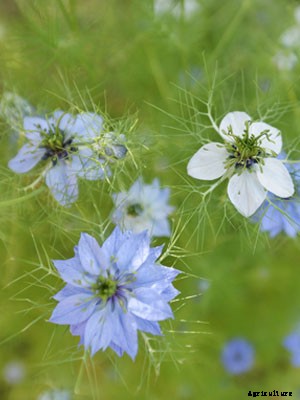
Sow seeds in prepared beds and gently press them into the surface. Keep moist until the seeds germinate. Because of their lacy foliage, nigella seedlings are easy to recognize among weeds. Nigella usually grows better from direct-sown seeds than from transplanted seedlings.
Our Garden Planner can produce a personalized calendar of when to sow, plant and harvest for your area.
Because nigella blooms for only a few weeks, it is best to sow seeds two or three times from late spring to early summer. Flower colors include white, blue, pink and purple.
Many gardeners like to gather the decorative dried seed pots for use in dry arrangements. When the pods begin to brown, clip them off and hang them in small bunches to dry.
Nigella plants may decline rapidly in very hot weather. This flower self-sows in most gardens.