Welcome to Modern Agriculture!

Miscellaneous ●
Fertile, well drained sandy loam is ideal.
Full sun.
Yes, but cultivars should be chosen that fit the climate. Some pecans are much more cold tolerant than others.
Mulch with well-rotted organic matter in spring.
Pecans are large, spreading trees that make good shade trees in large landscapes.
Single Plants: 65' 7" (20.00m) each way (minimum)
Rows: 65' 7" (20.00m) with 65' 7" (20.00m) row gap (minimum)
Prepare a large hole by breaking up the soil and adding plenty of well-rotted organic matter. A wide hole is better than a very deep one. Mulch after planting, and encircle the trunk with a wire cage or protective pipe to protect the young tree from animal and insect pests.
Our Garden Planner can produce a personalized calendar of when to sow, plant and harvest for your area.
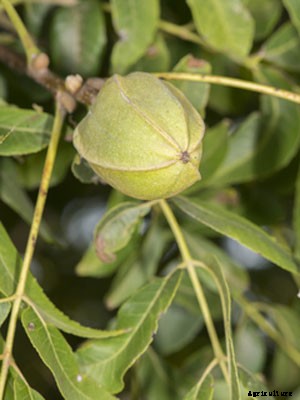
Pecans are outstanding nut-producing landscape trees in much of the Southeast USA. Pecan trees will bear for decades. It takes 20 years for a pecan tree to grow to maturity.
Gather nuts as they fall to the ground. Allow them to dry in a place that is protected from rain.
Pecans grow best in warm, humid climates. In cool climate pecans may not produce nuts, and may suffer from coral spot.