
Welcome to Modern Agriculture!

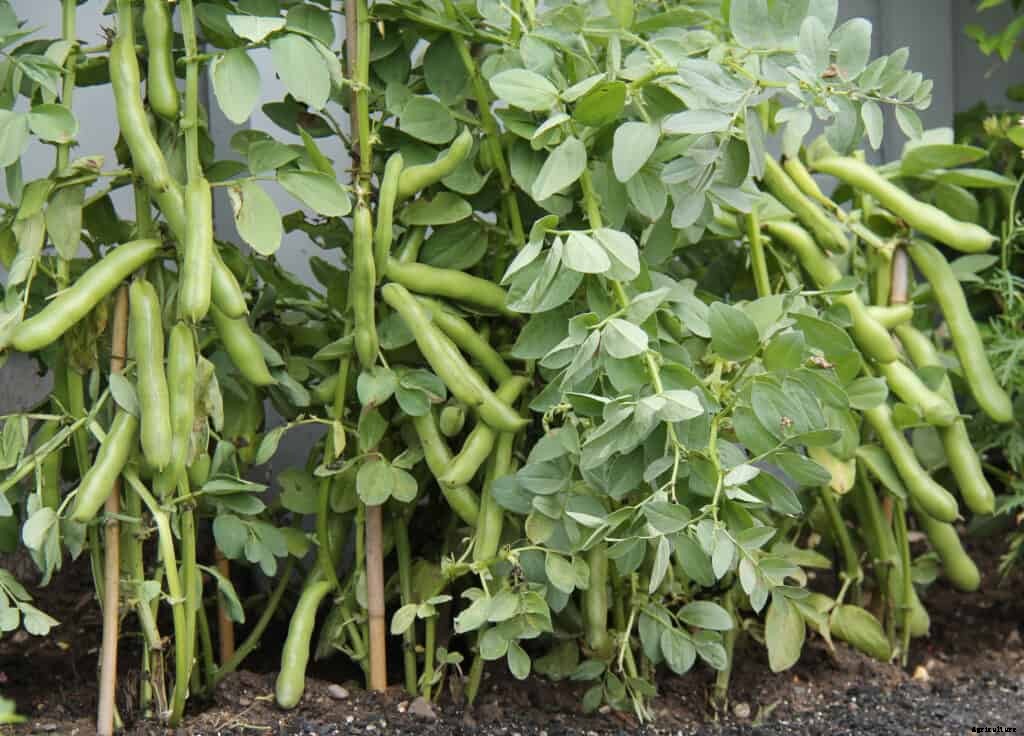 Broad beans, also called fava beans, are a cool-season crop that grows best in temperatures ranging from 60° to 65°F (15-18°C) but fava beans will grow in temperatures as low as 40°F (4.4°C) and as warm as 75°F (24°C). Sow broad beans in spring as soon as the soil can be worked for harvest before the weather warms. Broad beans require 80 to 100 days to reach harvest. In mild-winter regions sow broad beans in early autumn for winter harvest.
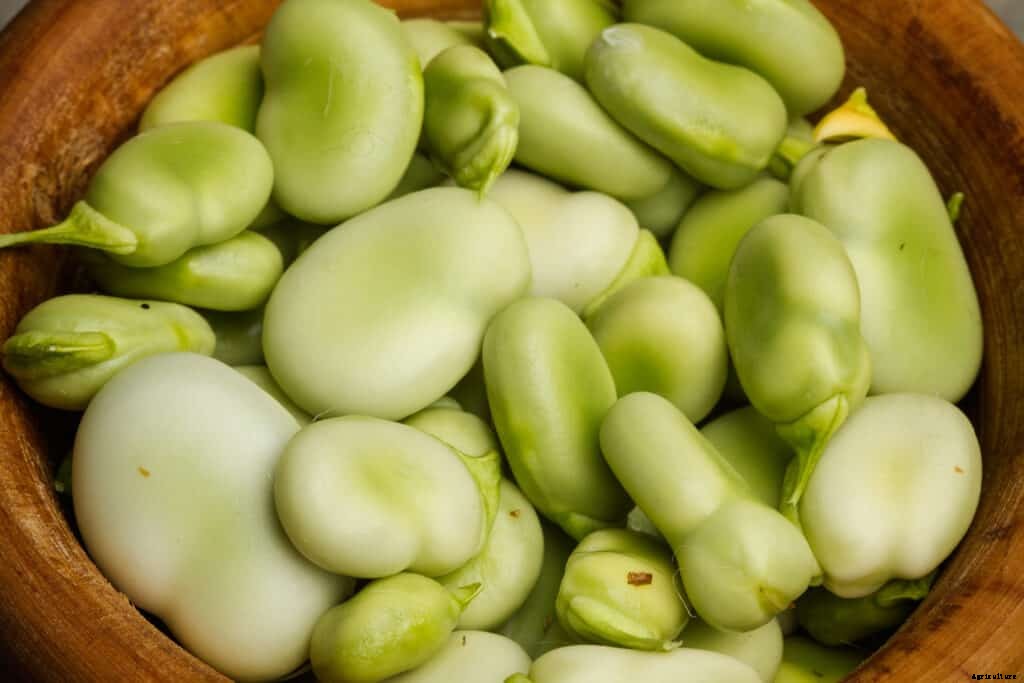
Description. The broad bean is a bushy, hardy annual that can grow from 3 to 4½ feet (.9-1.3m) tall. The broad bean has square stems with leaves divided into leaflets. Pods are 6 to 8 inches (15-20cm) long and contain 4 to 6 flat, oval seeds that can be white, yellow, green, or pinkish-red. The broad bean has white flowers that are splotched with brown. The broad bean is not a true bean is related to vetch, another legume.
Yield. Plant 4 to 8 broad beans per household member.
Site. Grow broad beans in full sun. Plant broad beans in loose, well-drained soil rich in organic matter. Add aged compost to planting beds before planting. Broad beans prefer a soil pH of 6.0 to 6.8.
Planting time. Broad beans grow best in cool weather where air temperatures are below 70°F (21°C). Broad beans, unlike snap beans, will not set pods in warm weather. Sow broad beans in early spring as soon as the soil can be worked. Broad beans will grow in temperatures as low as 40°F (4.4°C). They require 80 to 100 days to reach harvest. In mild-winter regions sow broad beans in early autumn for winter or spring harvest. They will not produce in the summer’s heat. In areas where winters are mild, plant broad beans in the fall for a spring crop. In cold regions, grow broad beans instead of lima beans, which require a warmer and long growing season.
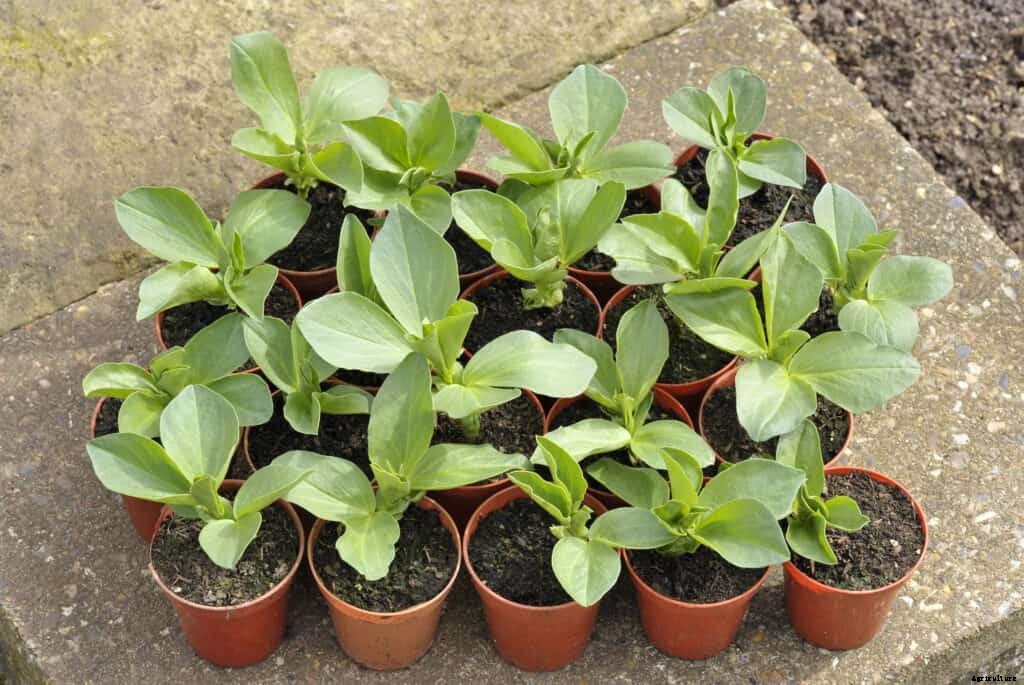
Planting and spacing. Sow broad bean seeds 1 inch deep and 4 to 5 inches (10-12cm) apart. Space rows 18 to 30 inches (45-76cm) apart. Thin seedlings to stand 8 to 10 inches (20-25cm) apart. In short-season regions, start broad beans indoors in peat pots and set them into the garden shortly after the last frost in spring.
Companion plants. Potatoes, cucumbers, corn, strawberries, celery, summer savory. Do not plant broad beans with onions or garlic.
Container growing. Beans can be grown in containers, but a good crop will take more space than most containers can provide.
Water and feeding. Water broad beans just before the soil dries out, but do not over-water them. Keep soil moist during flowering and pod formation. Plant beans in well-drained soil. Broad beans do not require feeding apart from planting in fertile, composted soil. Beans set up a mutual exchange with soil microorganisms called nitrogen-fixing bacteria, which help them produce usable nitrogen.
Care. Keep planting beds weed-free; cultivate shallowly to avoid disturbing roots.
Pests. Beans can be attacked by aphids, bean beetles, flea beetles, leafhoppers, and mites. Spray aphids away with a blast from the hose. Bean beetles and flea beetles can be controlled with sticky traps. Exclude leafhoppers with horticultural fleece or spray with insecticidal soap. and mites can be controlled. Spray mites with insecticidal soap.
Small white and yellow moths are adult cabbage worms that shelter in beans. They will not harm beans.
Diseases. Beans are susceptible to blight, mosaic, and anthracnose. Cut down the incidence of disease by planting disease-resistant varieties. Keep the garden clean. Avoid handling the plants when they are wet. Remove and destroy infected plants so they can not spread the disease to healthy plants. Soil-borne diseases can be reduced by changing the location of bean crops each year.
Few named varieties may be available; grow the variety available in your area.
Common name. Bean, broad bean, fava bean, Windsor bean, Scotch bean, horse bean
Botanical name. Vicia faba
Origin. Central Asia


