
Welcome to Modern Agriculture!

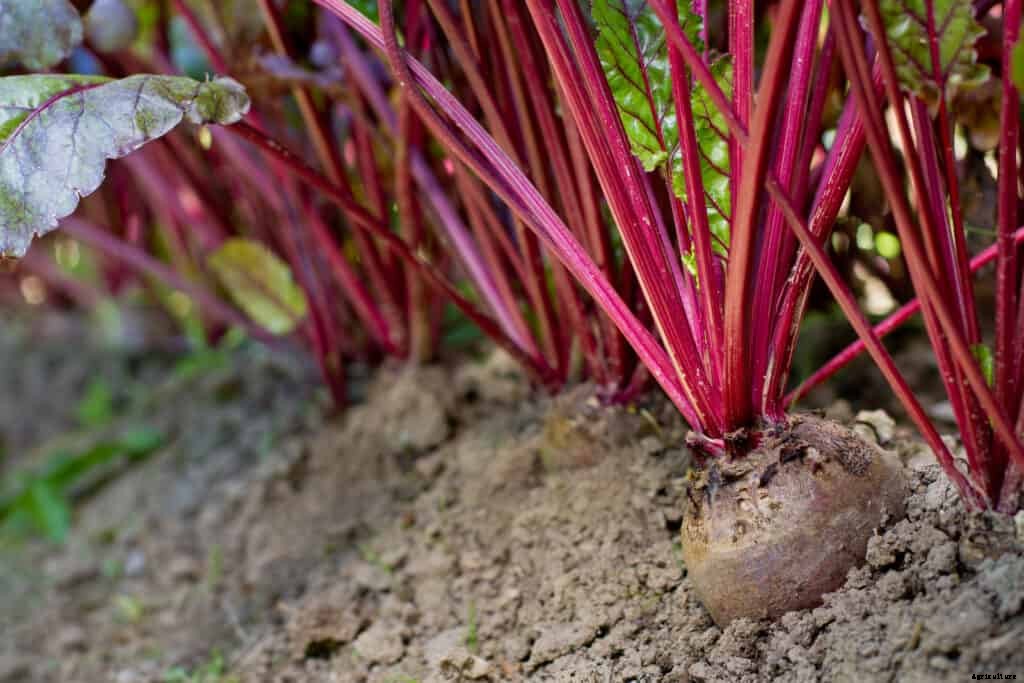
Beets are a cool-weather crop. Beets thrive in moderate temperatures from 50°F to 65°F (10-18°C). Sow beets in the garden 2 to 3 weeks before the last average frost date in spring. Continue succession plantings every 3 weeks until temperatures reach 80°F (26°C).
Beets can again be planted in late summer or early autumn 6 to 8 weeks before the first average frost in autumn. Grow beets as a winter crop in mild-winter regions.
Beets require 45 to 65 days to reach harvest.
Description. Beets are biennial plants grown as annuals. They are grown for their swollen roots and also for their leaves. There are two main beet types: globe-shaped and long-rooted. Beetroots can be red, orange, gold, yellow, white, and even concentrically ringed roots. A rosette of large edible leaves sprouts from the root; green leaves can have red, yellow, or white veins.
Beets Yield. Plant 5 to 10 beets per household member.
Site. Grow beets in full sun or partial shade in warm regions. Plant beets in well-worked loose soil rich in organic matter. Be sure to remove all stones and clods from planting beds so as not to impede or split growing roots. Add plenty of aged compost to growing beds in advance of planting; this will increase the yield. Alternatively, add 3 cups (700ml) of dried seaweed per 100 square feet (9 sq m). Beets grow best where the soil pH is 6.0 to 6.8; the ideal soil pH is 6.5.
Add only aged manure to the soil; fresh manures are high in nitrogen and cause beetroots to fork, twist, or be “hairy.”
If you have alkaline (chalky) or recently limed soil, the soil could be deficient in boron. Carefully sprinkle 1 to 1.5 tablespoons (6-9g) of household borax along 100 feet (30m) of row and work it into the soil. Do not overuse borax; it can be toxic.
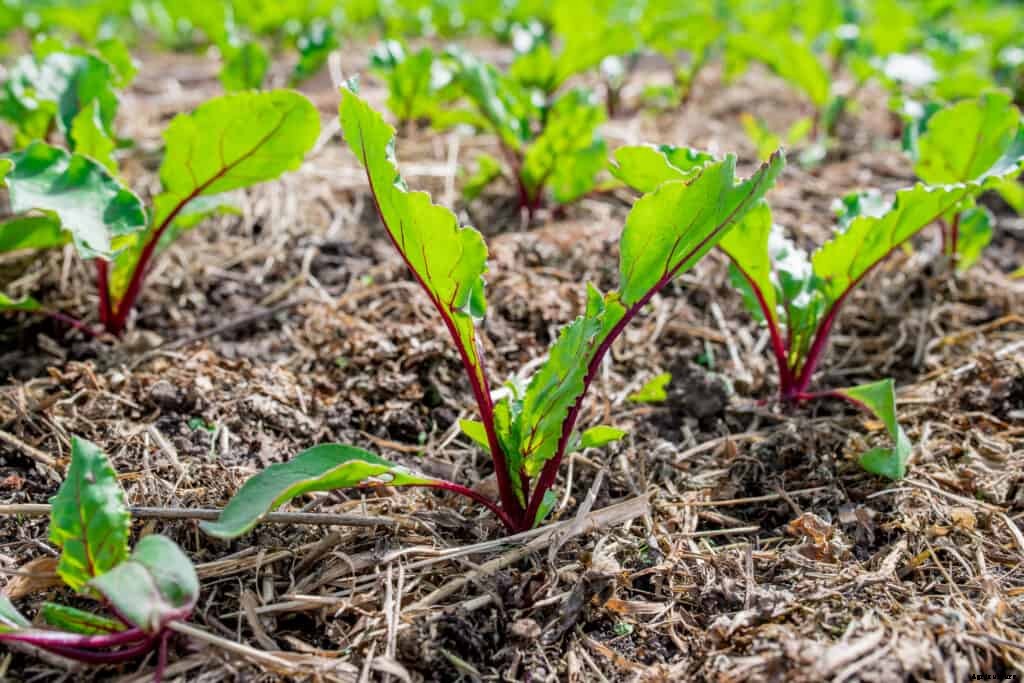
Beets Spring Planting Time Outdoors. Sow beets in the garden 2 to 3 weeks before the last average frost date in spring. The soil temperature should be at least 50°F (10°C), especially if you have experienced damping-off. Beets will grow faster in spring when covered with a row cover which will provide protection from chilling temperatures and wind.
Starting Beets Indoors. Sow seeds indoors 6 to 8 weeks before the last spring frost; harden off and transplant outside 4 weeks later.
Succession Planting. Beets require 45 to 65 days to reach harvest. Continue succession plantings every 3 weeks until temperatures reach 80°F (26°C). In hot-summer regions, stop sowing 60 days before full summer heat arrives. In hot weather, beetroots will become woody.
Beets Planting Time for Autumn Harvest. Beets can again be planted in late summer or early autumn 6 to 8 weeks before the first average frost in autumn. This will be the fall and winter storage crop, so sow only once, planting as much as you will need for winter. When direct sowing during summer, keep the soil constantly moist or germination will be poor.
Beets Planting for Winter Harvest. Beets can tolerate frost but will go to seed if temperatures are too cold. Grow beets as a winter crop in mild-winter regions. Late plantings that mature through winter will be the sweetest because the roots store sugars during cool weather.
Yield. Yield can vary by variety. You should harvest about 15 pounds (7kg) of beets per 10 feet (3m) of row.
More details: Planting Beets.
Planting and Spacing Beets. Beets are grown from seed clusters about the size of a small pea. Each cluster contains several tiny true seeds. Presoak seed clusters for 12 hours before sowing to help speed germination.
Sow seed clusters 1 inch (2.5cm) deep and 1 inch apart. Seedlings will sprout in clumps. Use small scissors to thin successful seedlings to 4 to 6 inches (10-15cm) apart when seedlings are 3 inches tall. Alternatively, you can gently separate young seedlings and replant the extra seedlings in a row nearby.
Space rows 12 to 18 inches (30-45cm) apart. Add thinned seedlings to salads. Beets generally do not transplant well.
Hilling Beets. As beetroots grow, the roots can push themselves out of the ground, so hill up soil around roots as necessary.
Intensive Spacing. Broadcast seeds lightly over a 15 to 18 inch (38-45cm)-wide bed.
Planting Transplants. Because beet seeds will not germinate in heavy clay soil, transplants are a better choice. Set each seedling at the desired final spacing.
Starting Seed Indoors. If you start seed indoors, sow one seed cluster per peat pot and thin seedlings to one plant per pot when the first true leaves emerge.
Yield. Plant a row 5-10 feet (1.5-3m) long or a 3 x 5-foot (1 x 1.5m) bed per person.
Companion plants. Onions, kohlrabi. Do not plant with pole beans and shading crops.
Container Growing Beets. Beets can be grown in containers. Thin seedlings to 4-inch (10cm) centers.
Water and Feeding Beets. Keep beets evenly watered. Do not let the soil dry out. Lack of water will cause roots to become stunted, stringy, and tough. Add aged compost to planting beds in advance of seeding. Side dress beets with compost at midseason.
Mulching Beets. To conserve soil moisture and keep down weeds, water the beets well and then put down a layer of mulch between the rows at least 4 inches (10cm) deep. If slugs are a problem, wait until the plants are a few inches tall before mulching.
Weeding Near Beets. If weeds grow near beets, remove them by hand rather than using tools. A hoe or trowel can nick the developing beetroots and expose them to disease. Keep planting beds weed-free to avoid competition for water and nutrients.
Thinning Beets. Thin beets as soon as they are about 3 inches (7.6cm) tall to avoid crowding which can hinder root growth.
Young Plants Go to Seed. If young plants flower and go to seed it is likely caused by temperatures below 50°F (10°C) or lack of moisture. Adjust the planting time to avoid cold exposure; keep the soil consistently moist.
Beet Root Problems. Black spots or brown hearts in roots can be caused by a lack of boron in the soil. Cutaway the discolored parts and the rest is edible. If the soil is chalky or has been recently limed, rake boron into the soil, 1.5 teaspoons per square yard or feed plants with calcified seaweed.
Beet Leaf Problems. Ragged holes in leaves may be caused by slugs, beet armyworms, or garden webworms; handpick caterpillars of spray with BTK when small; trap and kill slugs. Spinach leafminer larvae can tunnel through leaves; cover newly planted area with row covers to prevent damage. Brown spots on leaves can be caused by Cercospora leaf spot; pick and destroy affected leaves; roots are edible.
Beet Pests. Check roots for boring insects. Leafminers can tunnel inside the leaf surface leaving gray streaks.
Beet Diseases. Beets have no serious disease problems.
Beet pests and disease help: Beet Growing Problems: Troubleshooting.
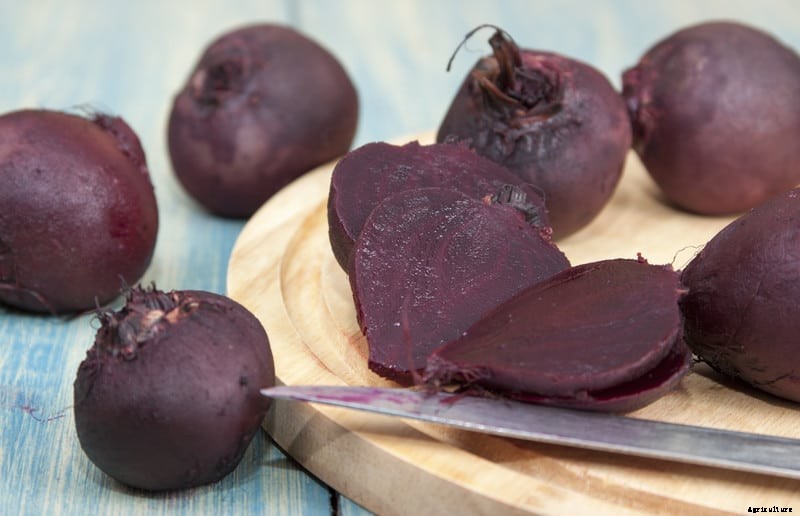
Beet Harvest. Beets will reach harvestable size–1 to 3 inches (2.5-7.6cm) in diameter–40 to 80 days after sowing. Lift beets gently. Twist the leaves off rather than cutting them off to prevent juices from bleeding.
Baby beets are ready for harvest about 40 days after planting. Full-size beets will be ready about 2 to 3 weeks later. Roots about the size of a golf ball will have optimal flavor. ‘Lutz Greenleaf’ variety will be flavorful when as large as a softball. Golden beets will be flavorful when the size of a baseball.
Young beet greens can be cut for salads about one month after planting. Don’t harvest too much foliage while the root is developing. Rinse the greens to remove grit before cooking or serving.
Storing and Preserving Beets. Beets will keep in the refrigerator for 1 to 3 weeks. Beet greens will keep in the refrigerator in a plastic bag for up to 1 week. Beets will keep for 1 to 3 months in damp sawdust in a cold, moist place. Beets can be frozen and dried.
For long-term storage, you can pack beets in containers of moist sand or peat and keep them in an unheated basement or garage (40-50°F/4.5-10°C is ideal). Small beets will not store as long as larger beets.
In cold-winter regions, you can store beets in an outdoor pit lined with dry leaves and straw. Layer the beets on top of a bed of straw, then cover them with a heavy layer of straw.
More harvest tips: How to Harvest and Store Beets.
Beet Varieties. ‘Detroit Dark Red’ (52 days); ‘Early Wonder’ (53 days); ‘Burpee’s Golden’ (55 days); ‘Bulls’s Blood’ (50 days); ‘Ruby Queen’ (56 days); ‘Little Ball’ (56 days); ‘Cylindra’, also called ‘Formanova’ or ‘Tendersweet’ (60 days); ‘Long Season’ also called ‘Winter Keeper’ (80 days).
‘Burpee’s Golden’ has sweet golden flesh which is nonstaining; the greens can be used for cooking or salads; grow from seed in 55 days.
‘Chioggia’ has sweet roots with rings of red and white when sliced; use the greens in place of spinach; grow from seed in 54 days.
‘Cylindra’ has long dark red roots which are ideal for pickling; ready for harvest 60 days from seed.
‘Lutz Green Leaf’ is a good choice for winter storage; it has a dark red root and tasty greens; ready 70 to 80 days from seed sowing.
‘Red Ace’ is fast growing with sweet roots and tasty greens; it is resistant to leaf spot; ready 50 days from seed.
Common name. Beets, beet greens, beetroot
Botanical name. Beta vulgaris
Origin. Southern Europe
Grow 80 vegetables:THE KITCHEN GARDEN GROWERS’ GUIDE


