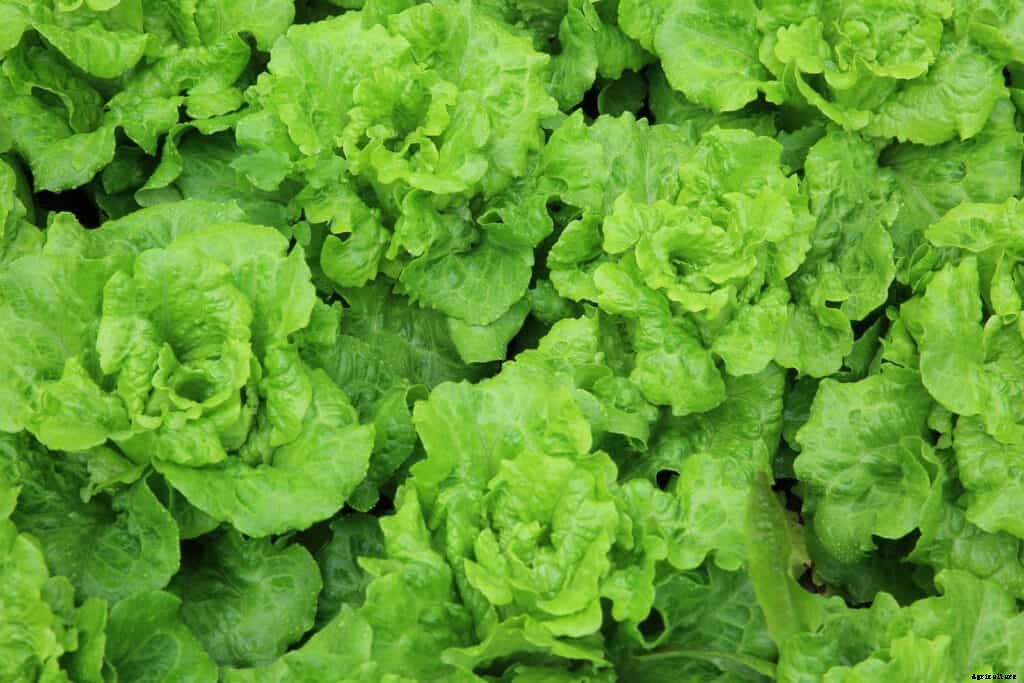
 Lettuce is a cool-season crop. Most lettuce varieties must mature before the weather gets warm. There are bolt-resistant, heat-tolerant varieties for growing in warm weather.
- Sow lettuce seed indoors 4 to 6 weeks before the average last frost date in spring; transplant seedlings to the garden when they are about 4 inches (10cm) tall.
- Direct sow lettuce in the garden 4 weeks before the average last frost date when the soil temperature is at least 35°F (1.7°C).
- Sow lettuce again when the weather cools in late summer or fall.
- Where the weather stays mild or warm most of the year, grow bolt-resistant, heat-tolerant varieties.
- Where the weather gets cold in winter, time lettuce planting to bring the crop to harvest before the first fall frost or grow lettuce through the winter under a plastic tunnel or cold frame.
- Lettuce will be ready for harvest 65 to 80 days after sowing depending on the variety.
Types of Lettuce
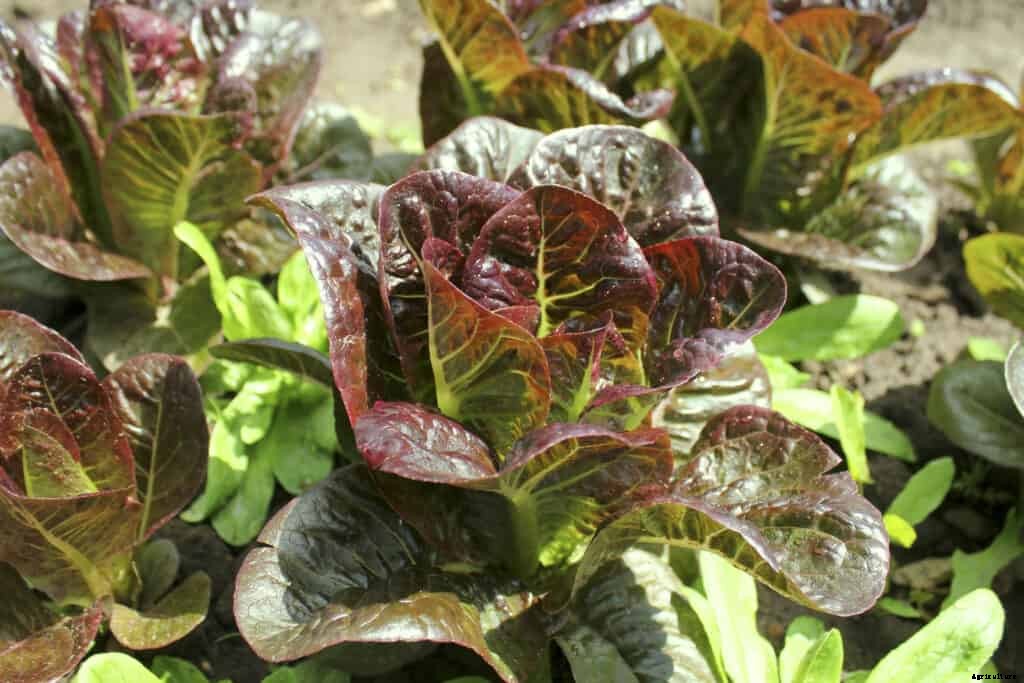
Lettuce is a fast-growing, hardy annual with either loose or compact growing leaves that range in color from light green to reddish-brown.
- Leaf or Looseleaf lettuce form loose, circular pattern, compact heads; leaves are yellow, green, red, or purplish; leaves can be frilly or smooth. Looseleaf lettuce comes to harvest in 40 to 50 days.
- Butterhead lettuce, also called Bibb or Boston lettuce, form loose round heads with delicate green to cream-colored leaves at the center. Butterhead lettuce has a soft and buttery texture and delicate flavor. Butterhead lettuce comes to maturity in 65 to 80 days; it can be very sensitive to high and low temperatures.
- Romaine or Cos lettuce form leafy green upright cylindrical or oval heads. Romaine lettuce comes to maturity in 80 to 85 days. Romaine lettuce is easy to grow.
- Crisphead or Iceberg lettuce form firm, compact heads of pale green, overlapping leaves. Crisphead lettuce comes to harvest in 80 to 90 days. Crisphead lettuce requires more space than other types of lettuce and can be finicky when it comes to water.
- Celtuce or Stem lettuce form loose leafy tops on stalks that resemble celery. Leaves are eaten as greens and stalks are eaten like celery. Celtuce comes to harvest in 65 to 90 days.
Where to Grow Lettuce
- Grow lettuce in full sun or partial shade. Use shade cloth to protect lettuce from very warm or hot weather.
- Lettuce prefers well-worked, well-drained soil that is moisture retentive.
- Add 4 inches (10cm) or more of aged compost or commercial organic planting mix to planting beds in advance of planting. Turn the soil to 6 inches (15cm) deep.
- Lettuce prefers a soil pH of 6.0 to 6.8.
Lettuce Planting Time Through the Year
- Lettuce is a cool-season crop that must come to harvest before the weather gets warm.
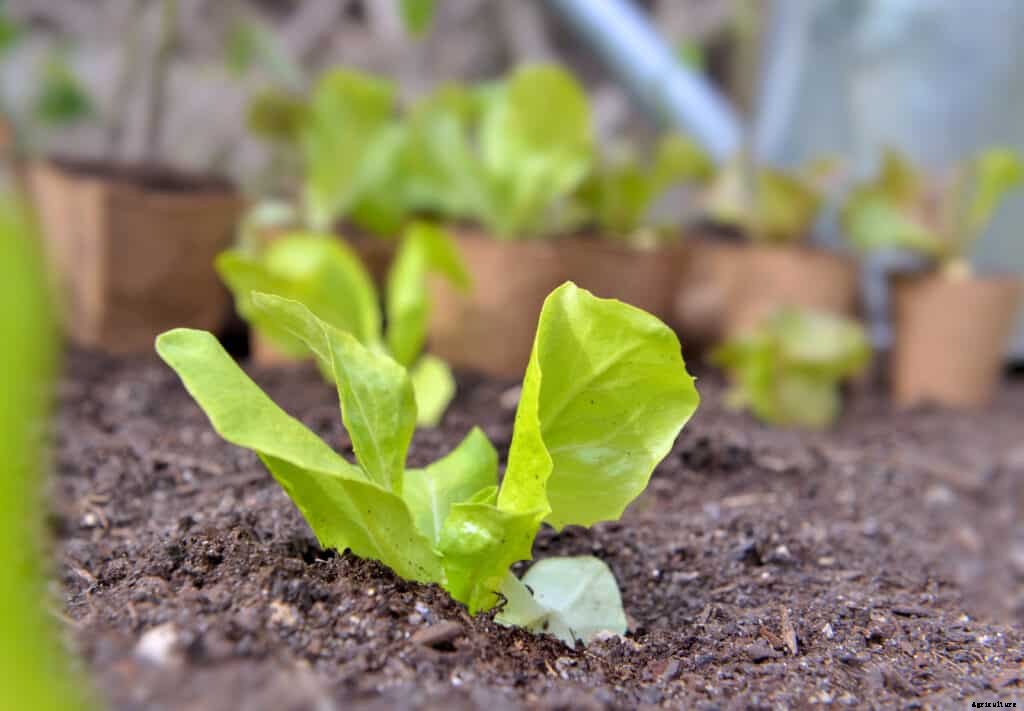
- Sow lettuce seed indoors 4 to 6 weeks before you plan to set transplants in the garden—commonly 4 to 6 weeks before the last frost in spring.
- Transplant seedlings to the garden when they are about 4 inches tall but not before night temperatures remain above 30°F (-1.1°C).
- Direct sow lettuce in the garden when the soil temperature is at least 35°F (1.7°C) Lettuce seed will not germinate in soil cooler than 35°F (1.7°C).
- Sow lettuce every three weeks for a continuous harvest. As temperatures warm sow bolt-resistant, heat-tolerant varieties.
- Eight weeks before the first expected frost in autumn, switch back to cool-weather lettuce varieties.
- In mild-winter regions, grow lettuce from autumn through winter into spring. Sow succession crops every three weeks through the winter.
- Lettuce will be ready for harvest 65 to 80 days after sowing depending on the variety.
Planting and Spacing Lettuce
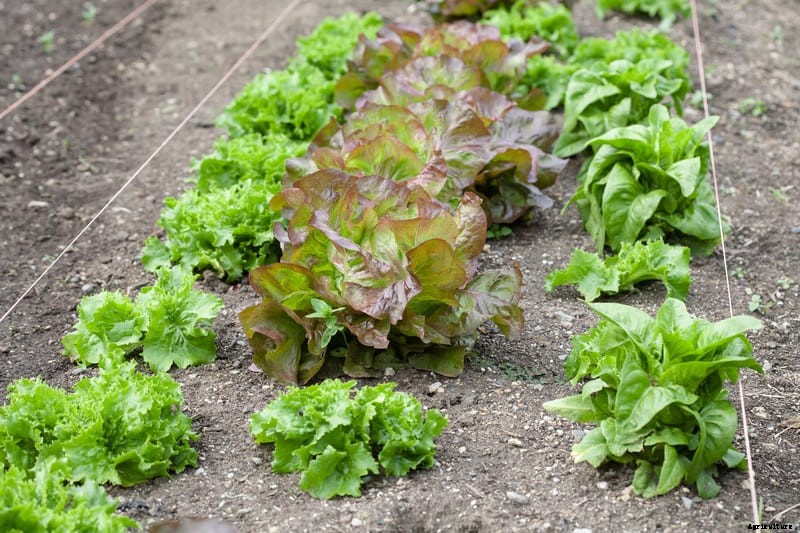
- Sow lettuce seeds ¼ inch (6mm) deep in wide rows. Sow bolt-resistant lettuce ½ inch (12mm) deep.
- To prevent soil crusting, sprinkle finely sifted compost or an organic potting soil over seeds.
- Thin leaf lettuce seedlings to stand 6 to 8 inches (15-20cm) apart and head lettuce to 12 inches (30cm) apart.
- Space rows 18 inches (45cm) apart.
- Lettuce must be thinned; lettuce that is too crowded will bolt.
- Transplant rooted thinnings to another row or spot; transplanted lettuce will be set back a couple of weeks but it will come to harvest.
- Plant 6 to 10 heads per person in the household.
Container Growing Lettuce
- Lettuce grows well in containers.
- Grow a single head of lettuce in a 6-inch (15cm) container; set lettuce in larger containers on 10-inch centers.
- Lettuce is heat sensitive so move containers to cooler spots if the temperature rises.
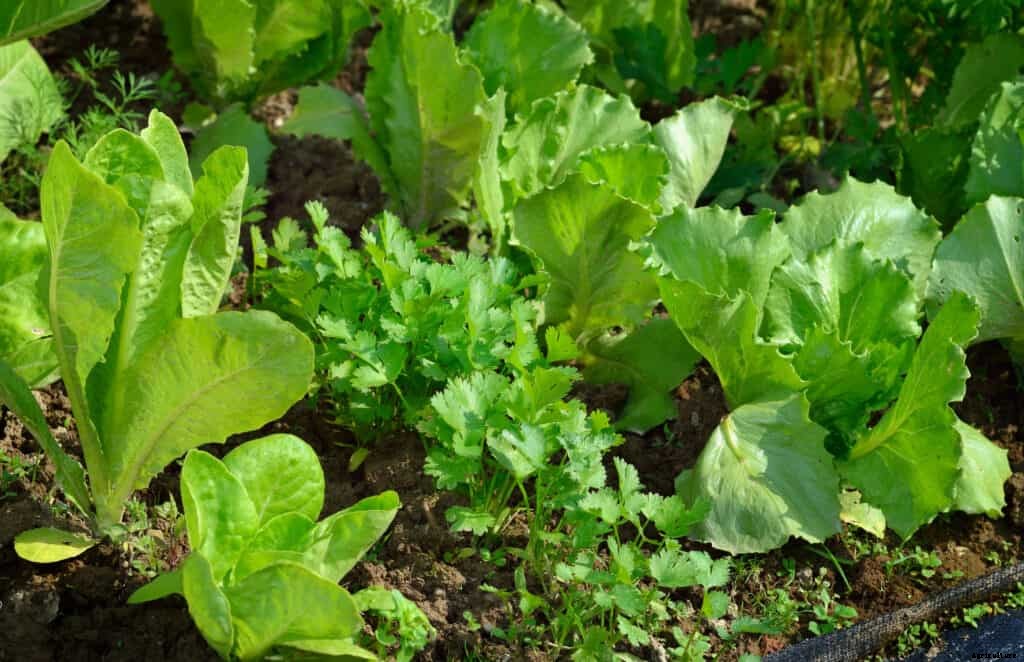
Companion Plants for Lettuce
- Grow lettuce with carrots, cucumbers, radishes, strawberries, and herbs including cilantro.
Caring for Lettuce
Feeding Lettuce
- Feed lettuce with compost tea or manure tea every two weeks throughout the season.
- You can also feed lettuce with aged compost or a commercial organic planting mix added as a mulch or side dressing around plants.
Watering Lettuce
- Do not let shallow-rooted lettuce plants dry out. Keep planting beds evenly moist but not soggy.
- Regular, even watering is required to form heads.
- If the rain comes to the garden often mulch with straw around the base of plants to keep muddy soil off the leaves.
More on how to grow lettuce: Lettuce Growing Tips.
Lettuce Care
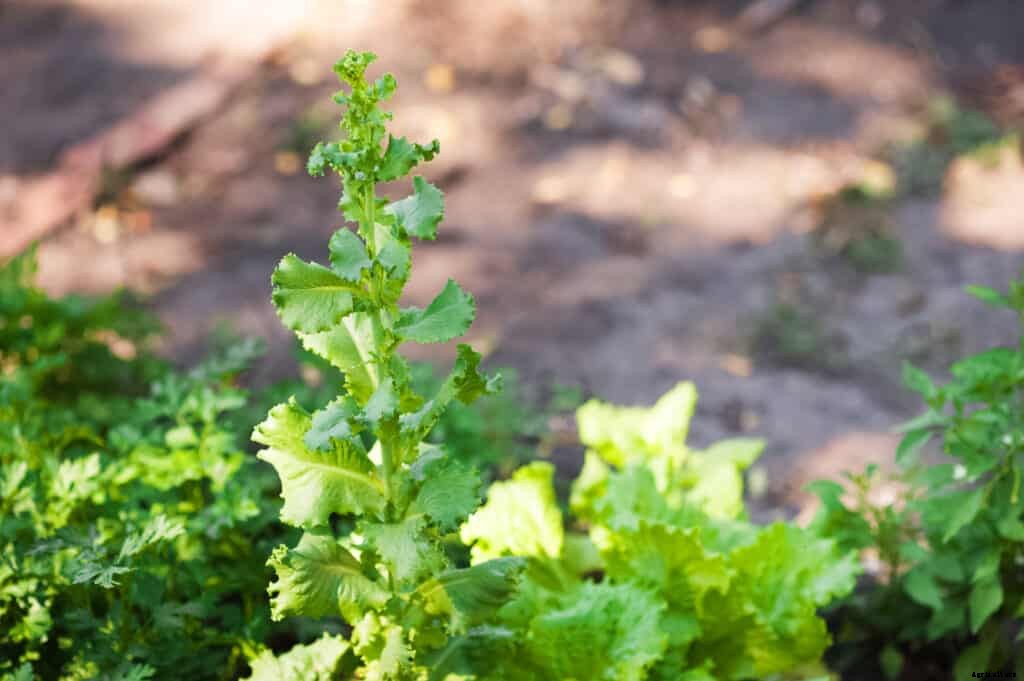
- Long hot sunny days will cause lettuce to bolt–send up a flower stalk–and go to seed. After bolting, leaves will be bitter flavored.
- Use shade cloth to partially protect lettuce from warm weather. (Place bitter tasting lettuce in the refrigerator for two and it will taste less bitter.)
- Protect lettuce from cold nights or frost with cloches or row covers.
About lettuce and heat: Lettuce Bolting.
Lettuce Pests
- Lettuce can be attacked by aphids, cutworms, leafminers, cabbage loopers, slugs, and snails.
- Spray aphids way with water; put a collar around each plant to discourage cutworms; trap slugs and snails with a saucer of stale beer set flush to the soil.
- Spray cabbage loopers with Bacillus thuringiensis or neem oil.
- Leafminers are the larvae of a fly; exclude the fly from laying eggs by protecting plants with floating row covers. Pick off and destroy leaves with leafminer tunnels.
Lettuce Diseases
- Lettuce has no serious disease problems.
- Root and collar rot can occur where the soil stays wet.
Harvesting and Storing Lettuce
- For the best flavor and crisp texture pick lettuce when you need it and use right away.
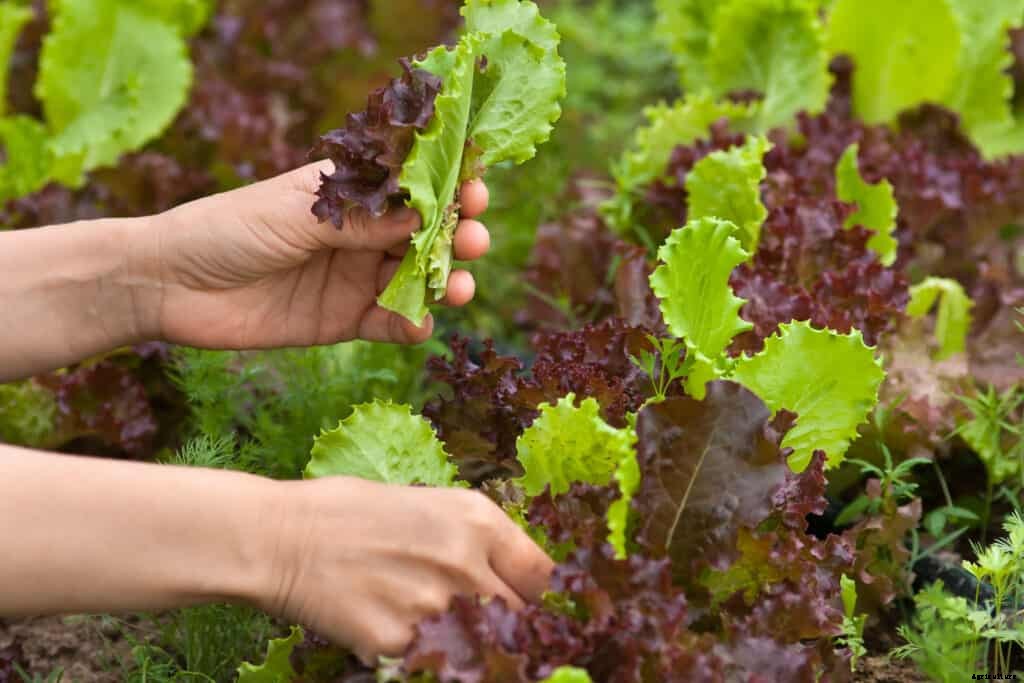
- For loose-leaf varieties, cut outer leaves on a cut-and-come-again basis and allow inner leaves to remain and develop. You can harvest the whole plant at once by cutting it off at ground level.
- Harvest crisphead, cos, and butterhead lettuce when the heads are firm and mature. Cut heads at the crown just above soil level.
- Harvest lettuce in the cool part of the day so that it does not wilt immediately. Chilling will crisp up wilted leaves.
Storing and Preserving Lettuce
- Crisphead lettuce will keep in the refrigerator for up to 3 weeks.
- Loose-leaf, butterhead, and romaine lettuce will keep in the refrigerator for 2 weeks.
Lettuce Varieties to Grow
There are dozens of varieties of each type of lettuce. Ask your cooperative extension for specific recommendations for your region.
- Loose-Leaf: ‘Black-Seeded Simpson’ (45 days); ‘Grand Rapids’ (45 days); ‘Oakleaf’ (50 days); ‘Salad Bowl’ (45 days); ‘Ruby’ (45 days); ‘Red Sails’ (45 days).
- Butterhead: ‘Big Boston’ (75 days); ‘Buttercrunch’ (75 days); ‘Summer Bibb’ (62 days).
- Romaine or Cos: ‘Parris Island Cos’ (73 days); ‘Valmain’ (85 days).
- Crisphead or iceberg: ‘Great Lakes’ (95 days); ‘Ithaca’ (75 days).
- Celtuce (80 days).
Lettuce types explained: Five Types of Lettuce.
About Lettuce
- Common name: Lettuce, crisphead lettuce, Butterhead lettuce, stem lettuce (celtuce), leaf lettuce, cos, romaine
- Botanical name: Lactuca sativa
- Origin: Near East


