
Welcome to Modern Agriculture!

Aquaculture is a major part of India’s economy and employment. India is one of the largest producers of freshwater fish in the world, accounting for more than 10% of the worldwide fish diversity. India ranks second in the world when it comes to fish production and fish farming.
Indian fisheries and aquaculture are important food production fields, providing food baskets with nutritional protection, contributing to agricultural exports, and engaging about 14 million people in various activities. Since independence, the country has shown steady and sustained increases in fish production, with diverse resources ranging from deep seas to mountain lakes and more than 10% of the global biodiversity in terms of fish and shellfish species.
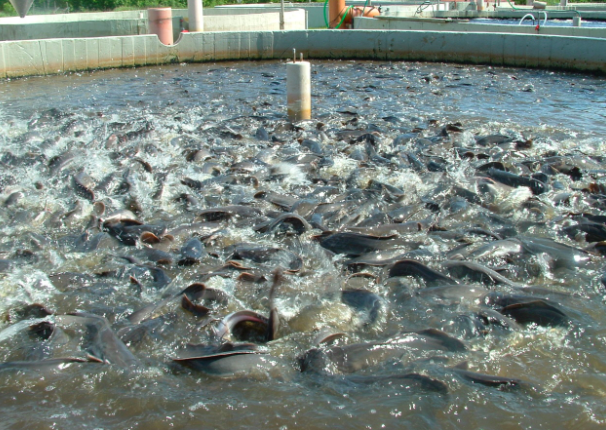
How to do Fish Farming in India?
The fish farming industry of our country also has great exporting potential. Fish and fish products have currently emerged as India’s largest agricultural export group, with a quantity of 10.5 lakh tonnes and a value of 33,442 crores. This accounts for about 10% of the country’s overall exports and almost 20% of the country’s agricultural exports. In 75 countries around the world, more than 50 different types of fish and shellfish products are exported.
In 2006, the Central Government of India launched a dedicated fisheries organization under its Ministry of Agriculture. Special efforts have been made to facilitate extensive and intensive inland fish farming, modernize coastal fisheries, and enable deep-sea fishing through joint ventures. These activities have resulted in a more than four-fold increase in the production of coastal fish in FY 1950 to 3.35 million tonnes in FY 2013. Clearly, fish farming is a very important part of Indian agriculture. Not only is it so essential to our country’s economy, but it also provides many people in the states with employment and jobs.
As already discussed, fish farming has proved to be an extremely profitable business for the country and its citizens. If you as well are thinking of starting your own fish farming business, here’s a brief on all the requirements and how you can start fish farming soon!
FISH FARMING TECHNIQUES:
Your first step should be to decide which type of fish you want to farm, where you want to farm and the techniques you want to use. There are primarily 2 techniques: The cage farming system, where the farmer does not own the water body and it prevents problems like overbreeding. The second is a Land-based system, where the farmer needs to build artificial ponds or tanks, providing them with a proper water supply and farms his fish in them.
CONSTRUCTING YOUR FISH CULTURE POND: Starting fish farming in fish culture is the most common way of farming fish culture. In an enclosed area, water is stored by artificially created ponds where aquatic animals such as finfish and shellfish are reared. The ponds can be filled with canal water, rainwater, bore well water, or other water sources. But there are certain things one needs to keep in mind when building the pond, like selecting land that has a high water-holding capacity, the soil should have a neutral pH, the pond has proper inlets and outlets, it should be stated in a low-lying area, etc.
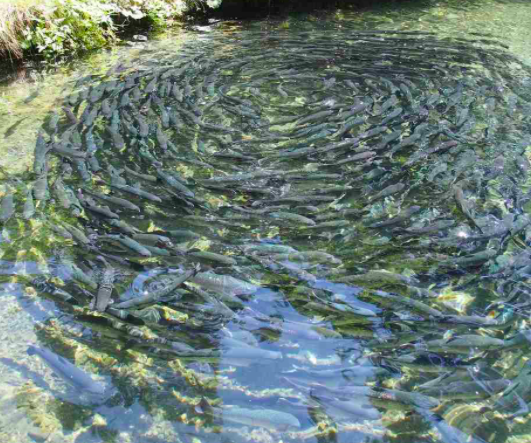
MATCHING THE GUIDELINES: In order to start a fish farm, you need to make sure that you match and follow the guidelines of the Steering Committee of Fisheries Agriculture. These guidelines are set by the Ministry of Agriculture and are the basis on which the inspections are carried out.
REGISTRATION: Your next step should be to register for a fishing license and apply for all forms. For e.g., if you wish to establish fish hatcheries, farmers will have to get approval from the Steering Committee.
KEEPING A RECORD: It is advisable for all fish farmers to keep a day-to-day record of things like the healthy growth of fish, source of seeds, farm stocking, sampling details, etc.
These are some basic steps that will help you get help in where to start. The most important step is to attain your fishing license, which has a number of requirements and steps, the details of which can easily be found online!
Though carp are the most important freshwater species in India, the majority of production is contributed by shrimp from the brackish water market. Over 90% of total Indian aquaculture production is accounted for by the three major Indian carp, namely Catla (Catla Catla), rohu Labeo (Labeo Rohita), and mrigal carp (Cirrhinus mrigala). Three exotic carp, namely, silver carp (Hypophthalmichthys molitrix), grass carp (Ctenopharyngodon Idellus), and common carp (Cyprinus carpio), were introduced into the carp polyculture system in the country during the 1970s and now form a second significant community.
The only species that has gained a lot of attention is the Philippine catfish, ‘magur’ (Clarias batrachus). Stinging catfish,’ Singhi’ (Heteropneustes fossilis) is another species of air-breathing catfish that is cultivated in swamps and derelict water bodies to some extent, especially in the eastern states. Attempts have been made in recent years to establish the culture of fish such as Pangasius pangasius, Pangasius sutchi, Oreochromis niloticus, Ompok pabda etc. Climbing perch (Anabas testudineus), murrels (Channa striata and C. marulius), etc., are other important species of finfish.
Among freshwater prawns, the most important species is the giant river prawn (Macrobrachium rosenbergii), followed by the monsoon river prawn, M.malcolmsonii. The Brackishwater aquaculture sector is primarily funded by the production of shrimp, as is the giant tiger prawn (Penaeus monodon), which is responsible for most of the production followed by the newly introduced Penaeus vannamei white leg shrimp.
In fact, within a very short span of time, the culture of this shrimp picked up on par with tiger shrimp. While India has many other potential finfish and shellfish species, its development is still of very low importance. Green mussel (Perna viridis), Indian brown mussel (Perna indica), Indian backwater oyster (Crassostrea madrasensis), Japanese pearl oyster (Pinctada fucata), and seaweed species such as Gracilaria edulis are the main farmed species in seawater.
Types of Fish Farming
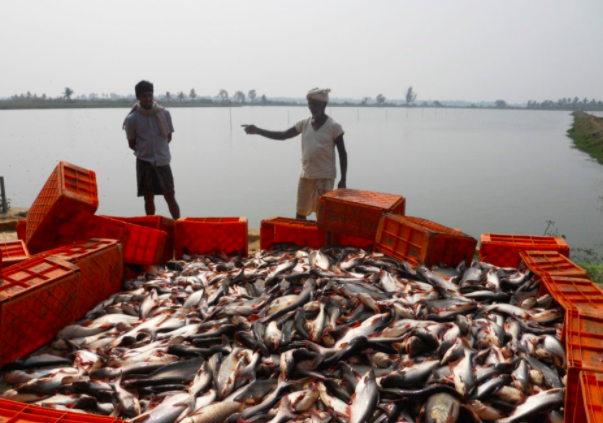
How to farm fish better?
Here are some steps that can help you expand your fish farm, make your business even more commercial and make the fishes you produce better!
Clearly, fish farming is a very important part of the Indian economy and extremely essential to the food production and employment conditions of our country. Over the years, fish farming has proved to be one of the most successful businesses to venture in and every person can make it big!


