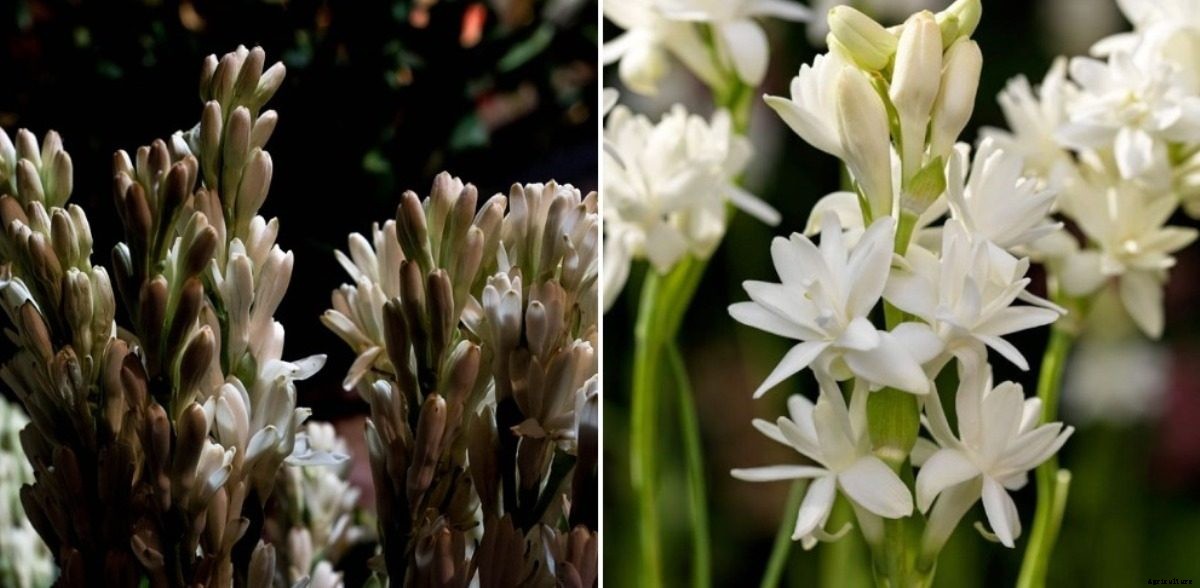
Introduction: Hello Gardeners and Plant lovers today we are here with an excellent information of growing Rajanigandha at home. Rajanigandha produces a heavily scented flower enjoyed by many gardeners and sometimes used in perfume. A perennial bulb native to Mexico, it will grow in cool to tropical regions, with extra precautions required for frosty winters. Rajanigandha is a member of the Agavaceae (Agave) family of plants. The scientific name of Rajanigandha is Polianthes tuberosa.
Rajanigandha is also called Nishigandha, tuberose or Polianthes tuberosa. Rajanigandha is a perennial plant related to the agaves, extracts of which are used as a note in perfumery. Tuberose plant is called as Rajanigandha in India, which means ‘Fragrant at Night’.
The Rajanigandha is a native of Mexico and is heavily used in the manufacture of various types of perfumes. Its sweet fragrance is used to make scented candles, soap, and some essential oils. Tuberose bulbs do well when planted in pots and containers. They can be used as accents in mixed beds or used for borders in your garden.
A step by step guide to growing Rajanigandha at home
Rajanigandha flowers grow on spiking stems that stalk up to 3 feet high. The beautiful, white, 10-inch tubular-shaped flowers grow between sword-shaped leaves. There are both single and double flowering varieties to select. Compared to other plants, Rajanigandha plants take more time to develop and to produce flowers.
Prepare the soil for growing Rajanigandha
Rajanigandha can be grown on a wide variety of soils ranging from light, sandy loam to clay loam. It can be effectively grown as a commercial crop even in those soils which are affected by salinity and alkalinity conditions if better agronomical practices are adopted.
You should not miss the Growing Rambutan Tree Indoors from Seed.
Fertile, loamy and sandy soils having a pH in the range of 6.5 to 7.5 with good aeration and drainage are ideal for growing tuberose. A place protected from strong winds is the soil is preferable.
Rajanigandha needs well-draining, highly nutritious soil. To develop your garden soil, mix in organic material such as peat moss, compost, or old, decomposing manure. Pile this mixture up 2 to 3 inches above the original soil surface to raise it above pooling water.
Select a sunny location
Plant in a location that gets full sun for about 6 to 8 hours during the day. Rajanigandha is native to hot climates, and will only need to be moved to bright partial shade if it shows signs of withering or drying before the end of the growing season.
Growing Rajanigandha at home
Rajanigandha is grown from its bulbs during the spring season when the temperature is not so low. This plant belongs to hotter parts of the world and prefers temperature range above 15°C. It can be grown in soil or pots.
Rajanigandha can successfully be grown in pots, borders, beds or containers. Plant Rajanigandha bulbs in spring after all danger of frost are gone from your area. Rajanigandha flowering bulbs like high temperatures and cannot be left in the ground throughout the year.
Find a place that gets full sun for 6 to 8 hours during the day time and doesn’t forget to choose a position where you and other family members will get the most from the delightful fragrance once the Rajanigandha flowers started blooming.
Dig a hole a few inches or centimeters deep for inserting the bulb if you have a cluster of bulbs, plant the entire clump, leaving 2 to 3 inches of soil above the clump. Situate bulbs about 6 to 8 inches apart to allow proper growth.
You may use a large, well-draining pot or container instead of a raised bed for growing Rajanigandha.
Rajanigandha bulbs are best planted in early spring after the last frost, but this requires a warm climate with a growing season at least 4 months long.
Plant Rajanigandha bulbs in a spot where they will receive a full day of sun. Growing Rajanigandha prefer to be kept on the dry side and need rich well-drained, somewhat sandy, soil. If you have a shorter growing season, start the Rajanigandha indoors in early spring and transfer once night temperatures outdoors are above 60ºF.
Rajanigandha bulbs needed to be planted at a depth where they will have two inches of soil above their heads and spaced approximately eight to ten inches apart. Water thoroughly after planting and then at regular intervals if natural rainfall doesn’t happen weekly. Also, Rajanigandha is a big eater and needs plenty of 8-8-8 fertilizer during the growing season to do well.
Water sparingly until plants emerge
As Rajanigandha grows, provide roughly 1–1.5 inches of water once a week. Rajanigandha prefers this to more frequent watering in smaller amounts.
Maintain the soil fairly dry, but water before it dries out fully. Within a few weeks, root systems will develop that allow the plant to handle more water.
Reduce watering if rain occurs, so the Rajanigandha only receives a total of approximately 1–1.5 in. of water each week.
Take care not to overwater, as Rajanigandha rots easily (the reason you need well-draining soil).
You may also like the Growing Wheatgrass in Hydroponics.
Growing Rajanigandhain pots
Here we discuss growing Rajanigandha in pots;
Fill a 1-gallon pot half full with moist potting soil for growing Rajanigandha. Use a pot or container with bottom drainage holes and a drip tray to allow for excess moisture drainage. Fill your pot with good quality, well-drained soil. Almost any commercially obtainable potting medium will work fine. Make sure there are adequate drainage holes; Rajanigandha must not sit in waterlogged soil.
Site your Rajanigandha where they’ll receive full sun. In very sunny, hot areas light shade is fine. Plant the entire clump with 2-3 inches of soil above the top. Place clumps 8-10 inches apart.
After planting, water your Rajanigandha generously to settle the soil around the bulbs. Roots and top growth will obtain within a few weeks. Water regularly during the growing season if rain does not occur regularly; 1-1.5 inches of total water per week is a good general rule of thumb. Empty the excess water from the drip tray if it rises above the gravel stage after watering.
Rajanigandha plants are heavy feeders and appreciate periodic applications of 8-8-8 fertilizer while they are actively growing.
Water regularly during the growing season if rain does not occur, keeping in mind that weekly deep waterings are better than lighter drinks every day or two.
Rajanigandha flower in mid to late summer, typically 90-120 days after planting. When in bloom, feel free to clip stems for bouquets and this will not hurt the plants and will provide a supply of extraordinarily fragrant flowers.
Rajanigandha flourishes with generous feeding during the active growth phase, add complete plant food once growth first appears and repeat fertilizing every 4 to 6 weeks.
Place the potted Rajanigandha in a window that receives all-day sun exposure. Carefully maintain temperatures between 65 and 85 degrees at all times.
Remove the rhizomes from the pot each fall after the Rajanigandha finishes flowering. Break the small rhizomes off the large essential rhizome. Dispose of the large rhizome and then store the smaller ones in dry peat moss in a cool, dark location until spring planting.
Care of Rajanigandha Bulbs
When caring for your growing Rajanigandha, water thoroughly after planting and then at regular intervals if natural rainfall doesn’t occur weekly. Also, tube Rajanigandha rose is a big eater and needs plenty of 8-8-8 fertilizer during the growing season to do well.
Your Rajanigandha flowers will bloom in mid to late summer. Rajanigandha plants make lovely scented, cut flowers for use in bouquets and vases. Cutting the flowers will not damage your Rajanigandha plants as long as you use a sharp pair of shears during their removal.
After the bloom is gone from your Rajanigandha plants, leave the foliage intact until it dies back naturally and continues watering as usual. The foliage provides nutrition for the bulbs and if cut back, the bulb will not flower next year.
Once the leaves of your Rajanigandha plant have turned yellow, it is safe to cut them back. After the first light frost of the season carefully digs up your Rajanigandha bulbs to remove them.
Keep your Rajanigandha moist with the help of a 3-inch mulch layer.
Pests for growing Rajanigandha
Thrips and aphids are usually disrupting the Rajanigandha plant. Then, use general pesticides to fight them.
Harvest your Rajanigandha flowers
Flower harvesting can be done after 3 to 3.5 months of planting. For loose flowers, the individual flower is plucked regularly which are used for different purposes whereas for cut flower the spike is cut from the base so that longer spike is available. Depending on the purpose, Rajanigandha harvesting is done by cutting the spikes from the base or single flowers are harvested as they open day by day.
Benefits of Rajanigandha
Rajanigandha oil can relieve a person of stress and anxiety. It can calm down the agitated nerves by giving a soothing sensation.
The oil extracted from Rajanigandha can also help in reducing inflammations relating to the respiratory and nervous system.
This Rajanigandha essential oil also stimulates and increases blood circulation throughout the body.
Rajanigandha flowers have long been used in perfumery as a source of essential oils and aroma compounds.
Rajanigandha flowers are used in the perfume industry and also a diuretic and emetic activity. Bulbs are used as anti-gonorrhea, diuretic, emetic and curing rashes in the infant.
You may be interested in Nutrient Deficiency in Plants.