
Welcome to Modern Agriculture!

Introduction to Growing Coriander in the Backyard
Hi friends, today we came with an interesting and easy topic called growing coriander in the backyard. The scientific name of coriander is Coriandrum sativum. It is native of the Mediterranean region and grown in Andhra Pradesh, Tamil Nadu, Karnataka, Rajasthan, and Madhya Pradesh. Most of the production of coriander is being consumed locally and a smaller percentage goes for exports. The fruits have a fragrant odor and pleasant aromatic taste.
Coriander is an annual spice herb used in the kitchen. It is mostly grown for its fruit and green leaves to provide flavor in dishes. Dry seeds of coriander contain essential oils that are used in confectionery, to mask offensive odors in the pharmaceutical industry and for flavoring liquors. Green leaves are a good source of Vitamin C and are used for making chutney, soups, and sauces, etc. Coriander also has good medicinal value. Tamil Nadu, Karnataka, Madhya Pradesh, and Rajasthan are major producers of Coriander in India. So let’s dive and learn how to grow coriander in the backyard. Let’s get started!
This article includes the below list of topics:
Coriander has recently become a very popular herb to grow at home. Grown mainly for its green leaves, which are sometimes known as cilantro, and also its spicy seeds, this herb is a must in salads and as a fragrant green addition to Indian, Thai, and Chinese curries. The seeds are the main ingredient of curry powder.
Coriander adds a distinct, lively flavor to your food, and it’s easy to grow at home. Coriander grows best in sunny spots. You can expect the plants to grow about 12 to 18 inches wide and 18 to 24 inches tall.
They have different uses and tastes, though both come from the same plant. However, in different parts of the world, the plant is known as coriander & seeds called coriander seeds. Cilantro is the stems and leaves of the coriander plant. When the plant flowers and turns into seed the seeds are then called coriander seeds.
Following are the varieties of coriander:
Calypso: Full plants that are slowest to bolt
Cruiser: Large leaves and full stems with an upright plant habit
Leisure: Attracts beneficial insects and is a standard type of cilantro
Santa: Slow-bolting plant with bushy leaves
CO 1: It was released by TANU, Coimbatore. The plant is taller with many umbels per plant. It is suitable for green and grains. Duration 110 days.
CO 2: High yield, dual-purpose variety, duration 90-110 days.
CO 3: Coimbatore. High yield, dual-purpose, the grain is medium-sized, seed oil content is 0.38-0.41%. Duration 103 days.
Gujarat Coriander-1: High yield, more number of branches, seeds are bolder and with a greenish color. Duration 112 days.
Gujarat Coriander-2: High yield, dense, foliage, more branches, umbels large size, grain purpose variety, bold seeds, no lodging. Duration 110-115 days.
Rajendra Swati: Yield potential is high, suitable for intercropping, fine seeded, rich in essential oil, and resistant to stem gall disease. The duration is 110 days.
Sindhu: Medium duration variety with 95-100 days duration. Grain is medium-sized.
Rcr-41: It is tall, erect, suitable for irrigated areas, and resistant to stem gall. Duration 130-140 days.
Swathi: Short duration variety that is 80-85 days. Escapes powdery mildew.
Sadhana: High yielding and suitable for rainfed areas. Resistant to aphids and performs well in moisture-retentive black soils. Duration 95-105 days.
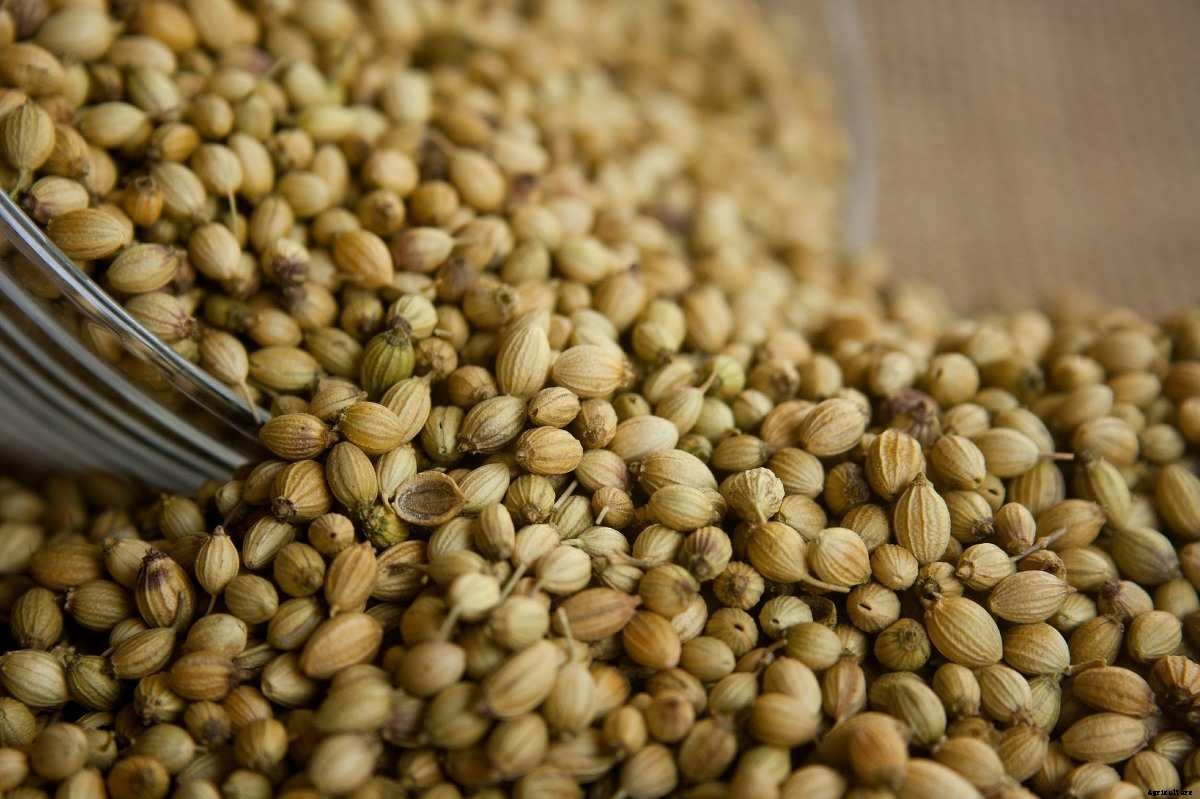
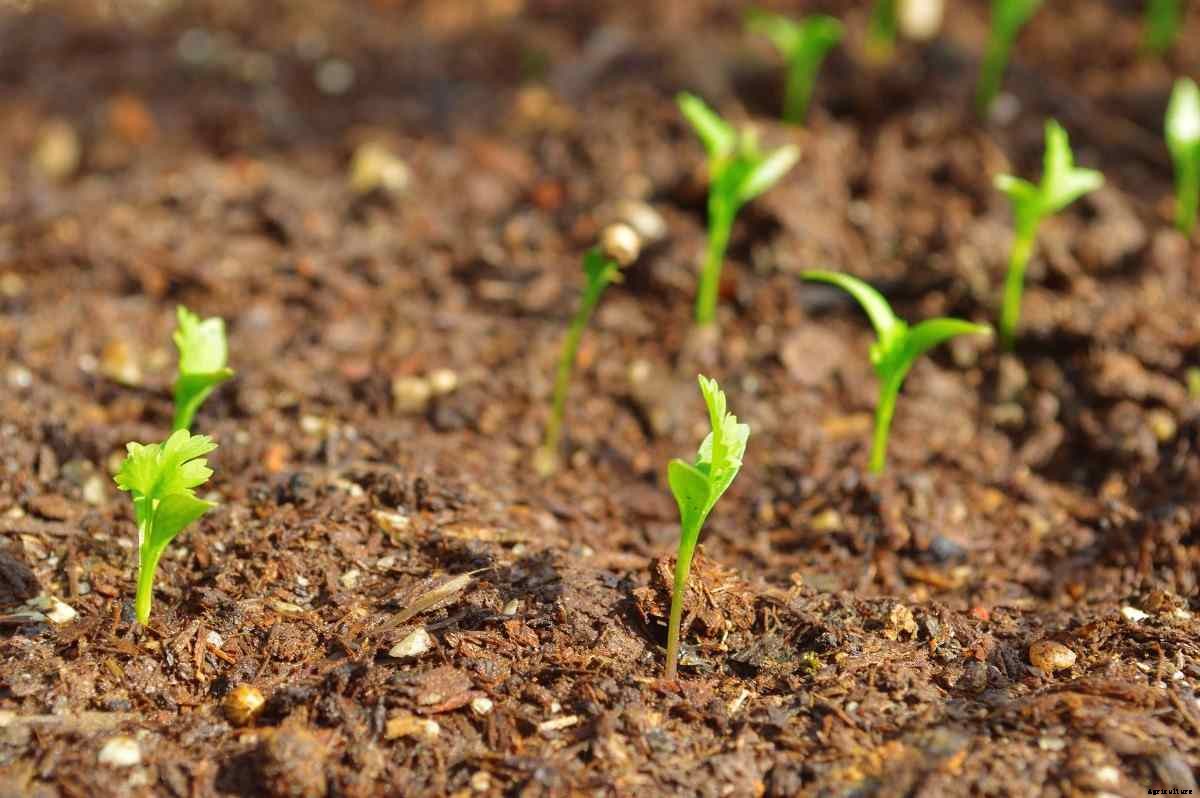
The propagation of coriander is through seeds. In a garden or a container or a pot, seeds can be sown directly. Plant the seeds ½ inch to 1 inch deep, 2 to 3 feet apart in rows and rows should be 15″ apart. Coriander traditionally germinates very slowly and can take as long as 21days to emerge. Make sure to water regularly and that the soil is warm enough for speedy germination.
It can grow in all types of soil, if provided sufficient organic matter is applied but well-drained loamy soils are suitable for good growth. pH range of soil for coriander should be 8-10. Coriander needs extra fertile soil if growing indoors. Under rainfed conditions, it is best suited to grow in black cotton soils.
You should not miss this: Growing Organic Zuccuni In Containers.
It is a cool-season crop and a suitable temperature of coriander is between 10°C to 30°C. It can tolerate temperatures as low as 10°C, but if temperatures exceed 30°C it will start to bolt.
A place away from direct sunlight will be more desirable. The soil should be mixed with cow dung and row leaves. If the soil has fertilizer content, then adding a bit of lime will be good.
Land should be prepared well by giving 2-3 deep plowing followed by planking to make uniform and leveled beds.
Water the plants, the soil should not dry when you touch. Water thoroughly until the water comes out the drainage holes. Keep the soil regularly moist, but not soaked. Good drainage is essential, as it has deep roots. Aim for about 1 inch of water per week.
Once the plant reaches a 2-inch height, you can apply fertilizers. Diluted cow dung water can be applied in the first stage. Nitrogen fertilizers are also good for the plants. As the plants grow, the frequency and amount of water should be brought down gradually. Also, never allow the plants to grow in thick bunches. Any weeds therefore should be uprooted in their initial stage itself.
Technically a fruit containing two seeds in it is a Coriander seed. So the round thing that you can see will contain two seeds in it. Each seed will grow into a coriander plant. The fruit can be split and sown or sown whole. Since it scarifies the seed as it increases the germination rate of coriander when split.
Coriander is directly sown. So, there is no specific step for planting coriander. The sowing and planting of coriander seeds happen at the same time. If you are growing coriander in containers, then you can move the container around to get good lighting etc.
By following the below tips you can take care of coriander:
Pests and diseases of coriander are mentioned below:
Aphids
Control
Cutworms
Control
Soft rot
Near the base of petioles, there will be small water-soaked lesions which become soft, sunken, and brown
Control
Powdery Mildew
Control
Wilt
Control
Bacterial leaf spot
Very small water-soaked spots between leaf veins that enlarge and turn dark brown to black, stems may have elongated dark streaks, inflorescences yellowing and turning brown and blighted, water-soaked lesions on fruit.
Control
Stem rot
Infected seeds fail to germinate, rapid death of germinating seeds before emergence, water-soaked reddish lesions girdling the stem at the collar region results in the collapse of emerged seedlings.
For Coriander
We can pluck the leaves once the plant reaches 4 to 5-inch height. The leaves of the herb will be least bitter and tender at this height. Both the leaves and the stalks can be used. Remember, the leaves should be pulled out only from the lower branches. This can be done once in two to three weeks.
We should also take care not to pluck more than two-thirds of the leaves as this will curtail growth. For cooking, instead of lower ferny-type leaves, use upper, new, and finely cut leaves. Like culinary herbs, Cilantro is not normally saved and dried. It loses almost its entire flavor when dried.
For Coriander seeds
Harvesting coriander seed is an easy affair. That too large seeds are very easy to harvest. Harvest on a dry day. When the seed heads turn brown and start to crack when pressed, then you must cut the top of the stems. You must harvest the pods before they release seeds into the garden. Place seedpods in a paper bag after stems are cut, so that the seeds will be caught. Finish the ripening process for a few weeks in a dark, well-ventilated, cool place. you can take the bag, shake it and all the coriander seeds should fall off and you can pull out the bare stalk.
Facts about Coriander
In case if you are interested in this: Organic Mint Farming.
Happy growing:-)


