
Welcome to Modern Agriculture!

Introduction of Growing Bottle Gourd in the Backyard
Hi Readers, growing vegetables at home is becoming more popular these days. There are plenty of reasons as to why people like to grow vegetables, herbs, fruits, etc. in their garden. Some people worry about the use of chemicals/ pesticides in vegetables and fruits, while others like to be close to nature, and find it relaxing to work in the garden. Whatever may be the reasons for thinking about growing your vegetables; it should be fun for you, and not a chore.
The botanical name of bottle gourd is Lagenaria siceraria. Bottle gourd also is known as Calabash gourd, Squash, White flower gourd, Dudhi, Lauki, and so on. Bottle gourd contains about 96% of water. They are rich in dietary fibers, and are also a good source of vitamin B and contain iron as well. Bottle gourd is one of the lightest vegetables and it is very easy to digest.
The main goal of vegetable production in the home garden is to produce vegetables to support daily intake for the family members throughout the year. Bottle Gourd is one of the healthiest veggies. It has lots of health benefits, is easy to grow, and tolerant to high temperatures, making it a great vegetable for the Indian summers.
The Bottle gourd is typically grown for non-food use. When they are mature the fruits are decorative, hardwearing, and waterproof. The growing gourd may be constricted with bands to form any desired shape. Designs scratched into the surface when the rind is still soft, will scar and remain in the mature fruit. Dried and waxed, the bottle gourd is waterproof and valuable for musical instruments, water jugs, kitchen equipment, planters, masks, or floats for fishing nets. Because of its mild flavor, like summer squash, it is very versatile in the diet of humans and the plants with young gourds may even be fed to animals.
Some popular varieties of bottle gourd are listed below:
Punjab Bahar: It is green in color and has round fruits.
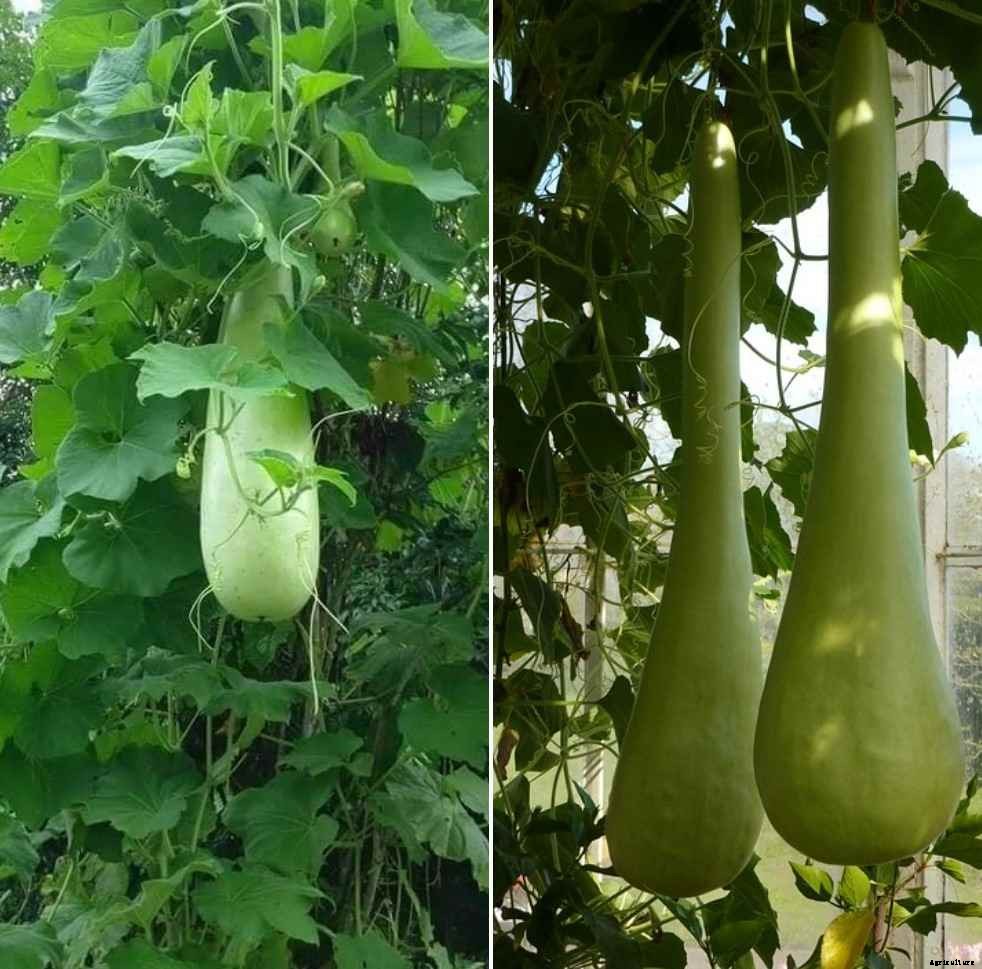
Punjab Long (1997): The plants have shining, profusely branched bearing cylindrical and light green color fruits. It has good long-distance marketing quality.
Punjab Komal (1988): It is an early maturing variety that gets mature in 70 days after sowing. It is a light green color and has medium-sized fruit which bears 10-12fruits per vine. It is tolerant to Cucumber Mosaic Virus (CMV).
Punjab Barkat: Released in 2014. They have long fruits, light green color, and its cylindrical shape. The variety is moderately resistant to mosaic disease.
Bottle gourd is a summer-growing vegetable. Raise the seedlings in a 4-inch pot indoors or a hot frosts free place (temperature at least 20°C) in-ground by sowing 2 seeds, half-inch deep. Keep the pot moist.
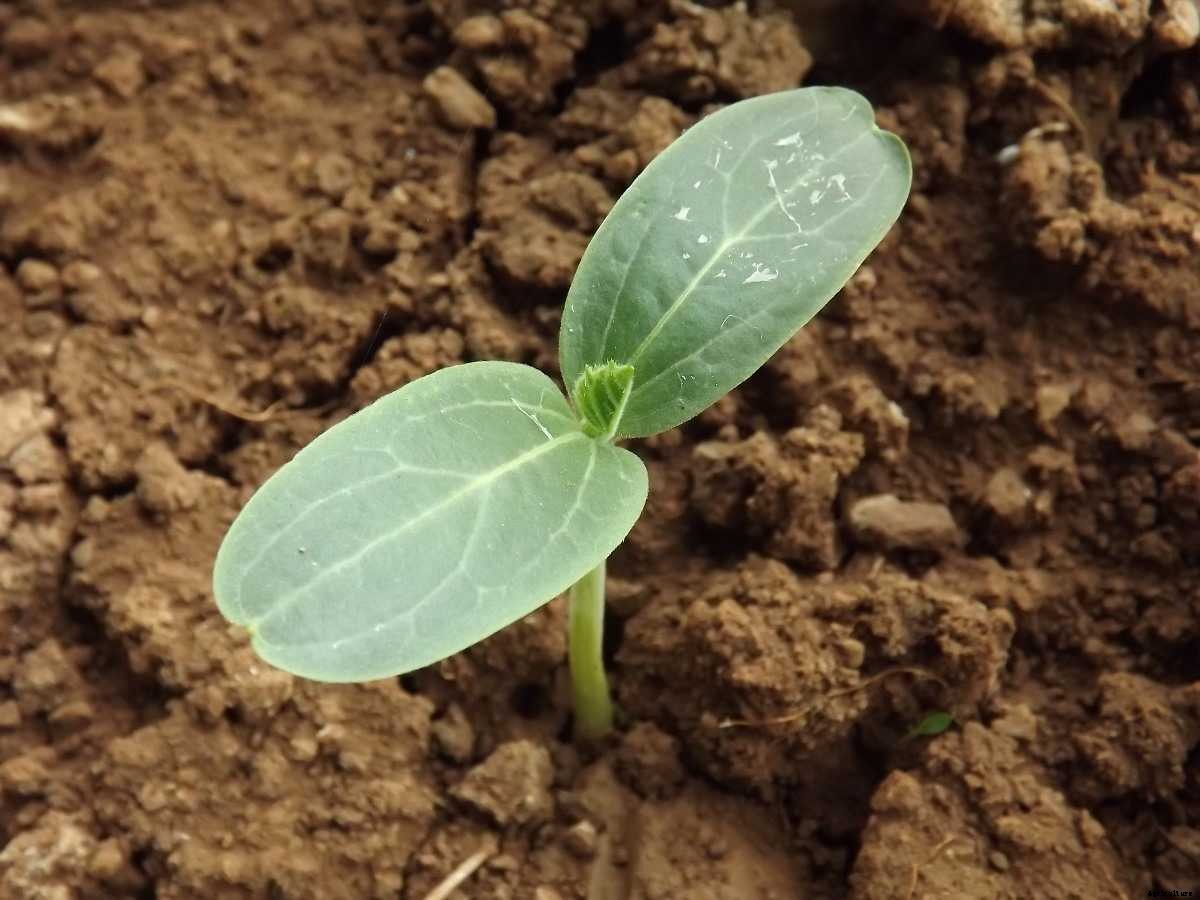
Fill your pot with the given growing medium and level the surface. Wet the soil with water to provide the right environment for seeds to germinate. Plant seeds about 1-2 inches deep in a group of 3 seeds then cover them with growing medium. Keep the soil moist by spraying water twice daily.
Bottle gourd can be grown in-ground or pot in your garden. If you plant Lauki in a pot, select a wide and deep pot, at least 50 cm diameter, also you can plant a bottle gourd type that grows very slowly or remains short.
You can grow bottle gourd in a pot, if you have only a small place, spread the vine on trellis or roof. Spread the plant on the fencing, if you want to grow bottle gourd on your terrace.
The bottle gourd seeds are slow in germination and may take from 7 to 25 days to germinate depending on the soil temperature. To speed up the germination, you can soak the seeds in water overnight. Use only the seeds that go to the bottom of the soaking bowl. When the seeds germinate and the plants grow to 2-3 leaves, transplant them to the final place. Discard the weaker plants.
It is easy to grow bottle gourd by seed sowing method throughout the year. Summer and monsoons are the best time to plant seeds. Buy bottle gourd seeds online. Seeds are sown directly in small pits or on raised beds which germinate in 7-8 days. Bottle gourd seedlings are very fast-growing and quickly form the habit of a climber.
Strong trellis support should be built for the climber to grow. Many gardeners let the plant trail on the ground or allow it to climb on the poles or roof of the house. Pinch off growing points of the young plant to induce branching. The side shoots will develop separate male and female flowers in the second month. After pollination, the female flowers have little gourds beneath them. If male flowers are plentiful, some of them can be removed.
Bottle gourd produces both male and female flowers. The white flowers mainly bloom at night and they drop off after pollination. The female flower changes into a bottle gourd, and this sets them apart from their male counterparts.
Your bottle gourd plant may have flowers but no fruits sometimes. None of the female flowers produce fruits, and they were dropping without growing into a bottle gourd. This is causing due to the failure of pollination as there was no bee activity in the garden area. Then you need to pollinate the bottle gourd by hand.
You should not miss this: Growing Ivy Gourd In Backyard.
Bottle gourd prefers sandy loam soil that is rich in organic matter with good drainage. The optimum soil pH of bottle gourd is 6.0–6.7, but plants tolerate alkaline soils up to pH 8.0.
Bottle gourd requires a minimum temperature of 18°C during early growth, but the optimal temperatures of bottle gourd are in the range of 24–27°C. The crop can tolerate low temperatures, but extreme cool temperatures will slow down growth and frost will kill the plant. The plants are adapted to a wide variety of rainfall conditions.
The land or main field should be prepared thoroughly by six to seven ploughings and the pH range in soil should be from 6.5 to 7.5 in bottle gourd cultivation. This vegetable requires good drainage. Adding organic matter will make the soil rich so that better yield with quality vegetable can be expected.
Check the soil once or twice daily for moisture loss. If it feels dry, it’s time to water. A healthy Bottle gourd plant uniformly needs water, so that the soil does not dry up. Proper watering at the proper time at the growing stage will encourage plant flowers and fruit. If not watered well, the plant will have weak produce.
For plants to grow well, it’s important to provide the right nutrients. The fertilizer for Bottle gourd should be high in phosphorous and potassium than nitrogen. Bottle gourd needs nitrogen to grow healthy, but excess nitrogen will encourage more leaves instead of fruit. An NPK fertilizer with a ratio of 6:10:10 or 4:8:5 can be used. Add 20g mix in the soil for each plant before planting.
Once the plants have reached at least 1/2 foot in height, it’s time to transplant them to a pot or open space. Before transplanting, keep one healthy plant and remove others. At the base of the soil, cut the weakest seedlings out. Be careful not to disturb the roots of the healthy plant. This process is called plant thinning and it’s a great way to ensure healthy growth.
After thinning, shift the entire biodegradable pot out in an open space or a container 18 to 24 inches deep. Bottle gourd grows well in sandy loam soil. By adding organic manure you can make the soil rich. This will give you high-quality vegetables. The plant can grow over 1 – 6 feet as a vine, so it needs solid support to climb. You can provide support by installing vertical trellis.
Pests and diseases of bottle gourd are relatively few. However, to prevent insects from laying eggs in the rind, mosquito netting may be draped over the vines. Since the flowers need insects for pollination, do not cover the plants until after the blossoms have dropped off. Major pests and diseases of bottle gourd are listed below with organic control.
Shoot and fruit borer
Spider mites and Aphids
Beetles and caterpillars
Fruit fly
Diseases of Bottle Gourd
Damping-off and Nematode
Leaf spot
Downey mildew
Powdery mildew
Bottle gourd plant care
Taking care of bottle gourd is as follows:
To control the weeds, 2-3 hoeings are required at the initial stages of plant growth. Weeding operations are carried out at the time of fertilizer application. Earthing up is also an effective way which should be carried out in the rainy season.
Particularly in the rainy season to prevent the fruit from rotting, the vines are trained to spread on bowers made from thin coconut rope and bamboo sticks and allowing the vines and foliage for better exposure to light and air.
The bottle gourd fruits harvesting should be done at the tender green stage, otherwise, hard seeds and coarse dry skin is not palatable for cooking and does not fetch a good price in the market. Depending upon variety and growing season, it takes 60-80 days after sowing for first harvesting. Upon attaining the marketable size fruits should be removed carefully from the vine with the help of a knife. It is desirable to pick the fruits within 3 days of shedding of small hairs present on the skin. In peak season, picking should be done at an interval of 3 or 4 days. The harvesting should be done during morning or evening hours.
Storing of bottle gourds should be in a cool and dry place for several weeks or until they are lightweight with a hard rind. Leave space between the gourds so air can circulate all sides.
In case if you are interested in this: Role Of Eathworms In Soil Health.


