
Welcome to Modern Agriculture!

Growing Organic Bottle Gourd
Hello friends, are you planning for growing organic bottle gourd? Well, you landed in the right place. The scientific name of Bottle gourd is Lagenaria siceraria and belongs to Cucurbitaceae (Cucumber family). It is also called Calabash, Dudi and it is popularly known as Lauki in India. It is a well-known and widely cultivated fruiting vegetable in the Indian subcontinent and around the world. Bottle gourd is one of the oldest cultivated crops. It is a trailing or climbing vine with white color flowers which open at night and hard-skinned fruits. When they are mature the fruits or Bottle gourd is hard-wearing, decorative, and waterproof. It is extensively grown in India and fruits are available throughout the year. The name Bottle gourd is due to the shape of fruit like Bottle. Fruits at the tender stage are used as a cooked vegetable and used for the preparation of sweets and pickles.
Generally, Bottle gourd cultivated in warm climates around the world. The Bottle gourd producers in India are Bihar, Uttar Pradesh, Haryana, and Madhya Pradesh. The milky green-colored fruits are available in several shapes and sizes; the long cylindrical and short round varieties are the most common Bottle gourds. In this article we also discuss the below topics about growing Bottle gourd;
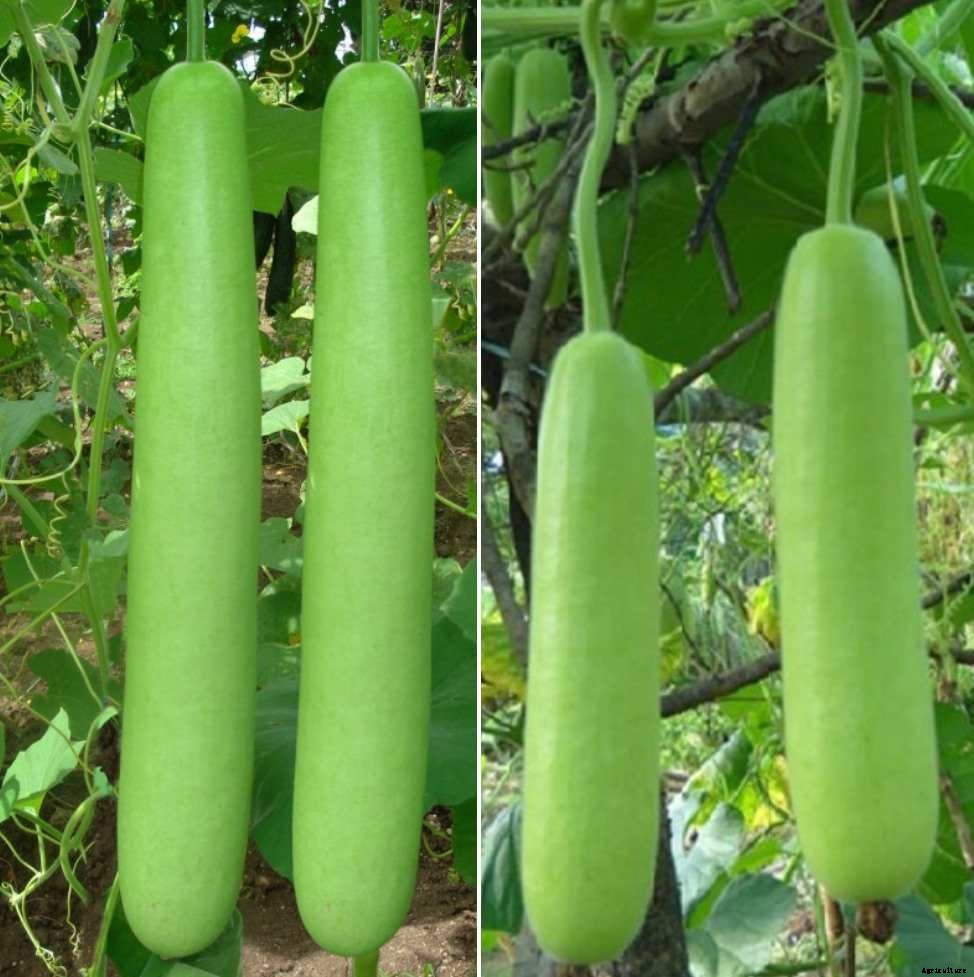
Bottle gourd is a popular and healthy annual vegetable in India. It is a long vine, whose flower is white color and the leaves come in bigger. Bottle Gourd is one of the healthiest vegetables. Bottle gourd contains full of water approximately 92% and minerals and it keeps your body hydrated. Bottle gourd has lots of health benefits, is very easy to grow vegetables, and tolerant to high-temperature levels, making it a great vegetable for the Indian summers. It can be easily grown in 14-inch containers or also in big-sized grow bags. Before planting Bottle gourd seeds add the good quality potting mixture to the container. For growing organic Bottle gourd, the organic vegetable mix is one of the best suited growing media. Grow one plant per container.
Organic farming shall be based on the below principles;
Popular varieties of Bottle gourd can be given below;
PKM 1 – The fruits are extra-long means 180-200cm
CO.1 – Selection from germplasm type. Fruits are with prominent Bottleneck at the top and fruits are pale green.
Punjab Barkat – This variety of Bottle gourd have long fruits, light green, and is cylindrical. The variety is moderately resistant to mosaic disease.
Punjab Komal – It is an early maturing Bottle gourd variety. And, it has medium-sized fruit which is light green and bears 10 to 12 fruits per vine. This Bottle gourd variety is tolerant to CMV (Cucumber Mosaic Virus).
Punjab Bahar – This Bottle gourd variety has round fruits and is green in color.
Other state varieties are;
Round varieties of Bottle gourd – PSPR (Pusa Summer Prolific Round), Pusa Manjri, and Punjab Round are the main round Bottle gourd varieties grown in Himachal Pradesh.
Long varieties of Bottle gourd – Pusa Summer Prolific round Bottle gourd variety are used in Himachal Pradesh for cultivation.
Bottle gourd requires good soil-rich drainage soil. Growing organic Bottle gourd in garden soil adds organic matter (compost, manure, or leaf mold) to improve soil structure. Bottle gourd is a typical warm-season vegetable plant. However, a crop tolerates a cool climate better than musk melon and watermelon, it cannot tolerate frost. Well, drained fertile silt loam is ideal for the cultivation of organic Bottle gourd. Bottle gourd is grown during the summer and rainy seasons. In places where water is not scarce, Bottle gourd is grown throughout the year.
The land is ploughed to a fine tilth and furrows are made at a distance of about 2.0-3.0 meters. After incorporating FYM (farmyard manure), seeds are sown in furrows at a distance of about 1.0-1.5 m between plants. When Bottle gourd is trained on bower, and then follows a spacing of about 3.0 x 1.0 m. In sloppy land, sowing seed is done in pits with 2-3 plants/pit. Soaking seeds about 12-24 hours in water or succinic acid (600 ppm) for 12 hours improves the seed germination process.
Sprouting stage – Bottle gourd seeds will germinate within the first 6-8 days or so tiny sprouts will be visible.
Cotyledons – The first two leaves will emerge in the second week of the germination process. These are false leaves known as cotyledons.
First leaves – In this plant, the first leaves will emerge above cotyledons at the end of the second week.
Seedling stage – Bottle gourd seedlings will start growing into a small plant by the second week onwards.
Thinning – After the 2nd week, keep only a single seedling at one spot, Cut off the weak, small & lagging seedlings with a pair of scissors.
In case if you miss this: Tomato Growing Tips, Ideas, Secrets and Techniques.
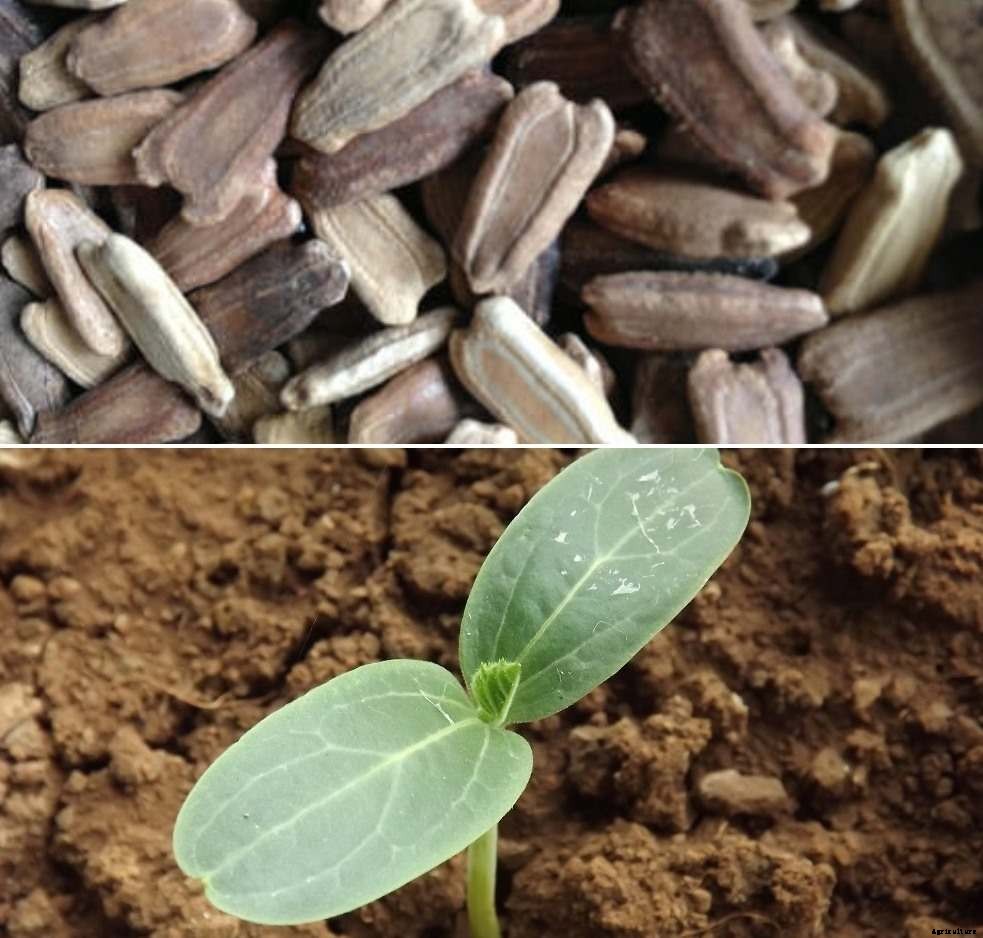
The optimum time for seed sowing is February-March, June-July, and November-December month. About 1-2 cm deep seeds are sown.
In Bottle, gourd plant flowers come in about 40 days. Where the bee is lacking, you can pollinate Bottle gourd flowers with your hands. Both men and female plants of Bottle gourd make flowers. Take a paintbrush and then collect male yellowish sticky pollen inside male flowers, then transfer it inside the female flowers. The pollination process depends on bees. So if your garden is lacking bees you must go for hand pollination.
In Bottle gourd, hand pollination can be done by using a soft brush. Repeat the procedure for 2 to 3 days. (Both flowers look similar but the male flower grows on a long peduncle and the female flower on a short peduncle but it has an ovary in the fruit shape).
For planting a Bottle gourd, add good quality organic manure in the soil with a 2:1 ratio. Organic manure can be well rotten cow dung manure, FYM (farmyard manure), Compost, or Vermicomposting.
When your Bottle Gourd climber is more than 45 days old, Provide one tablespoon of about 15:15:15 (NPK) Fertilizer per plant or mix a handful of Vermicomposting in the soil around each plant. Buy fertilizers online.
In case if you are interested in Crop Yield Improvement Basics, Ideas And Tips.
For growing Bottle gourd, check the soil once or twice daily for moisture loss. Proper watering in the growing season will encourage plant flowers and fruit.
Bottle gourds are quite a drought-tolerant. Though, to keep them happy and get maximum gourd production, you’ll want to make sure they get at least 1 inch of water per week. That means you’ll need to irrigate if rain isn’t regular during the summer season. Use a watering can to make sure that the plants get water in the form of the shower and not by a single flow.
Conduct weeding and raking of the soil at the time of fertilizer application in crops. Earthing up is done during the rainy season. Mulching is used for Bottle gourd crops grown on raised beds. Use organic or plastic mulch depending on availability. Keep weeds under control during the growing season.
Always look for the early signs of any insect, fungal, or any other infections in the Bottle gourd plant. Spray medicines as soon as any symptoms of such diseases are spotted. Watch out for Powdery Mildew when Bottle gourd plants are young. If mildew disease develops, soaking the roots regularly with water and then seaweed feed to improve the plant’s immune system.
In cold wet weather conditions, the furry leaves trap moisture and can develop a grey rot or patches of mould again, remove the worst infected leaves, and train them far apart to give the maximum air circulation.
Bottle gourd plant troubleshoots;
Immature gourds are falling – It is a very common trouble. Generally, this is due to a lack of sufficient nourishment or watering. Then, supply liquid manure and let it reach right down to the roots.
Small fruits are rotting – Bottle gourds when quite small, turn yellow, rot at the end and eventually fall off. Then, this can be due to imperfect pollination.
Bottle gourd pests are;
Bottle gourd diseases are;
Organic control of Bottle gourd pests and diseases are given below;
Once you have identified the troublemakers, you can control problems by using organic pest-control methods in Bottle gourd. The following list contains few methods;
Shoot and fruit borer
Beetles and caterpillars
Damping-off and Nematode
Spider mites and Aphids
Leaf spot
Fruit fly
Downey mildew
Proper training and pruning are advantageous for Bottle gourd plant growth. Axillary buds of growing vines must be removed till vines reach the bower height. After the formation of 4 to 5 fruits, vines are again pruned allowing 2-3 axillary buds only to grow on primary vines. Also, it is advisable to remove all yellow and pale-colored older leaves near the bottom portion. The vines are trained to spread on bowers made from thin coconut rope and bamboo sticks in the rainy season to prevent the fruit from rotting.
During the initial stages of plant growth, irrigate at 3-4 days intervals, and alternate days during flowering and fruiting. Furrow irrigation is the ideal process of irrigating. During the rainy season, drainage is necessary for plant survival and growth.
The main signs for harvesting a Bottle gourd are it begins to change color or becoming yellowish, and then it is time to harvest it. Depending upon plant variety and season, the crop is ready for harvesting in 60 to 70 days. Medium and tender Bottle gourd fruits are harvested depending upon the market requirement. Though, mature Bottle gourd fruits are mostly stored for seed production purposes. Cut the Bottle gourd fruits from vines with help of a sharp knife. In peak season, picking must be done every 3 to 4 days. The harvesting season begins after 2 to 3 months of seed sowing, and it continues for about 6-8 weeks.
Does Bottle gourd need full sun?
Bottle gourd plant-like plenty of sunlight. The Bottle gourd plant grows well under warm temperatures about 25 to 35ºC.
Can Bottle gourd be grown in pots?
Bottle gourds can be easily grown in containers or big-sized grow bags.
How do you protect Bottle gourd from insects?
Diseases and pests are few in Bottle gourd. Though, to prevent insects from laying eggs in the rind, mosquito netting can be draped over the vines.


