Growing Yam from Cuttings, Planting, Care, Harvesting
A guide to Growing Yam in the home garden or outdoor garden
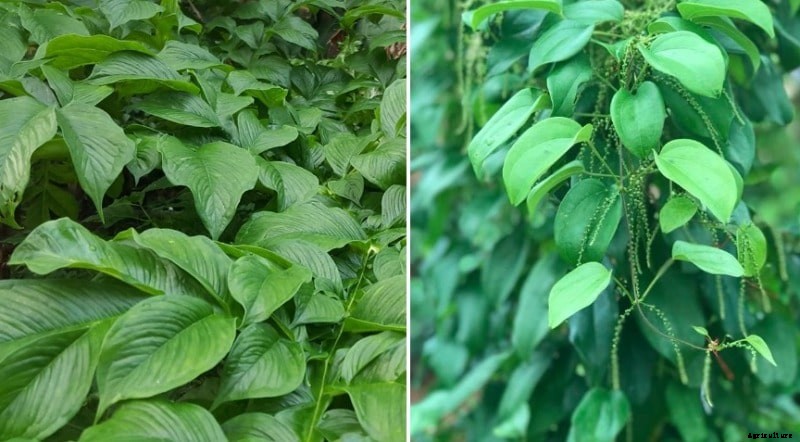
Well, are you interested and intended to growing yam in the home garden then you are on the right spot. Yams are the vegetables which belong to the family of Dioscoreaceae. The Yams are native to Asia and Africa and other tropical areas. Yams are tubers which are starchy and have a skin which is almost like a black-bark and its flesh will be purple or reddish in most of the varieties. The yams will be small as normal potatoes or they sometimes grow up to a length of 5 feet.
Yams are the vegetables which are healthy and delicious. These are easy to grow and tend to survive in tropical climatic conditions. These can also be grown in the climatic conditions which are cold with the perfect planning and forethought. You can also consider growing your own slips and sprouts for plantation, and then grow them, harvest and cure.
Growing yam slips for plantation:
In this section, we will discuss about growing Yams from cuttings. Start the growth of the sprouts. Yams will not be grown from seeds like all the other vegetables. These are the vegetables which grow from slips, which are taken from the sprouts of the adult yams. For growing sprouts, cut a yam to its half and submerge one part in a glass of cold water. Toothpicks have to be inserted at three points around the centre of the yam and it has to be suspended over the container, by submerging half of it in water.
Ensure that the yam you have selected is looking healthy. If you find any sort of discolouration or lesions on the skin of the yam, it is an indication that it is diseases which means the sprouts of the yam are also diseased.
The sprouts have to be kept warm. The growing process of yams will need warmth, so for this, you will have to keep a glass close to a heat source. If it is possible, place the glass close to a window so that the yam, which is just sprouting will receive the sunlight as well. Else, you can also consider placing it close to a heater for the absorption of warmth.
Allow the development of sprouts. The water has to be refilled in glasses or jars if required to keep the level of submersion of the yam in a consistent manner. You will have to wait for the formation of sprouts on the yam and this will take a few weeks of time. As soon as the sprouts are ready, take each of the sprouts and twist it off the yam in a gentle manner. One yam will be able to produce 50 sprouts.
Each sprout has to be laid in a container which is shallow. The stem’s bottom half has to be submerged in water. Let the leaves to hang out over the container’s rim. Over the time of a few days, you will be able to see roots coming from the bottom of every sprout. When the roots reach the size of at least 1 inch, they are then the slips which are ready for plantation. You can also consider purchasing slips online.
You should not miss the Moringa Plantation, Care, Harvesting.
Plantation of Yams:
To make sure that the roots are not meeting resistance as they are expanding, ensure that the soil is well-drained and loose wherever you are considering to go with the plantation of yams.
When you see that the ground has started getting dry at the time of spring, the soil has to be tilled at a depth of 10 to 12 inches and the debris has to be removed. Manure or compost has to be spread over the soil and the soil has to be tilled up to a depth of at least 8 inches into the ground for the improvement of the structure of the soil.
The area has to be raked and water has to be sprayed. After that, leave the area for 2 to 3 days before the plantation.
Make sure that you have sufficient room for accommodation of slips that you will be considering for plantation. When growing yams in tubers, large tubers will require plenty of space for growth and the same with the plant vines which grow in a vigorous manner. Leaving at least 1 metre of space between each plant is ideal.
Yams will not grow well in the temperatures which are cold. So it is always best to be patient until a few weeks after the completion of the last frost for the plantation of slips. Planting in the middle of the spring is considered to be ideal. Yams need a growing season which is long, so make sure that you are not waiting for too long into the summer or spring to start a plantation.
The slips have to be buried into the soil. Holes have to be dug at a depth of 4 or 5 inches at a width of 3 inches. The slips have to be placed in the holes which are at a distance of at least 8 inches from each other. The slips have to be positioned with their roots pointing downwards and the leafy tops should be above the soil. Now fill the holes in a gentle manner with the soil and be very careful that you are not bruising the slips too much.
The soil has to be pressed down carefully to avoid any air pockets.
Growing Yam in container:
Place a half-barrel planter or any large container used for planting in a sunny spot. Give light shade at the middle of the day when you are residing in the areas which are hot and dry. Make sure that you are avoiding deep shade as the plants will have an appearance which is leggy with only a few flowers.
The container has to be filled with a potting soil mixture of 2 sections of loam, 1 section of milled peat moss, 1 section of perlite or medium grit sand. The soil mixture has to be stirred so that the perlite and sand are distributed well across the loam.
The slips of yam have to be planted 2 to 3 weeks after the completion of last spring frost. The slips have to be placed at a distance of at least 8 inches from each other in the middle of the container. Watering of Yam has to be done in a thorough manner after the plantation of slips to raise the contact between the soil and the stems.
Then you will have to spread a thick layer of 1 inch which is of acidic mulch like pine needles around the plant’s base for acidifying the soil and help in holding the moisture. A gap of a half-inch should be left between the stem’s base and the mulch layer to let the evaporation of moisture from the soil take place.
The yams have to be watered whenever the soil’s top inch will get dried completely or if you see that the leaves are wilted slightly. Water has to be poured at the plants’ base until the soil is wet in its top three inches. Consider going ahead with the watering at evening times for avoiding the leave scalding. Soil saturation has to be avoided.
You may also consider to read the Hydroponic Greenhouse Farming.
Care and maintenance:
Watering of the plants has to be done generously. The slips which are planted newly have to be watered on a daily basis in the first week and on alternate days in the second week. Watering can be reduced as per the growth. Be very careful when you are hydrating them and also make sure that you are not overwatering them which causes waterlogging. Yams will survive in sunlight, so if you see that the soil is dry, adjust the schedule of watering accordingly.
The plants have to be fertilized. Make use of fertilizer at the time of growing period so that it will help in the improvement of the production. Buy a fertilizer which has less content of nitrogen, an element which will be able to compromise the development of roots and is high in the content of phosphorus. It is always considered to be ideal to fertilize the plant every 2 weeks or 4 weeks.
Vines of the yam plant will not be sturdy and will need some sort of support for producing a good yield. Monitor the plants and make sure that you are staking the mounds for every 4 weeks after the emergence of the vines for the first time. Make use of the bamboo canes for support to these vines which will be able to grow up to 10 feet.
Pests and disease management:
There are different pests and diseases which your yams fall prey to. Monitor your yam plants to check for the following conditions. These points will also help you in the growth of your yams and selecting your sprouts.
Yam Mosaic disease: This disease is caused by aphids and this is the condition which leads to the discolouration of seeds into yellow and light green. For the prevention of this disease, make sure that you are keeping the growing area weed-free and make use of slips which are free of diseases. If you see any plants which are diseased, make sure that you are not removing them immediately.
Dry rot disease: This is a condition which leads to lesions which are light yellow in colour on the outer skin, gradually turning the complete yam into black colour. Make use of slips which are free of diseases for the prevention of dry rot. If your yams are affected by this disease, you will have to soak them in hot water for one hour after the harvest to decrease its effects.
Mealybugs: This is an insect which will look like a cotton oval and is white in colour. Mealybugs will be able to hinder the growth and will also attract ants. Mealybugs have to be treated by removing the plants which are infected and by making use of insecticide sprays for a large number of insects.
White scale insects: These are the insects which lead to the creation of white scales which are tiny on the yams’ skin and they even slow the growth of the yam. The plants which are affected by these pests can be treated with insecticidal soaps.
How to harvest yams:
Yams will take about three months to reach the stage of maturity. These have to be harvested when the plants’ top starts to turn yellow and wither. Harvesting usually takes place at the time of autumn. Yams have to be removed from the soil. Make use of a pitchfork or something similar related to gardening for digging into the soil in a gentle manner and then removing the tubers which are present under the surface of the soil. You can start digging at a safer distance from the step. Make sure that you are being careful not to remove the skin of the yams when you are taking them out of the ground.
You should not miss the Growing Malabar Spinach from Seeds.
Curing your yams:
Make sure that you are not considering to wash your yams after the completion of the harvest. Rather than that, you can sort your yams into baskets or boxes for curing them before storing. You can do curing in about 2 weeks. For doing so, yams have to be placed in a warm and dark spot with some amount of ventilation and then leave them alone. This process will let the bruises and wounds which are present on the yam to heal and seal the bacteria which is rot.
Storing your yams: Once the yams are harvested, you can keep them for several months. The yams have to be stored in a place which is cool and dry such as a kitchen cabinet.
Facts about growing yam:
Yams like all the other tubers will need a long growing season which is warm. They will take up to 3 to 3 ½ months to reach the stage of maturity. Yams will not be able to tolerate frosts get matured in a well manner in the climatic conditions which are cold. So make sure that you are planting the Yams which are sprouted immediately after the threat of the first frost is completed. This will tend to happen around the middle of the spring.
If you do not harvest the yam, then it becomes a perennial plant. The stem will die at the end of every growing season which leads to an impression that the yam is an annual plant. But the tuber will survive and will grow a new stem for the coming year. Usually, the propagation of yam is done in a vegetative way i.ee., by tuber cuttings or tuber.
That’s all folks about growing yam at home. Keep gardening.!
You may be interested in Polyhouse Vegetable Farming.