
Welcome to Modern Agriculture!

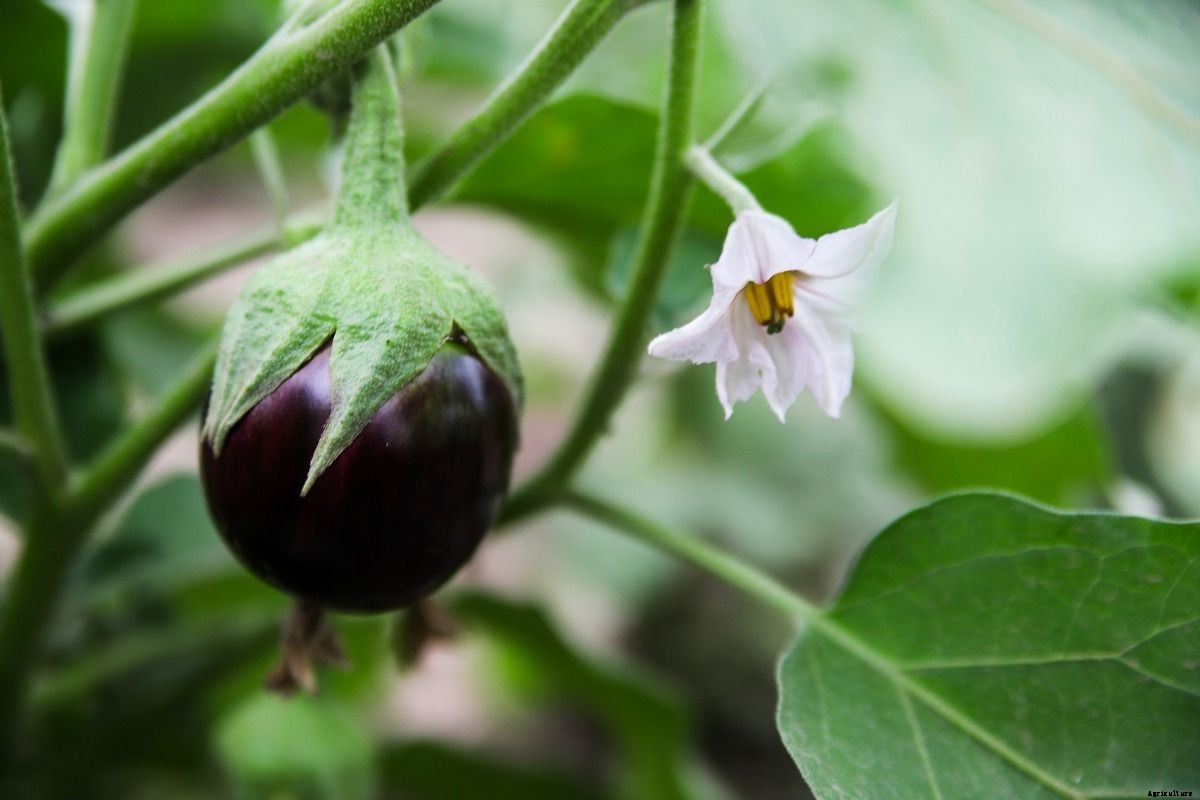
Growing eggplant in aquaponics: Eggplant is also called brinjal or aubergine, which is a plant species in the nightshade family Solanaceae. Eggplant is grown as an annual and features an erect bushy stem that is sometimes armed with spines. The plant leaves are large, ovate, and slightly lobed. The pendant violet flowers are normally solitary and approximately 5 cm (2 inches) across. The fruit is a large egg-shaped berry with a glossy surface that changes in color from dark purple to red, pink, yellowish, or white and is sometimes striped; the color and shape of the white variety is the source of the common name.
Aquaponics is a process of growing food without using soil. Instead, you grow several plants in water. Aquaponics provides a solution to the main issues these two systems face; the need for sustainable ways of filtering of nutrient-rich fish waste in aquaculture and the need for nutrient-rich water to act as a fertilizer with all of the nutrients and minerals required for plants grown through hydroponics. And combining these two systems provides an all-natural nutrient solution for plant growth while eliminating a waste product which is often disposed of as wastewater. The recommended aquaponics method for growing eggplant is media beds
You should not miss the How to Grow Spinach in Raised Beds.
The fish tank was bought from the local market and prepared before growing aquaponics. Preparation of tank included the cutting of upper end, washing, liming, and plumbing pipes; setting brick lets and fills up the tank with underground water. Initially, the upper part of the tank was cut out to make an opening for feeding the fish and cleaning the tank. The fish tank was then washed with disinfectants mixed water. It is necessary to wash the fish tank before starting the fish culture to remove the chemicals if any. Then the pipes were set to make an inlet and outlet. Two air pumps with 4 air stones were set to supply dissolved oxygen. The tank was then filled with brick lets of 2 to 5 cm diameter up to six inches at the bottom of the tank. Before placing the brick lets they washed with clean water and finally the tank was filled with water from overhead tank. A separate filter was used to filter the fish tank water and placed over the tank.
Daytime temperatures should be around 22 to 26°C, and night temperatures no lower than 15°C. If lower night temperatures are likely then protect the eggplants.
Eggplants enjoy warm temperatures with full sun exposure. Plants perform best with daily temperatures in the range of 22 to 26°C and relative humidity of 60–70%, both of which favor a strong fruit set. Eggplants love warmth, and thrive in warm temperatures, but watch out when the temperature goes over 30°C, this could limit their potential.
Aquaponics system has clean water with the right pH and healthy microbes to deal with ammonia and fish waste, the next step is to add fish. There are different types of freshwater fish that will work in these systems. Once you decide for the selection of fish and have purchased your fish, add them into your fish tank.
An aquaponics system requires an aerator to provide oxygen for the fish and a pump to send water from the fish tank to the filtration to the grow bed and then back again. Solar-powered pumps will take aquaponics to a whole new level of sustainability and reduce your energy consumption. You need PVC pipes to pump the nutrient-dense water through (make sure they are non-toxic before installing).
The grow beds can vary in structure, but one popular selection is to use shallow wooden boxes lined with pond liner and perlite, gravel. An optional addition would be a bell siphon, this allows water to fill the grow bed to an optimal level, then uses air pressure to rapidly drain that water at the right time to prevent the roots from drowning.
In case if you miss this: How to Grow Baby Corn in Containers.
Follow these steps after you have set up your aquaponics system;
Add grow media into the grow bed and we have recommended that you use 3/4″ river rock. This not only is an inexpensive solution, but you will get the extra added advantage of introducing worms into your system (their eggs are just naturally in the rocks). Fill the grow bed so that there are 12 inches of growing media in the grow bed (Do not fill higher than 12 inches because this will increase chances for anaerobic bacteria to build up which will kill plants, microbes, and fish). Make sure the media is equally distributed, level, and does not cover the water spout that brings water to the grow bed.
Fill up your fish tank with water. If you are using tap water, you will want to turn on your pump and aerator to bubble off chemicals that are commonly found in municipal waters. It normally takes 3 days (for small systems) to 1 week (for large systems) to completely get these chemicals out of the water. Keep in mind that you will want to aerate the water when you need to add more water to your system to plant uptake or evaporation. Chlorine hurts fish and also plants. The water pH level for growing eggplant in the aquaponics system is 5.5–7.0
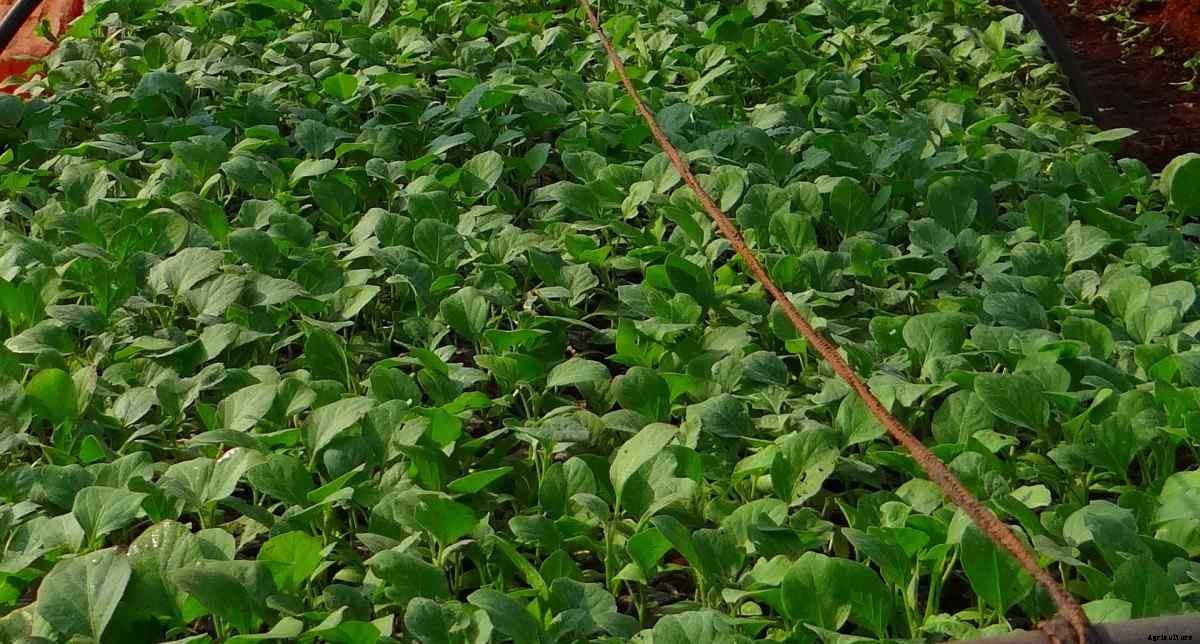
Now that you have the right pH level, the next step is to add plants into the grow beds. You can add plants into the system even though your water could not be clean. (They will help clean the water and absorb healthy nutrients). If you are adding plants grown in soil, and it is imperative that you get as much of the soil off the roots as possible. As a best practice, using vermiculate as a growing medium to start plants in. This growing media easily rinses off the potential of cross-contamination of e-coli or other harmful bacteria into the aquaponics system. The recommended plant height and width will be 60–120 cm; 60–80 cm respectively.
To plant plants, simply dig down into the grow media 2 inches and gently place the plant and roots into the growing media. Carefully return the grow media being sure to not damage the plant roots or cover the leaves of the plant. Make sure that the plant is supported and then standing upright. As you add plants, make sure to give enough space between them so they have room to grow. Plant spacing required for growing eggplants in an aquaponics system is 40–60 cm (3–5 plants/m2).
The commercial floating feed containing about 30% protein was used to feed the fish. The fish feed was bought from the local fish dealer. The fish feed was supplied twice daily, first in the morning at 9:00 AM and in the afternoon at 5:00 PM. Overfeeding was avoided as uneaten feed make the fish tank water unsafe for fish and lead to water quality degradation. Later on, the feed was reduced to about 3% of the fish body weight.
You may also like How to Grow Sweet Potato in Terrace, Balcony, Backyard.
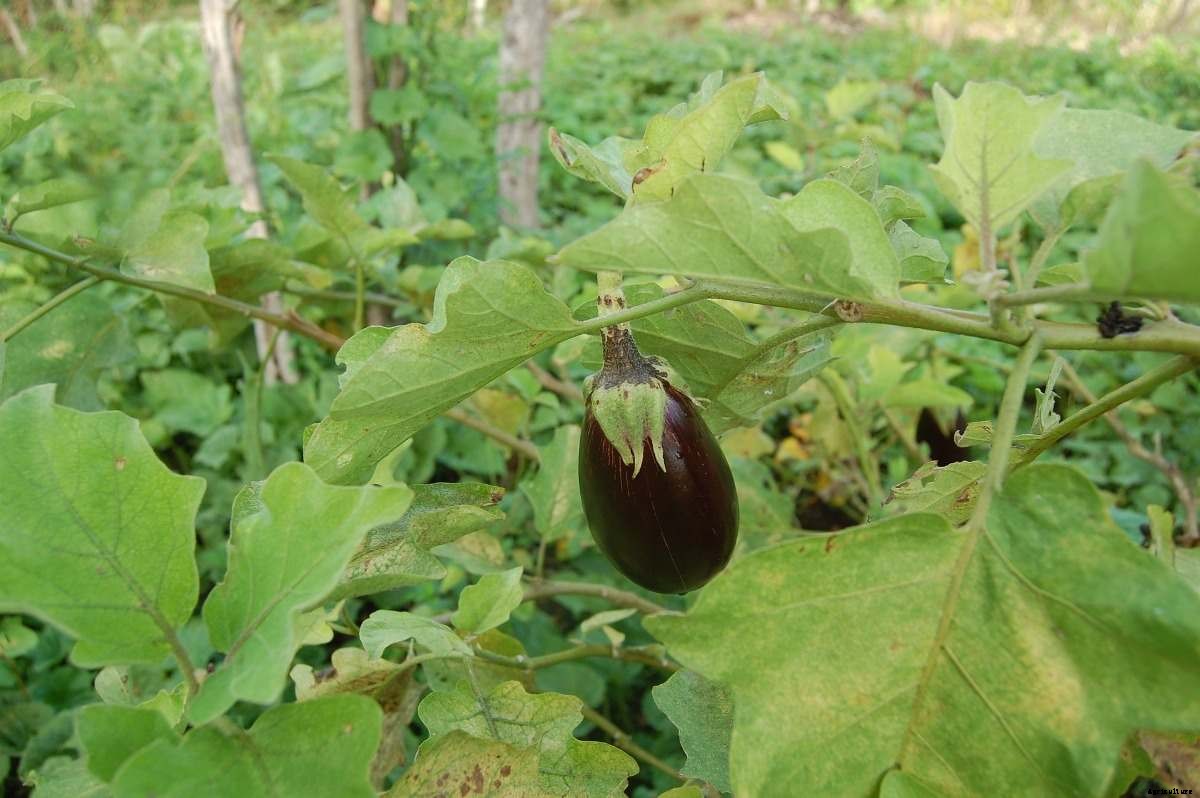
Eggplant is a summer fruiting vegetable and that grows well in media beds owing to the deep growth of the root systems. Eggplant has a large root system and is only really suitable for media beds when grown in an Aquaponics system. This Eggplant has high nitrogen and potash requirements, so take this into consideration when planning your planting scheme. This will help avoid nutrient deficiencies arising which can be detrimental to other plants. Plants can produce 10 to 15 fruits for a total yield of 3–7 kg. Eggplants have high nitrogen and potassium requirements.
Seeds germinate in 8 to 10 days in warm temperatures (26–30°C). Seedlings can be transplanted at 4 to 5 leaves. Eggplants can be transplanted when temperatures rise in spring. Towards the end of the summer, begin pinching off new blossoms to favor the ripening of the existing fruit. At the end of the season, plants can be drastically pruned at 20 to 30 cm by leaving just three branches. And plants can be grown without pruning; however, in limited spaces or in greenhouses, management of the branches can be facilitated with stakes or vertical strings.
Sow from seed in February or March and expect germination in 8 to 10 days, with temperatures around 25 – 30°C.
Watering was started after the plantation was done in the containers containing media. Only fish tank water was used for watering. And watering was done by using a porous PVC pipe. PVC pipes were cleaned regularly to provide maximum wastewater supply. Then a motor was used for watering of the plant from the fish tank to beds. In night time wastewater supply was stopped. No fertilizer was used in the vegetable beds. Initially, 10 to 15 days were required to slowly grow denitrifying bacteria in the beds, and nitrification started in full swing. After that time plants grew well. Less weeding required in an aquaponics system, a wedding was done regularly when any unwanted plants grow in the system.
Pests
Diseases
Start harvesting when the eggplants are 10 to 15 cm long. The skin must be shiny; dull and yellow color skin is a sign that the eggplant is overripe. Delayed harvest will make the fruits unmarketable owing to the presence of seeds inside. By using a sharp knife and cut the eggplant, leaving at least 3 cm of the stem attached to the fruit.
You may be interested in Papaya Seed Germination, Time, Process, Temperature.


