
Welcome to Modern Agriculture!

Introduction to growing aquaponic tomatoes: Aquaponics is a growing process that incorporates fish and a growing container for plants. A tube transports nutrient-rich water from the fish tank to the plant in the container. The fish water is particularly ideal for tomatoes, providing the right level of nutrients for plant growth and fruit production. Aquaponics is a fantastic and fun way to grow several plants. Plants grown in aquaponics tend to grow much faster than in traditional, soil-based growing methods. Let;s us
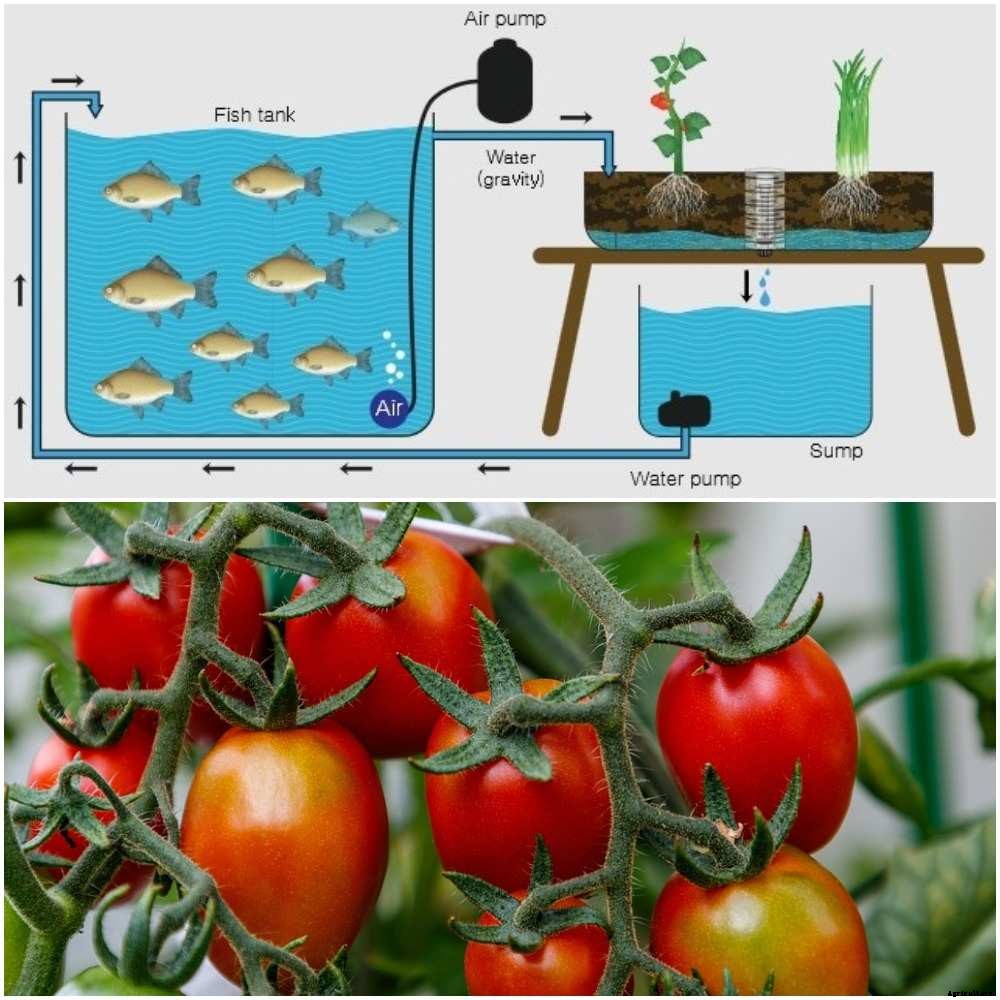
Tomato plants do exceptionally well in aquaponics. Tomatoes like warm weather but also require plenty of nutrient-rich water. Tomatoes are a good option for an aquaponics system where the environment can be controlled. The tomato plant does exceptionally well in this water-based system. Aquaponics system is the combination of both aquaculture systems that means raising fish and hydroponics (the soil-less growing of plants) system where fish and plants grow together in one integrated system. The fish waste provides organic food for the tomato plants, and the plants filter the water for the fish.
Besides the fish and the plants, the microbes (nitrifying bacteria) are a third participant in aquaponics. Then these bacteria convert the ammonia, from the fish waste, into nitrites. The nitrites are then converted to nitrates, which are a form of nitrogen that the tomato plants use to grow. The fish waste serves as a natural fertilizer for the plants to produce, and in return, the plants purify the water for the fish. Before setting up aquaponics tomato system, you must be aware of best tomato varieties for aquaponics. The Aquaponics tomato yield is defiantly higher than the conventional tomato farming.
The humble tomato grows well in the temperature range between 65°F and 85°F. However, as much as it likes warmer temperatures tomato plants will stop growing if the temperature goes past 95°F. It is worth noting that if the nighttime temperature is higher than 85°F the tomato will not turn red.
This means the best temperature to keep the tomatoes aquaponics system will be between 75°F and 85°F. At this temperature, the tomato must flourish.
It is important to maintain the tomato plant well-drained; despite needing a steady supply of water it will not respond well if submerged all the time. To facilitate the plant growth you need to keep the water temperature range of about 75°F to 85°F. This is low enough to ensure the tomatoes turn red but warm enough to facilitate growth.
Tomato plants prefer to have the water at a pH of between 5.8 and 6.8. This pH level is lower than other plants and fish are accustomed to; you will have to consider the best match if you’re hoping to grow different types of plants in the same aquaponics system.
You should not miss the Balcony Vertical Garden Ideas.
In aquaponics system, you should be able to get between 25 and 35 tomatoes from each of the tomato plants, depending on the exact variety of tomato used in tomato aquaponics systems.
The tomato plant will grow quickly if you’ve got the conditions correct. You should see growth within 2 weeks and the fully developed flowers must be formed within 4 weeks of planting. It should then be possible to harvest first fully developed, and delicious, tomatoes within 8 weeks of planting.
At this stage the plant will be about 2 feet tall; it will continue to grow and can produce more tomatoes if you wish.
In Dutch bucket aquaponic systems we are using several buckets for growing tomato crops in them. In buckets, we put any growing media that is suitable for the aquaponics system. When we are irrigating plants the water is moving through growing medium and feeding the roots of our plants. We want to make sure that on the bottom of the bucket we always have some water. We can get this by drilling drainage holes on a certain height of the bucket. For this system to work we do not need any additional siphons and parts which make it easier to maintain.
There are mainly two approaches that seem to give positive results when undertaking any tomato aquaponics systems.
The first method is the standard gravel bed approach or river rock. It is necessary to ensure that the gravel is limestone free; if not the pH level will slowly climb which is not good for your tomato plants.
The second method is to use Deep Water Culture (DWC). For this, you’ll need to build or find a container that can be used for the water to flow through, by a pump from the fish tank. In effect, you are making a canal. Above the canal, you’ll want to create a section that can hold your growing media. And this can be a lid on the canal with holes cut out for pots.
The pots will want to be filled with gravel, or another media of your choice, and sat partially in the water. This will allow the roots of the tomato plants to obtain the water they need without being saturated. You can use a floating tray approach but it will want to be deep to accommodate the roots of these plants.
When planting tomato plants in the aquaponics system it is very important to carefully remove the soil from the roots. The best method is to use a shower or water under pressure and to remove soil and dirt from roots. Plant your tomato in growing medium carefully so you don’t damage roots. The plant is most sensitive during this procedure.
After planting tomato plants are in a shock and it is in a completely different environment than it used to be. But when you plant your tomato plants in the aquaponics system the shock is minimal as they have arrived in a better environment.
Root Rot
Damping-off is a fungal disease that can simply kill newly emerged seedlings left too long in a humid environment after germination. If you don’t control the climate in the aquaponics system environment, the same fate can happen to young tomato plants. This disease known as root rot is caused by the presence of spores produced by various species of Pythium, mainly P. aphanidermatum. In addition to insufficient light and ventilation, increased vulnerability to pythium results from contaminated sedimentation tanks.
Gray Mold
Caused by the fungus Botrytis cinerea, gray mold is characterized by lesions that first appear on stems and also leaves. Reducing humidity levels and improving ventilation could help minimize the risk of botrytis infections.
Powdery Mildew
Various fungi cause powdery mildew, most notably Leveillula Taurica and also Oidium neolycopersici. Evidence of powdery mildew begins with the appearance of white color spots on leaves, followed by brown lesions. As the name implies, a powdery growth can also appear. The key to deterring powdery mildew disease infections in aquaponics is to give adequate ventilation and monitor humidity levels.
Wilt Diseases
Wilt diseases target older growth first and spread to younger plant leaves, and causing them to wilt and eventually die. Diseased tomato plants are stunted in growth and show evidence of chlorosis, a condition that affects when plant leaves cannot produce enough chlorophyll.
You may also like the Growing Malabar Spinach on Terrace.
Choose the tank carefully
Fish tanks are a crucial component in the aquaponics unit. Any fish tank will work, but round tanks with flat or conical bottoms in the tank are mainly recommended as they are easier to keep clean. Try using strong inert plastic or use fiberglass tanks, because of their durability and long life span.
Maintain good water quality
Water is the life-blood of an aquaponics and it is the medium through which all necessary nutrients are transported to the tomato plants, and it is where the fish live. Five key water quality parameters are very important to monitor and control: dissolved oxygen (5 mg/liter), pH (6–7), temperature (18–30 °C), nitrogen, and water alkalinity.
Do not overcrowd the tanks
Aquaponics will be easier to manage and this will be insulated against shocks and collapse. The recommended stocking density is about 20 kg/1000 liters, which will still allow for substantial plant growing area.
Avoid overfeeding, and remove any uneaten food
Wastes and uneaten food are harmful to aquatic animals as they can rot inside the aquaponics system. Feed the animals every day, but remove any uneaten food after 30 minutes and then adjust the next day’s portion accordingly.
Maintain a balance between plants and animals
By using a batch cropping system can help keep a steady harvest of fishes and plants to keep a consistent production level and keep a constant balance between fish and plants.
You miight be interested in How to Grow Leafy Vegetables in Pots.


