
Welcome to Modern Agriculture!

Introduction: Hello gardeners, today we are back with a great information of growing hydroponic peppers. Peppers can be grown using hydroponics at any time of the year. It has been proven that growing peppers hydroponically will not only result in an increased yield when properly done but commonly a better quality and larger fruit size as well. In hydroponics, the pepper plants theoretically receive a steady food source from the nutrient solution, and they incur have fewer attacks from insects and soil-borne pathogens.
You can produce more pepper plants with less space precisely because hydroponics systems can be modified to fit the available space. You can use hydroponics to grow peppers at any time of the year. It is possible to increase pepper size and production with this hydroponic type of indoor growing system. The plants get a constant food source from the nutrient-rich water, and they have few problems with pests and diseases that are often found in soil-grown plants.
Several styles of hydroponic systems are obtainable. Best for beginners are the deep-water system, Wick systems or ebb-and-flow types, which are ideal for growing green peppers.
Deepwater culture – Deepwater Culture (DWC) is also known as the reservoir method, is by far the easiest process for growing plants with hydroponics. In a Deepwater Culture hydroponic system, the plant roots are suspended in a nutrient solution. An aquarium air pump oxygenates the nutrient solution, and this keeps the roots of the plants from drowning. Remember to prevent light from penetrating your culture system, as this can cause algae to grow. This will wreak havoc on the system. The primary advantage of using a Deepwater Culture system is that there are no drip or spray emitters to clog. This makes DWC is a good choice for organic hydroponics, as hydroponics systems that use organic nutrients are more prone to clogs.
Wick systems – Wick systems are the simplest system mechanically and easiest to set up because there are no moving parts. The system consists of a reservoir filled with water and nutrients; above it, there is a container filled with a growing medium. The two containers are connected by a wick, which draws the nutrient-filled water up into the growing medium where it is absorbed by the roots of plants. This system is great for learning the basics, but it could not work well with large plants or with water-hungry plants like lettuce because the wick cannot supply water fast enough.
You should not miss the How to Grow Leafy Greens in Containers.
Ebb and flow systems – Ebb and flow systems are slightly complex in design, but they are extremely versatile. This system works mainly by flooding the growing medium with a water-nutrient solution and then draining it back into the reservoir. To do this, the system wants a submersible pump with a timer. One of the greatest benefits of ebb and flow is that you can use the timer to customize your plants’ watering schedule based on their size, number, ambient temperature, humidity, etc. You also have the option of potting plants individually for simple customization or filling the entire tray with growing medium and planting directly in the tray.
Hydroponics is the process of growing several plants without using soil. In the traditional sense of growing plants, the soil is one major way that plants get the nutrients they want to grow, along with the sun and water. With a hydroponic system, alternatives to those nutrients are directly fed to plants instead of being absorbed by the plants through soil. This way, the use of soil can be erased.
If you are planting bell pepper plants hydroponically, they need to be 18 to 24 inches away from each other. If you’re aiming for smaller chili pepper plants, then the plant spacing requirement is half. We’ve even seen pepper plants that are quite close to each other, but to ensure that the plants are getting enough light, a massive LED grows light is directed toward the plant leaves.
A simple, homemade tank hydroponics system holds the water, or growing solution, the growing medium, and plants, such as pepper plants. A plastic storage tote supplies a watertight container for the reservoir. Pond baskets, which are mesh pots that allow water to pass through, work well for holding the growing medium and the pepper plants. Hook up a hydroponics pump or a fountain pump to the reservoir with plastic tubing thus the water moves and doesn’t become stagnant. The hydroponic pump sits in a bucket of water outside the reservoir. Freshwater and the nutrient solution want to be added to the bucket and then pumped into the reservoir.
Rock wool gives a sterile growing medium for peppers in a hydroponics system. It is made from spun basalt rock that’s turned into a fibrous material this is similar to fiberglass. You can germinate pepper seeds in rock wool and produce the resulting plants to maturity in the same medium. Fill the pond baskets with moistened rock wool, and then cut slits in the rock wool for planting each pepper seed.
Pepper plants, in general, require a lot of sunlight to thrive, so to be on the safe side, allow your plants to be exposed to 14 to 18 hours of light per day, with the remaining hours (eight to ten hours) for the nighttime cycle.
Nighttime is just as important as the daylight cycle as plants undergo vital processes that take place in the absence of light.
You may also like How to Grow Plants in Plastic Bottles.
Assuming you are growing a variety of plants in addition to peppers you must be using a general nutrient formulation. Any nutrient suitable for Tomatoes or eggplants is also suitable for pepper plants.
The optimal pH level for peppers growing hydroponically is between 5.5 to 7.0. A low pH level can be corrected by adding sodium hydroxide or potassium hydroxide to the water. Small amounts of one or the other must be used. Never touch hydroxides with wet hands and handle them as little as possible and when you do, use sturdy water-resistant gloves. If possible, test any pH level adjustments on a single plant before you continue to make adjustments to your entire nutrient solution.
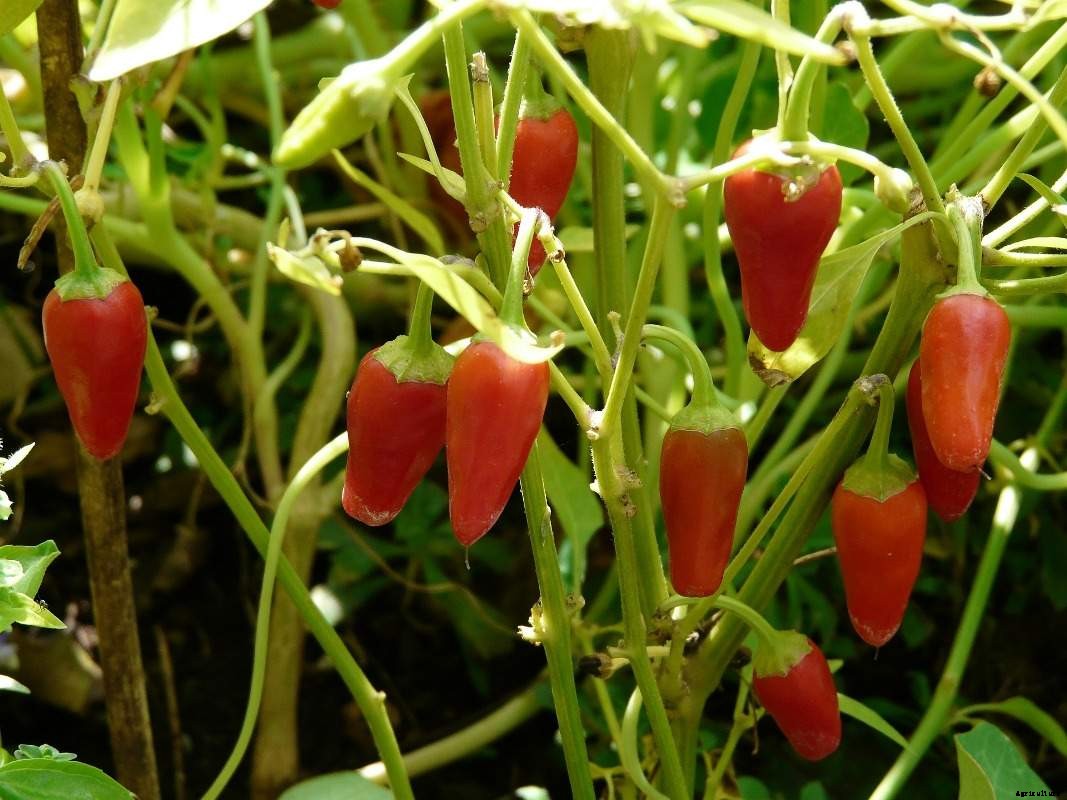
The germination stage of pepper plants will likely take 7 to 14 days, fourteen being the upper limit. It takes an average of 50 to 80 days for pepper plants to be fully mature and ready for harvesting. Before this period, you will see a lot of flowering and vegetative growth, with pods growing bigger and redder with each passing day.
Simply maintain the formula you have been using for your pepper plants and wait for the right time to pick the pods from the stems. If your first batch of pepper plants does well, you can just keep the system or begin cloning from your best-performing plants.
Incase if you miss this: How to Grow Hydroponic Mushrooms.
The best thing about using a hydroponics system is even if crops become hungry for more nutrients down the line, you can simply adjust the nutrient levels of your hydroponics setup to suit the requirements of your plants. Here are tips for planting hydroponic peppers.
Bell pepper plants are a slightly more advanced hydroponic plant. Don’t let them grow to their full height, instead, prune and pinch plants at 8 inches to spur pepper growth. A deep water culture system or ebb and flow systems are best for peppers.
Grow time of bell peppers will be about 90 days. The best pH level of these peppers is 5.5 to 7.0. Plan to provide up to 18 hours of light for these pepper plants each day, and raise light rack as the plants grow, keeping plants about 6 inches from the lights. Different bell pepper varieties suitable for the hydroponic system will be Ace, California Wonder, Vidi, and Yolo Wonder.
You may also consider: Unique Vegetable Garden Ideas.
You may be interested in Post Harvesting Technology of Vegetables.


