
Welcome to Modern Agriculture!

Introduction to Star Fruit Growing Tips, Techniques, Hints, Ideas, and Secrets – we are here with a topic of how to grow Star Fruit (Carambola). If you want to know all the growing tips for growing star fruit trees. Then follow our complete article. Carambola also referred to as star fruit, is that the fruit of carambola, a species of tree native to tropical Southeast Asia. The fruit is usually consumed in parts of Brazil, Southeast Asia, South Asia, and therefore the South Pacific, and Micronesia, parts of East Asia, us, and therefore the Caribbean.
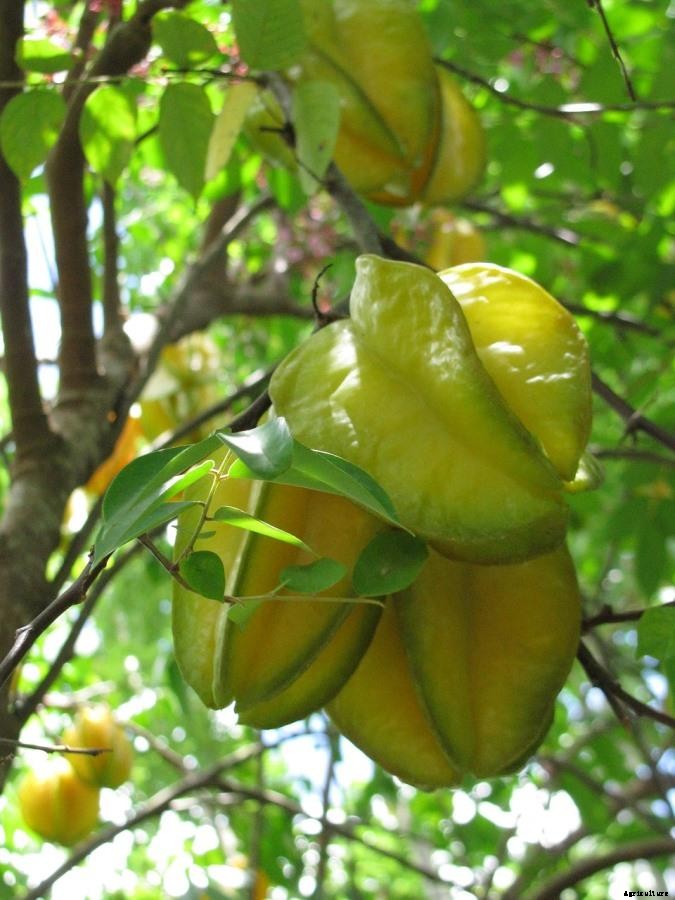
Star fruit belongs in subtropical and tropical regions. They’re evergreen, but if grown in cooler regions, they lose some or all of their leaves within the late winter and early spring.
Expect these trees to get older than twenty to 30 feet tall if not pruned, so you would like many spaces to grow them. They provide much shade under a multi-branched, bushy canopy.
Not all star fruits are sweet. They will range from sweet to tart, and therefore the fruits are often small, medium, or even large. Some require cross-pollination to fruit, which suggests you’ll need quite one tree.
It is one of the sweetest varieties out there. It’s a self-pollinating hybrid and has medium-sized fruits with an excellent flavour and a juicy, crisp texture. The tree starts producing when it’s young, and therefore the fruits turn orange when ripe.
This Thai variety is self-fertile and even produces beautiful yellow fruit with a pronounced star shape. The fruits are very sweet and crisp, and therefore the tree starts producing from a young age.
This type was bred in Hawaii and produces sweet, juicy, crisp fruit. This is often a self-fertile variety that works well for espalier.
It is an abundant, self-pollinating hybrid from Hawaii. The high-quality, sweet fruit is little and has an exceptional flavour.
This hybrid type is from Florida has sweet fruits on a self-pollinating tree.
Ensuring that your trees have the proper soil is significant if you would like to grow carambola. Compost is usually mixed into the soil when planting to make sure the tree has the nutrients needed to grow.
It’s important to understand your soil’s pH range, so order a test from your local county extension office or buy a soil pH test online. Carambola trees don’t tolerate pH soils because they’re susceptible to chlorosis, which is that the yellowing of plant parts, in alkaline or limestone soils.
These trees prefer slightly acidic soil. If you would like to amend the soil, sphagnum increases the soil’s acidity, alongside wood ash. Aim for a variety between 4.5 and 7 for ideal and optimal growth.
In case if you miss this: Hydroponic Nutrient Chart.
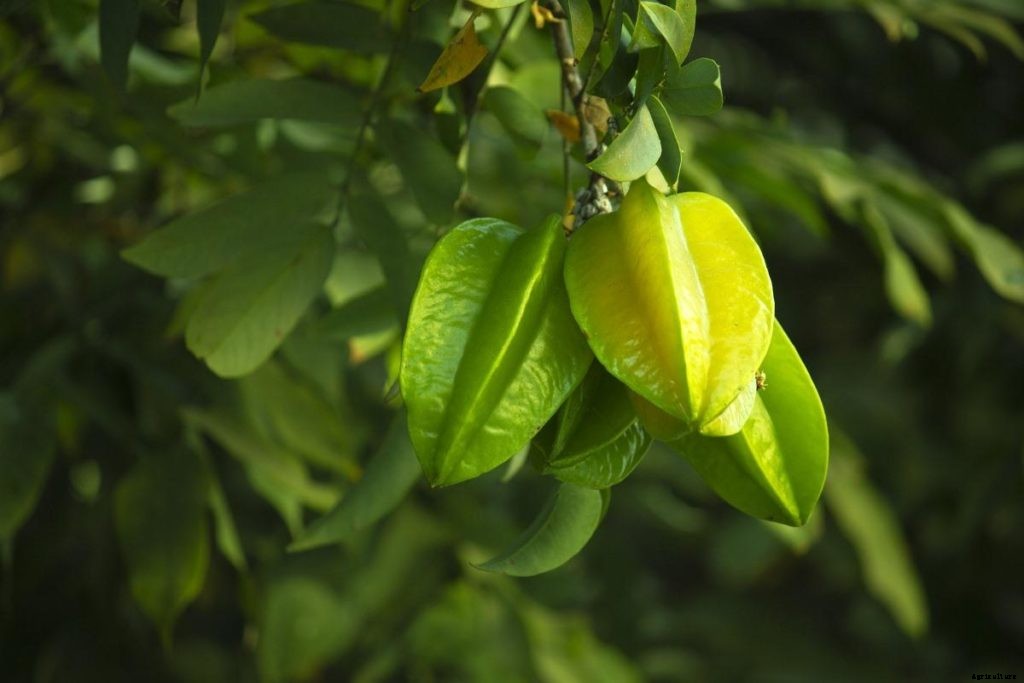
These two methods are commonly used when propagating carambola trees. They’re seed propagation and air layering. The latter is that the most desirable method for large-scale production.
Star fruit seeds lose their viability very quickly. They need to be harvested from the fruit once they are plump and even mature and then planted within a couple of days. Seed germination ranges from one week within the summer to 2 or more weeks during the winter months.
Start the fresh star fruit seeds in damp sphagnum. Once sprouted, the seedlings are often transplanted into pots using sandy loam soil.
Seed propagation can produce variable results. Although this is often not the well-liked and best method of star fruit propagation for commercial orchards, it is often a fun way for home gardeners to grow a tree from store-bought fruit.
This method of vegetative propagation is good and best if you have already got a star fruit tree that you’d wish to clone. It usually involves wounding one among the tree branches and inspiring it to root. Air layering is often difficult thanks to the star fruit’s slow root production.
Begin by choosing a branch that’s a minimum of 2 feet or 60 cm long. Make two parallel cuts round the branch between 1 to 2 feet or 30 to 60 cm from the branch’s tip. The cuts should be approximately 1 to 1 ½ inches or 2.5 to 3 cm apart.
Remove the ring of bark and cambium that means the layer between the bark and therefore the wood from the branch. If required, a rooting hormone is often applied to the wound of the plant.
Cover this area with a moist ball of sphagnum. You need to use a bit of sheet plastic to wrap it tightly. Secure both ends with electrical tape. Cover the plastic with aluminium foil to retain moisture and exclude light. It can take one to three months for an abundance of roots to develop very well.
When the branch is well-rooted, you need to cut it under the new roots. Carefully remove the wrap and then plant the new tree in sandy loam. The new tree is going to be in a vulnerable state until it is well-rooted. During this era, you need to keep the soil evenly moist and protect the young tree from direct sunlight and wind.
In the tropics, star fruit trees are often planted year-round but in colder regions, plant star fruit within the summer.
These trees are propagated via seed or by other methods. That said, seed from this particular fruit is merely viable for a brief period, mere days at the most, so use the freshest seeds available to extend the probabilities of germination.
You can also try star fruit growing by grafting. Take graft wood from mature twigs that have a good number of leaves and if possible, buds. Healthy one-year-old seedlings should be used for rootstocks.
Star fruit trees love hot temperatures and do best when temps are from 20 to 35°C. Choose a sunny area, preferably with an upscale loamy soil that’s moderately acidic with a pH of 5.5 to 6.5.
First off when contemplating growing star fruit in containers, for best and optimal results, this tree needs high temps, a minimum of 15°C for flowering, and a successive fruit set. Given the consistent temperature and even sun, the tree will flower throughout the year.
There is a spread of planters available, but two of them seem to try to the simplest when grown in containers. ‘Maher Dwarf’ and ‘Dwarf Hawaiian’ will both fruit and flower for several years in 10-inch or 25 cm pots.
Potted star fruit isn’t too picky when it involves the soil they’re grown in although, that said, the tree will grow more quickly and bear more heavily in rich loam that’s moderately acidic pH 5.5 to 6.5. Don’t overwater, because the tree is sensitive but its root age is immune to many of the basic diseases that afflict other potted fruit trees. Star fruit usually prefers full sun but will tolerate partial sun.
Container-grown star fruit trees should have an application of balanced fertilizer within the spring through the autumn. Slow release or organic granular fertilizers are recommended and may be applied every few months. Star fruit trees may show signs of iron chlorosis during the winter, which appears as interveinal yellowing on young foliage. Treat the tree with chelated iron within the sort of a foliar spray or, if warm weather is nigh, await a touch and symptoms will often clear up.
Relatively pest-free, star fruit trees will often begin blooming directly when only a foot and half tall or 0.5 m, and you’ll even get a couple of fruits. The flowers emerge off older wood and, as such, allows for pruning and shaping which will not retard fruit production. For the dwarf varieties recommended for container gardening above, prune back the outreaching branches within the late winter before spring growth spurts.
These trees aren’t drought-tolerant, so it’s essential to supply regular watering to the trees. The soil must be kept moist but not saturated at the least times. Aim to water the tree very deeply once or twice per week if it hasn’t rained.
Watering is most vital from flowering through fruiting. The tree needs much water to supply edible, yummy fruits that you simply want to enjoy.
In the winter months, reduce watering.
Pruning is an important part of growing star fruit trees. When your trees are one to two years old, it’s time to start out pruning off branches that are longer than three feet long. This encourages lateral growth.
The best time to prune star fruit trees is within the winter when the tree is dormant. Always check your trees annually to see for inward growing branches. Selective pruning and removing these inward-growing branches improves airflow and lightweight to the remainder of the cover.
It’s best to prune your mature trees regularly to stay them 6 to 12 feet tall for straightforward harvesting. If the trees are any taller, you’ll need a ladder to reap.
Fertilize: four to five times a year with balanced liquid fertilizer or use a slow-release granular fertilizer several times during the season.
Star fruit trees are moderate to heavy feeders; they have to be fertilized four to six times per annum. Young trees got to be fertilized even more frequently. It’s best to feed young trees every 30 to 60 days throughout the season for optimal growth.
When you fertilize a star fruit tree, use a 6-2-6 or 6-4-6 fertilizer when possible. Search for one that contains micronutrients like iron, zinc, manganese, and magnesium.
If your tree grows in alkaline soil, it results in nutrient deficiencies, so you’ll get to pay special attention to regular fertilization. The tree will need regular foliar sprays to extend the iron, zinc, and manganese supplies.
Maintain proper irrigation, pruning, and fertilization regimes in carambola plantations; appropriate copper-based fungicides could also be required to regulate the disease in severely infected plantations
You need to avoid wounding fruits during harvest
Better to avoid wounding fruits during harvest
Plant carambola varieties that are more tolerant of the disease in areas where the disease is present; the disease is often controlled with regular applications of appropriate foliar fungicides
Plant only disease-free nursery stock and plant in areas with no history of the disease; avoid planting trees in low lying areas
You may also check this: How To Grow Organic Spinach At Home.
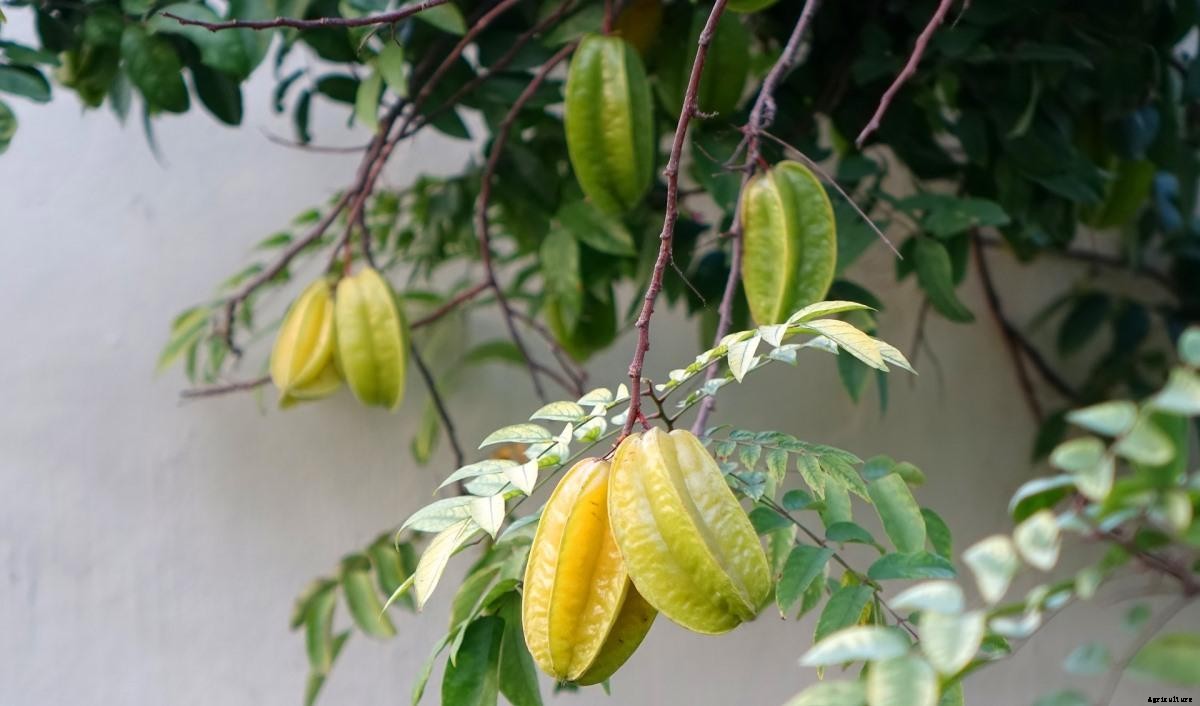
Whether you’re picking star fruit off a tree in your backyard or selecting fresh fruit from the market, here’s what you’ll get to know to seek out the simplest products for of these innovative ways you’ve got for using star fruit:


