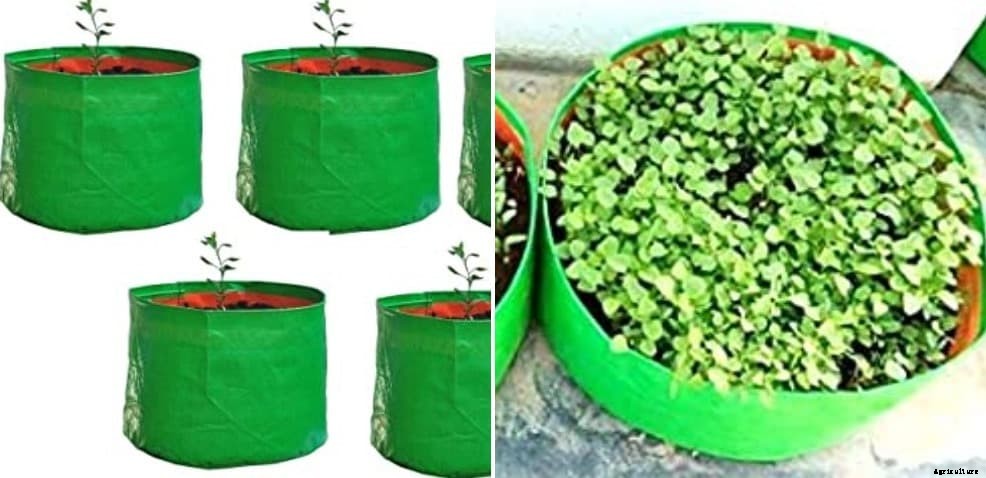
Growing Plants In Grow Bags – Advantages And Problems
Introduction toGrowing Plants in Grow Bags
Grow bags have become very popular in recent years because they solve several garden problems. Grow bags made from lightweight, durable fabric, they cost very little to make and fold up nice and small for easy storage. They are a great way to create portable plantings outdoors. Though, many gardeners wonder if they can use grow bags indoors, and if so, how they should go about it. They are plastic or fabric bags that are used to grow plants with shallow roots. Growing bags are ideal for balconies, indoors, or small gardens, where space is a premium. Growing bags are re-usable and put out very little waste. In this article, we also discuss the below sections;
Do grow bags need drainage holes
What size grow bag for peppers
Grow bags for indoor plants
Why use grow bags
what size grow bag suitable for vegetables
How to make grow bags
What size grow bag for tomatoes
Vegetable grow bags
A Step-by-Step Guide to Growing Plants in Grow Bags
Grow bags can be mostly used for annuals including flowers and vegetables or perennials you plan to overwinter in a protected storage area.
Can you use grow bags indoors? Yes, you can use grow bags indoors. For growing plants in grow bags, you should follow some conditions;
First, you will need to choose a location with enough light, and make sure there are drainage holes in the grow bag.
Also, you will need to use the right type of soil for your plants, and find a way to water them. You can use grow bags indoors, but there are some considerations before you get started.
You will want to select the right size bags, and then choose a good location with plenty of sunlight. Make sure there are enough drainage holes in the grow bag.
Use the right type of soil, depending on which plant you put in your grow bag.
Finally, you will want to find a way to water your plants and a way to support certain plants like small stakes or tomato cages. These types of plant grow bags are ideal for growing vegetables on the terrace and balconies and its easily transportable because of their lightweight.
One of the popular alternatives of the gardening that is done in-ground is grown bags.
Grow bags are like large fiber bags used for growing plants with shallow roots. So, you can use Grow bags indoors or take it outside for the light it needs and change it again reposition it based on your preference.
Advantages of Growing Plants in Grow Bags
Grow bags are perfect for growing vegetables, fruits, and even flowers.
There are several distinct advantages of using grow bags compared to other types of growing methods. For example, a plant that is grown in a plastic pot will become root-bound as the roots will simply circle the pot. A plant growing in a grow bag will receive oxygen through the walls of the pot.
Many gardeners using grow bags when wishing to expand their home garden space.
Growers with heavy soils may specifically choose to grow bags as a means by which they can grow more successful plants of root vegetables like carrots and potatoes. If soil isn’t quite up to par, using a grow bag can fix that. Much like a raised bed or container, you can grow plants in looser and healthier soil.
Grow bags are made of breathable fabric which means good drainage and aeration. It is the aeration that makes them superior to garden containers.
Grow bags also let water out, which prevents overwatering issues.
Grow bags allow better aeration – Grow bags are breathable, so the bags allow more soil to come in contact with the air than traditional pots. Better aeration prevents soil compaction, and this makes it easier for plants to absorb nutrients from the soil. Since they allow excess heat to escape on warm days. This means that plants are less likely to overheat if left out in the sun. Finally, when the soil contains more air, water will penetrate the soil easily, allowing more even watering (rather than some areas that are too dry and some that are too wet).
Grow bags allow better drainage – Drainage holes allow excess water to escape through the bottom of a bag.
Grow bags are perfect to use especially when your yard soil is not rich in nutrients or non-existent. Being rectangular, these bags are available in different sizes and heights which makes them versatile.
Temperature control – Grow bags are breathable by nature. Hence, it is easier to regulate the temperature. Also, excessive heat is unable to affect the plants adversely.
Ease of use – Grow bags are lightweight and come with handles they are easy to move around the garden.
Types of Grow Bags Used to Growinf Plant or in Gardening
Grow bags are available in 3 different sizes like medium, large, and extra-large.
Standard or Medium Bags – Standard grow bags have dimensions of about 24 cm x 24 cm x 40 cm. In medium bags, all leafy vegetables and fruit vegetables can be grown well like Spinach, Amaranthus, Coriander, Tomato, Brinjal, Chilli, Carrot, and Beetroot, etc. Medium or Standard size grow bags holds up to 15kg of potting mix.
Large Bag – Large bags have dimensions of about 61 cm x 35 cm x 18 cm. In a large bag, Lemon plants, Curry Leaves, and all types of Creepers such as Bottle Gourd, Bitter Gourd, Ridge Gourd, and Snake Gourd can be grown. It holds up to about 35kg of potting mix.
Extra-Large Bag – It has dimensions of about 85 cm x 45 cm x 35 cm. In extra-large bags, all fruit plants can be grown like Pomegranate, Chikoo, Guava, Orange, and Papaya, etc. It holds up to 80kg of potting mix.
Purchase your Grow Bagsfor Growing Plants
You can purchase a grow bag at a nursery or home improvement store. You can select a plastic or fabric growing bag, but fabric growing bags often need to be watered more than plastic bags. Select the bag based on the size of the roots. Don’t buy a large bag unless you are going to plant something large. E.g., you would require a 50-gallon bag if you’re planting something as large as a grapefruit tree.
Considerations When Choosing Grow Bagsfor Growing Plants in the Home Garden
Material
Grow bags tend to be made of fabric or flexible plastic.
Fabric grows bags are permeable, which is great for drainage and allowing air to plant roots. Though it does mean they don’t retain water as effectively, so you need to water more frequently, plus heat retention isn’t great. Plastic grow bags are an affordable option that retains moisture and heat well, which is great for plants that need warm soil to thrive. The disadvantage of plastic bags is that they aren’t highly durable and they last a couple of growing seasons before they must be replaced.
Color
The majority of grow bags are black, but this isn’t the best option for delicate plants that easily get scorched roots, since black absorbs more heat from the sun than lighter colors. Also, you can sometimes find green, tan, or white options.
Choosing a Location For Your Indoor Grow Bag
Before you fill-up the grow bag with soil, you will want to put it in the correct location, so you don’t have to move a heavy bag too far.
Find a location near a window that will get plenty of sunlight during the day, especially if you are growing in the winter when the days are shorter.
A south-facing window is the best bet, especially for plants like tomatoes that need full sun.
Set your grow bags near a sunny window to get the most out of your plants. Also, be sure to avoid locations that have drafts, since plants won’t like shocks of hot or cold air from HVAC systems.
Normally, dark-colored grow bags absorb more energy from sunlight and get warmer during the day. If you keep your house cool, a darker grow bag will help plants to stay a few extra degrees warmer.
Adding Soil to Your Grow Bag
The soil used in your grow bag will depend on what you are trying to grow. Several plant varieties will do fine with a potting soil mix from a local garden center. On the other hand, carrots prefer loose and sandy soil.
A good soil mix for grow bags is 1/3 moss, 1/3 compost mixture, and 1/3 vermiculite. This mix retains moisture and is important for gardening with grow bags. You can also mulch grow bags with wood chips just like you would in the garden. You need loose and sandy soil to grow straight carrots that are not forked or deformed.
When putting soil in a grow bag, don’t fill it to the top, or else you won’t have a place to put your plant, and the soil will spill out when you water the plant.
Instead, put some soil in the grow bag, leaving enough space for the plant and its roots. Put your plant in the grow bag, and then cover the roots with some more soil.
How to Use Grow Bags for Growing Plants
Grow bags work well with several plants. Simply plant vegetables like you normally would in regular soil. Some vegetables produce well in grow bags besides Tomatoes are, Lettuce, Kohlrabi, and French or Green Beans.
Short root crops like Potatoes, Radishes, Stump Rooted Carrots, and Spring Onions do well in the garden grow bags as well. Also, you can create a herb garden using a grow bag. If you are not into growing vegetables and herbs, you can also use grow bags for flower plants.
Each bag must be treated as a large container. You can place several grow bags in a row to create a continuous garden bed. Growing flowers or vegetable plants in a growing bag is not much different than growing them in other container types. You do need to keep in mind that there are no drainage holes, so be careful with watering your plants or you could end up with a mushy mess.
When you first plant in fabric bags you will want to water them sparingly. As your plants start to grow you will want to provide them with more water, especially if the weather is fairly hot and sunny. If you let your tomato plants dry out the tomatoes start to show signs of end rot.
If you are having a rainy summer it is very important to make sure that grow bags are draining properly. Also, proper drainage is important because if the soil becomes too wet your plants can get root rot. When this develops in your plant it will stop producing fruit and becomes useless.
It is important to feed your plants regularly in grow bags. Since a growing bag holds a small amount of compost, when the plants have used up these original nutrients they will need more. Giving your plants a general-purpose feed weekly will help provide them with the nutrients they need to grow.
If you use the right type of grow bag combined with the right type of soil, you will quickly discover that plants will grow at a fairly fast rate. Grow bags promote plant growth and production.
What about Fertilizing Plants in Grow Bags
Growing plants in grow bags is different than growing plants in pots or containers.
Worm castings, bone meal, and compost tea are all important elements in fertilizing plants.
For plant growth, we can use waste eggshells to make water-soluble calcium as a foliar spray and keep banana peels to make an easy potassium fertilizer that you can add topically to the soil.
Watering Grow Bags
Grow bags require more water than potted plants. Check the growing bags daily and water the soil anytime you see that it is drying out. The plastic heats the peat mix considerably, so keeping the soil moist is necessary for the growing plants to succeed. Generally, fabric bags need to be watered more often than plastic bags.
Cost of Grow Bags
The cost of grow bags is approximately Rs 100/ Kilogram.
Choose Plants for Gowing in Grow Bags
Choose plants to grow bags with shallow roots for best results. Usually, shallow-rooted plants are ideal in the grow bag because they will not be stunted by the bottom of the bag. Some good plant choices for grow bags are Vegetables like Tomatoes, Peppers (Capsicum), Eggplants, Zucchini, Cucumbers, Marrow, Lettuce, Potatoes, Strawberries, Herbs, and Flowers. Also, you can grow trees, if you have purchased a very large growing bag. Vegetables growing in grow bags are a perfect solution to save up space.
Size of Grow Bags for VegetablePlants Growing
Table to find out which size grow bag you should use by plant type.
PlantRecommended Size of Grow Bag Basil1 to 4 gallonsCarrot1 to 3 gallonsLettuce2 to 3 gallonsOnion1 to 3 gallonsPepper2 to 3 gallons (jalapeno) 5 to 7 gallons (mini bell)Radish1 to 3 gallonsTomato2 to 3 gallons (miniature) 5 to 10 gallons (determinate)Zucchini15 gallonsKale3 to 5 gallonsChard1 to 2 gallonsCucumbers4 to 5 gallonsHerbs1 to 2 gallons
Herbs You Can Grow in Grow Bags
Many herbs grow well in grow bags. Fresh herbs add unique flavor to many dishes. Some of the common herbs you can plant in grow bags are Basil, Rosemary, Sage, Fennel, Chives, and Dill.
Root Vegetables Suitable for Grow Bags
Growing root vegetables in grow bags is going to be the best idea. Some of our favorites are Potatoes, Radish, Beetroot, Carrots, and Onions.
Some other vegetables that grow well in grow bags are Lettuce, Tomatoes, Chilies, Swiss chard, Mushrooms, Cauliflower, Beans, and Cabbage.
You should not miss this: Growing Plants from Seed.
Disadvantages of Using Grow Bags
The grow bags that are obtainable on the market aren’t all eco-friendly, as they are not all biodegradable. Many grow bags are formed with poly plastics that don’t break down. Then, this becomes a concern when the grow bags need to be discarded and replaced.
Grow bags require more watering than traditional pots do and this is one of the biggest grow bag gardening disadvantages if you don’t have a lot of extra time on your hands.
Considering the grow bags do not last as long as other containers, then it means more money to spend replacing them. The cost will depend on the plants you have to grow within a certain period.
Commonly Asked Questions about Grow Bags
What size grows bag for vegetables?
Generally, grow bags come in sizes from 1 gallon to 100 gallons. The grow bag size you need will depend on the plant you want to grow. Normally, you won’t be able to grow large plants indoors, due to space constraints and the fact that your ceiling height will only accommodate shorter plants.
Should you put drainage holes in grow bags?
Yes, you should put drainage holes in grow bags. Some grow bags already have drainage holes in the bottom or sides. If not, you can use a knife or scissors to create drainage holes yourself.
What can I grow in a grow bag?
Any plants that you can grow in a container are suitable for grow bags. You can grow anything in a grow bag, from tomato plants to petunias. You can even grow root vegetables like potatoes, in large, deep grow bags.
Can I reuse the potting soil in my grow bag?
Yes, you can reuse the potting soil in a grow bag, but it’s best not to grow the same type of plant in the same soil 2 years in a row, especially blight-prone plants like tomatoes and potatoes, as this increases the risk of disease.
In case if you are interested in this: Vegetable Farming Tips, Production Business Plan.