
Welcome to Modern Agriculture!

Growing Tomatillos in Containers
The Tomatillo is also known as the Mexican husk tomato is an annual plant of the nightshade family and its tart edible fruits. Tomatillos are great container plants for kitchen gardens. Tomatillo plants will need stakes, trellis, or other types of support. The flowers will attract bees, which will increase Tomatillo fruit production. Tomatillos do well in small 5-gallon plant containers with well-draining potting soil. The Tomatillo looks much like a tomato. The Tomatillo is generally green but can be orange, yellow, red, or even purple. Tomatillo is enclosed in a papery wrapping called a calyx. The condition of the calyx is used as an indicator of freshness in fresh markets. In this article we also discuss the below topics;
Tomatillo Varieties
The best varieties of Tomatillos are given below;
Purple – This type has a dark purple colour skin that adds colour to the garden. It’s a lot sweeter than other green-coloured Tomatillos. Purple is equally delicious in salsa.
Purple Coban – Another purple-coloured variety, this one is an heirloom and it matures in 70 days.
Toma Verde – This type is quick-maturing Tomatillo (60 days) that produces large-sized fruits.
Tomayo – Tomayo plant yields big green balls of semi-sweet Tomatillos.
Amarylla – It is a yellow coloured variety that matures in about 60 days.
Rio Grande Verde – For the gardener looking for a plant that yields big fruits, this variety is the number one choice.
Other Tomatillo Varieties to Grow in Your Garden are;
“Cisineros” – Very large, green fruits.
“di Milpa’ – Small wild variety.
“Pineapple” – Small and fruity tasting.
“Purple” – Heirloom purple variety with sweet fruits.
“Toma Verde” – A traditional green variety.
“Verde Puebla” – Large, productive green variety
Tomatillos need potting soil that drains well. Choose a soil that has been enriched with lots of organic matter like aged manure or mature compost. Then, add plenty of organic matter to the soil, before planting. Tomatillos prefer a somewhat neutral soil pH level of around 6.5 – 7.0, but for the most part, they will grow anywhere there is heat, sunshine, and regular water.
Tomatoes and Tomatillos belong to the same nightshade family, but they are slightly different plants. Tomatillo fruits have a slightly more acidic, slightly less sweet flavor than ripe and unripe tomatoes. Overall, the Tomatillo fruit flavor is more vegetal and bright, and the interior texture is denser and less watery.
Tomatillos are big and sprawling plants. They also need lots of water. To have the best chance for success growing Tomatillos, get the biggest container you can and then fill it up with a good quality potting soil. You’ll want to use a large size pot because the more potting soil you use the better the moisture retention will be, and the happier the plant. For growing Tomatillos, you can use almost any container that is big enough to hold at least a cubic foot of soil. A large reusable grocery bag or large conventional flower pot would work too. Also, growing Tomatillos in a grow box makes it easier to keep the plants hydrated.
Normally, Tomatillos need at least a 5-gallon pot per plant. They do best with ample space and lots of water, so the bigger container is better. You will need at least two Tomatillo plants to bear fruit (3 or 4 is ideal) and both containers need to sit near each other. Be sure your containers drain well or root rot will devastate your Tomatillo plants.
Tomatillos can be grown from seed or cuttings.
To propagate Tomatillo plants by seed, start seeds indoors 2 months before the last expected frost (seeds will germinate in 4 to 7 days). Seed trays aren’t large enough to grow Tomatillo seedlings for 2 months, so either uses a larger plant container when starting seeds or transplants seedlings into a large pot after the first set of true leaves forms. When bringing the young plants outside, harden them off by getting them used to the cooler outdoor garden weather. For a few days, keep the plants out in the sun only during the daytime and bring them back indoors at night.
Cuttings will take root easily. If plants sprawl, branches that touch the soil may develop plant roots on their own. If you wish to do cuttings, choose 6 inches or longer vigorous branch. Remove it along the stem, and strip off lower leaves, ensuring that a few leaves are remaining at the tip. Trim it down to 6 inches height. You can dip it in rooting hormone if you’d like, but it’s not necessary. Place your cutting into a container of moistened potting soil and it will form plant roots within a couple of weeks. Ensure your soil remains damp, but not soggy, while it’s setting roots. Then, this will be enough to keep your stem hydrated until it forms new roots to absorb nutrients.
Tomatillo seedlings are not always widely available, but the plants are easy to start from seed. You can start seed indoors, about 4 weeks before your transplant. They germinate and grow quickly, much like tomatoes.
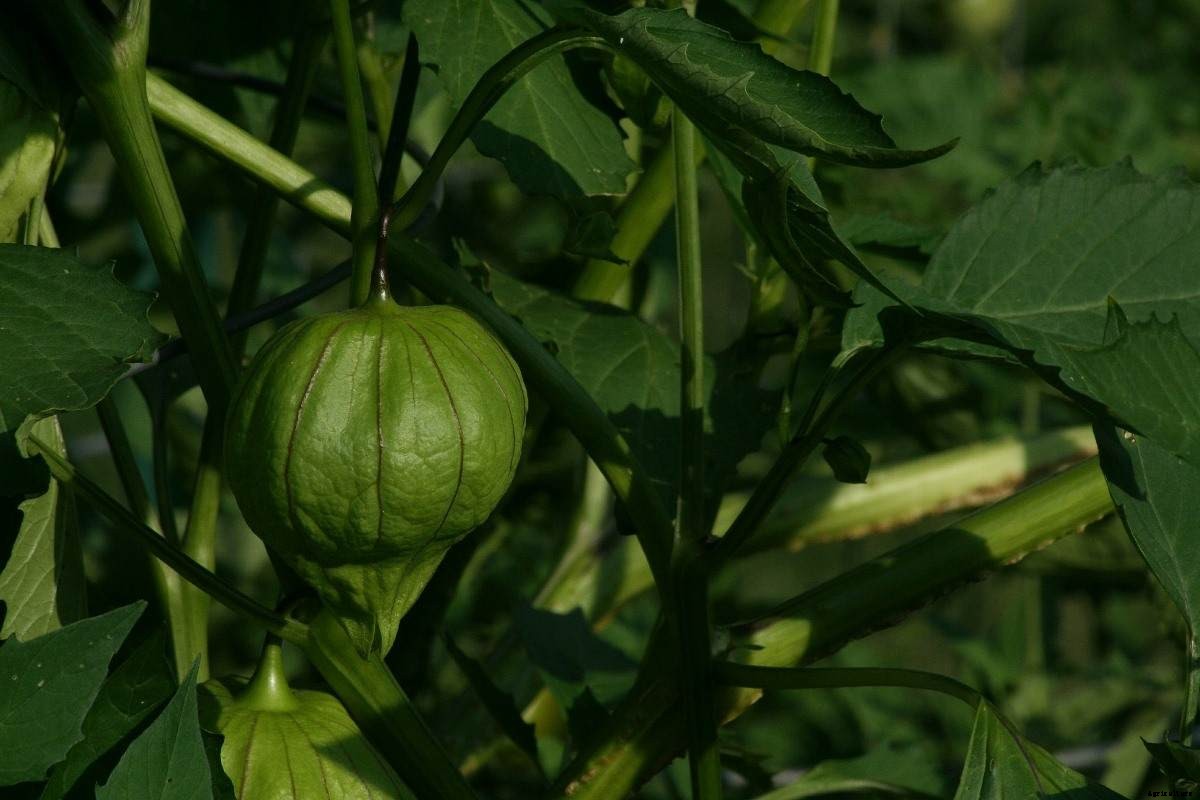
Tomatillos must be transplanted into the ground around the same time you plant your tomatoes. Tomatillo plants are a little more forgiving, but waiting until the nights start to warm up is ideal. These are very sensitive to cold temperatures.
It is important to remember that you will need at least 2 Tomatillo plants, for pollination and fruit production. Tomatillo plants are self-sterile; meaning the flowers of an individual plant cannot pollinate themselves. You will need more than one plant to get fruits.
The plants are bushy and about 2 – 3 feet tall. The plants can get heavy with fruit and staking or caging is highly recommended. You can plant them closely, but they are easier to harvest with at least 6 inches between plants.
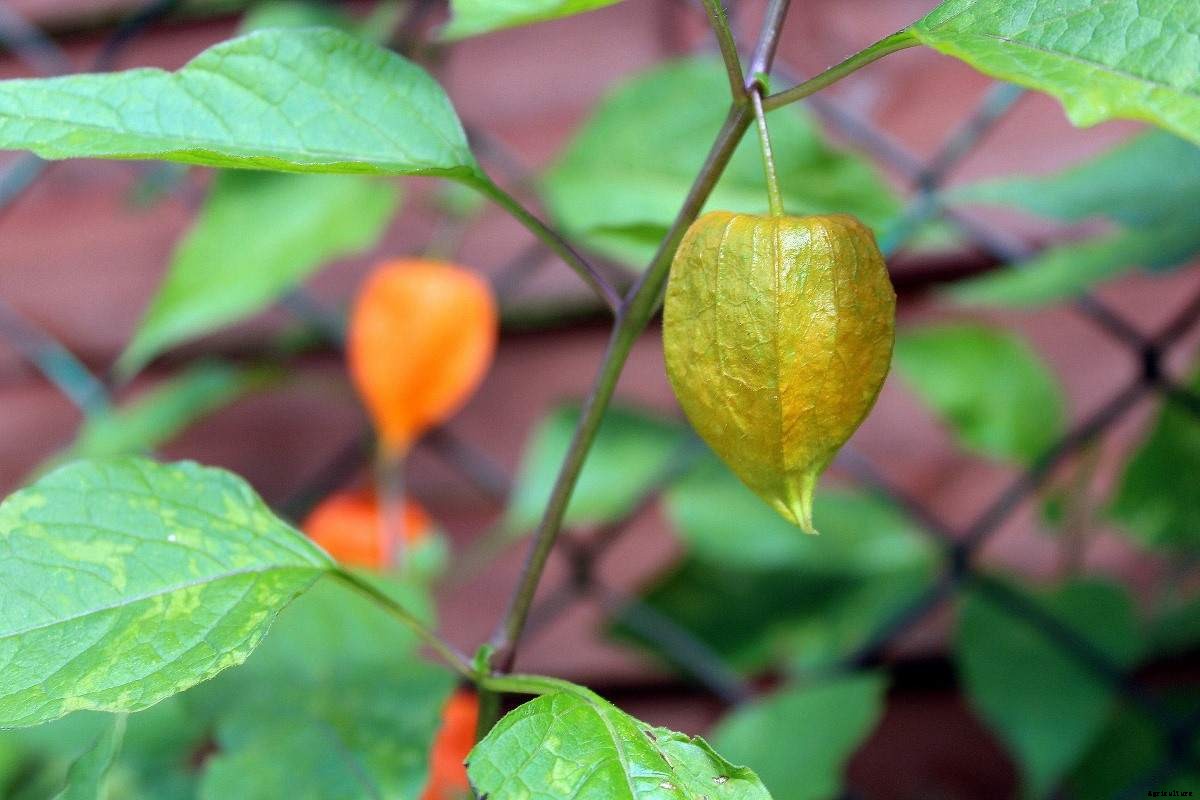
Tomatillo plants need to be watered regularly. Never let the soil dry out but be sure not to let it get soggy either. Like tomatoes, Tomatillos need regular watering to produce fruit. Apply about 1 inch of water per week, or more if you live in dry conditions. Water at the base of the Tomatillo plant; overhead watering can encourage disease. Keep in mind that containers dry out fast. Keep an eye on them, particularly during dry spells. Ceramic pots tend to dry out quicker than plastic containers. Water Tomatillo plants at the base and be sure they get 1 to 1.5 inches of water weekly.
Tomatillo plants grow tall quickly and need support even before they start to bear fruit. Place a stake in your containers before transplanting to avoid damaging the plant roots later on. Gently tie the vines to the stake as they appear to need the support. Use a thick string or cloth to avoid damaging the vines. Be sure the vines do not touch the ground, which tends to attract pests and encourage disease.
Light pruning is good for Tomatillo plants, as it promotes good air circulation around the plant. The majority of your pruning must be removing sucker shoots. A sucker shoot comes up in the V-shape created by the main stem and a branch. Simply pinch off the new shoot once it reaches 2-4 inches in length, or trim it off with a clean and sterile pair of pruning shears. Use metal or wooden stakes that are at least 2 inches in diameter and 4 or 5 feet tall.
Tomatillos have only a few insect pests and diseases. Insect pests include cutworms, root-knot nematode, tobacco budworm, and whiteflies. Common diseases are black spot and tobacco mosaic virus.
Flea Beetles – Flea beetles are irritating little creatures that munch on the foliage of Tomatillo plants. A homemade spray should do the trick if you encounter them and need to get rid of them, but they’re not a big problem especially not with nearly mature plants.
Mosaic Virus – Mosaic virus eventually kills off plants. Affected plants should be destroyed and promptly removed from the garden.
Black Spot – Black spot is a fungal infection that plant leaves dark spots on foliage, but may eventually affect fruit appearance if left untreated. Certain fungicides can be applied to treat the issue, but to avoid it in the first place it’s best to ensure proper air circulation between plants and avoid overwatering.
Spider Mites – You’ll notice yellowing and browning leaves and lots of little spider-like insects. Prune away impacted plant leaves, and spray the plants with water. Use neem oil to control them long-term.
You should not miss this: Growing Organic Aspagarus.

Tomatillo plants tend to grow in height and produce a lot of leaves before they start producing fruits. You can expect the fruits to start maturing in 80 days. Harvest Tomatillos when the fruits fill out the husks and the husks begin to break open, about 100 days after transplanting. In some cases, the fruits will not break open the husks and you have to feel the fruits for firmness. Ripe Tomatillos turn green to pale yellow.
Harvest the Tomatillo fruits, husks, and all. If you are using them right away, remove the husks, and then wash the sticky fruits. Otherwise, leave the husks in place, and you can store the fruit for up to a month. Do not seal them in airtight containers or plastic bags; store them in mesh bags in a cool, well-ventilated spot. Smaller varieties are delicious for fresh eating.
In case if you are interested in this: Organic Mint Farming.


