
Welcome to Modern Agriculture!

Introduction to Growing Luffa Gourd in Containers
Luffa Gourd is also known as Loofah Gourd or Sponge Gourd. Luffa gourds can grow to 2 feet long and 7 inches in diameter. If you want to eat the Luffa gourd, it is best harvested when less than 6 inches long. Luffas are tender vines belonging to the cucumber family and can be easily grown indoors or outside in a sheltered position. They have fruits that are edible when young and green, developing a fibrous structure when mature. In this article we also discuss the below topics;
The plant thrives in well-drained, loamy soil with a pH level of 6.0 to 7. When growing sponge gourd in pots, never use ordinary garden soil. Like other gourds, Luffa plant loves warmth and expose to the sun as well. Place your Luffa plant at a position, where it gets a minimum of 5 to 6 hours of direct sunlight daily.
For growing Luffa in containers pick one that is more than 12 inches deep and wide. It can be of any material, just make sure it has proper drainage holes at the bottom. A large 16-18 inches pot or bucket is right for the growth of one plant if you’re growing it for edible purpose. Containers must have good drainage and can’t be moved once the vines attach tendrils to other objects. The ideal soil pH level is neutral to slightly alkaline. Some lime may be needed for acid soils.
Starting Luffa seeds indoors about 6 to 8 weeks before their average last spring frost. You can increase seed germination rate by scratching the seeds on sandpaper to weaken the seed coating this is called “scarification” or by soaking them in water for about 48 hours before planting. Luffa seeds are slow to sprout, so practice patience while maintaining a moist, well-drained soil medium and providing plenty of light.
You can find Luffa gourd seeds in a local nursery or garden center easily. Always buy new seeds for propagation. After procuring seeds, take a filer or sandpaper and scratch the outer layer a bit. Soaking them in warm water for 24 hours also helps in the germination process.
Poke your finger in the soil, making a hole of about an inch, and put the seeds in. Cover them completely and water moderately. Check the moisture every day and don’t let the soil dry out completely. The seeds will germinate in 4-10 days.
Luffa seed germination is equally dependent on moisture and temperature. If the Luffa seeds are moist but not sprouting then it may be too cold. The soil needs to be warm, near 21°C or warmer. If the Luffa seeds have been stored in a hot dry place they may become hard. Hard seeds will take longer to sprout and may not germinate at all. To speed up the germination of any seeds, wrap them in a wet towel in a warm place for a day or two before planting. You want just enough water to keep the Luffa seeds moist and humid but still allow air in. Even under ideal conditions, some Luffa seeds may take a long time to germinate. Normally it takes one to two weeks, sometimes less. Luffa seeds planted in soil that is too cold or wet often decay without sprouting.
Step 1) Luffa is quite easy to grow, and when the fruits are still young, they’re quite delicious. They can be cooked and eaten like zucchini. But, for gardeners interested in growing Luffa as a sponge, the fruits need to mature on the vine.
Step 2) A vining plant, closely related to cucumbers, melons, and squash, Luffa takes up quite a bit of room in the garden. The vines can reach 10 to 20 feet in length, so most gardeners will want to grow them up a trellis or fence.
Step 3) Luffa plants like full sun and a well-drained but moist soil, enriched with plenty of compost or well-rotted manure. They are grown like winter squash or hard-shelled gourd and their long (30 feet isn’t unusual) vigorous vines need lots of room to roam or a sturdy trellis to clamber over.
Step 4) Luffas need a long season to ripen and most gardeners start seeds in 5 or 6-inch pots inside a few weeks before planting time. Then transplant them outdoors once the weather is warm and settled.
Step 5) Pick a site that receives a minimum of 6 to 8 hours of full sun per day and work some compost or other organic matter into the planting area before sowing the seeds. Because Luffa seeds sometimes take a long time to germinate, soak them in warm water for a day or two before planting to speed germination.
Step 6) Sowing method – The seeds need to be started earlier in pots for better germination and health of the plant. They should be planted 2 cm deep in pots, and make sure the soil temperature is warm. The plant will germinate in about a week, and after a month, when the seedlings have their first leaves on them, they can be transplanted outdoors. Once the plants are shifted completely outdoors, then it takes 120 to 150 days for the plant to become ready to pick.
Step 7) Plant two or three Luffa vines close together and allow them to climb the trellis. Water the vines regularly throughout the growing season and mulch with a 2-inch layer of straw or untreated grass clippings.
Step 8) The Luffa gourds will begin to develop in mid- to late-summer and will eventually reach up to 2 feet in length. Expect one to two dozen Luffas per plant. You’ll know they’re ripe when their green skin shrivels and turns yellow and dry. Still-green fruits do not make good sponges. The fruits must be allowed to fully ripen on the vine.
You should not miss this: Growing Organic Cucumbers In Containers.
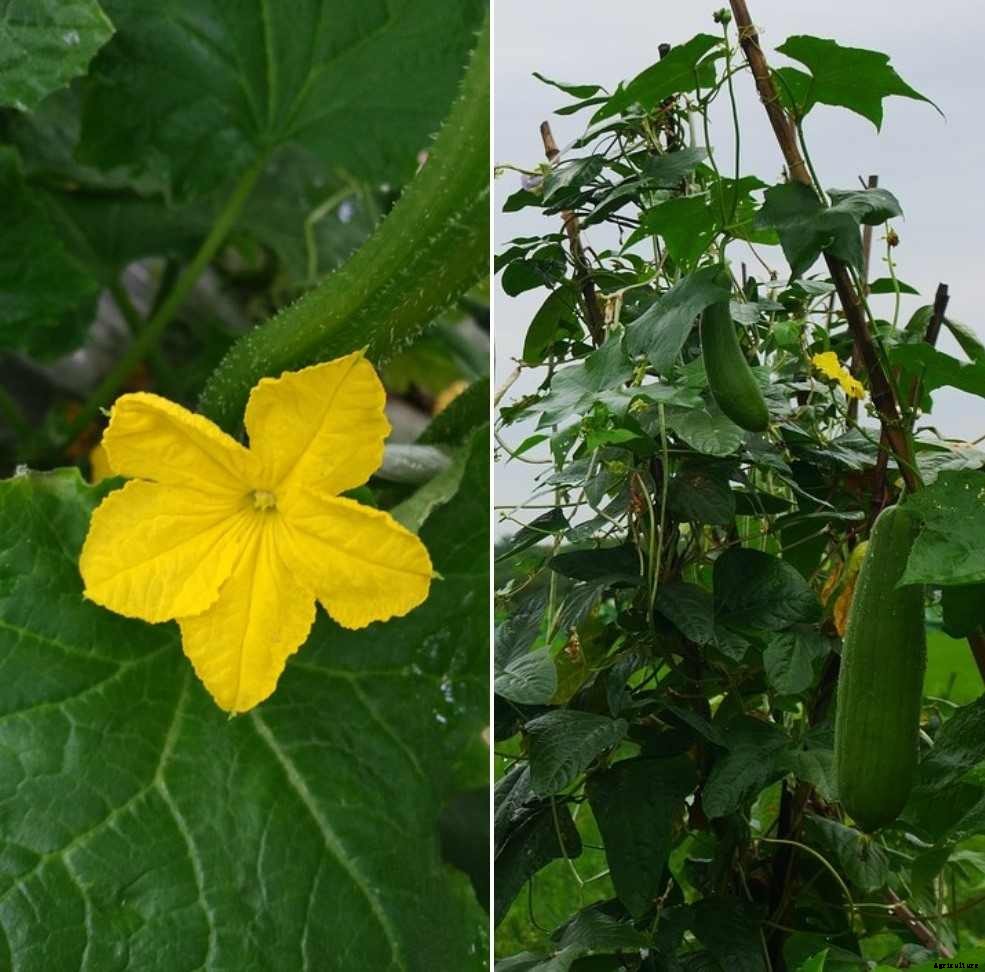
Luffa vines grow vigorously and fast and need a very sturdy trellis to keep the fruit off the ground and ensure good air circulation. Soil contact may lead to fruit rot, discoloration, and misshaped gourds.
Luffa gourds benefit greatly from being grown on a trellis system. If Luffa gourds contact the ground, discolored sponges, fruit rot, and misshaped gourds are usually the result. Trellis like the ones for cucumbers and pole beans work well, as long as the trellis is strong enough to support the weight of the mature Luffa gourds.
Luffa gourd is one of the popular vegetables similar to ridge gourd. The only difference is Luffa gourd has a smooth surface. Fully ripe sponge gourds have a high volume of fibrous which is being used as a cleansing agent and making shoe-soles, table mats.
Luffas are reasonably healthy but can suffer from the same problems as other cucurbits, especially powdery mildew disease. Watering the plants well and removing the worst affected leaves will help control this disease.
If you’re over-watering the plant, this will essentially drown it and cause the roots to rot. If the edges of the leaves are browning or the plant seems to be suddenly infected with pest issues, then over-watering might be the problem.
Pruning aims to improve the overall health of the Luffa plant as well as reducing its size and thickening the leaves for better consumption. Pruning is a type of training, especially used in the case of Luffa plants. It also protects the plant from damaging weather and other unfavourable conditions. To get the best quality out of your Luffa, pruning is required at least twice a year means once during the spring season and once during the summer season. The pruning time depends on the growth of the Luffa and also on the climate of the place where it grows.
When pruning Luffa vines, keep in mind the size of the area in which they will grow and how many of these versatile fruits you will want. The idea is to allow the stems to reach your trellis system while promoting airflow and room for the large fruits to grow without bumping into each other.
Use very sharp and clean cutting tools for Luffa pruning. Then, this will help prevent disease and damage at cut sites. To trim young plants, wait until there are at least 4 stems and cut all of the first stems back to the main stem. Continue training to the trellis and let the stems grow. Pinch off the first male flowers. Female flowers develop next and will form the fruit. You can easily keep the plant in check this way, provided you still have plenty of fruit on the lower vines. To give the plants room to grow, you may have to prune off those that are in clusters. This will allow the biggest fruits to fully mature without damage.
Picking the Luffa is similar to the method for harvesting any other squash or melon. If you want to use the Luffa in the kitchen, then it should be harvested in its tender fruit stages, before it starts flowering. This will be about 4 months after the initial planting of the seed. If you aim to use it for the sponge inside, then wait until it flowers, and then pick the Luffa gourd.
In case if you are interested in this: Organic Watermelon Farming.


