
Welcome to Modern Agriculture!

Introduction to growing Passion fruit plant in containers
Passion fruit is one of the popular garden plants. It is highly rich in Vitamin C, beta-cryptoxanthin and alpha-carotene that boosts your immunity. It also has iron which increases hemoglobin in red blood cells. The rich content of riboflavin (Vitamin B6) and niacin (Vitamin B3) in Passion fruit also helps in regulating the thyroid activity in our body. Passion fruit is also known as granadilla. In this article we also discuss below topics;
Passion fruit is one of the bountiful backyard crops, and spring is a good time to get started with planting a new vine or to give one that’s already growing a helping hand. Passion fruit trees may be grown indoors near a sunny window. The plants do best when planted in a location with well-draining, moist soil, and protection from strong winds. In the subtropics they could begin fruiting in 6 to 12 months from planting, it takes 18 months before flowering begins and fruit forms.
The best soil for Passion fruit vines is rich in organic matter and well-drained with a pH level of 5.5 to 6.5. Plant Passion fruit vines in full sun except in hot areas where partial shade is preferable. The vine can be rather rampant, so it is very important to plant it next to a chain-link fence or install a strong trellis before planting. The plants can be trained into an attractive arbor.
Passion fruit vines need large containers. If you’re transplanting, select a container that’s two to three times the size of your current one. Fill the container with well-draining, nutrient-rich potting material. Passion fruit vines are fantastic growers and climbers, often gaining 15 to 20 feet (4.5-6 m.) of length in a single year. This means it’s essential to give the vine some kind of growing structure, such as a trellis or a chain-link fence. Position your container grown Passion flowers about one foot (0.3 m.) away from the structure. Even if you’re planning on moving your Passion fruit vine indoors for the winter, it’s alright to let it climb a fixed outdoor object. When winter comes, you can cut the vine down to 1 or 2 feet (0.3-0.6 m.) high so it can be easily stored indoors. It’s such a fast grower that it will simply make up for the lost length in the spring.
In case if you miss this: Growing Carambola in Containers.
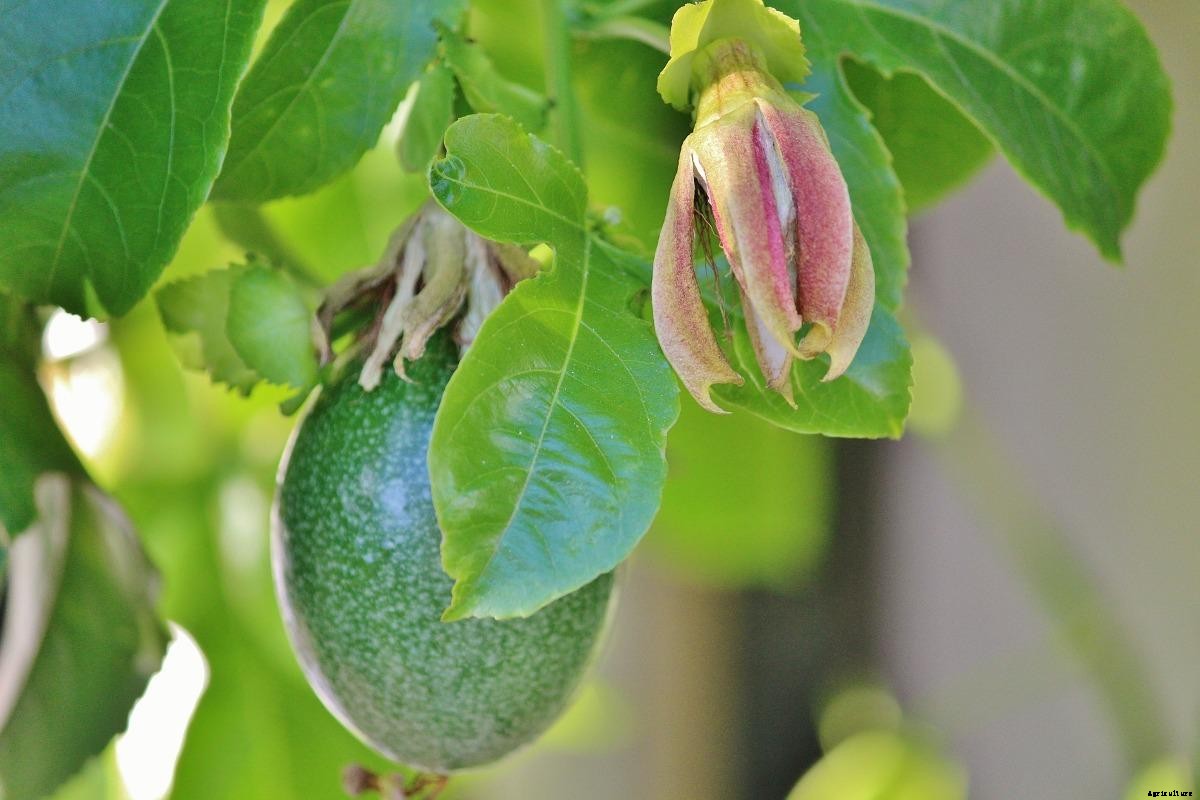
To grow Passion fruit indoors is quite simple. Use a pot that is about 12 x 12 inches and fill it with high-quality potting soil. Use a trellis so the vine of your plant can grow up and around it, get the plant at least 4 hours of sunlight daily and watch your new houseplant thrive.
Passion fruit propagation is usually from seed, and germination can take anywhere from a few weeks to a few months. Increase seed germination speed by placing the seed tray on a warm surface that has a temperature range between 21 to 27°C. Then, soaking the seed before planting in warm to hot water overnight will help to soften the seed.
The Passion fruit vine can be grown from fresh seed or rooted cuttings. Plants are grown from seed take 1 to 3 weeks to germinate, while cuttings begin to grow as soon as they develop roots. Passion fruit vines propagated by either method take 2 to 3 years to reach maturity, flower and begin to bear fruit. In general, yellow Passion fruit vines grow faster, fruit quickly and produce larger crops. The fruit of both yellow and purple varieties takes 2 to 3 months to ripen.
You may also like the Growing Persimmons in Containers from Seed.
The best time to plant a Passion fruit vine is in the spring season. Before planting, prepare your soil by incorporating compost and chicken manure to an area around 1 to 2 meters wide. Dig a hole twice as wide and just as deep as the root ball, gently tease the plant roots, plant the vine and water well. Mulch around the base with sugarcane, bark chips or pea straw, but don’t let it build up around the plant stem. Passion fruit vines can be grown in large pots as long as they have an adequate support structure.
Passion fruit vines require regular watering, particularly when the vine is young and when it’s flowering and fruiting. Then, water deeply a couple of times a week, depending on weather conditions and climate. Remember to spread water over the entire root system, not just around the stem of the vine.
Feed Passion fruit vine with well-watered-in citrus food or chicken manure twice a year, in spring and autumn. Ensure you spread the fertilizer over the entire root system. Avoid over-feeding or using fertilizers that are high in nitrogen, this will encourage leaf growth at the expense of flowers and also fruits.
Seed-grown Passion fruit can take about 18 months to 2 years to flower and fruit; vines are fast-growing in warm climates with ample water and fertilizer and fruit in 6 months. Flowering occurs from spring to autumn with fruit forming quickly after the plant flowers have been pollinated.
Passion fruit vines are susceptible to several diseases, including fusarium wilt, crown rot, nematode attack, and some viruses. Infected vines could seem to lose their vitality and sometimes develop stem lesions or cankers close to the soil line. These problems can kill the vine early and could spread to other plants. If Passion fruit vine develops an infection, it’s best to remove it, destroy the dead material, and replant it in a new location. Though, yellow Passion fruit plants are resistant to nematodes and fusarium wilt and can be planted preferentially or used as a rootstock for purple fruit vines to prevent disease.
Snails and slugs could attack seedlings. Protect the little Passion fruit plants with a few pellets of iron-based snail and slug bait. Check the plant leaves for other pests including grasshoppers and Passion vine hoppers. Also, protect seedlings at night if there are possums around.
Protect the plant from disease. There are a handful of diseases you must try to prevent. When you spot signs of plant disease, you need to do what you can to get rid of it and prevent the disease from spreading. Passion fruit vines can fall victim to rot and also viral diseases.
Flowers appear in mid-spring before fruiting in early summer. Your first fruit will appear around 6 to 8 months after planting but have patience the best crop will come in around 18 months. Passion fruits want to fully ripen on the vine and will drop off when they’re ready to eat. They can be picked off the vine when their color is fully developed and come away from the vine easily. Normally, ripe Passion fruit will drop from the vine as soon as they are ready for consumption. The drop itself does not hurt the fruit, but you must collect the fruit within a couple of days after it drops to ensure the best possible quality. If you have a variety that does not drop its fruit, simply pluck off each fruit once you observe the skin beginning to wrinkle.
You should not miss the Vermiculture Advantages for Organic Garden.
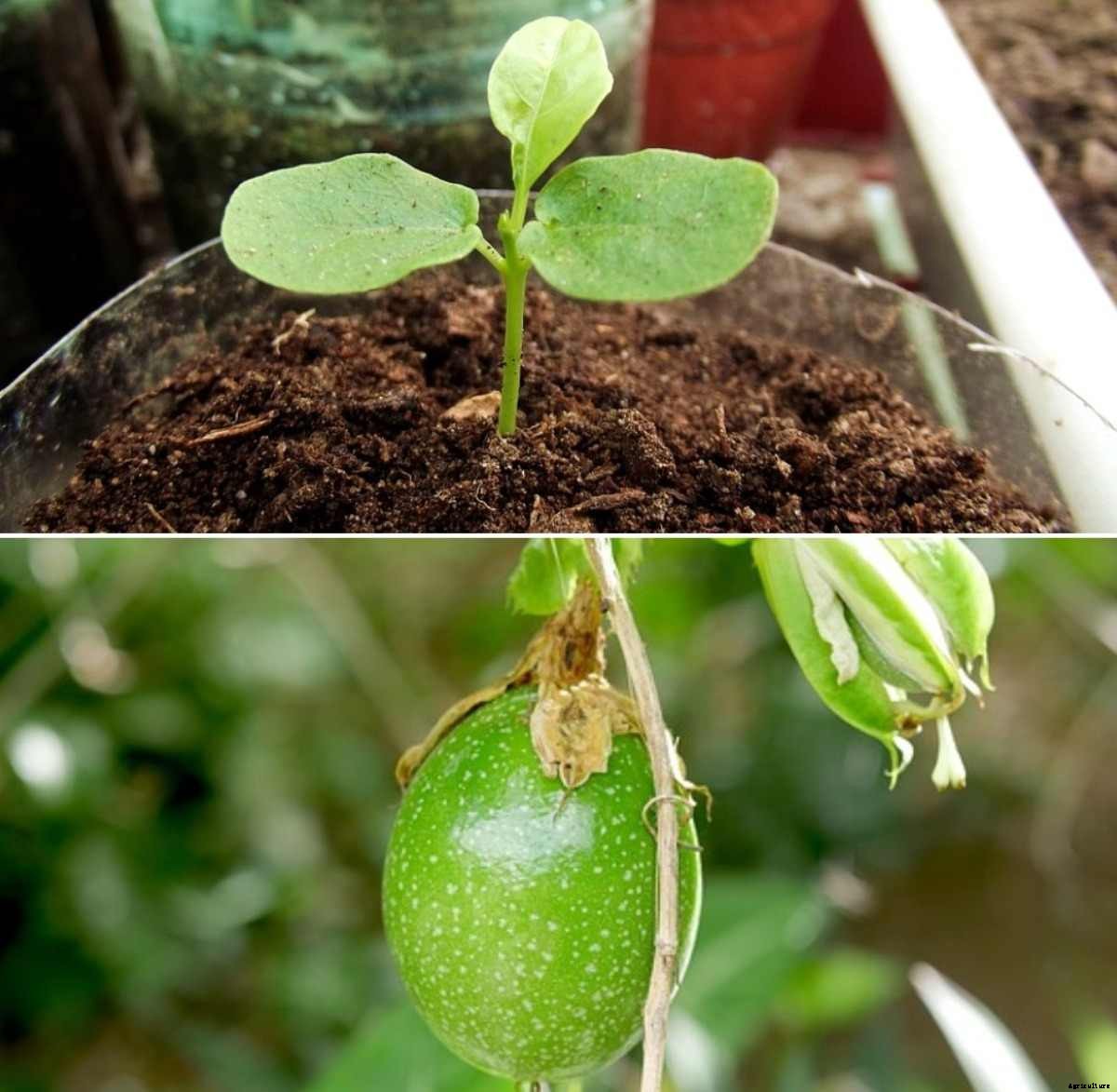
If your Passion fruit is fruiting but the goods are dropping off the vine, it can be due to irregular watering, fungal diseases or fruit flies.
This can be due to a cold snap or the Passion fruit plant not getting enough water. Passion fruit has a high water requirement when Passion fruits are approaching maturity. If the soil is dry, fruits can shrivel and fall prematurely, so water frequently for short periods during dry times.
Passion fruit vines can be grown in large pots as long as they have an adequate support structure.
If your Passion fruit vine is not fruiting after this time, it may be due to one of the following reasons. Passion fruit vines are heavy feeders and require plenty of water. A dry plant will not produce fruit, and then ensure the soil is moist. Passion fruit usually needs fertilizing twice a year, after pruning and again after fruiting.
Empty fruit on a Passion fruit vine can be caused by overfeeding, particularly if you are using a fertilizer high in nitrogen. Compost, chicken manure or well-rotted cow manure are the better options. Make sure you water deeply at least once a week the water must soak in through the extensive root system, encouraging Passion fruit full of pulp. Note that empty fruit could be the result of inherent weaknesses in seedlings. If this is a problem, you may, unfortunately, need to start from scratch.
Stop leaves from yellowing by feeding with a citrus food around the root zone 2 or 3 times between spring and late summer. Adding a sprinkle of Epsom salts to the watering can help.
Ants hate strong odors so try planting ant-repellent herbs that are mint, pennyroyal, rue or tansy near trouble spots. Otherwise, keep ants away by sprinkling a trail of salt, cayenne or black pepper around the base of the vine, or drawing a line with chalk to stop them from climbing the vine to the flowers.
Growing passion fruit plant in your home garden or terrace or even in balcony is fun and profitable. You may also like the Papaya Flower and Fruit Drop, Causes, Control Methods.


