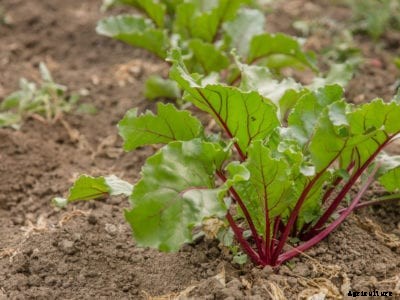
Cool season beets are a fairly easy crop to grow but they can be afflicted by a number of beet growing problems. Most stem from insects, diseases, or environmental stressors. One such issue arises when beet plants are falling over or wilting. What are some of the reasons for a beet plant wilting and is there a solution?
Help For Beet Seedlings Falling Over
Seedlings can become leggy if they’re started with a light source that is too far away; the beets stretch to the light, becoming leggy. The result, of course, will be that they simply can’t support themselves and you get beets that are falling over.
If you see that your beet seedlings are falling over, an additional cause may be wind, especially, if you are hardening them off outside prior to transplanting. Keep the seedlings in a protected area until they harden off and strengthen. Also, start slowly when hardening off. Begin by bringing the seedlings outside for one to two hours at first in a shaded area and then gradually work up to an additional hour each day in increasing sun exposure so they can adjust to the bright sun and temperature differences.
Beet Growing Problems
Wilting in beets may be the consequence of insect infestation or disease.
Wilting and Insects
A number of insects can afflict beets.
- Flea Beetles – The flea beetle (Phyllotreta spp.) can wreak havoc on foliage. The small black adults, which are 1/16th- to 1/18th-inch (4 to 3 ml.) long with over-large back legs feed on the leaves, creating pits and small, irregular holes. The plant may then wilt as a result.
- Aphids – Aphids also like to feed on the leaves. Both green peach and turnip aphids (Myzus persicae and Lipaphis erysimi) enjoy the beet greens just as much as we do. Present throughout the growing season, aphids suck nutritious juices from the foliage, resulting in leaf yellowing and wilting.
- Leafhoppers – Yellow wilt leafhopper does just that, causing wilting along with stunting of growth, yellowing and eventual die back. They afflict the leaf and crown of beets. Avoid planting in an infested area, use resistant cultivars and apply insecticides to control leafhoppers.
Wilting and Disease
Wilting may also be caused by a number of diseases.
- Root rot complex – Root rot complex first appears on leaves as red spots, then yellow, and finally wilting. The root itself may develop dark lesions on the root surface or even soften and rot. Additionally, a white to grayish brown fungal growth may appear on the rotting root areas.
- Damping off – Damping off disease may also occur among beet plants. This is a horticultural disease caused by a number of pathogens that kill or weaken seeds or seedlings. The seedlings will develop black stems, wilt and finally die. The best defense is to use treated seeds and practice crop rotation annually.
- Curly top disease – Curly top disease causes young plants to expire rapidly. First, the tender leaves roll inward and blister and thicken. Then, the veins swell, the plant wilts and it usually dies. Leafhoppers spread this disease. Use row covers to keep the leaf hoppers off the beets, plant the crop early and harvest early, and control weeds around the beet crop that act as cover for the leaf hoppers.
- Root and crown rot – Rhizoctonia root and crown rot affects the roots of the beet plants. The first symptoms are sudden wilting; yellowing; and dry, black petioles at the crown. The wilted leaves die and the root surface harbors infected areas that are dark brown to black. To thwart this disease, begin with a planting area that is well drained, tilled and has adequate nutrition. Rotate beet crops with corn or small grain crops, control weeds and don’t hill plant beets.
- Verticillium wilt – Verticillium wilt may also cause beet plants to wilt. Initially, leaves turn a straw color, with outer leaves drying and wilting while the inner foliage becomes deformed and twisted. Again, rotate crops to mitigate the disease.
Lastly, not just disease or insects can cause beets to wilt. The first thing to consider if any plant is wilting is whether or not it’s getting enough water. Conversely, an overabundance of water can cause a plant to wilt. Really, almost any environmental stress can lead to wilting. Although beets are a cool season crops, they can still be affected by extended cold snaps, as frost damage may also cause beets to wilt.


