
Welcome to Modern Agriculture!

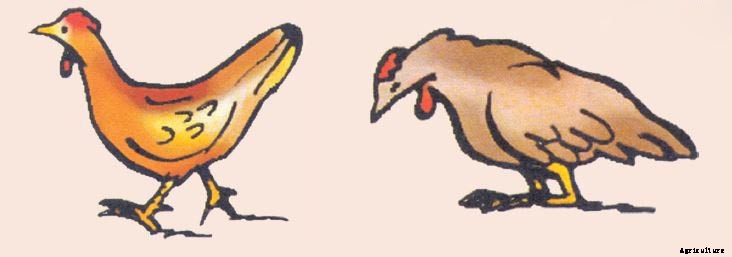
POULTRY HEALTH AND DISEASES : If chickens are healthy it will keep disease away. This will also be more eggs and more meat. It is important to watch your chickens every day to check on their health. Watching carefully and keeping them healthy means you can prevent and control diseases.
It is important to keep unhealthy birds away from the rest of the healthy chickens.
If a bird dies it should be burned or buried. It should never be eaten.
It should be handled carefully – do not touch it. Use a plastic bag on your hands and bury it in a plastic bag.
HEALTHY BIRDS UNHEALTH/SICK BIRDS Alert and on guard Tired and lifeless Bright eyes and comb Dull eyes and comb Eat and drink normally Eat and drink less Lay eggs normally Lay less or stop laying eggs Smooth and neat feathers (according to race) Ruffled and loose feathers Soft compact droppings Wet/loose droppings with blood or worms, diarrhoea Breathe quietly Cough, sneeze and breathe noisly, and may have nasal discharges
Th ere are many causes of diseases in chickens. Some are caused by infections e.g. viral diseases, bacteria diseases and parasites. Some are caused by poor feeding that can make the chicken weak and ill.
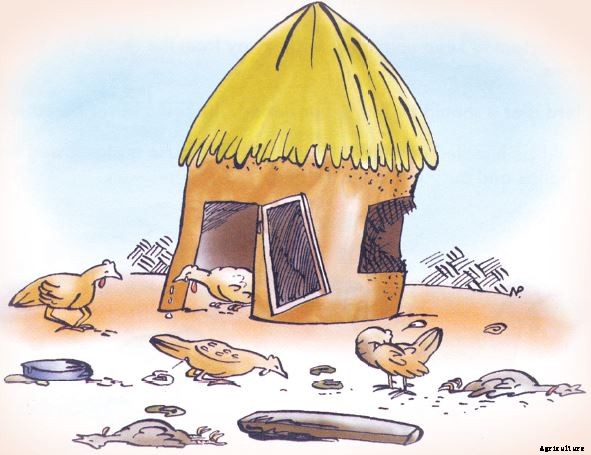
VIRAL DISEASES
There is no treatment for viral diseases. But you can vaccinate chicks so that they will not get the disease.
NEWCASTLE DISEASE
This the most common cause of death amongst free range local chickens. It can kill between 30 to 100% of the flock. Chickens may stop eating, have heavy breathing, green droppings, sometimes bloody diarrhea and paralysis. Th ere is a good and cheap vaccine to prevent this disease.
FOWL POX
Often seen in young chicks but also adults. Chickens will get small lumps on wattles, comb and face.
GUMBORO (INFECTIOUS BURSAL DISEASE, IBD)
IBD is common between 3 to 6 weeks of age. It is less severe for chicks younger than 3 week old. It is normally seen in large flocks kept in chicken houses.
MAREK’S DISEASE
Only seen in birds older than 16 weeks. Birds cannot move one or both wings (paralysis), or one or both legs.
BACTERIAL DISEASES
Most bacterial diseases can be prevented by good hygiene. Keeping the birds’ food and water clean and keeping nests for layers clean.
CHRONIC RESPIRATORY DISEASE
Chickens may have a runny or blocked nose, swollen face, closed eyes and lay fewer eggs but does not often lead to death. Can be treated with antibiotics in the drinking water.
PARASITES:
COCCIDIOSIS
This is prevented by not overcrowding the chicken. It can affect young chicks. Signs are head down, ruffled feathers and blood diarrhea. Coccidiostats in the drinking water of feed can treat the disease.
ROUNDWORMS AND TAPEWORMS
Very common in all ages. Good hygiene will prevent heavy infections. Adding Anthelmintics to drinking water twice a year is the best treatment.
Bad hygiene encourages fleas, mites and ticks. Spraying or dushing birds with pesticides, dry lime, ashes and oil are treatments.
NUTRITION DISEASES
Nutritional disease can lead to feather loss and leg deformation.
These will not happen if there is a good feeling, when birds can walk freely outside each day.


