
Welcome to Modern Agriculture!

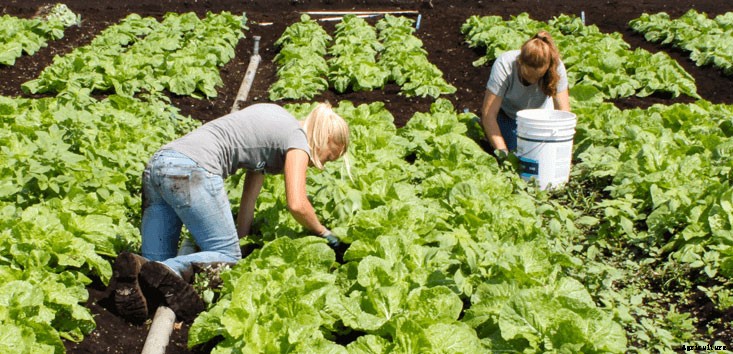
ORGANIC FARMING IDEAS, FACTS, AND INFORMATION : Organic farming is a process of farming, which restricts the use of synthetic products such as fertilizers, hormones, pesticides, additives etc. and relies to the largest extent upon crop rotation, crop residues, off- farm organic waste, mineral grade rock additives, animal manures, and biological system of nutrient mobilization and plant protection. It helps in the promotion and enhancement of biodiversity, biological cycles and agro system health.
MAJOR AIMS AND OBJECTIVES OF ORGANIC FARMING :
1. An adequately high level of yield
2. Compatibility of cultivation with the natural cycles of the farming system as a whole
3. Maintenance and increase in the long lasting fertility and organic activity of the soil
4. Maintenance and increase in the environmental diversity and agro-biodiversity.
5. Maintaining a harmonious balance between crops and animal husbandry.
6. Maintaining conditions where animals relate to their natural behaviour
7. Protecting and learning from indigenous knowledge and old age management systems
BASIC STAGES AND MECHANISMS OF ORGANIC FARMING
Organic farming includes the following stages:
1. Transformation of land from conventional management to organic management
2. Management of the entire neighboring system to guarantee biodiversity and sustainability of the system.
3. Crop production with the use of substitute sources of nutrients such as residue management, crop rotation, biological inputs
and organic manures.
4. Management of unwanted plants and pests by best management practices
5. Maintenance of livestock in tandem with organic concept and make them an integral part of the entire system.
PRINCIPLES OR DOCTRINES OF ORGANIC FARMING :
The organic farming is based on various ideologies and philosophies. Majorly, it has following four values as enumerated
below:
1. DOCTRINE OF HEALTH:
The prime principle of organic agriculture is to promote, sustain and enhance the health of a) soil b)
plant c) animal d) human e) planet as one and united. When the soil is healthy, the crops produced in it would be healthy,
subsequently fostering the health of animals and people.
2. DOCTRINE OF ECOLOGY:
The next vital principle of organic agriculture is to be based on living ecological systems and cycles,
work with them, match with them and help endure them. The whole idea of organic farming should be based on ecological
systems and recycling. The organic management must be adaptive of native conditions, culture and scale and ecology. The
contributions should be reduced by recycling, reuse and optimum use of materials and energy in order to improve the
environment and resource quality.
3. DOCTRINE OF JUSTICE:
Organic agriculture should thrive upon building relationships that ensure impartiality and justice to the
environment as a whole and life prospects. It primarily emphasizes on the fact that whosoever is involved with the organic
form of farming must conduct human relationships in such a manner that fairness is ensured at all levels to all whether
farmers, workers, processors, distributors, retailers and consumers. The resources should be managed in such a way that it
is open and equitable for upcoming generations to use it in social and just manner.
4. DOCTRINE OF CAUTION:
Organic farming should be achieved in a preventive and responsible manner in favor of protection of
health and well being of current and upcoming generations and the environment as a whole. The doctrine states that the
precaution and responsibility are the major concerns in management, technology and development.
ADVANTAGES OF ORGANIC FARMING
The nourishing value of food is a major function of its vitamin and mineral content. In this respect, food grown organically is intensely higher to that grown by conservative methods. An important benefit to consumers of organic food is that it is free from adulteration with chemicals harming health such as pesticides, herbicides, etc. Coming to the taste, food grown organically tastes far better than the conventionally grown food.
The financial side of organic farming is considered by increasing profits via reduced water use, lower expenses
on fertilizer and energy and increase in the preservation of topsoil.
This form of farming effectively considers soil management. With the use of proper micro nutrients via inter cropping techniques, crop rotation and wide use of green manure. The presence of microbes increases the nourishment of the soil.
The use of organic agriculture reduces the usage of energy requirements on an average by 28-30 percent in comparison to conventional based agricultural method.
The use of atmosphere friendly and non toxic green pesticides such as compost tea, neem etc help in identifying and removing contaminated and dying plants in time. The organic farming increases flexibility to climatic changes and weather irregularity.
Main employer of labourers in villages and rural areas is agriculture. Thus, by being labor concentrated, organic agriculture not only increases employment, but also creates employee friendly conditions like fair wages.
TYPES OF ORGANIC FARMING
There are majorly the following three types of farming
This kind of farming excludes the use of any kinds of inorganic manures and pest control methods.
It basically involves integrated nutrient management and integrated pest management. It focuses on the development of crops from natural resources having the complete nutritious value and manage to prevent the crop from pests.
It totally depends upon the local and natural resources like recycling of tree leaves, crop deposits, agricultural wastes. It is used in such a way as to not deplete the ecosystem.
In furtherance of the above, we use the following techniques;
CROP ROTATION:
A technique used in a sequential manner to grow various kinds of crops in the same area seasonally.
GREEN MANURE:
A technique wherein the dying plants are uprooted and turned towards the soil to make them as a nutrient for
the soil for its better quality.
BIOLOGICAL PEST CONTROL:
A technique where living organisms are used to control pests using or may not use chemicals.
COMPOST:
A recycled, organic matter used in agricultural farms as a fertilizer which is highly rich in nutrients.


