Trichoderma viridae: An Important Plant Protection biological Agent
Introduction
The genus Trichoderma is a fungus in the family Hypocreaceae, that occurs naturally in all soils, where it is the most prevalent culturable fungus and highly effective in controlling diseases affecting major crops, including plantation crops and fruit and vegetable crops.
Biological control of soil borne plant pathogens by species of Trichoderma is a vital area of plant pathological research all over the world in these days Mukhopadhyay, 1987
This genus contains many species that can be characterized as opportunistic avirulent plant symbionts. In this case, it refers to trichoderma species establishing mutualistic endophytic relationships with various plant species.
Christiaan Hendrik Persoon described this genus in 1794 and it is known for producing green trichoderma mold or trich mold.
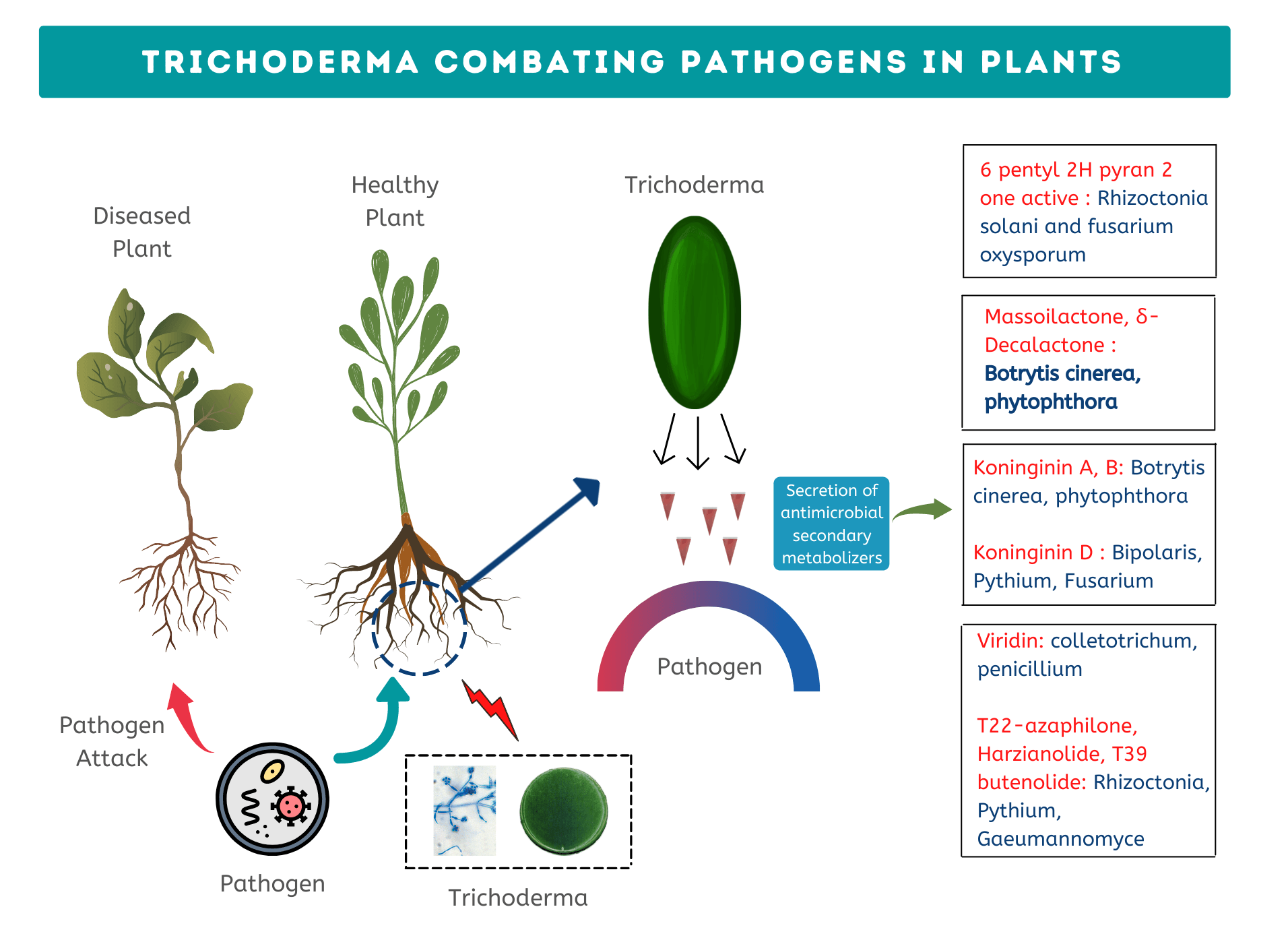
Trichoderma species are known to utilize a wide variety of carbon and nitrogen sources for their growth and activity in soil. In the present-day agriculture, the usage of pesticides has become an indispensable component. Application of pesticides generally disturbs and alters the biological equilibrium in soil. Trichoderma sp. is highly interactive in root, soil and foliar environments. It reduces growth, survival or infections caused by pathogens by different mechanisms like competition, antibiosis, mycoparasitism, hyphal interactions, and enzyme secretion Mannina and Segrc, 1997
Scientific classification of Trichoderma viridae
Kingdom: Fungi
Division: Ascomycota
Class: Sordariomycetes
Order: Hypocreales
Family: Hypocreaceae
Genus: Trichoderma
Species: viridae
Characteristics of Trichoderma Species
Trichoderma species exhibits the following characteristics:
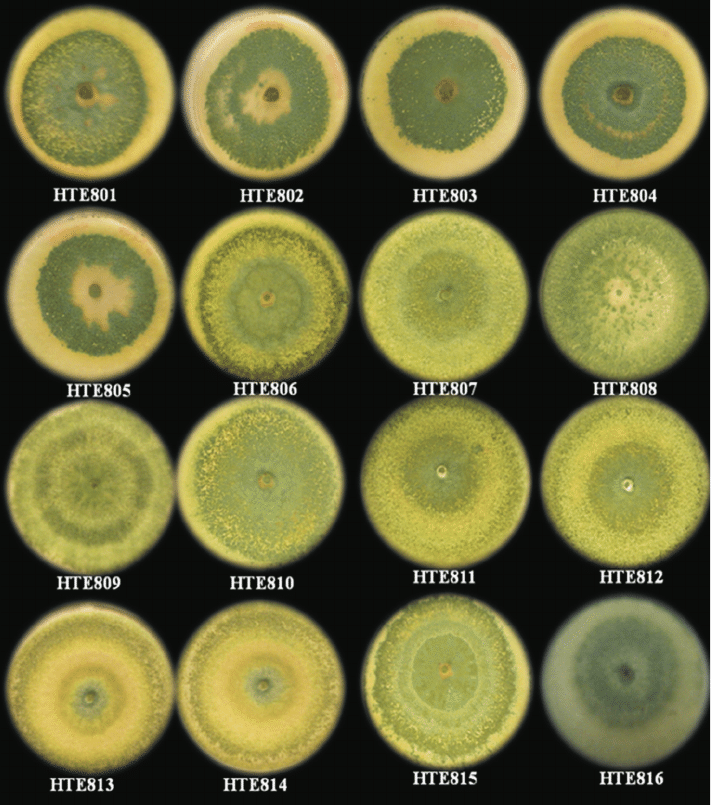
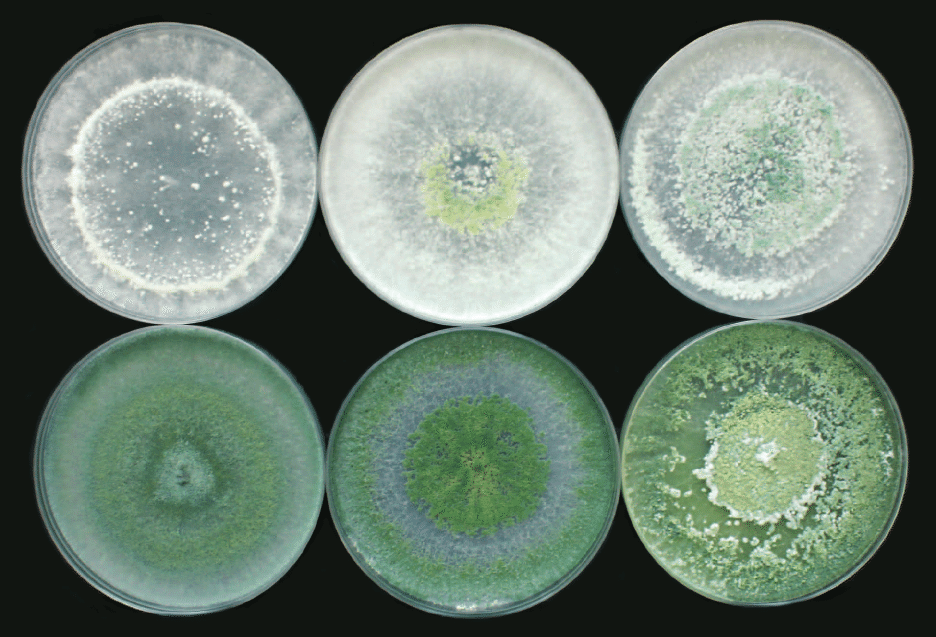
On richer media such as potato dextrose agar (PDA) colonies start out white on media such as cornmeal dextrose agar (CMD). CMD typically doesn’t reveal mycelium, and conidia typically form within one week in compact or loose tufts of shades of green, yellow, or white. The agar may contain yellow pigment, especially on PDA.
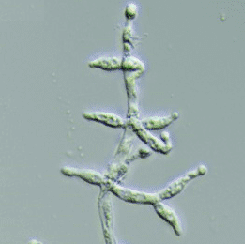
Branches of conidiophores are difficult to define or measure due to their complexity. The tuft can be loose or compact, and often forms distinct rings or appears along the scant aerial hyphae. In some cases, conidiophores produce paired lateral side branches as well as unpaired.
The largest branches are far from the tip and often phialides sprout directly from the main axis near the tip. It is not uncommon for the branches to rebranched, with the longest secondary branches closest to the main axis and paired secondary branches. As a rule, all primary and secondary branches arise at 90° or near 90° relative to the main axis. The typical shape of the pyramidal Trichoderma species Conidiophores is determined by the presence of paired branches.
Phialides are normally bulging in the centre but can be cylindrical or almost subglobose. Phialides may be arranged in whorls, at an angle of 90° to other members, or they may be penicillate (like gliocladium).
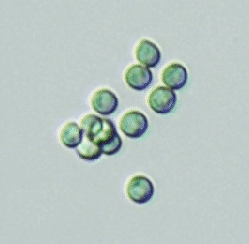
It appears that conidia are held in small liquid drops of clear or yellowish green colour.
Synanamorphs are produced by some species that also produce typical Trichoderma pustules. In synanamorphs, conidiophores are solitary and rhomboid in nature. Conidia are enclosed in clear green liquid in a drop at the end of each phialide.
All species may produce chlamydospores, but not all species grow chlamydospores on CMD at 20° C within 10 days. A chlamydospore is usually a single, subglobular body terminating in a short hypha. Chlamydospore can also form within hyphal cells. Multicellular chlamydospores are found in some species for example T. stromaticum.
Teleomorphs of Trichoderma species are from the ascomycete genus Hypocrea. They produce a fleshy, brown to yellow or orange stromata. Most species have discoidal to pulvinate stroma, and their extent is limited, although some species have overlapping stromata that may cover considerable area. The perithecia are immersed fully. At an early stage of development, ascospores disarticulate into 16 part-ascospores, giving the appearance of 16 ascospores in an ascus. Ascospores are usually green or hyaline, and spinulose.
Trichoderma viridae as a biological agent
Plant fungal diseases are controlled with several strains of Trichoderma. Among the various mechanisms in which Trichoderma acts as a biological agent are antibiosis, parasitism, inducing host-plant resistance, and competition. There are several species of biocontrol agents, among which are T. asperellum, T. harzianum, T. viride and T. hamatum.
Since the biocontrol agent grows naturally on the root surface, it combats root diseases primarily but is also effective against foliar diseases.
Upon application to a crop, the biocontrol agent Trichoderma viridae colonizes the areas of soil around the seeds or roots of the crop. As it multiplies on the seed surface, it protects the crop against soilborne pathogens with mycoparasitism and antibiosis until the end of the crop’s lifespan.
Trichoderma viridae is highly effective in combating soilborne pathogens such as Fusarium spp., Rhizoctonia solani and Macrophomina Phaseolina. Because of this quality, it is considered as one of the best options to prevent the crops from diseases like collar rot, wilt, seedling diseases, root rot, charcoal rot, damping off etc.
Additionally, Trichoderma viridae enhances yield as well as the quality of the crop, increases the rate of germination and facilitates the conversion of insoluble forms of Phosphates to soluble forms. This helps in better shoot and root growth.
Aside from that, Trichoderma viridae contribute to crop growth during the early stages of crop lifecycle. The development of Dry matter is greatly enhanced. Enhance soil and crop immunity naturally.
Recommended Crops for Trichoderma viridae
Cauliflower, cotton, tobacco, soybean, sugarcane, sugarbeet, eggplant, red gram, banana, coconut, tomato, chillies, potato, citrus, onion, groundnut, peas, sunflower, brinjal, ginger, turmeric, pepper, betel vine, cardamom etc are examples of the crops that can be treated with Trichoderma sp. to protect them from soil-borne diseases.
Methods of application of Trichoderma viridae
How do you use Trichoderma viride?
Seed Treatment Add 6-10 grams of Trichoderma powder per kilo of seed before sowing.
Nursery treatment To treat a 100 meter square nursery bed, add 10 to 25 grams of Trichoderma powder. By applying neem cake and FYM before treatment, efficacy is increased.
Cutting and seedling root dip Dip the cuttings and seedlings for 10 minutes in water containing 10g of Trichoderma powder, 100g of well-rotten FYM.
Soil treatment When you turn the sun hemp or dhainch into the soil for green manuring, apply 5 kilograms of Trichoderma powder per hectare. OR Mix 1 kilogram of Trichoderma formulation in 100 kilograms of farmyard manure and cover with polythene for seven days. Sprinkle water intermittently over the pile for seven days. The mixture should be turned every 3-4 days after which it should be broadcast on the field.
Plant Treatment Mix 10g of Trichoderma powder in 1 liter of water and drench soil near stem region.
Commercial formulations of Trichoderma
Sanjibani, Guard, Niprot, and Bioderma are some of the most important commercial formulations. For every 1 g of carrier material, these formulations contain 3×10⁶ CFU. The powder formulations are made with Talc as the carrier.
Advantages of Trichoderma viridae
Trichoderma viridae treatment eliminates the pathogen on the surface of the seed, thus preventing seed borne diseases.
Other biofertilizer or biopesticides can be applied in combination with it.
By various mechanisms, it encourages plant growth.
Trichoderma formulations promote organic agriculture because they are safer for the environment.
Trichoderma viridae protects seeds and plants by eradicating pathogens from the rhizosphere region.
In addition to their ability to attack and destroy other types of fungi and various other organisms such as bacteria, Trichoderma species are also used to manufacture pesticides and other biological agents that are used in agriculture to control fungi and pathogens.
It provides protection against diseases throughout the growing season of the crop.
It is easy and safe to apply and is safe for humans and other benevolent organisms.
Cost-effective compared to chemical-based management of plant diseases.
By decomposing organic matter, Trichoderma fungi also facilitate nutrition availability for plants (biomass) and contribute to carbon and nitrogen cycles, and hence plays a key role in the development of the crop.
Trichoderma fungus has no residual issues
It has the ability of multiplying quickly in the soil and hence it is relatively fast.
Pesticides and herbicides contaminated soil can be bioremediated by Trichoderma strains. Insecticides such as organochlorines, organophosphates, and carbonates can be degraded by Trichoderma fungus.
Induced resistance in plants is known to be caused by Trichoderma strains. It is now known that Trichoderma produces three types of compounds that induce resistance in plants. In plants, these compounds cause ethylene production, hypersensitivity reactions, and other defense-related reactions.
Plants such as tobacco and potato have been made more resistant to fungal growth by introducing the endochitinase gene from Trichoderma. There are some transgenic lines that are very tolerant to foliar pathogens such as Alternaria alternata, A solani, and Botrytis cinererea, as well as soil-borne pathogens such as Rhizectonia spp.
Uses of Trichoderma viridae
What is Trichoderma used for?
Trichoderma fungus can be used for many purposes such as:
It is used in Damping-off caused by Pythium species and Phytophthora species.
The root rot attributed to Pellicularis filamentosa
Dry rot and Charcoal rot caused by Macrophomina phaseoli
Loose smut induced by Ustilago segetum
Karnal bunt diseases, Black scurf produced by Rhizoctonia solani
Combats Dutch elm disease (Armillaria mellea) on a range of trees, and removes silver leaf on plums, peaches and nectarine.
Rot-preventing agent against rots on a wide array of crops caused by fusarium, Rhizoctonia and Pythium, and other pathogens that produce sclerotium, such as Sclerotinia and Sclerotium
Additionally, it is used to prevent foot rots of pepper and betel vines, and capsule rots in several crops.
For the prevention of Botrytis caused by Botrytis cinerea
Precautions to be taken while using Trichoderma
Trichoderma should not be used in dry soil. Its growth and survival are dependent on moisture.
You should not expose the Trichoderma treated seeds to sunlight.
After applying Trichoderma fungicide, do not use chemical fungicide for 4-5 days.
Don’t keep the Trichoderma treated FYM for an extended period of time.
Compatibility of Trichoderma fungus
Certain insecticides such as Mancozeb or Imidacloprid are compatible with Trichoderma viridae.Anitha et al. (2010) investigated the effects of carboxin and metalaxyl on Trichoderma viridis in vitro and found neither of them inhibited the growth of the fungus.
The trichoderma fungus is compatible with organic manures and biofertilizers like Rhizobium, Azospirillum, Bacillus subtilis, and Phosphobacterium.
Trichoderma can be applied to metalaxyl and thiram-treated seeds, but not to mercurials. Trichoderma can be used in a tank mix with chemical fungicides.