Tillage is the process of manipulating soil into the desired state through mechanical means. Tools (such as pulverizing, splitting, or sliding) are employed in order to achieve some desired result. Tilling soil changes its structure, kills weeds, and helps manage crop residues. Often, soil-structure modification is necessary.
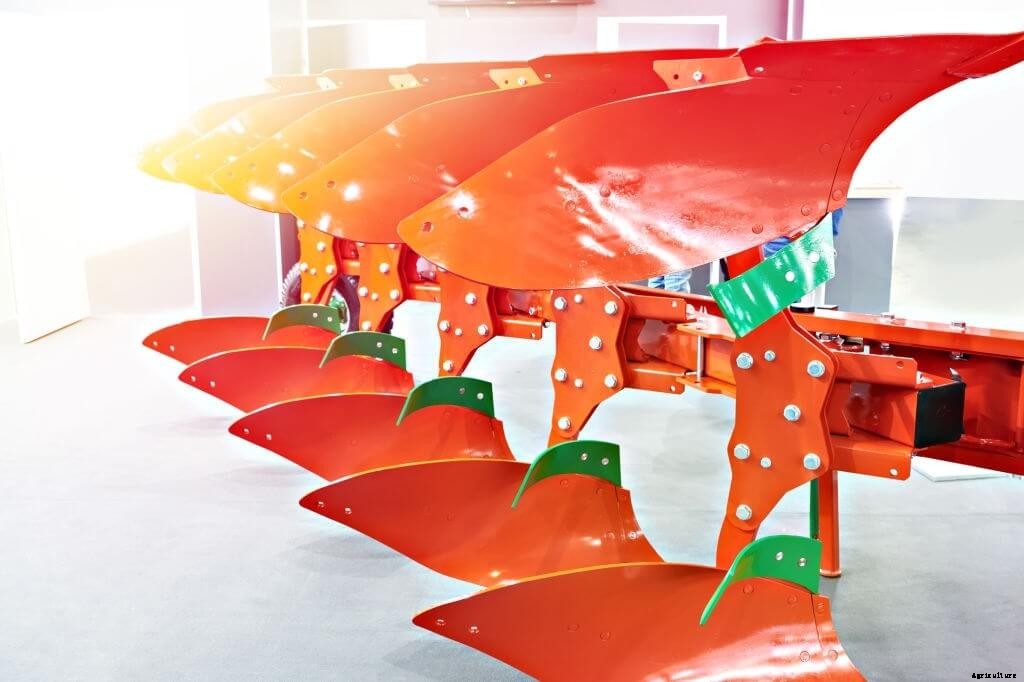
Mouldboard ploughing and similar deep-tillage operations have been used for centuries in more advanced agricultural systems. Even today, some farmers still think it is profitable to use ever-more-powerful tractors to plough deeper every year due to the ever-increasing supply. However, the concept of tillage requirements for crop production is rapidly changing.
There is increasing awareness all over the world of the negative effects of conventional agriculture and the need to change traditional agricultural practices. The key problem of conventional agriculture faces, especially in the tropics, is the steady decline in soil fertility, which is closely correlated to the duration of soil use. This is primarily due to soil erosion and the loss of organic matter associated with conventional tillage practices, which leave the soil bare and unprotected in times of heavy rainfall, wind and heat. Derpsch, 1998
What is zero tillage ?
No-tillage can be defined as a system of planting (seeding) crops into untilled soil by opening a narrow slot or trench only of sufficient width and depth to obtain proper seed coverage. No other soil tillage is done. Phillips and Young, 1973
Zero tillage is one of the many practices which come under conservation agriculture. It can be defined as an extreme form of minimum tillage. In Zero tillage The primary tillage is abstained from entirely and a small amount of secondary tillage is conducted in the row zone only.
Conservation agriculture is a concept for resource-saving agricultural crop production that strives to achieve acceptable profits together with high and sustained production levels while concurrently conserving the environment. Food and Agriculture Organization (FAO), 2007
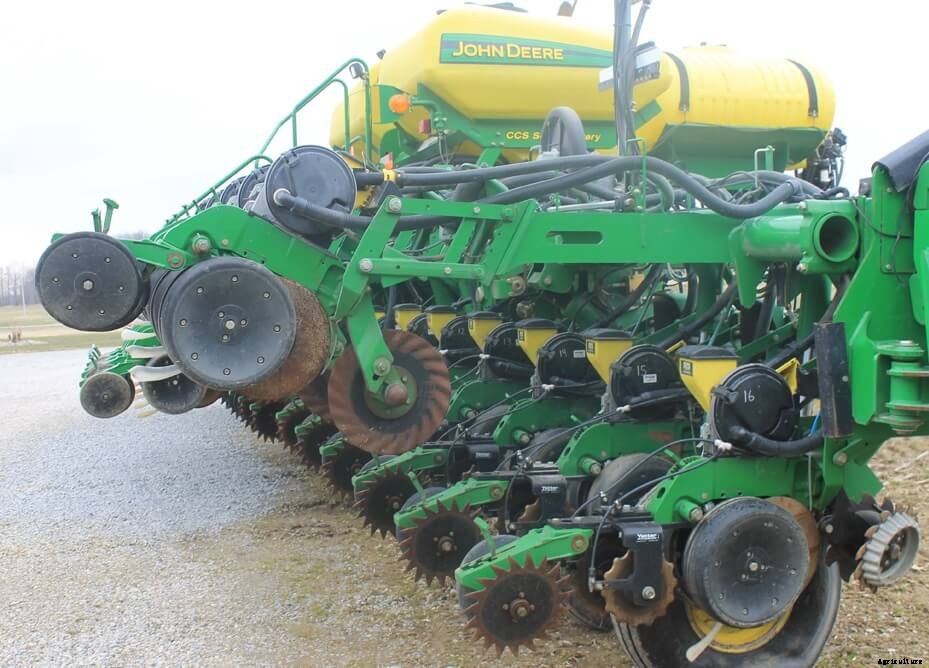
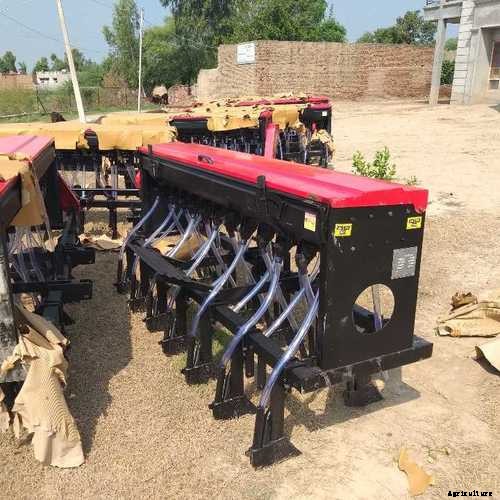
No-tillage or zero-tillage or nil-tillage farming involves no plowing of the field and crop residues are left on the land after harvest. Planting the next crop is carried out directly with no-till planters (Zero Tillage Machines).
Without any soil preparation, seeds are sown in the ground. Basically, it is direct seeding in the field without causing any soil disturbance.Zero-tillage is a conservation technology that can save small farmers time, energy, and inputs.
Following are some of the key characteristics of zero tillage:
Growing crops or pastures from year to year without disturbing the soil through tillage
This is also an agricultural practice that increases organic matter retention, nutrient cycling, and water infiltration in all kinds of soils
In many agricultural regions, it reduces or eliminates soil erosion.
Increase the diversity of life in the soil, including the number of disease-causing organisms and the number of disease-suppressing organisms. By improving soil biological fertility, zero tillage increases soil resilience. It introduces many operational improvements, especially shorter sowing times and improved traffic-ability of farm operations.
No-tillage and minimum-tillage have been used since ancient times. Thus, it was referred to as “primitive cultures” for the production of crops, simply because humans lacks the muscle power to till a substantial area of land by hand. The concept of zero tillage was first introduced by Edward Faulkner in the 1940s.
Tilling soil removes weeds, shapes it into rows for crop plants, and creates irrigation furrows. As a result, soil compaction takes place, organic matter is lost, soil aggregates are degraded, soil microbes are destroyed, and topsoil is washed away.
Through zero tillage, these impacts are avoided. As a result of this farming method, crop residues and other organic materials are retained on the soil surface and minimal soil disturbance is caused by sowing or fertilizing. Zero-tillage fields must be managed very differently in order to maintain or increase yields.
No-till farming encompasses four broad, interconnected management practices, which go beyond soil tillage:
Soil disturbance is minimal (no plowing and harrowing)
The maintenance of a permanent vegetative cover on the soil
Direct seeding or sowing
Crop rotation
Conservation agriculture also includes these management practices. No tillage or zero tillage farming can also be considered a component of sustainable land management (SLM) and better land management (BLM).
The zero-tillage method typically includes the following steps:
Shaping, cutting or moving loose straw or living mulch
Fertilization and seeding
Closing of furrows
Compaction of seeds and soil
Differences between conventional tillage and no-tillage practices in agriculture
The economic, environmental and social differences between zero tillage and conventional tillage practices in agriculture can be understood by looking at the agroecological functions of each system, specifically C02 production, aeration, water movement, runoff, and infiltration.
Following table sums up the differences in both the methods:
Zero Tillage
Conventional tillage
Natural soil ecosystems are mimicked by soil-plant systems.
The soil is more drought resistant.
The soil condition ensures efficient use and absorption of nutrients.
Drought-prone soil plant system.
Soil surface erosion accelerated.
High input must be provided to maintain fertility.
As a result of the intense biological activity, the soil pore atmosphere is richer in CO2.
Also, the soil temperature is low
By creating more reactive surfaces for gas exchange on soil aggregates that are exposed to higher ambient oxygen concentrations (21%) and higher temperatures, tillage lets microbial activity flourish.
High CO2 levels and high temperatures reduce oxidation rates and increase soil organic matter (SOM).
Oxidation of soil organic matter (SOM)
Results in intense nitrate fluxes
Soil porosity is reduced
Reduced water infiltration capacity
Increased Runoff
Fluxes of nutrients are washed away
Permanent soil cover protects the soil from the rain drops' energy, increases water infiltration, and thus dramatically reduces water runoff and soil erosion risk.
Plows create a compaction zone over time, which prevents upward movement of soil fauna and downward growth of roots.
A greater number of earthworms, insects, and roots lead to better soil aeration.
Nitrate leaching and associated cations, such as magnesium and calcium from the root zone, result in acidification of soil and groundwater pollution.
Root development and stable biological porosity produce efficient water and nutrient cycling.
Tilled and zero tilled soil structure comparison
Advantages zero tillage practices
Economic Advantages
Lower energy and labor costs throughout the entire production process
Reduced fertilizer use and hence less money spent on fertilizers
Increased crop productivity
Zero tillage farming requires fewer passes across the field, which will reduce fuel costs dramatically.
Huge time saver as it shortens the time it takes to plant crops before the soil dries out. Hence, time saved is money saved.
A shorter crop duration can lead to earlier harvests and therefore higher yields.
Environmental Advantages
Maintains or enhances soil organic matter (SOM)
Several studies have shown that zero tillage alters soil characteristics both physically and biologically. Generally, studies have shown that soil becomes denser as the number of larger pore spaces decreases and the number of smaller spaces increases. Although this reduces aeration somewhat, it tends to increase the soil’s water-holding capacity.
Zero tilled soil is relatively cooler. This also helps in less carbon sequestration which in turn is good to slow down global warming
There is more flexibility in the planting schedule. It is possible to plant immediately after rain, as no tillage is required. The harvest, slashing, spraying, and planting of double crops (cowpeas after maize, for example) can be completed within a few days.
A zero tilled field is less compacted than a tilled field
Moisture loss is reduced in the soil. Zero tilled seedings can conserve soil moisture while protecting it from evaporation caused by sunlight and wind.
It leads to healthier soil. When the foliage of the plants decomposes naturally, a wide variety of life forms appear in and on the soil surface increasing the biodiversity and flora and fauna
The soil is more resistant to wind and water erosion in zero-tillage farming. This effect can be enhanced with the help of mulch covers such as stalks, straw, leaves, pods, chaff.
Disadvantages zero tillage practices
There may be short-term yield effects that are negative, neutral, or positive (which can discourage the use of zero tillage practices).
Increased weed pressure may result in zero tillage practice. While not ploughing may result in labour savings, weeding may require a higher level of labour.
Since tillage is not practiced, sometimes burning of excess residual vegetation and weeds is done to prepare the field for cropping. This leads to pollution.
Weeds are controlled with herbicides. It contributes to environmental pollution as more chemicals are being used. Moreover, the right application of herbicides requires a good knowledge of both broad-spectrum and specific herbicides. This makes the herbicide application stage very critical and stressful.
Broad-spectrum herbicides can not be applied to the field after cropping and can only be applied over the mulches. Successful effects of herbicides can be seen when the herbicide passes through the much into the soil. This depends on the rain and proper irrigation practices. This somewhat increases the complexity
Switching from conventional tilling to no-tillage planting can be difficult due to the initial investment in equipment and parts for the zero tillage method. However, money invested can be recovered by higher crop yields or selling off old equipment.
Zero tillage practices in agriculture require different maintenance methods, hence, requires the farmer to learn a new skill set. This hassle of shifting to a different technique prevents the farmer from adopting the zero tillage method.
The formation of gullies can occur in zero tillage farming. As leveling of the field is not done by tilling, the depth of gullies can increase year by year. Although, this can be prevented by mulch covers (reducing runoff), low-pressure radial tires (which compress the field less) or by using subsurface drip irrigation
Recommendations to adopt zero tillage practice successfully
Try and gather as much knowledge as possible in all aspects of zero tillage farming, notably in weed control. As, weed control is one of the most important factor in deciding the success of zero tillage farming
Make sure that the soil in the field has good drainage. Initial leveling might be required for this
Gaining knowledge on various kinds of mulch covers and the cost incurred is advisable
Crop rotation, crop diversification, organic manure, integrated farming and bio fertilizers will definitely improve the crop yield and profitability
Testing the technique in a small portion of the farm instead of the whole farm, is recommended. After gaining experience and satisfactory results, the practice can be done on bigger section of the field
Initial analysis of the soil to the check the deficiencies of the soil is advisable
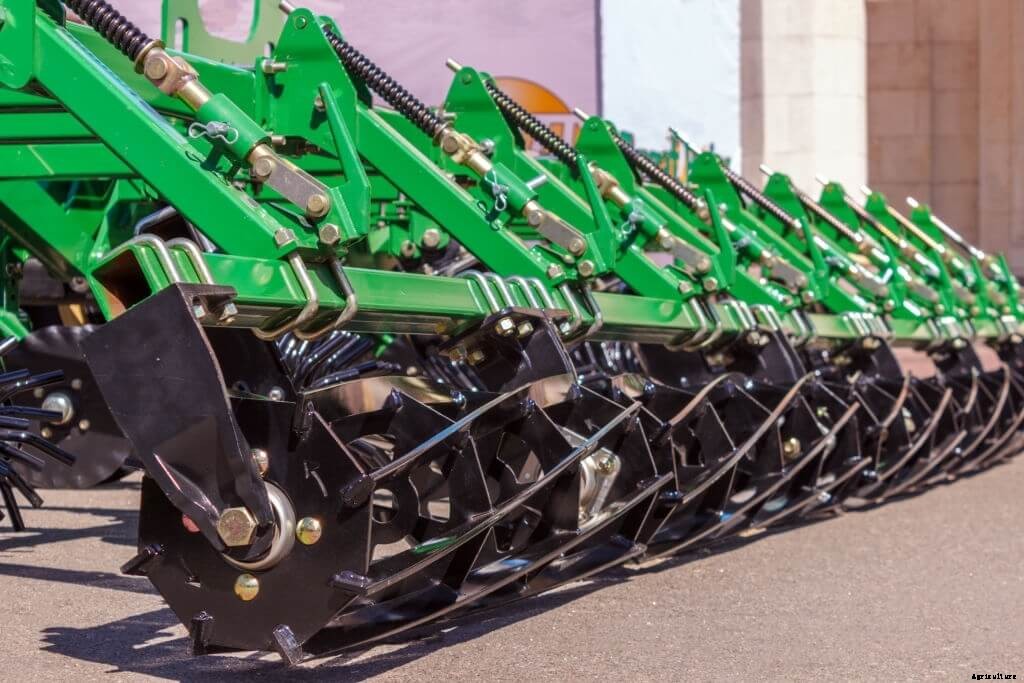
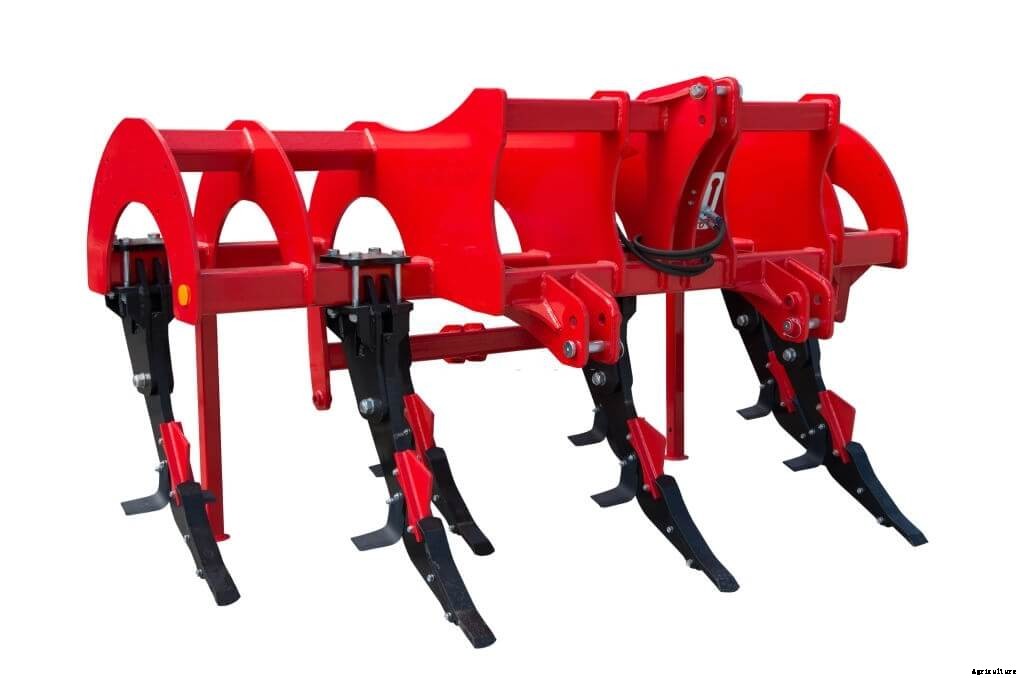
Use chisel ploughs or subsoilers to eliminate soil compaction
Being updated with the advancement in the technique and equipment will always help in practicing zero tillage for farming
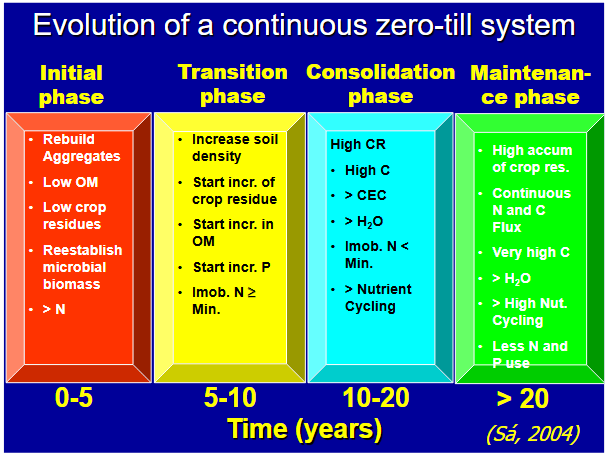
It takes time to get the full desired benefits of zero tillage farming. Patience is the key here
As a rule, the full advantages of zero tillage can take time to be realized and, during the initial transition years, farmers may not see the benefits, thus discouraging them from using no tillage systems.
The physical and biological health of the soil also takes time to develop. Most experts estimate that the benefits will take approximately 3 to 7 years (at least) to fully manifest.