
Welcome to Modern Agriculture!

Vertical farms are back in the news, with Sean Williams writing in Wired that vertical farms nailed tiny salads. Now they need to feed the world.
Treehugger has been following this subject and has been dishing up stories on vertical farms ever since Gordon Graff first showed his Skyfarm in Toronto's Entertainment district, ready to serve tomatoes to throw at actors in the theaters and olives for the martini bars. They were the toast of the internet after Dickson Despommier wrote his book "The Vertical Farm" – I was not convinced and wrote in my now archived review in 2010:
Subsequently, I was honored to be an external examiner at Gordon Graff's defense of his Masters thesis at the University of Waterloo, where he demonstrated that vertical farms could actually work, but pretty much in an industrial barn, where he cornered the lettuce market. And that is kind of where we are today, with Aerofarms in a Newark warehouse and vertical farms operating in repurposed factories around the world, mostly growing what critics call "garnishes for the rich."
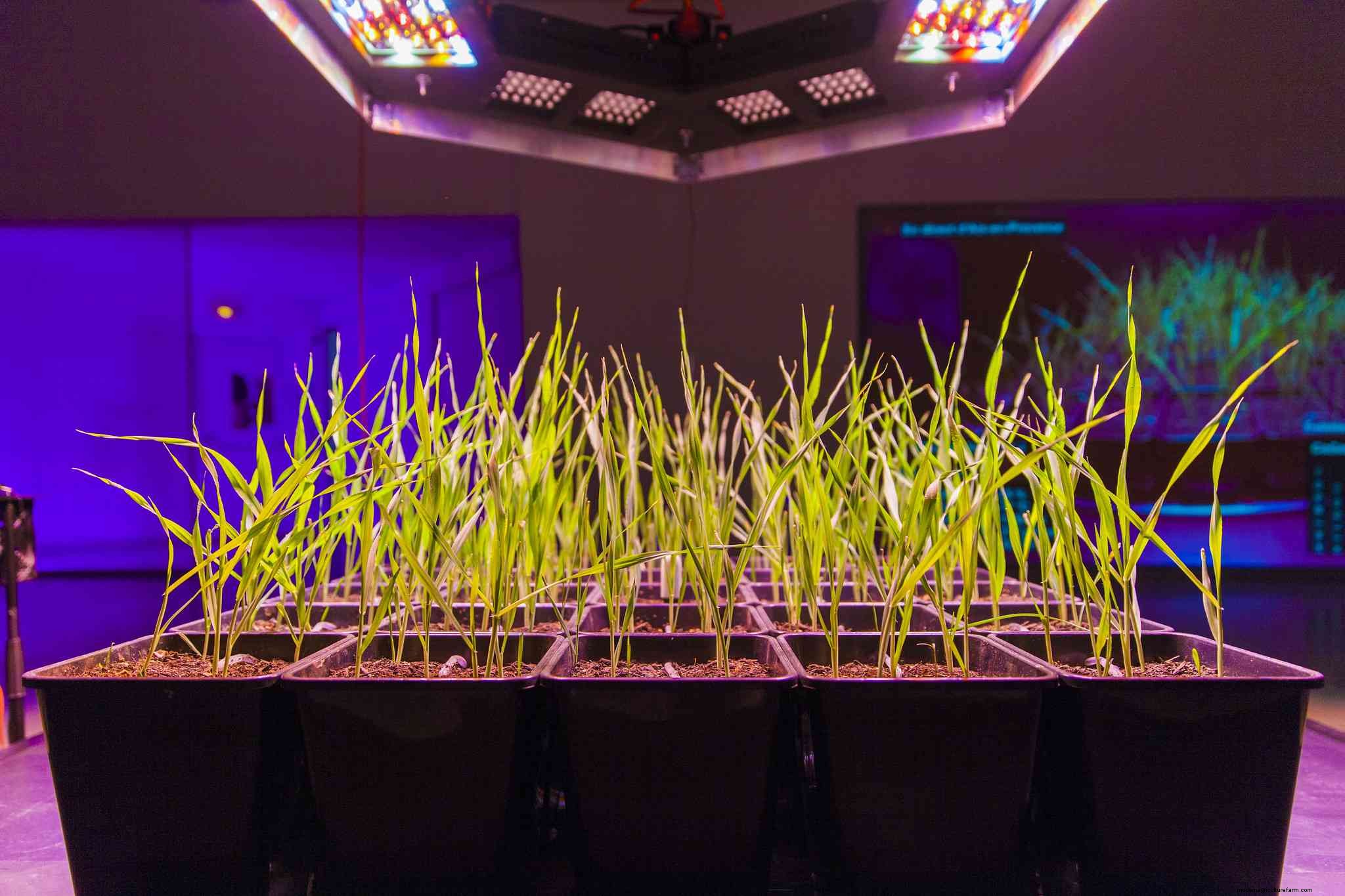
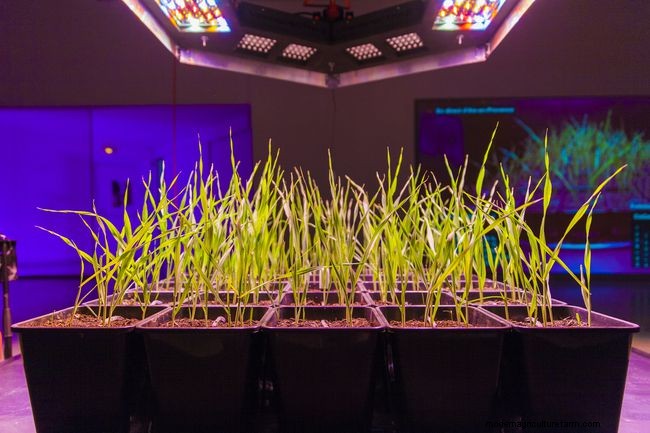
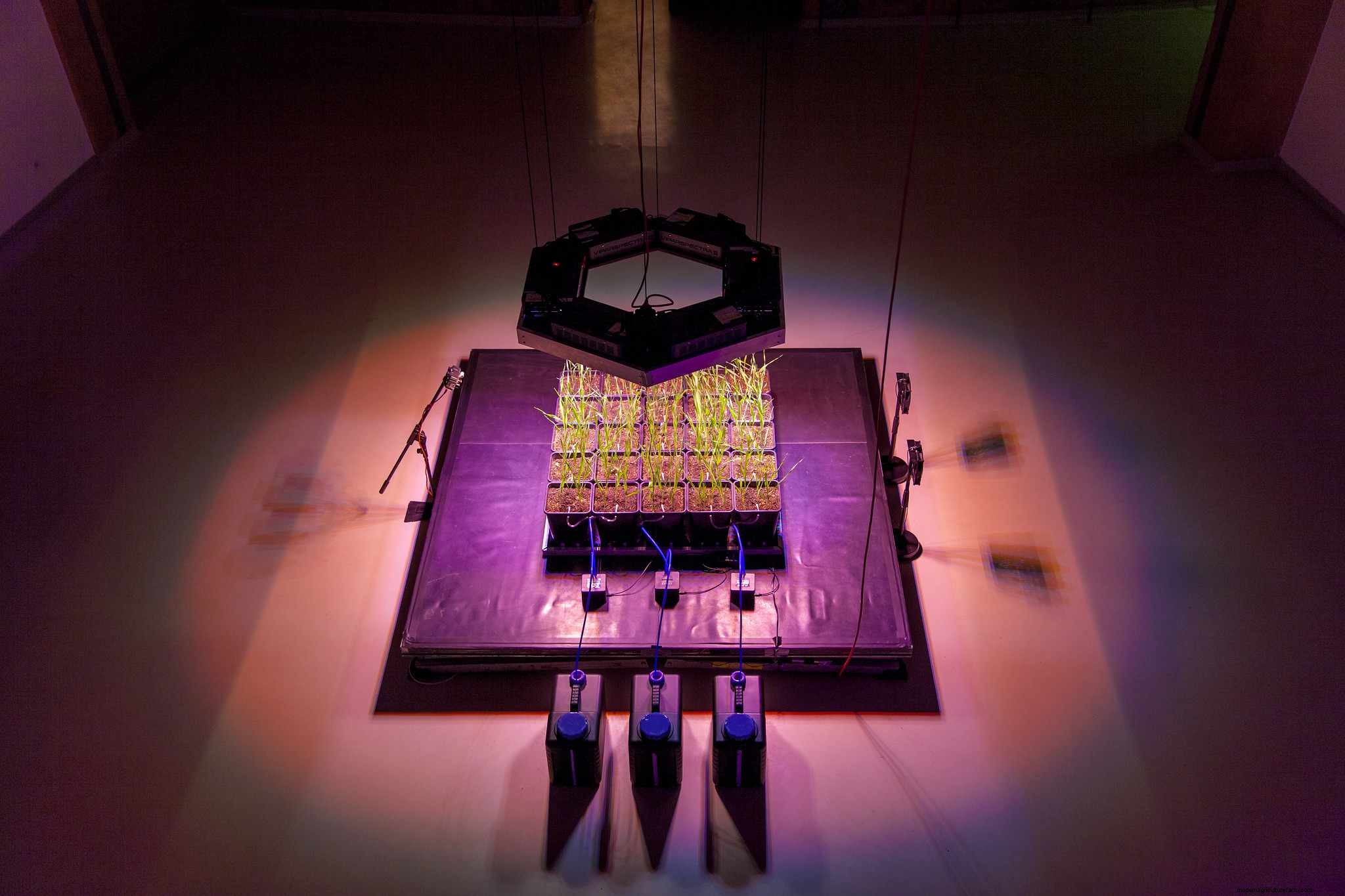
Our go-to critic of all things techno-futurist is Kris De Decker of Low-tech Magazine, who notes that garnishes for the rich don't include carbohydrates or proteins, and writes that "to feed a city, it takes grains, legumes, root crops, and oil crops." He recently had a look at vertical or indoor farming after seeing an art exhibit in Brussels called The Farm, which examined the inputs required to grow a square meter of wheat. The artists write:
De Decker reports that it took 2,577 kWh of power and 394 liters of water to grow this little bit of wheat, and that didn't include the embodied energy from making all the equipment needed. Ultimately a loaf of bread made from this wheat would cost 345 euros ($410).
Among the purported virtues of vertical farms is that they can use specifically tuned LED lights, a controlled atmosphere, and that they take up a lot less space because the plants are stacked vertically. However, if you wanted to run them on renewable energy such as solar power, "then the savings are canceled out by the land required to install the solar panels." De Decker concludes the article:
Except that's not really the conclusion, it is just the start of pages and pages of comments on the article from the techno-futurist crowd, attacking De Decker for a "hit piece" and pointing out that there is nuclear power. The discussion gets picked up on Y Combinator Hacker News where they say "fusion energy is going to account for a rapidly increasing share of energy production by the end of this decade," so why not? Poor Kris De Decker responds by saying "I had no idea that vertical farms were such an emotional topic" (Treehugger could have warned him) and clarifies that "this article (and this art work) criticizes the idea that vertical farming could supply a substantial share of a city's food supply."
Much has changed in the years since we started covering vertical farms, including the improvement of LEDs, the understanding of which spectra of light they should be tuned to, and of course, the rise in global temperatures, increasing climate weirdness, and worries about increasing deforestation for agricultural land. But as we recently noted, just cutting out red meat would cut agricultural land use in half, or that we could grow all the food we need in our yards.
Ultimately, I do not believe that the prospects for hydroponic vertical farms under artificial light (versus rooftop farms under glass or vertical greenhouses) have changed much. If anything, they have gotten worse, because not a single analysis I have seen has ever included the embodied carbon or upfront carbon emissions from actually making the aluminum and steel and lighting equipment that they are built from. We live in a world where we are using sunlight to grow our building materials to get rid of steel and aluminum; surely we can use it to grow our food.
In his recent book, "Animal, Vegetable, Junk" Mark Bittman complains about modern farming practices and their reliance on fertilizers. He writes:
"Methods of treating the soil became predictably and tragically oversimplified, as it was incorrectly determined that plants didn't need healthy soil and all that it contained – literally hundreds of elements and compounds and trillions of microbes. According to reductionist analysis, soil and plants quite simply needed nitrogen, potassium, and phosphorus."
Now the reductionists even want to replace the soil and sunlight. Perhaps instead, we should listen to Bittman.
Dr. Jonathan Foley had much to say about this a few years ago in No, Vertical Farms Won't Feed the World.


