
Welcome to Modern Agriculture!

Treehugger has been writing about the problems of meat forever, we have been pitching vegetarian and vegan diets for years as a way of reducing one's carbon footprint, and we keep writing posts about reducing our intake of meat. But it is a hard sell; as Bill Gates writes in his new book,
A new data dump from the Our World In Data gang gives a different graphic perspective. Hannah Ritchie titles her report "If the world adopted a plant-based diet we would reduce global agricultural land use from 4 to 1 billion hectares, a 75% reduction," but as Bill Gates notes, that is a stretch for a lot of people.
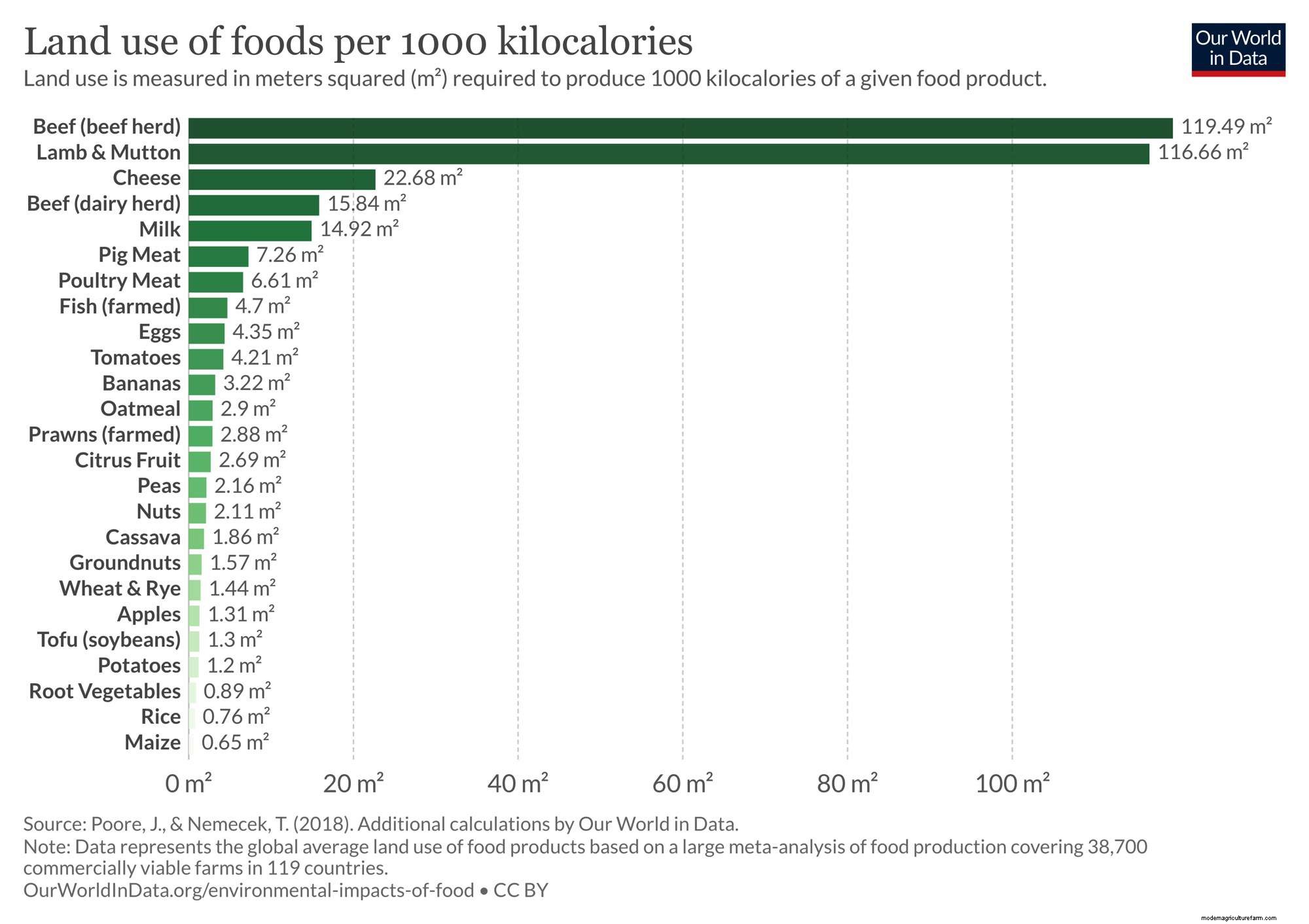
When it comes to land use, there are beef and lamb taking up a huge amount of land, 2.89 billion hectares for pasture, and then 43% of cropland to grow animal feed. If everyone goes vegan, the global land use for agriculture drops from 4.14 billion hectares down to just 1 billion. But as Gates and most of our readers will acknowledge, that's not gonna happen.
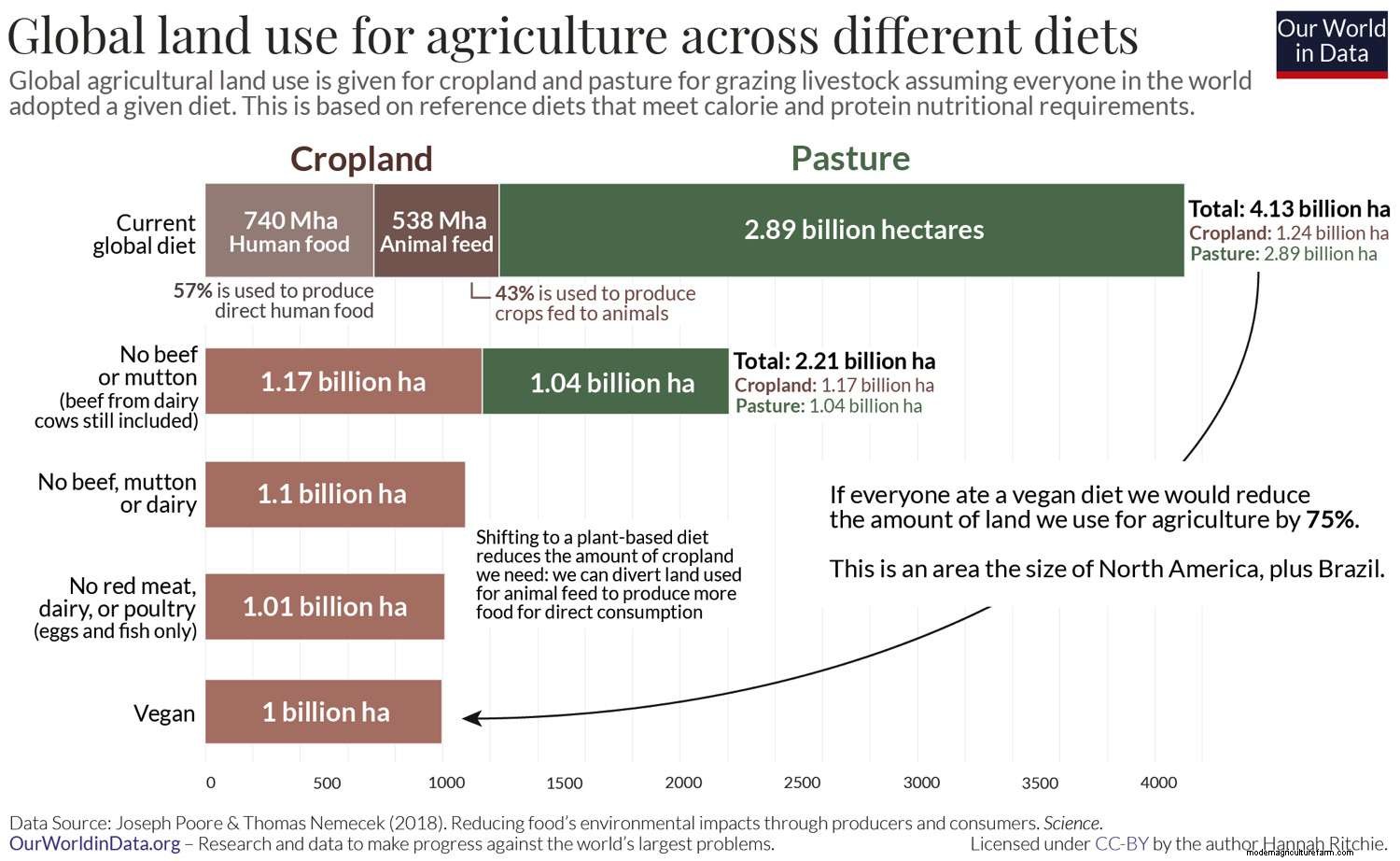
Where it gets interesting is when you look at what happens when you just give up most beef and mutton, but milk, cheese, and the occasional burger from Elsie and the dairy cows stay on the menu. Land use drops dramatically, to a little more than half. Give up the dairy and the burger but still keep the chicken and pork, and it drops in half again. From a land-use point of view, it is only marginally different than going fully vegan.
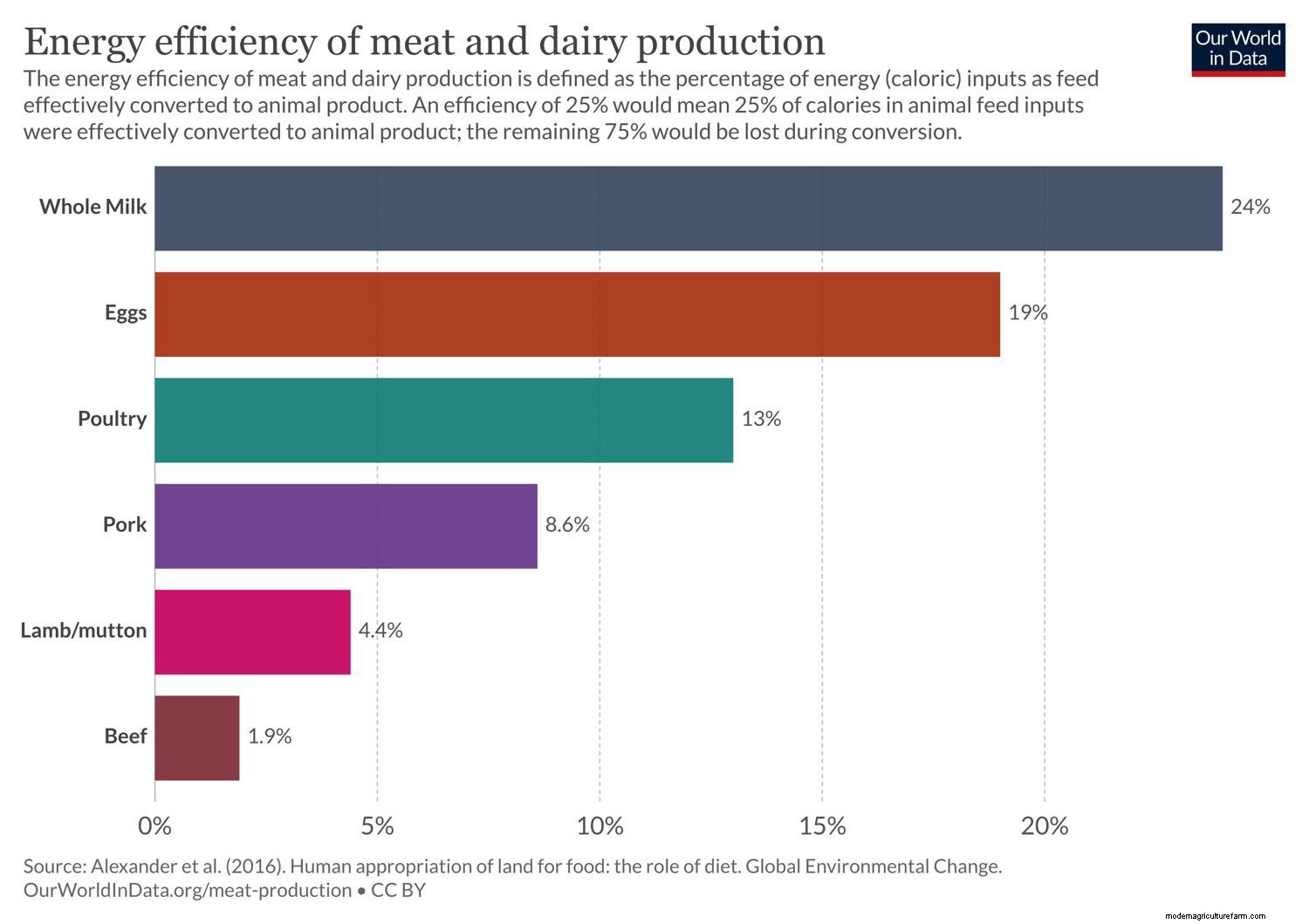
This is because cows are extremely inefficient converters of their food into protein. As Ritchie notes:
Treehugger is full of posts about the problems with the industrial production of chickens and pigs, and dairy isn't exactly benign. But going vegan is hard, and many people can't do it, don't want to do it, or don't have the discipline for it, including me.
But while trying to live a 1.5-degree diet where I attempt to reduce my carbon emissions to less than 2.5 tonnes per year, I have had very little difficulty following a diet where we eat a lot less meat in general and almost no beef. It's not that hard at all. And as Ritchie concludes, "this would free up billions of hectares for natural vegetation, forests, and ecosystems to return." We get two for the price of one: fewer methane emissions from the cows, and more trees to absorb carbon from the atmosphere.
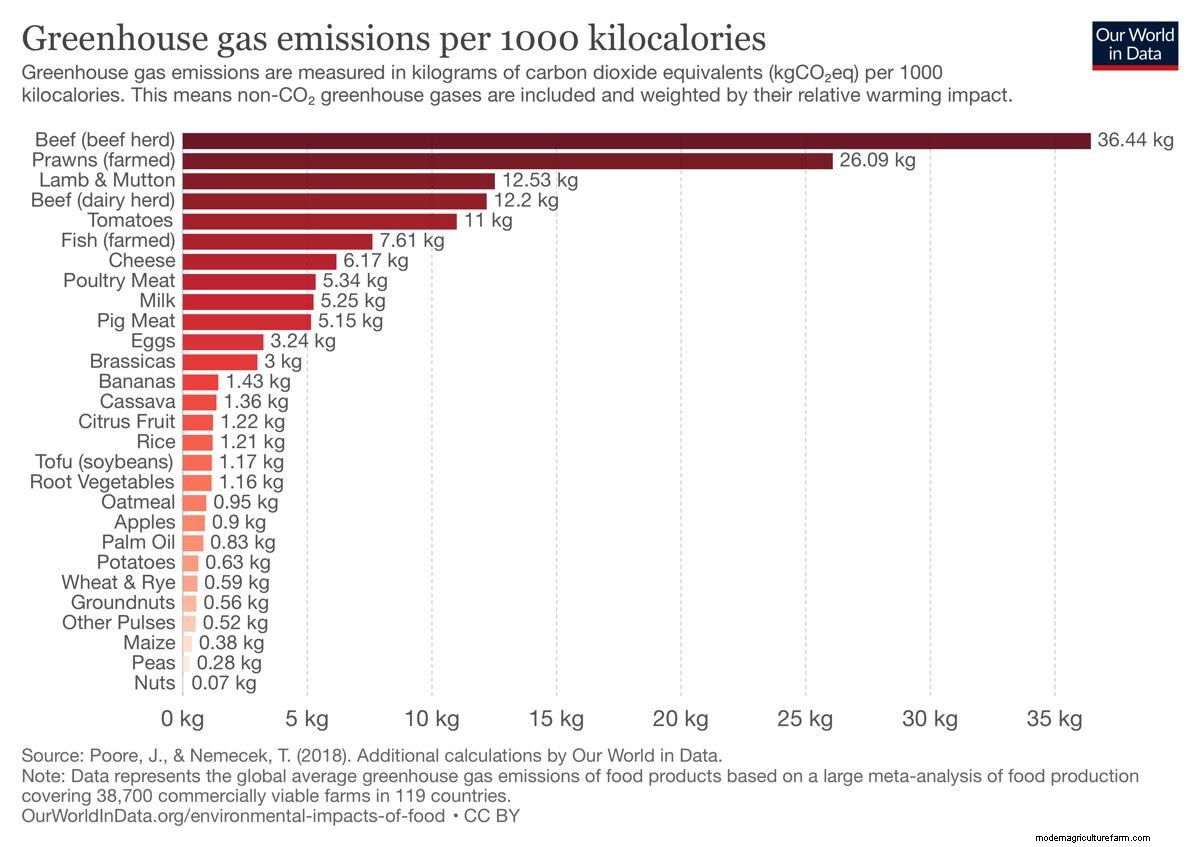
My colleague Katherine Martinko has talked about this before, about cutting back instead of taking an "all or nothing" approach, eating less meat and being a reducetarian. I wonder if in the climate crisis it isn't better to choose our targets carefully and be strict climatarians, eliminating the red meat, the prawns, and the hothouse tomatoes, and enjoying moderate amounts of other foods that are not so bad from a strictly carbon-footprint point of view. I have no doubt that ethical vegans will have something to say about this, but it's a good place to start.
How to Be a Reducetarian
