
Welcome to Modern Agriculture!

Are you fed up with mowing the lawn? Then learning how to create a front yard permaculture garden might be exactly what you need.
The average homeowner spends around 60 minutes each time they need to mow and edge their lawn. And this gets done 2.4 times per month on average during the warmer months of the year.
All of that time spent on yard maintenance really adds up!
A person will spend nearly two months over the course of their lifetime cutting the grass.
Imagine if you could start making your front yard work for you, instead of the other way around.
Creating a permaculture front yard can help you do exactly that.
But before you start ripping up your lawn to create a front yard permaculture garden, let’s discuss exactly what permaculture is.
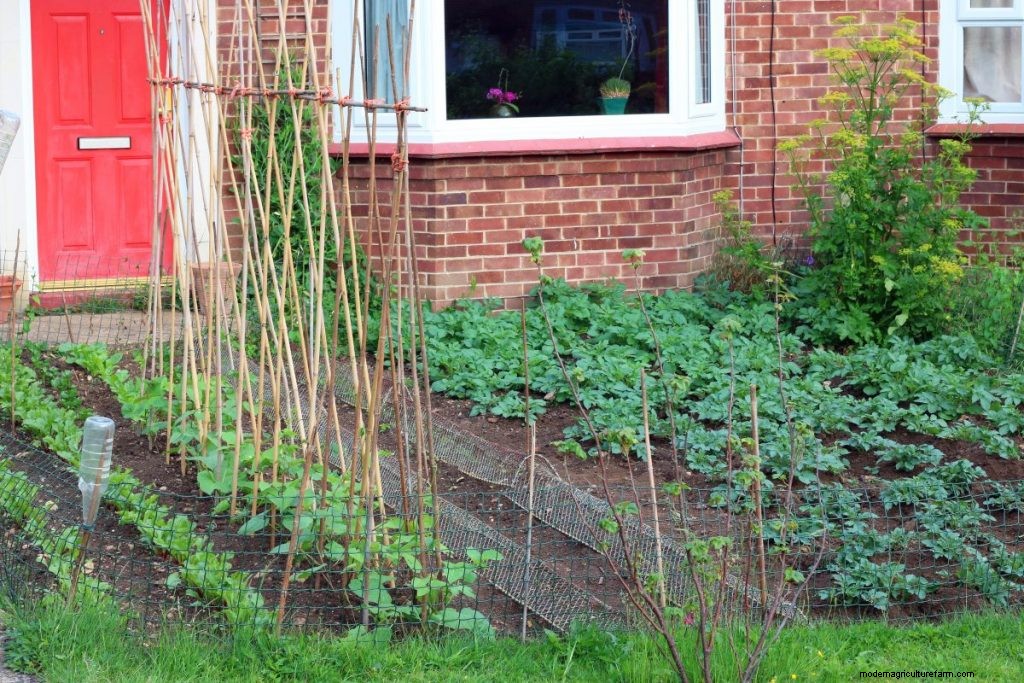
Permaculture is about learning to work with nature instead of against it.
Out in the wild, the landscape naturally maintains itself with minimal human intervention.
Gardeners or farmers who follow the principles of permaculture look to recreate these natural processes on their own land. The goal is to create a more sustainable and holistic landscape.
One of the main goals of permaculture is to create a closed-loop system found in natural systems, where little or no waste gets produced.
Permaculture in a front yard functions much like it would anywhere else. Albeit usually on a smaller scale and with more restrictions.
It’s about designing your front gardens and lawn to mimic the relationships and patterns found in nature. As opposed to the very unnatural monoculture of grass that’s found in front of many homes today.
Permaculture in the front yard seeks to tie various plants and parts of the landscape together. Instead of having a bunch of very separate and disconnected areas.
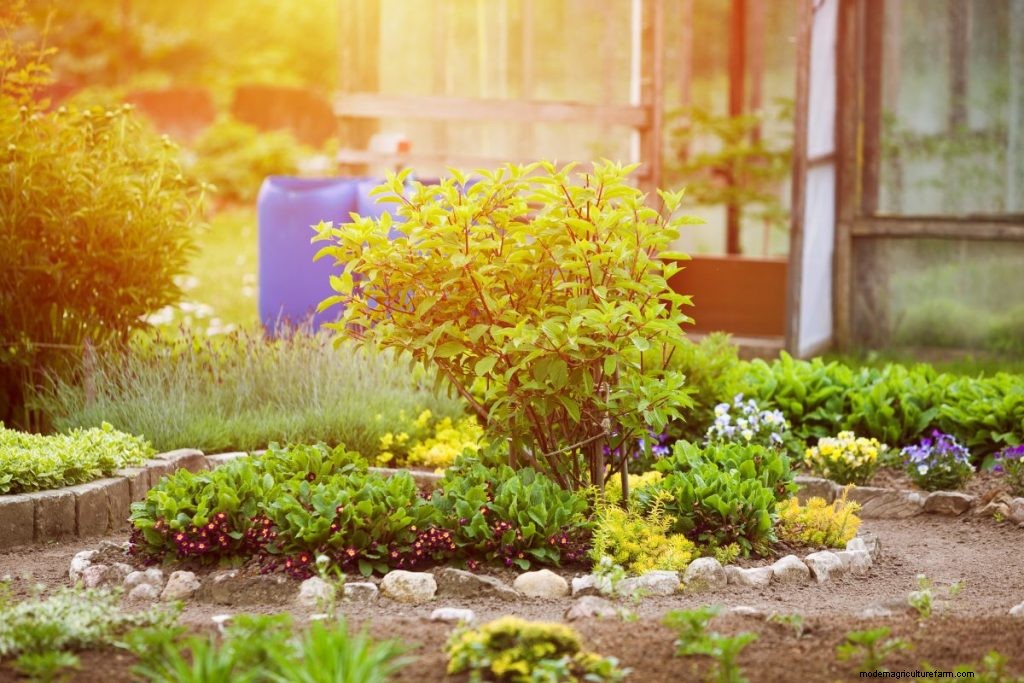
There are several ways that a front yard permaculture design can be useful. First off, we can’t eat our lawn. So pretty much anything is more useful than growing grass just to continually mow it.
Permaculture design in your front yard doesn’t need to include edible landscaping to be useful. Although obtaining a yield of food or energy from your front yard is certainly a nice bonus!
Even just replacing your standard lawn with plants that require less watering and maintenance will make your lawn more useful. It will save your time, energy and be better for the environment as well.
Front yard permaculture designs are also useful for increasing biodiversity.
Adding native wildflowers to your front yard will help attract pollinating insects that can boost the yield of a garden that you might have in your backyard as well.
Before you can get started on your permaculture front yard design, you’ll need a way to get rid of most of that pesky grass. There are a few strategies for this.
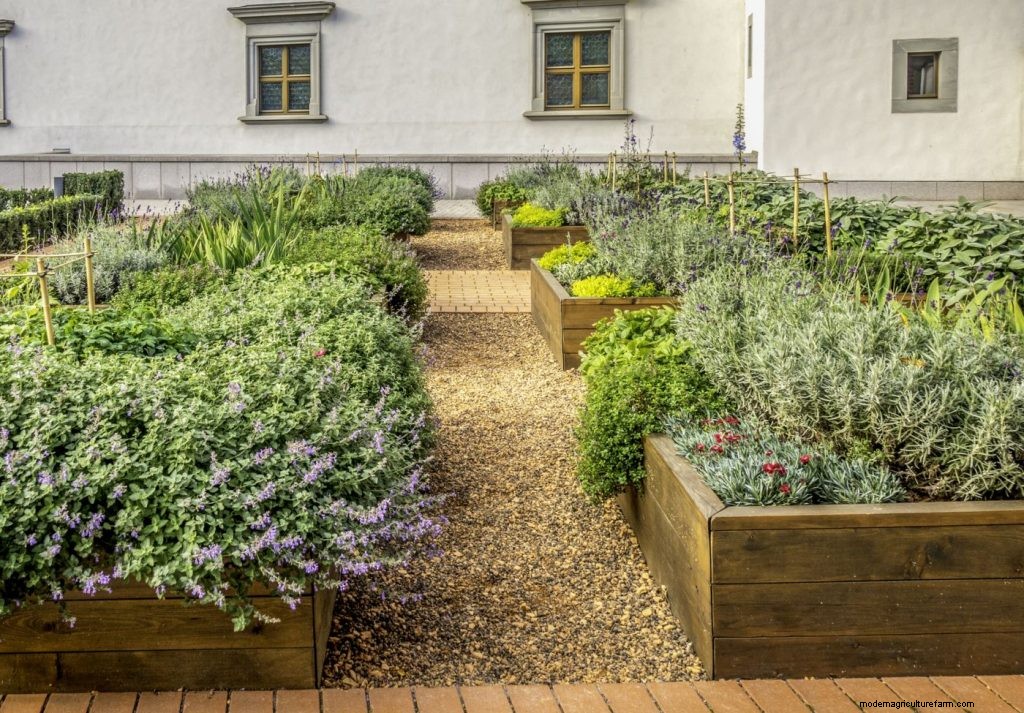
There are many factors you’ll want to consider when you start designing front yard garden ideas:
When designing your permaculture front yard, you’ll want to consider the 12 permaculture principles.
We discuss all 12 permaculture principles in depth in our article Permaculture Farming: The Ultimate Guide and Examples.
But for this context, here are three main principles that we think you should factor into any front yard permaculture project.
This should be your first step when designing a permaculture garden, no matter how big or small it is.
When designing your permaculture front yard, take some time to look at it. What direction does it face?
Do you get lots of sunlight, or is most of the area shaded during the day?
Does the ground get very soggy in the spring?
These are all important things to keep in mind. Too much (or too little) of water, sunlight, or many other factors will determine what kinds of plants you can grow.
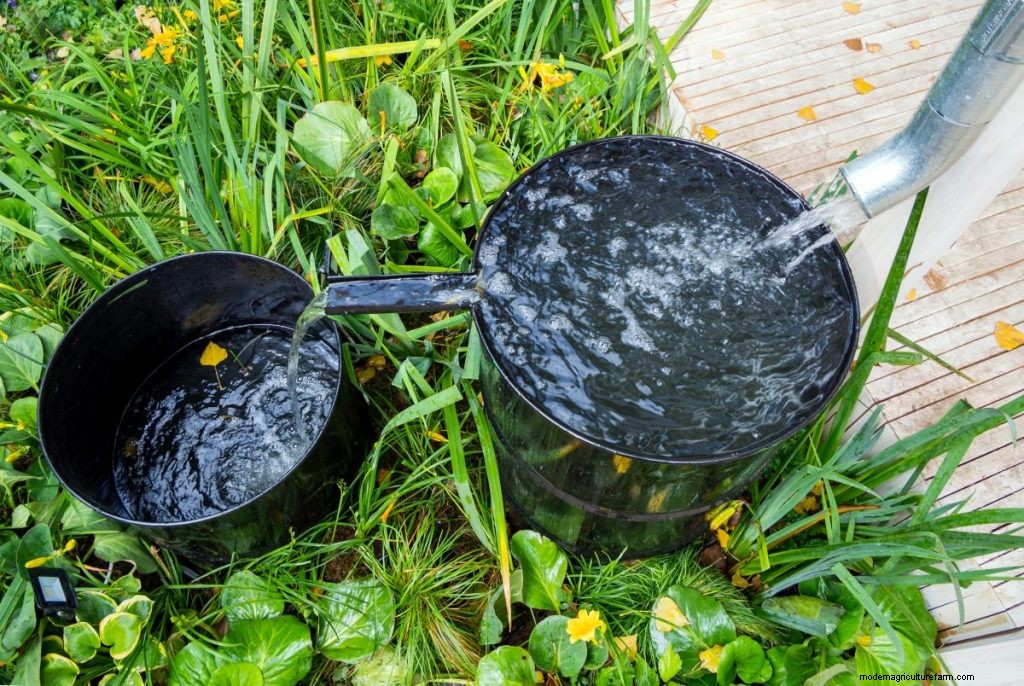
You can design your front yard to catch and store energy in a bunch of different ways.
It can soak up rainwater to avoid it running off your property. In larger front yards, you may even be able to add a swale or rain garden to capture larger amounts of water.
Larger plants and trees can catch sunlight, turning it into vegetation that provides shade to keep your home cooler.
Eventually all of that vegetation decomposes to add fertility back to the soil.
The obvious yield of a permaculture garden is food. If you can work fresh fruits and vegetables into your front yard permaculture design, that’s a bonus.
But depending on your yard, that may not be possible.
You can still design your project to obtain lots of other yields though. Adding beauty to your yard and having nice flowers to look at is certainly a yield.
So is attracting butterflies and birds for you to watch as well.
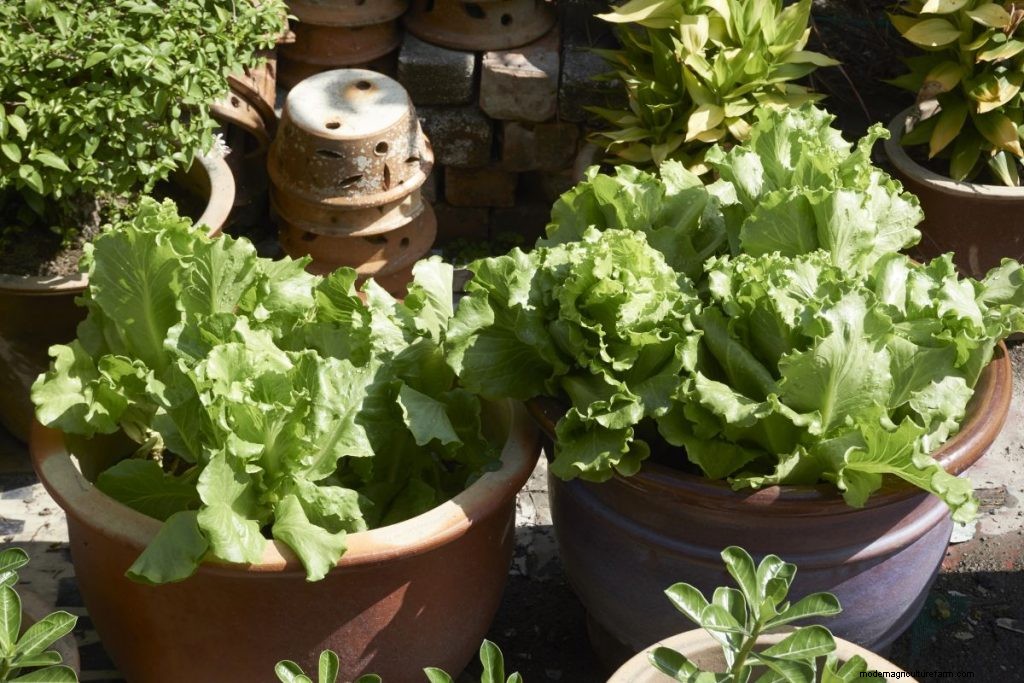
Don’t have much space to work with? No problem! There are lots of little things that you can do to add permaculture to your front yard. Even if you only have a small strip of lawn to work with.
Even small front yards can usually fit at least one small tree or shrub, plus some smaller herbaceous plants.
For particularly small front yards, try container gardening. This can keep vegetation contained and neat looking, instead of like you have a tiny patch of land that has grown out of control.
Many plants that spread aggressively like mint or oregano should be kept in containers regardless.
But containers also make it possible to grow things like tomatoes, or even vining plants like zucchini or cucumbers in a smaller area.
You can start with just a couple of small flower pots and build from there.
Dwarf fruit trees will stay relatively small. Usually they reach a maximum size of about 8 to 10 feet (2.5 to 3 meters) in height and width.
You don’t need a whole orchard to start growing fruit either. Pollinating bees can travel up to 2 miles (4 kilometers).
So if you plant a single dwarf pear tree, there’s a good chance it should grow fruit as long as there’s at least one other pear tree within a few miles of your house.
Or you could always plant a second tree just to be sure.
You could also look for self-pollinating varieties to plant. Then it’s not even a concern.
Some great edible shrubs to consider include cranberries, blueberries, or currants.
Although you can grow them, you might want to avoid raspberries or blackberries so their brambles aren’t catching on your clothes as you walk by.
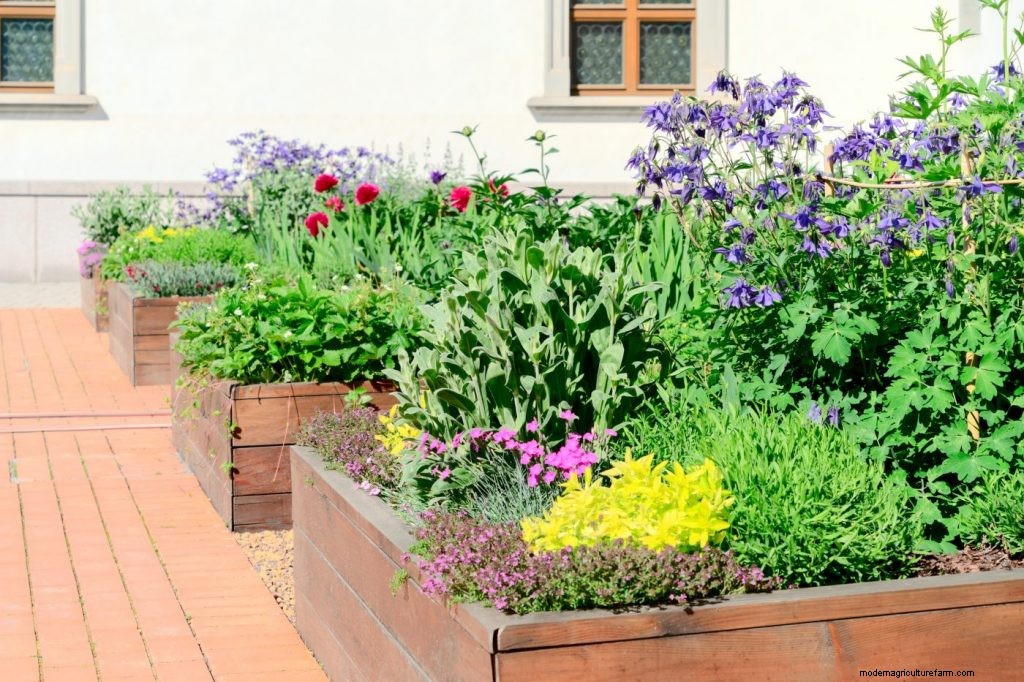
Attracting birds, butterflies and bees will help to make all gardens in the neighborhood become more productive. Plus they’re nice to look at, too.
Consider adding a birdbath into your front yard to help them out. Even bees need a source of water to drink from since their diet of nectar and pollen isn’t very high in moisture.
In a full-sized permaculture garden, there are typically seven food forest layers that are grown. You can read our article The Complete Guide to Food Forest Layers for a full guide.
Most front yards don’t have the space to include all of the food forest layers. But you can try to include as many of them as you can.
Almost every layer has some opportunity to incorporate edible landscaping into your design as well.
Overstory layer – These include walnuts, pecans, or full-sized fruit trees. Most front yards probably won’t be able to fit the large trees that typically make up the overstory layer.
Nor would you probably want to grow one of these, as they could shade out your entire growing area. But if you live in a more rural area with a large front yard, you might be able to fit them.
Understory layer – These include smaller trees. Some front yards may be able to fit one or two dwarf fruit trees like apples, pears, or cherries.
In particularly warm or tropical regions, you might have other varieties like bananas to choose from as well.
Shrub layer – Even small yards can usually fit a couple of shrubs or bushes. Blueberries or currants are great choices.
Even some smaller nut-producing plants like hazelnuts can be grown in a shrub form.
Herbaceous layer – Here is where you can grow most of your vegetables and herbs.
We think a front yard garden is the perfect place to put things like mint or sage that you might not want spreading into a larger vegetable garden.
You can also grow flowers like echinacea or chamomile. Even a large rhubarb plant won’t necessarily look out of place in a front yard permaculture garden.
Groundcover layer – You can still have groundcover without growing grass that needs to be constantly mowed.
Plants like clover or creeping thyme can make great alternatives if you’d like to add some paths into your yard, or as a general cover layer.
Root layer – Don’t forget to grow below ground as well as above it!
Ornamental flowers like lilies, daffodil and tulips grow from bulbs that will keep coming up in the same spot every year.
You can also plant edible roots like peanuts, wild leeks (ramps,) or jerusalem artichokes.
Vine layer – Beans, cucumbers, or grapes are all great vines that produce an edible crop. In warmer climates you can also grow hops or kiwifruit.
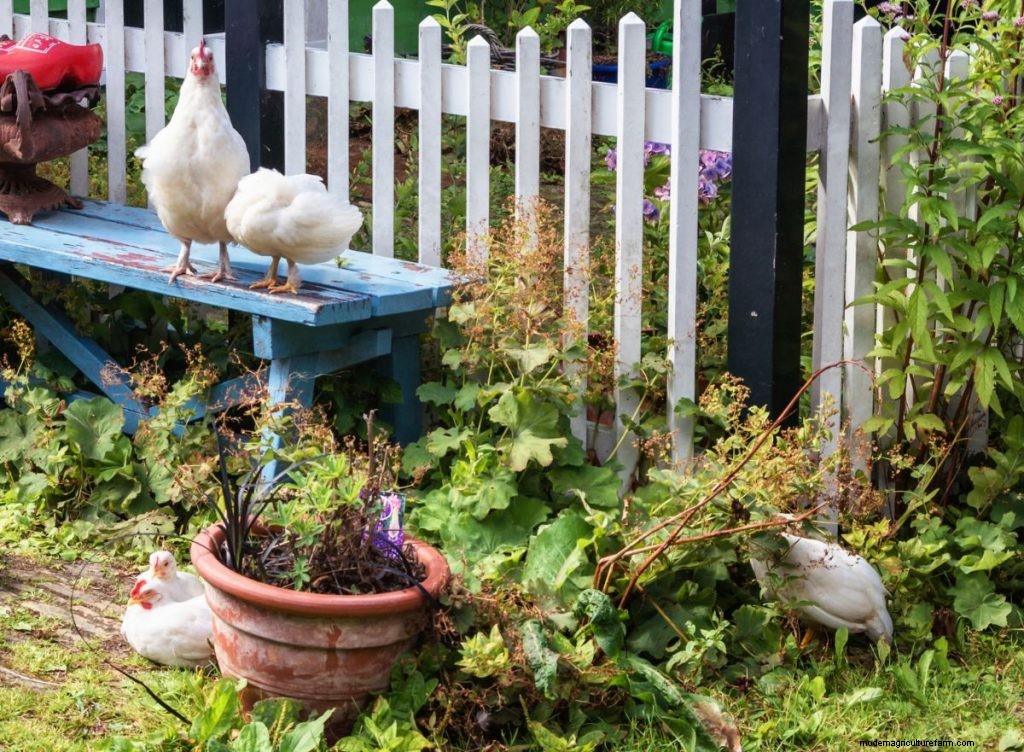
A permaculture front yard has some major advantages, but also some potential disadvantages to be aware of. Let’s discuss both.
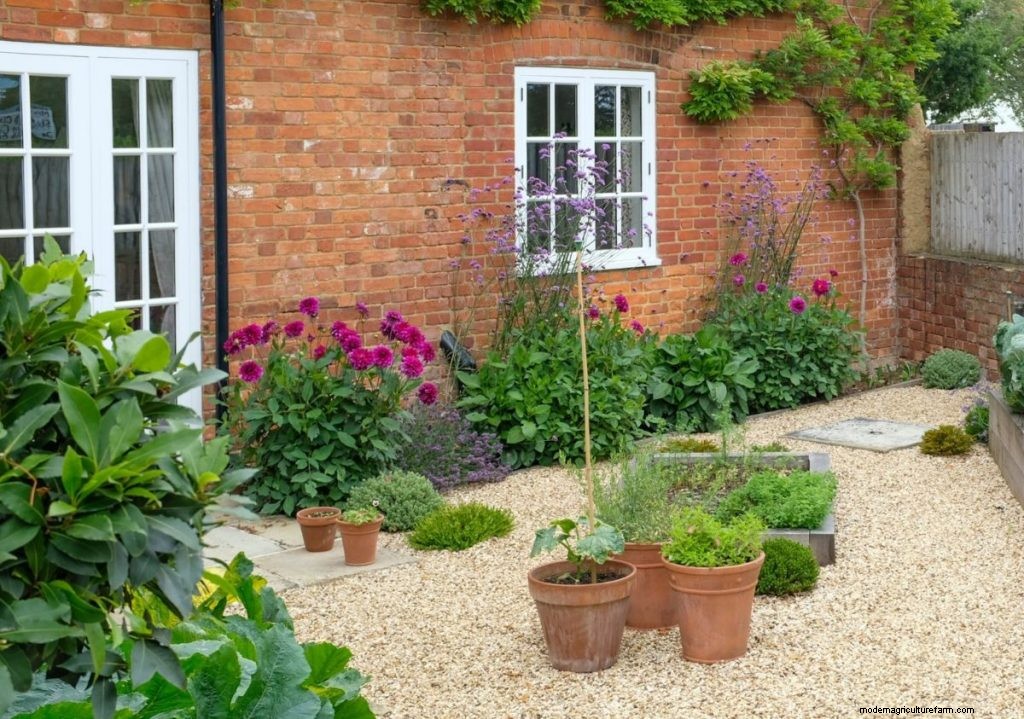
Adding some element of permaculture to your front yard doesn’t have to be a huge undertaking.
In fact, sometimes doing nothing at all is a step toward permaculture. Often it’s referred to as “rewilding.”
If you’ve got some dandelions growing in your front yard, resist the urge to pull them or spray chemicals.
Remember that dandelion greens are edible and delicious in a salad. So why would you want to get rid of them?
When wild plants pop up in an area, they are normally adding something that was lacking in the ecosystem, or helping to restore the landscape.
For example, the long taproots of dandelions tend to develop in compacted soil to help break it up.
You can also look at what kinds of herbs or vegetables you typically buy from the supermarket. Consider if it’s something that would easily grow in a garden and add it to your front yard!
All across developed countries, the space in most front yards goes to waste growing grass. It doesn’t really contribute anything and in fact it just creates more work to maintain.
Converting some or all of your front yard into a permaculture garden is a great way to make your landscape more appealing and help the environment.
Best of all, it will help cut down on the amount of mowing and maintenance you need to do. After you’re done with your front yard, why not work on your backyard too? See our article How to Design a Permaculture Backyard: Step by Step Instructions for a full guide.

