
Welcome to Modern Agriculture!

Introduction to management of plant viral diseases: Well, if you know the management of plant viral diseases in agricultural crops, there is a good chance of producing quality produce and high yields. Viral diseases cause enormous economic losses in the tropics and semi tropics which provide ideal conditions for the perpetuation of viruses. Viruses are particles smaller than a single cell and not visible through a light microscope. Most viruses are spread by insects, but some viruses are spread mechanically through the exposure of plant wounds to infected sap. In insect transmission, plants become infected by the sampling and feeding activities of insects such as aphids, thrips, and leafhoppers that carry viruses or vectors. Viruses are capable of infecting virtually all species of cultivated plants. Though, host ranges of individual viruses vary from very narrow to very broad. Many diverse approaches have been tried to minimize the losses caused by viral diseases. The approaches are based on avoidance of sources of infection; control of vectors; modification of cultural practices; and use of resistant varieties obtained through the conventional breeding process; cross-protection; and use of transgenic plants containing alien genes that impart resistance to some viruses. The use of resistant varieties is economical, for effective management of plant viral diseases an integrated approach is necessary for sustainable agriculture. In this article we also discuss below topics;
What are we waiting for? Let’s jump into the topic of management of plant viral diseases, thier symptoms and their control measures.
Viruses cause many important plant diseases and responsible for huge losses in crop production and quality in all parts of the world. Infected plants can show a range of symptoms depending on the disease but often there is leaf yellowing (either of the whole leaf or in a pattern of stripes or blotches), leaf distortion (example curling) and other growth distortions (for example stunting of the whole plant, abnormalities in flower or fruit formation).
You should not miss the Organic Farming Business Plan.
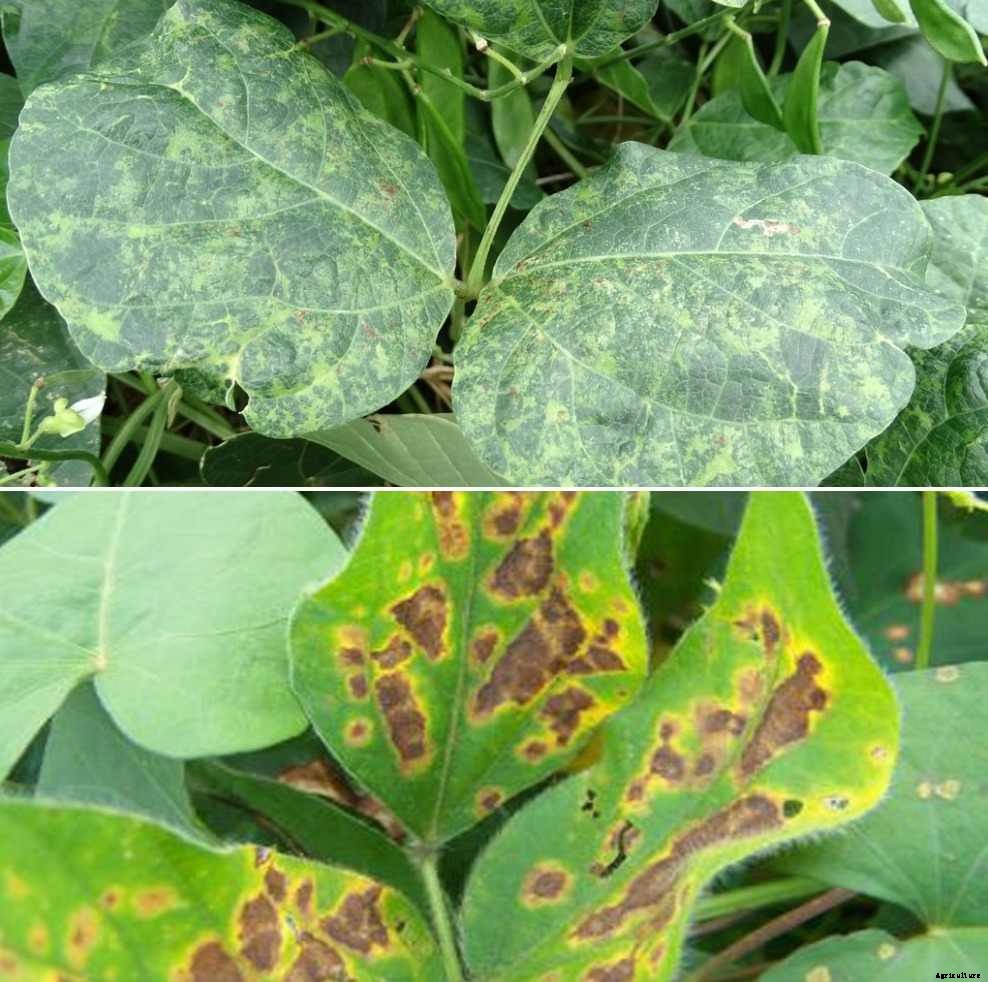
Integrated management plant approaches involving the utilization of virus-resistant crops and the management of insect vectors can reduce disastrous problems. Though, in developing countries, such strategies are rarely applied due to a lack of farmer’s knowledge about plant virus diseases. Some viral disease symptoms are;
These are further divided into two categories;
(a) Primary symptoms – These are the initial symptoms and the result of local reaction at the spot of inoculation. These primary symptoms appear in the form of local lesions and clearing of veins.
(b) Systemic symptoms – In this whole of the plant is involved.
The main systemic symptoms are;
Chlorosis – It is mainly characterized by the uneven distribution of chlorophyll in yellow and green patches on the leaf. These patches are irregularly distributed among normal green tissues and create a mosaic pattern. This is the common symptom and is produced by various viruses examples are mosaic of cucurbits, a mosaic of potato, a mosaic of sugarcane and Tobacco mosaic, etc.
Yellows – In this symptom uniform chlorosis of the leaves take place, for example, Rice yellows.
Necrosis (death of cells) – In this symptom, the infected part of the plant, group of cells collapse, become brown and die. It appears in different forms. Some viruses affect the tissue at the point of inoculation by causing a localized breakdown and it is called local necrosis.
Ring Spotting – On infected leaves, this symptom appears in localized spots. These spots contain various types of chlorosis and necrosis. The spots may be circular chlorotic areas and are called chlorotic ring spots.
Distortion – It is a common symptom of virus diseases and this symptom is characterized by the alteration in the symmetry of leaf arrangement, crinkling of edges of the leaf, leaf rolling and leaf resetting, e.g., leaf roll of potato, leaf curl of papaya, and leaf curl of tomato, etc.
Root Symptoms – Infected plants show the drying of lateral roots, overproduction of tumors and galls in roots, for example, wound tumor disease of Pea.
These are of two types;
(a) Histological Symptoms
Hypoplasia – Infected plants show reduced growth.
Hyperplasia – Infected plants show excessive growth and abnormal development of tissues due to an increase in the number of cells.
Necrosis – Death of the cells or tissues takes place and other histological changes can also be seen. Phloem cells degenerate or die callose deposition occurs on the phloem sieve plates. Tyloses are produced in the xylem elements. The xylem elements increase characteristic signified strands which are known as endo-cellular cordons.
(b) Cytological Symptoms
The Cytological symptom of virus infection is the development of intracellular inclusion bodies. They are mainly two types they are (a) crystalline and (b) amoeba-like amorphous bodies. The latter is known as X bodies. The exact nature of these bodies is not known.
These bodies are very common in the epidermal cells of leaves and stems. They are present in roots, flowers, and most tissues, except the phloem sieve element. The bodies reported in plants infected with Tobacco-ring spot, Turnip yellow mosaic, Potato virus, and Hyosyamus mosaic virus, etc.
Virus diseases are critical in cash crops and they can even quickly roll back the economy of any region if they hit their epidemics. Therefore timely management acquires huge importance. The farmers are not confused about the virus disease but they further pile up to their loss via the wrong usage of pesticides. Due to a lack of knowledge in the farmer community about plant virus diseases, the long-lasting solution against these diseases can be through the incorporation of host plant resistance. Hundreds of research institutes, laboratories and universities utilized billions of funds every year to research virus diseases but they are failed in generating the virus-resistant crop verities against most of the plant viruses. There are few success stories regarding virus-resistant cultivars but they are 0.1% of the total which is un-justifying. The other solution and the better solution for the farmers is to rely on themselves and help themselves by improving their knowledge about plant viruses, their symptomology, their management strategies. This can be done by increasing the connections between extension services and farmers’ communities by arranging different activities and training. The problem that the former lacks knowledge about the viruses is alarming not for farmers but also for food security worldwide but no one is ready to pay the attention to this matter seriously which can lead to a sudden disaster in near future.
In case if you miss this: Medicinal Plant Cultivation, Farming, Training.
Plant viruses can be difficult to detect as symptoms look similar to several nutrient deficiencies and vary depending on the age of the plant when infection occurs.
Mosaic virus overwinters on perennial weeds and spread by insects that feed on them. Aphids, leafhoppers, whiteflies and cucumber beetles are garden pests that can transmit this disease. Soil, seed, starter pots and containers can be infected and pass the plant virus. Cuttings or divisions from infected plants will carry the virus.
Types of viral diseases in plants are;
Tobacco Mosaic Virus
Disease symptoms are Discoloration of leaves.
Infected crops- Tobacco, Pepper, Potato, Tomato, Eggplant, Cucumber, and Petunia
Transmitting agent- Insects or other physical damage
Cauliflower Mosaic Virus
Disease symptoms are twisting in young leaves that stunt the growth of the entire plant and cause poor fruit or leaf production.
Host/crop – Cucumber, Tomato, Peppers, Melons, Squash, Spinach, Beet, and other plants.
Transmitting agent- Aphids.
Barley Yellow Dwarf
Disease symptoms are discoloration of leaves and the tips of the plants, which reduce photosynthesis, stunt growth and decreases the production of seed grains.
Host/crop- Grains and staple crops, including wheat
Transmitting agent- Aphids
Bud Blight – Disease symptoms are stem to bend at the top and the buds to turn brown and drop off the plant.
Host/crop – Soybeans
Transmitting agent- – Nematode
Sugarcane Mosaic Virus – Disease symptoms are discolored leaves stunts the growth of young plants.
Host/crop – Sugarcane
Transmitting agent- Aphids and infected seeds
Lettuce Mosaic Virus – Disease symptoms are Mottles the leaves of lettuce, stunting its growth and eliminating its market appeal.
Host/crop – Lettuce
Transmitting agent- Aphids and infected seeds
Maize Mosaic Virus – Disease symptoms are yellow spots and stripes on the leaves of corn, stunting its growth.
Host/crop – Maize
Transmitting agent- Leafhoppers
Leaf curl Virus – Disease symptoms are upward and downward curling of leaf and leaf thickening.
Host/crop – Cotton, Papaya, Bhendi, Chilly, Capsicum, Tomato, and Tobacco
Transmitting agent- whiteflies
Control of plant viral diseases is;
Different cultivars and species show different degrees of resistance to viruses, resistant types should be planted whenever they are available. Recent advances in plant cell molecular biology and virology have led to the development of genetically modified plants with superior resistance to viruses.
You may also like Hydroponic Farming Business Plan, Hydroponic Yield.
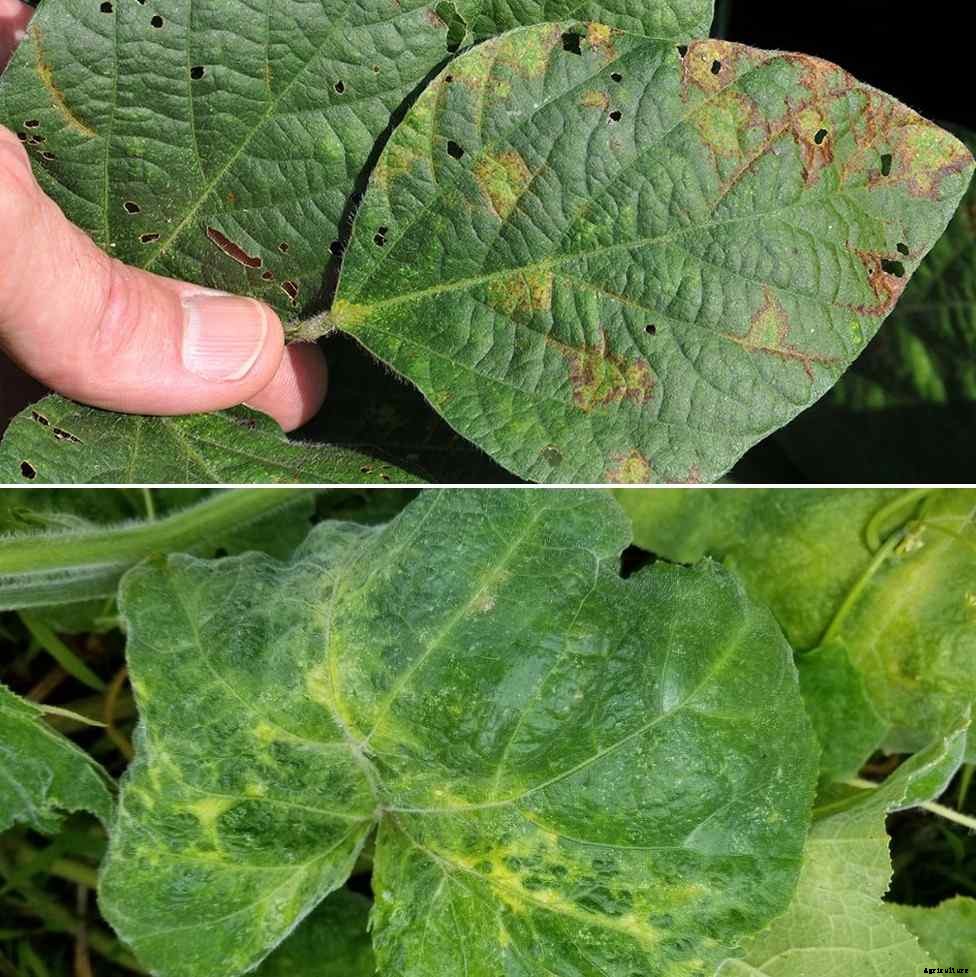
All the above-mentioned suggestions can be applied if the farmer can identify the plant virus diseases. So farmers must take training and contact the active extension service departments for learning.
The intricate relationship between the virus, host plants, and the vector or the carrier, creates problems in developing effective management systems. Though, by using a combination of management options, or an Integrated Pest Management (IPM) approach, disease control can be successfully implemented.
Exclusion or avoidance – quarantine; grow crops in regions where the virus seldom occurs or during periods when the virus; and use virus-free seedling transplants.
Reduction in virus spreading sources – control weeds and virus hosts and insect vectors; destroy old crops promptly; separate new crops from maturing crops; and avoid overlapping crops, mainly year-round cropping.
Protection of the host plant – plant virus-resistant varieties; use barrier crops to reduce insect vector activity in the crop; use insecticides to protect plants; and also use highly reflective mulches and oil sprays to deter insects.
You may be interested in Small Vegetable Garden Ideas for Beginners.


