
Welcome to Modern Agriculture!

Introduction to management of plant bacterial diseases: Bacteria as plant pathogens can cause severe economically damaging diseases, ranging from spots, mosaic patterns on leaves. They do great harm to many crops, particularly cotton, tobacco, tomatoes, potatoes, cabbage, and cucumbers. Management strategies for plant bacterial diseases need a thorough knowledge of the pathosystem to identify the appropriate timing for the targeting of pathogen populations and to determine when the critical host tissues are vulnerable to infection.
An integrated management approach, including the use of plant host resistance or the growth of less susceptible cultivars, intervention with chemical and biological controls, and cultural practices aimed at inoculums reduction, normally represents the best overall strategy for effective and sustainable disease management. Though, integrated approaches depend on the availability of appropriate host plant cultivars, efficacious chemical and biological controls, and cultural practices that are physically achievable and economically suitable, such that growers will deploy them. In this article we also discussed below topics;
For a bacterial disease to take hold in a host plant, the bacterium has to encounter the host in a form where disease infection can take place. Applications are understood the life cycle of the pathogen, and what causes it to be pathogenic, as well as understanding how that pathogenicity occurs. This has a role to play in informing stakeholders about the risks of infection, including from imported plant material.
Soil can play a different variety of roles in the transmission and establishment of bacterial diseases of plants. Pathogenic bacteria can live in soil and infect host plants that grow there, and unlike pathogens affecting the plant upperparts, soil-borne bacteria are difficult to treat. Diseases can be spread by organisms living in the soil, such as nematodes and slugs. Soil conditions, including the soil microbiome, can have an effect but little research has been done in this area, and applications to the role of soil in bacterial diseases of plants are welcomed.
Cause – The bacteria are spread by rain and wind then the disease can occur after long cool wet periods entering the plant through damaged leaves. Warm dry weather stops the spread of bacterial blight.
Symptoms – Small brown spots on the upper plant leaves which eventually grow bigger as they encompass the whole leaf. In some cases, the infected plant leaves can turn brown and watery.
Treatment – Cut out the infected parts of the crop such as leaves, stems, and branches; make sure to disinfect the pruning tools that you use. Avoid overhead irrigation system to avoid further spreading. When applicable, practice crop rotation to avoid overwintering of the bacterial blight disease. Use disease-free plant seeds and practice antibiotic seed treatment.
This disease affects cultivars and hybrids of citrus and citrus relatives contain orange, grape-wine, pummeto, mandarin, lemon, lime, tangerine, sour orange, and rough lemon. Because of its rapid spread, high potential damage and impact on export and domestic sales, the citrus canker disease is a significant threat to all citrus-growing countries.
Symptoms – A characteristic symptom of the citrus canker disease on the leave is the yellow halo that surrounds the lesion. These lesions start as pinpoint spots and attain a maximum size of 2 to 10 mm in diameter.
Lesions became visible about 7 to 10 days after infection on the lower surface of leaves and soon appear on the upper surface. The lesion persists on twigs and branches for several years and supports long term survival of the bacterium. Severely infected fruits can drop prematurely, leading to reduced crop yield.
You should not miss the Basic Steps of Organic Farming.
Control Measures
Cause – Black rot mainly caused by wet and warm weather conditions. The black rot bacteria can enter the plant through natural openings or wounds of the leaf. Once the bacteria are in the plant, it can infect the whole plant traveling through its water-conducting system.
Symptoms – Yellow to dark brown discoloration appears on the margins of the plant leaves. As the disease spreads it infects the whole leaf which turns dark brown color. Later stages of black rot disease can take over the plant’s fruits or vegetables which decay and dry out.
Control measures – Prune the dead branches of trees, pluck the dried out fruit or vegetables, weed regularly to prevent the spread of the disease to other plants. Use bactericides to treat the infected plants but beware that most of them could impose harm on the plant and its fruit or vegetables. One process of prevention is to use disease-free seeds or to wash them before planting them.
It is a common bacterial disease of potato tubers and the disease occurs throughout the potato growing regions of the world. The pathogen mainly affects beets, radish, and other root crops.
It is a cosmetic disease with no or little effect on the crop yield. The main loss from the scab is lower market quality because tubers are unsightly and have poor customer appeal. Severe scab reduces the quality of the usable tubers, as more peeling is necessary.
Symptoms – The first symptoms of the potato scab disease are the appearance of small usually circular, brownish specks or spots or lesions on the young tubers. These spots soon enlarge, darken, and become corky. Certain lesions may merge to form large scabby areas. These lesions may be so numerous as to give a russeted appearance to the entire tuber. Pitted scab develops where lesions develop up to half an inch deep. These deep lesions are dark brown to black.
Control Measures
Cause – Wet and cool conditions could help the bacteria spread. Once it has infected the plant, the leaf spot bacteria can multiply quickly.
Symptoms – Dark spots on the leaves and leaf discoloration. In some extreme cases, dark necrotic sports can spread to the whole leaf and kill it.
Control measures – Make sure to cut all infected plant leaves to prevent further spread of the leaf spot. Use a copper-based bactericide in the early stage of the bacteria disease. Make sure that remove all debris from infected plants in the garden and then you don’t plant new ones in the same place.
Cause – These bacteria can be transmitted by insects. When insects bite off of a leaf the bacteria start multiplying at the wound and begin to spread. Dry hot weather helps the bacteria spread and induce wilting.
Symptoms – When a part of the stem or branch is cut, white slimy ooze extends from one cut to the other. Yellowing of the plant leaves can occur but not in every case. Sometimes the infected plant can wilt rapidly without any yellowing of the plant leaves.
In case if you miss this: Mango Flower and Fruit Drop Causes and Control Methods.

Control measures – The effective way to prevent the spread of bacterial wilt is to control the insects from spreading it. Once wilt disease has infected the plant there is no way to cure it. Though, it is essential not to use the diseased plants for compost and to make sure to remove any remains of the infected plants from the soil.
Bacterial diseases in plants are very difficult to control. Emphasis is on preventing the spread of the bacteria disease rather than on curing the plant. Integrated management measures for bacterial disease plant pathogens include;
Resistant varieties, cultivars or hybrids are the important control procedure.
Applications of copper-containing compounds or Bordeaux mixture that is copper sulfate and lime.
The use of antagonistic or biological control products may be effective for managing bacterial diseases of plants.
Pathogenic bacteria cause serious diseases of vegetables. They do not penetrate directly into plant tissue but want to enter through wounds or natural plant openings. Wounds can effect from damage by insects, other pathogens, and tools during operations such as pruning and picking.
Bacteria become active and cause problems when factors are conducive for them to multiply. They can multiply quickly and some factors conducive to infection include high humidity; crowding; poor air circulation; plant stress caused by over-watering, under-watering, or irregular watering; poor soil health; and excess nutrients.
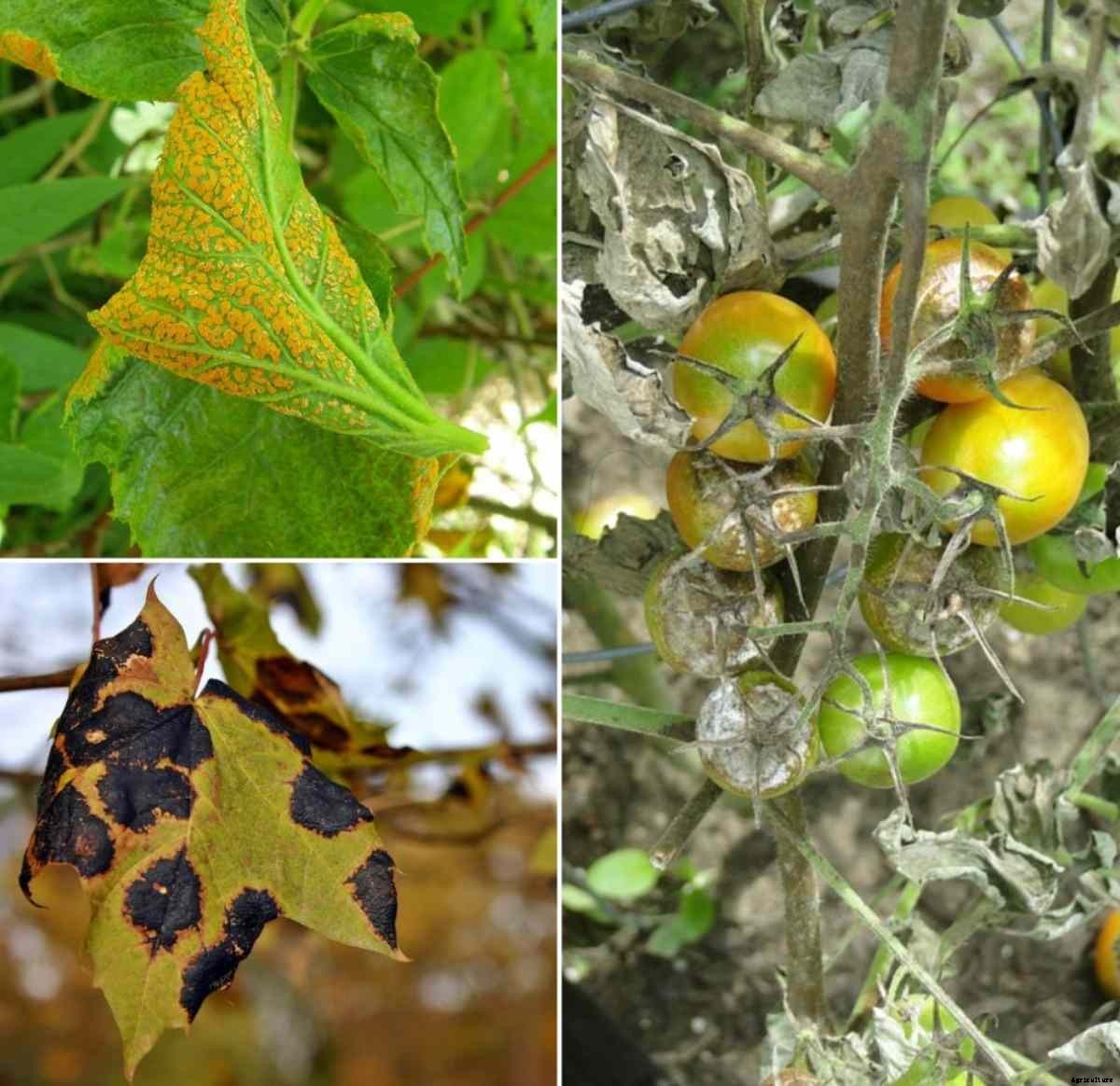
Bacterial organisms can survive in the soil and crop debris, and seeds and plant parts. Weeds can act as reservoirs for plant bacterial diseases. Warm, wet weather favors the development of some bacterial diseases, as others are favored by cool, wet conditions. Development is arrested by hot, dry conditions, but may exacerbate symptoms once the plant is already infected (e.g. Bacterial wilt caused by Ralstonia solanacearum). Sometimes bacterial ooze can be seen on diseased plant tissue. However, symptoms of bacterial diseases can be confused with those caused by fungal diseases. It is very important to have diseased tissue examined in a plant diagnostics laboratory to confirm the type of pathogen causing the disease. Infection of plants by bacteria can occur in many ways. Bacteria could be sucked into a plant through natural plant openings such as stomata, hydathodes or lenticels. They can enter through abrasions or wounds on leaves, stems or plant roots or placement by specific feeding insects.
You may also like the Fertilizer Business Subsidy, Scheme, License, Permission.
Some of the bacterial diseases of vegetables include;
Disease management strategies aim to favor the host plant’s growth while attacking vulnerable stages in the lifecycle of the pathogen to prevent or restrict its development. The key means of bacterial disease management contain;
The potential for the chemical management of individual bacterial diseases has been largely driven by factors that are the availability of effective modes of action, the opportunity to access the pathogen on plant surfaces, the susceptibility of the pathogen to the specific chemical, the economic value of the crop threatened and the market potential of the use of the chemical from an industrial perspective. Compared with fungicides, for example, moderately few chemicals targeting plant bacterial diseases have been marketed. Probably the important reason for this is that the best antibacterial compounds available are antibiotics, and almost all antibiotics historically have been developed for use in clinical medicine and not for plant agriculture.
Initial forays into the chemical management of bacterial diseases focused on a ‘kitchen sink’ approach, involving the testing of a wide range of obtainable compounds against a wide range of diseases. The antibiotic streptomycin proved to be the most efficacious, and have been the most commonly used bactericide spray treatments for bacterial disease management on plants, mainly targeting Pseudomonas spp., Xanthomonas spp. and E. amylovora. Although these bactericides have been relatively successful disease management tools, the use of both copper and streptomycin has been impacted by the evolution of resistance in populations of plant pathogens.
The extensive use of copper and antibiotic sprays over multiple years and the use of high numbers of applications within individual seasons are correlated with the selection of resistance in pathogen populations. In the majority of cases, resistance has evolved as a result of the acquisition of genes encoding resistance determinants, thus implicating non‐target microbiota in the horizontal transmission of resistance determinants within agricultural ecosystems. The linkage of disparate ecosystems on a global scale is apparent when we consider the breadth of geographical locations and bacterial species harboring identical antibiotic resistance determinants. The inclusion of plant pathogens and other populations of plant‐associated bacteria in this globally connected ecosystem became apparent when the genetic determinants of resistance to copper and streptomycin were revealed.
The control of bacterial diseases is one of the difficult problems of plant growth. It consists of a choice of integrated activities aiming at the elimination of disease sources, protection of plants against infection and decreasing plant susceptibility. Of chemical preparations, copper compounds and antibiotics are listed in the assortment. Though, other methods including biological, based on beneficial bacteria and yeasts are more common. Basic principles are;
You may be interested in Squash Plant Diseases, Pests and Control Methods.


