
Welcome to Modern Agriculture!

Introduction: Hello polyhouse gardeners, we are here today with an excellent information of setting up a polyhouse plant nursery and managing plants within the polyhouse. A nursery is a place where seedlings are grown before transplanting them in the major plots. Generally, the seed is to produce vegetables and to raise seedlings. Therefore, the quality of seed is important based on which the vegetable seed is sown. Some vegetables cannot produce directly by sowing the seed into the plot. For example, vegetables such as tomato, eggplant, Rayo, cabbage and cauliflower, seedling first need to be raised and then transplanted in the plot. Normally, the seeds are covered with a layer of soil after sowing. While there are some other vegetables whose seed needs to be direct sowing in the major plot such as okra, mustard, legumes, etc.
In many cases, if the seed is sown too close to the soil surface the risk is greater that they will be dried out by the sun or eaten by birds or rodents. There are several types of vegetable seeds based on their size and it is important to maintain to correct distances between plant to plant and row to row distances. A vegetable nursery is a place or an establishment for the rising of young vegetable seedlings until they are ready for more permanent planting.
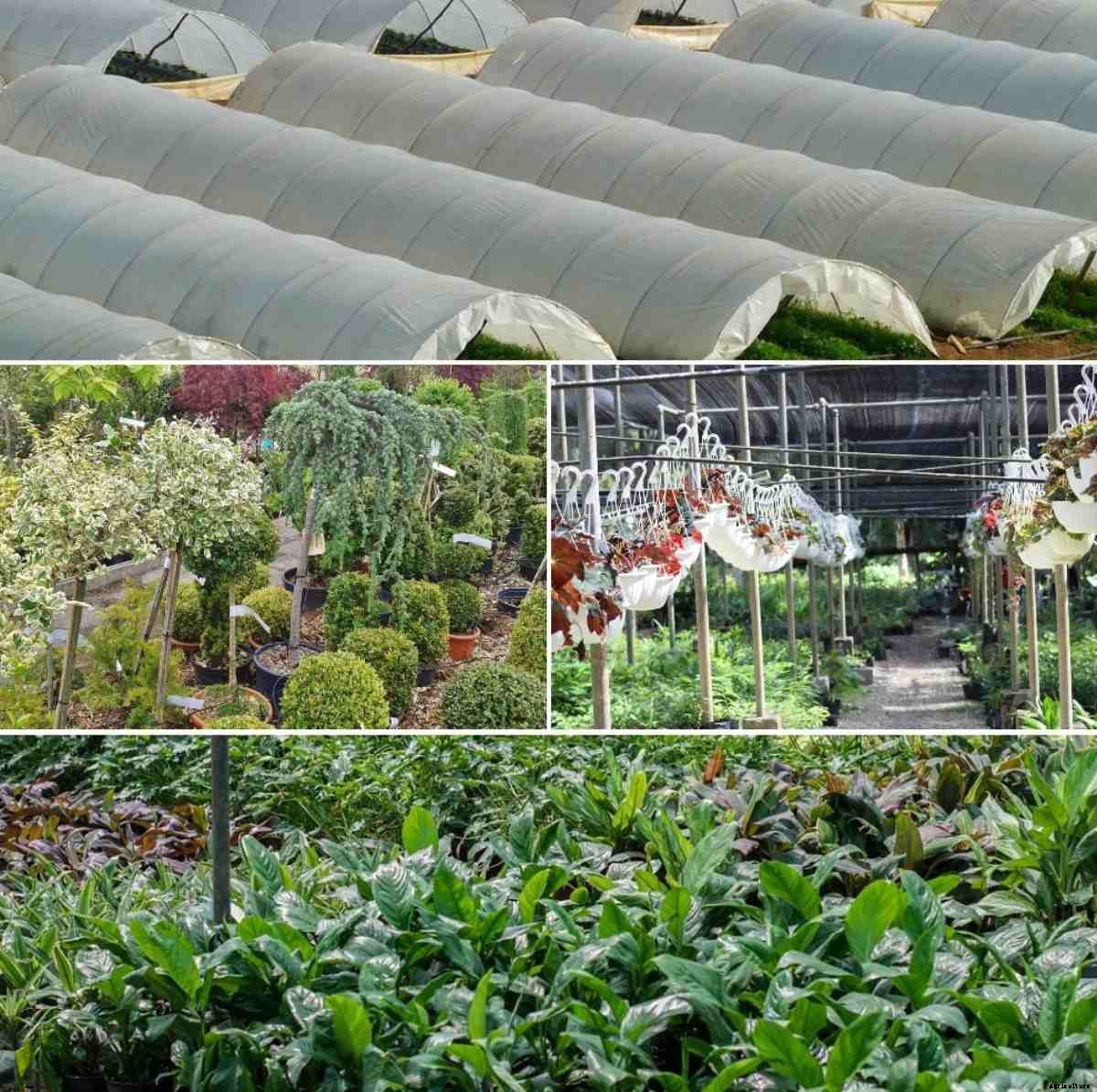
Site Selection is the first important consideration for polyhouse nursery management;
Critical points considered while selecting nursery area;
The soil must be loam to sandy loam, loose and friable, rich in organic content and well-drained for raising vegetable seedling the soil pH level should be 7.0. Soil preparation needs deep cultivation of polyhouse nursery land either by soil turning, plowing by spade and subsequent 2-3 hoeing with a cultivator. Remove all the clods, stones, and weeds from the field and level the nursery land. Mix 100 kg well rotten and fine FYM of 500 gm vermicompost per square meter well mixed in the soil.
You should not miss the Vegetable Garden Layout, and Design.
Cloches – These are structures covered with perforated polyethylene caps to protect seedling containers.
Low Tunnels – Low tunnels are small arc about 0.5 m tall. They cover the raised beds of the nursery. It is supported by a steel frame which is removed as necessary.
Medium and Walking Tunnels – These medium tunnel structures are of medium height where a person can walk and carry out nursery operations.
Shade net House – These shade net structures are covered with shade net and polyethylene. They are big enough to work inside.
Cover material used in this structure is polyethylene. The polyethylene used for covering all structures is UV stabilized and 200 micron and this type of polythene has a life of 3 to 5 years.
Vegetable crops like French bean, amaranth and summer squash which are determinate in growth habit and could not be developed under open field condition during winter season successfully. They were grown under low height low-cost temporary poly structure which was highly appropriate for raising these crops during the offseason.
Once the seed trays or containers are moved to production polyhouses, where they are kept under suitable temperature and humidity conditions for the development of seedlings.
A polyhouse structure riveted with galvanized nuts and bolts is normally recommended as it will be stronger and easier to repair if it is damaged.
You may also consider Vegetable Garden Calander in India.
Suggested specifications for the polyhouse nursery structure;
In polyhouse, a nursery bed must be prepared according to the season and crop. In the rainy season raised beds are prepared but in the winter and summer season flatbeds must be prepared. For the uniform and high percentage of germination, the soil should be fine and moist enough.
If the seedlings are to be raised in boxes during unfavorable weather conditions, polythene bags, potting plugs, wooden treys, earthen pots, etc. may be used. Prepare soil mixture in the ratio of 1:1:1 of soil, sand and well rotten FYM or leaf mold, etc. and fill the mixture in these seedlings raising polyhouse structure. The arrangement must be made to drain excess water from these structures by making a hole in the bottom of all types of pots.
The width of 1 m with 15-20 cm high from the ground level of a raised bed is arranged. A space of 30-40 cm is left between two beds and finally, it converts into furrows. The nursery bed must be smooth and slightly raised in the center compared to the margin for the easy drain of the bed. The bed should prepare in the east and west direction and the line must be made north to south on the beds.
Factors to be considered for raising a nursery in polyhouse;
The nursery beds need light irrigation with the help of rose can till the seeds get germinated. Excess rainwater or irrigated water must be drained out from the field as and when it is required otherwise plants may die due to excess of water.
You may also like the Growing Orange in Pots at Home.
Watering in the nursery beds depends upon the weather condition. If the temperature is high, open irrigation is applied and need not irrigate the beds during rainy days. Irrigation travelers, sprinkler or micro-sprinkler systems are usually used in production polyhouses although when containers are used in production, drip irrigation systems are also used.
Fertile soils may not need fertilizer applications. Observe seedlings as they grow and if leaves are pale yellow color, apply a solution of NPK (5g/L) 1 week after germination.
Timely weeding in the nursery is very important to get the healthy seedling therefore manually removing them or pre-emergence herbicides such as stomp @3ml per liter water must be sprayed on the nursery bed after the seed sowing and covering with the mixture.
Adaptation of plant protection measures in the nursery against the occurrence of insect pests and diseases is an important task to obtain healthy seedlings. Damping-off seedlings, leaf curl, leaf blight diseases, and leaf miner and borer infect the seedling in the polyhouse nursery. The care for controlling them from time to time is very essential.
You may be interested in Turmeric Cultivation in Polyhouse.


