
Welcome to Modern Agriculture!

Introduction: Hello gardeners, today we are here with a great information of how to grow green peas, how to care green peas plants in home garden. Green peas are a very popular vegetable. They are quite nutritious and contain a fair amount of fiber and antioxidants.
Green peas are a great addition to your food menu because in addition to their concentration of vitamins and minerals. They provide the carotenoid phytonutrients, lutein, and zeaxanthin, which are known to promote vision and eye health.
Here we discuss growing green peas at home;
To give your plants the best head start, turn over your green pea planting beds and add compost or manure to the soil in the fall. Carefully add wood ashes and bone meal to the soil before planting. Green peas need phosphorus and potassium, but excess nitrogen will encourage foliage growth instead of flowers or pods.
Select a spot that gets at least 6 to 8 hours of sunlight. Green peas prefer full sun. Observe your yard throughout the day, and note which areas obtain good sunlight. Since afternoon sunlight can be intense, go for a spot that gets lots of sunlight in the morning, but is partly shaded later in the day. Some green peas do well in partial shade or 4 to 6 hours of sun.
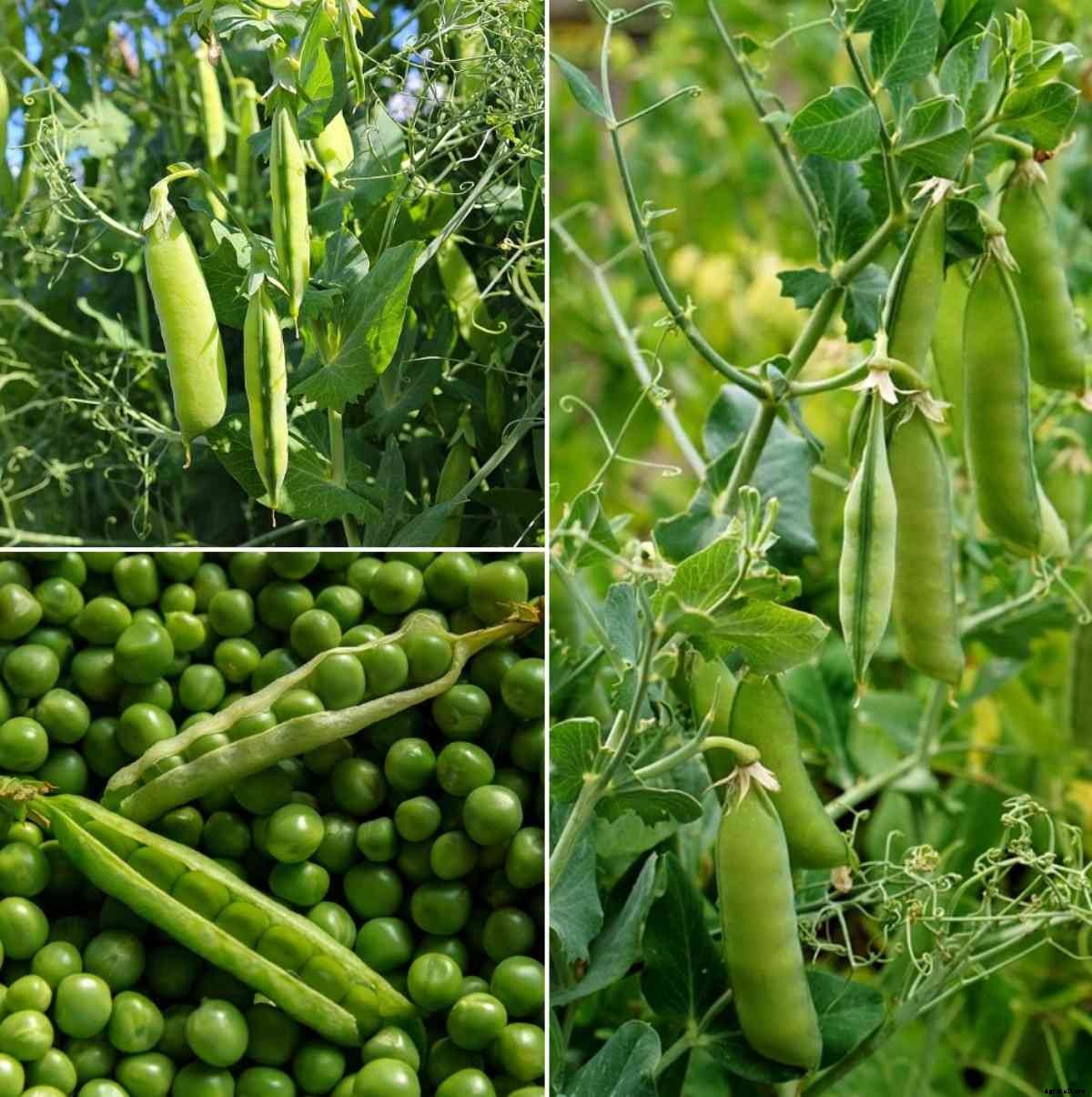
Use a loamy and well-drained commercial potting mix or prepare your own but never substitute it with regular garden soil when growing green peas in containers. If you’re planting green peas in a very sunny location, increase the moisture-holding capacity of your soil or water more frequently. Peas are not fussy about soil pH level and do well in slightly acidic to neutral soils.
Snap peas or dwarf peas will grow well indoors all year round and obtain seeds for your peas from a local garden center.
Sweet peas – Sweet peas have a sweet flavor and are what you purchase at the grocery store in a can and the pods are not edible, but the peas are delicious.
Snow peas – Snow peas are very good for cooking in Asian cuisine. The snow peas have both edible peas and pods. The pods are flat which makes them easy to identify.
Snap peas – Snap peas are another kind of pea that some people use as a snack and in a stir-fry. The snap peas have both edible peas and pods. The major difference is that the peas in snap peas are larger than those in snow peas.
You should not miss the Vegetable Garden Layout, Design.
Green peas are a cool-season crop that should mature before the weather gets hot. The ideal growing weather is moist with temperatures between 60 and 65°F. Plant peas as soon as the soil can be worked in spring about 6 weeks before the average date of the last frost. Green peas need good drainage in soil that is high in organic material. They generate earlier in sandy soil, but yield a heavier, later crop if grown in clayey soil. Plant green peas directly in the garden 2 inches deep and 1 to 2 inches apart. Don’t let the soil dry out; green peas need ample moisture. Give a three-foot-high trellis to support the vines.
Growing green peas indoors is possible, if you have a south or west-facing window that receives at least 5 to 6 hours of direct sunlight. A 6 inches deep window box is fine to grow dwarf varieties of peas. You can plant tall varieties if you’ve space. For support, poke short stakes close to the plants when they are 4-6 inches tall without damaging the fragile roots. Water carefully and moderately to avoid pests and diseases.
Almost any container will work as long as you have drainage holes (or make 3 to 5 holes with a hammer and nail) and measures least 12 inches across. Fill the container with soil leaving a one-inch space at the top. Create support for the potted green pea with bamboo poles or stakes set into the center of the pot. Space the green pea seeds 2 inches apart and 1 inch beneath the soil. Water in thoroughly and top with a one-inch layer of mulch, like compost or wood chips. Keep the seeds in a lightly shaded area until the germination period 9-13 days at which time you should move them to full sun exposure.
Green peas grow well in moderately cool weather. The green peas don’t tolerate extremes of temperature. They produce best in springtime and early summer in the cool climate and late fall and winter in tropics. Green peas grow well in the temperature range between 60-75°F.
Growing green peas in a container garden does require that you have some sort of trellis. The green pea plants will be much healthier if they are allowed to grow vertically. Most pea plants will produce to a maximum height of about 3 feet. Check seed variety for the plant height.
You can need to cut the bottom of it if your container depth is shallow. You can make your own with some bamboo rods. You can use 3 or 4 and form a cone shape and tie them at the top.
Just make sure that the trellis that you use will support the weight of the green pea plants when they fully mature. Those that grow on your porch can use the railing if you want to manually assist the plant in finding it. Just be careful if you have to move the plant as it is a hollow stem and can break simply if tugged.
You may also check the Rooftop Vegetable Gardening.
Growing green peas from seeds are easy, and it requires a few steps given below:
Green peas prefer cool and moist soil but avoid the overwatering and constantly soggy situation. Otherwise, the plants will rot or generate a lower yield. Also, you can’t let the soil dry out completely, particularly when the plants are germinating or producing pods.
Container-grown green peas need a greater supply of water than their garden-grown counterparts. Make sure the topsoil is never dry, and the pea plants don’t show signs of wilting.
Green peas don’t require heavy feeding as they produce nitrogen intermittently on the ground. However, in containers, fertilizing green peas moderately is necessary.
The main pests which affect green peas are aphids and maggots. The maggots can be prevented with standard inspection and making sure to catch the infestation in the egg stage. You can obtain rid of those pesky aphids, with hard streams of water to the stems and leaves.
You may be interested in Lentil Cultivation Income, Profit, Project Report.


