Organic farming training in India: Organic farming aims to produce different crops with high nutritional value. It is a system that favors the maximum use of organic materials and microbial fertilizers to improve soil health and to increase crop yield. It is the form of agriculture that relies on crop rotation, green manure, biological pest control, organic pesticide, and mechanical cultivation to maintain soil productivity and control pests, excluding the use of synthetic fertilizers and pesticides, plant growth regulators, livestock antibiotics, and genetically modified organisms.
A guide to organic farming training, organic farming courses in India
Organic farming is one of several to sustainable agriculture and many of the methods used such as intercropping, crop rotation, plowing, mulching, integration of crops and livestock, etc are practices under various agricultural systems.
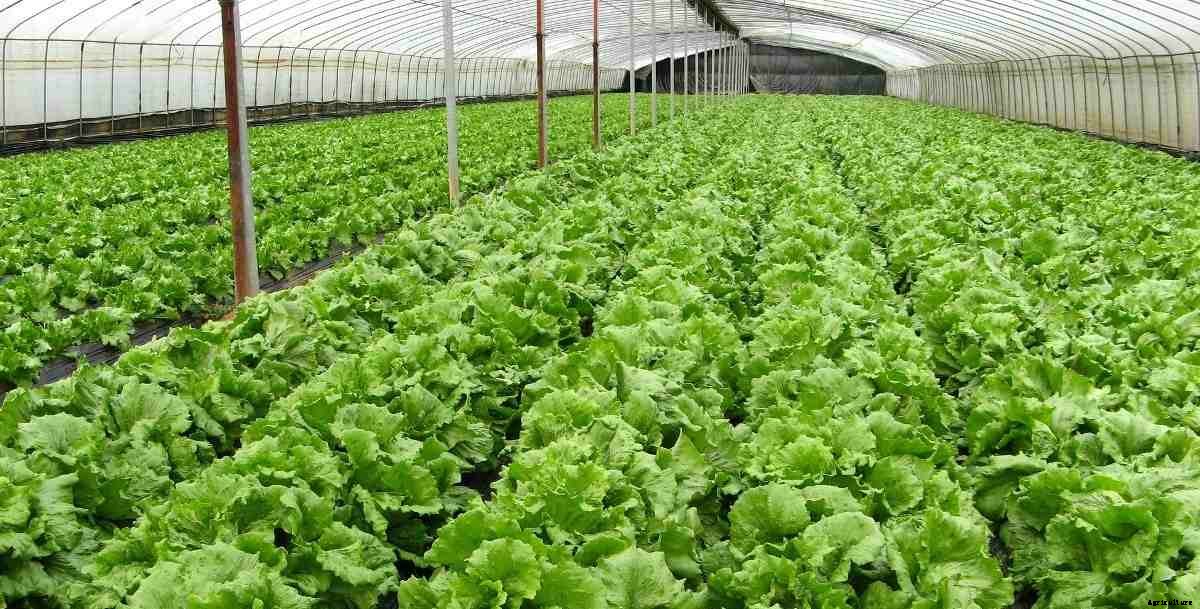 Organic Training Guide.
Basic steps of organic cultivation
The organic farming approach involves steps;
- Conversion of land from conventional management to organic system management,
- Management of the entire sustainability of the system
- Crop production with the use of alternative sources of nutrients for example crop rotation, residue management, organic manures, and biological inputs
- Management of weeds and pests by better management practices, and by the biological control system, and
- Maintenance of livestock in tandem with the organic concept and make them an integral part of the entire organic farming system.
Advantages of organic farming
- Organic farming increases the soil’s physical properties that are granulation, good tilth, good aeration, easy root penetration and improves water-holding capacity.
- Farmers can reduce their production costs because they do not want to buy expensive chemicals and fertilizers.
- It reduces the cost of agricultural production and improves soil health.
- It ensures optimum utilization of natural resources for short-term advantage and helps in conserving them for the future generation.
- Organic farming improves the soil’s chemical properties such as supply and retention of soil nutrients, reduces nutrient loss into water bodies and environment and promotes favorable chemical reactions.
Organic cultivation principles
You should not miss the Dry Land Farming.
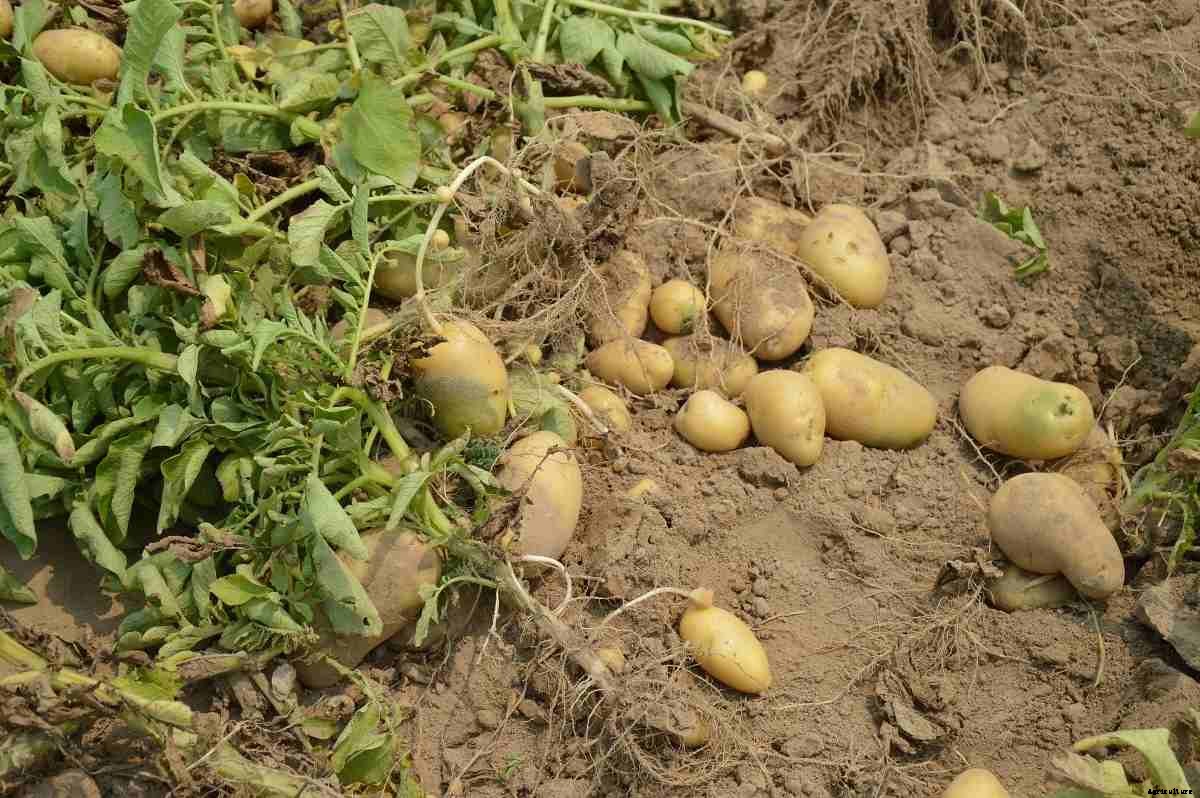 Organic Potato Cultivation Practices.
Organic farming is based on below principles;
- Nature is the best role model for farming because it does not use any inputs nor demand unreasonable quantities of water.
- The entire system is mainly based on an intimate understanding of nature’s ways. The farming system does not believe in the mining of the soil of its nutrients and does not degrade it in any way for today’s needs.
- The soil’s living population of microbes and other organisms are important contributors to its fertility on a sustained basis and must be protected and nurtured at all costs.
- The total environment of the soil, from soil structure to soil cover is very important.
Organic farming training centers in India
Some of the important organic farming training centers in India;
National centre of organic farming
Course name – Certificate course on organic farming
Implementing agency – National Centre of Organic Farming/Regional Centre of Organic Farming (NCOF/RCOFs)
The main objectives are;
Skilled development of Agriculture Youth in some identified areas of organic farming to create job opportunities in organic sector mainly in the area of organic production, on-farm resource management, input production, and quality control, PGS certification and also marketing of organic produce with objectives as follows;
- Increasing the employment chance for rural youth at the village level in the organic market as an organic grower, stakeholders, and entrepreneurs.
- To create a workforce that will help/guide/learn the techniques for doubling farmer’s income at the village level such as reducing input cost/inputs management, multilayer cropping, crop waste management, nutrient management, and water management, etc.
- To make first-generation organic agriculture extension workers, field workers, and organic growers at the village level.
- To develop trainers at the village level on organic management practices with focus on soil health, nutrient management and plant protection also including formulation techniques for traditional Biofertilizer, Biopesticides, and Soil health promoters.
- To empower trainees at the village level with knowledge and develop professionals for organic certification facilitation including PGS (Participatory Guarantee System)-India certification.
- To impart skills at the village level necessary for organic farming practices and related marketing economics.
Program duration – The course duration will be 30 days duration residential training course with field training will be imparted.
Age – Age preference will be given to rural youth; though there is no age bar
Course content
The main course content will be;
- Introduction, Principles, and Need for organic farming
- Soil health build-up is the prime need in organic farming management
- Organic farming an integrated approach
- Conversion to organic with soil health management
- On-farm input generation and resource management
- In situ composting and recycling of organic matter in the organic agriculture system
- Traditional organic input preparation or formulation of Biofertilizer, biopesticides, plant health promoters such as Panchgavya, Beejamrut, etc. including waste decomposer use in organic farming
- Organic manure preparation and introduction to compost, composting and its value addition quality test as per Fertilizer Control Order (FCO)
- Introduction to different agriculturally useful Biofertilizer and Biocontrol agents including Integrated Pest Management
- Economics of organic farming
- System of organic certification and inspection also including PGS-India certification
- Branding of rural products, Food Safety and Standards Authority of India (FSSAI), marketing and packaging of organic produce
- Current Government schemes related to organic farming
You may also like the Cold Storage License, Permission, Guidelines in India.
Course name – Training of Field Functionaries/Extension Officers on Organic
Farming Implementing Agency – National Centre of Organic Farming /Regional Centre of Organic Farming (NCOF/RCOFs)
Program duration – About 2 Days duration residential training course
Course content
- Organic farming principals, practices and also its integrated approach
- On-farm and off-farm input based nutrient and also pest management approach including traditional practices and organic production management planning
- Certification systems in organic farming also including PGS-India certification
- Current Government schemes related to organic farming
Address – Hapur Road, Near CBI Academy, Kamla Nehru Nagar, Ghaziabad, Uttar Pradesh 201002
Institute of good manufacturing practices India (IGMPI)
The program structure will be;
- Organic farming introduction, Scope, and Nature in Global Scenario
- Organic farming principles and practices
- Integrated Organic Farm Management Systems
- Organic Crops and Soil Sciences
- Organic Plant Protection and Disease Management
- Organic Fertilizers and Crop Nutrients in Organic Farming
- Livestock Management
- Good Agricultural Practices (GAP)
- Concept of Quality in Organic Farming
- Horticulture Sciences
- Organic Farms Inspection and Audits
- Certification Procedures and Compliance with the Global Standards
- Organic farming- Possible Problems & Fixes
- Organic Food Packaging
- Crop Production Systems
- Agrifood Economics and Marketing
- Entrepreneurship Development in Organic Products
- Organic Industry Based Case Studies
Eligibility – All those who have completed their graduation or post-Graduation/ PhD are eligible for the course. This course designed to cater to the requirements of professionals and industry and individuals from any sector (agriculture, management, production, processing, quality, R&D, etc.) with interest in the agriculture industry can also seek benefits of the course.
Program duration – Minimum time in which a student can complete this course is one year while a maximum of 2 consecutive years is allowed to complete the course.
E-mail – info@igmpiindia.org [Admissions and other inquiries]
E-mail – placement@igmpiindia.org [Placement]
Address – 6-3-1239/2/B/1, Renuka Enclave, Rajbhavan Road, opposite Railway Station, Hyderabad, Telangana 500082
Phone – 081309 24488
AIOFS (All India Organic Farmers Society)
Organic farming training
In this organic training (Batch of 30 trainees) we cover all aspects of Organic Agriculture. Training is both Theoretical and practical.
Course duration
2 Days – (Fee – Rs. 2000/-) (For Farmers Rs. 500/-)
1 Week – (Fee – Rs. 5000/-) (For Farmers Rs. 1500/-)
6 Week – (Fee – Rs. 20000/-) (For Farmers Rs. 3000/-)
Course type – Certificate Program in Organic Farming
Course content
- Introduction to Organic Farming.
- Principle of Organic Farming.
- Organic Farming v/s Chemical Farming.
- Basic Concept of Organic Farming.
- On-Farm Input production.
- Minerals /elements essential for Plants.
- Testing the quality of soil and also its management.
- Proper handling of farm waste and also household waste.
- Harvesting and storage of Organic products.
- Training on Cluster Making.
- Marketing of Organic Products.
- The economic viability of Organic Farming.
- Individual Certification and Group Certification processes.
- Package of practices on Organic Farming.
- Practical Training on Friend and Enemy Insects and Pests.
Address
6-A, Namdev Complex, Sirsa Road, Hisar-125 001 (Haryana)
Correspondence Address – SCO-170, 1st Floor, Red Square Market, Haryana, Hisar-125 001
Telephone No. – 01662-241164
E-mail – vinoodbeniwal@gmail.com
Organic farming certification
Organic Farming Certification is necessary for each organic Producer. All Organic farmers or growers should know the importance of Organic Farming Certification.
Sri Sri Institute of agricultural cciences and technology
Course content
- Basics of organic farming
- Comparative study of the cost of production between chemical farming and organic farming
- Economics and viability of organic farming and case study with several crops
- Government schemes on capacity building for organic products
- Documentation, Inspection and Certification Procedure
- Basics of marketing, and its functions for organic farming.
Address – 21st Km, Kanakpura Road, Udaypura post, Bangalore 560082
Phone – 080-28432965
E-mail – srisriagri@gmail.com
Indian council of agricultural research (ICAR)
ICAR center of advance faculty training on organic farming
Course duration – 21 days Training Programme on innovative approaches and strategies for higher profitability and sustainability in organic production system.
Course content
The course content will broadly cover the below topics;
- Definition, importance, concept, principles and recent developments of organic agriculture
- Innovative approaches in organic agriculture
- Recent trends in agro-ecosystem and soil health management under organic farming
- Current advances in agronomic production practices for organic farming
- World organic standards, certification, and marketing
- Economics of organic production
- Organic foods & human health
- Pest, disease and weed management in organic agriculture
- Organizations, farms and case studies in organic agriculture
- Innovations and entrepreneurship opportunities in organic agriculture.
Eligibility
- Master’s Degree in Agriculture, Extension, Communication, Social Science, Agri-business, Agricultural Engineering, Home Science and Animal Husbandry.
- Working not below the rank of Assistant Professor and equivalent in the concerned subject in Agricultural University or ICAR Institute.
Address – Krishi Bhavan, Dr. Rajendra Prasad Rd, opp. Rail Bhavan, New Delhi, 110001
Phone – 011 2338 2629.
Important goals of organic farming
The important goals of organic farming are;
- A sufficiently high level of productivity
- Compatibility of cultivation with the natural cycles of the production system as a whole
- Maintaining and increasing the long-term fertility and also biological activity of the soil
- Maintaining and increasing natural diversity and agro-biodiversity
- Maximum possible use of renewable resources
- Creation of a harmonic balance between crops and animal husbandry
- Creation of conditions in which animals are kept that correspond to natural behavior
- Protection of, and learning from, indigenous knowledge and traditional management
Environmental challenges of organic farming systems
Organic farming also presents some distinct environmental challenges;
Nutrients – Organic nutrient sources release slowly, it is difficult to calibrate application rates for optimum production. A reliance on manure and compost to provide adequate nitrogen (N) for organic crops can lead to nutrient imbalances, particularly a buildup of excessive soil phosphorus (P). Inadequate crop-available N, particularly in early spring when the soil is cool, is a common production constraint for organic farms. Legume cover crops can address this constraint without adding P or also other nutrients.
Tillage – Without broad-spectrum herbicides, organic annual crop production is reliant on tillage and cultivation for weed management and seedbed preparation. This can lead to soil erosion and organic matter loss. Integrated, and ecological weed management strategies, including cover crops and crop rotation, can reduce reliance on cultivation, additions of organic matter to the soil can mitigate the negative impacts of tillage. Awareness of this issue has led to an increasing number of organic farmers to implement flame weeding, mulches, reduced-till, and no-till systems.
Residues – Some specialty crop rotations could not provide sufficient crop residues to replenish soil organic carbon or control erosion.
Organic cultivation training
This Information may be applied to organic farming training in Karnataka, organic farming training in Tamil Nadu, organic farming training in Telangana, organic farming training in Maharashtra, organic farming training in Andhra Pradesh, organic farming training in Kerala, organic farming training in Bihar, organic farming training in Madhya Pradesh, organic farming training in Uttar Pradesh, organic farming training in West Bengal, organic farming training in Gujarat, organic farming training in Rajasthan, organic farming training in Punjab, organic farming training in Haryana, organic farming training in Uttarakhand, organic farming training in Chhattisgarh, organic farming training in Odisha, organic farming training in Assam, organic farming training PPT, and organic farming training PDF.
You may be interested in How to Grow Baby Corn in Pots.


