
Welcome to Modern Agriculture!

Introduction to Dryland Farming in India: Dryland farming is an improved system of cultivation whereby the maximum quantity of water is conserved by soil and water management. It is practiced in the more arid and desert areas of the country, including northwest and central India. Crops such as gram jowar, bajra (pearl millet), horse gram, and peas are grown in these types of conditions. Arid areas and semi-arid areas with rainfall between 750 to 1150 mm and lower moisture availability for crops are selected for such cultivation. Here we also cover below topics;
Dryland farming is an agricultural system for non-irrigated cultivation of land. Dryland farming is a practice of growing profitable crops without irrigation in areas that receive an annual rainfall of 500 mm or even less. Dry-land farming in India is to cover rain-fed agricultural operations dominated by low water requiring crops in those arid and semi-arid tropical regions. To start Dry-land farming requires alternate farm seasons of cropping and fallows which again need careful plowing and harrowing during the cropping and fallow season. Black soil is mainly suitable for Dry farming as it is fine-grained; rich in calcium and it can retain moisture to a large level and sticky. So it can be used for multiple types of farming and for producing cash crops like cotton.
Importance of Dryland farming for India
The importance of Dry-land farming in India is increasing year by year. With the continuous growth in the size of the population in India, the gap between the requirements and supply of agricultural output is increasing slowly. Present rate of development of irrigation system and water potentiality of the country, it is estimated that at any point in time about 50% of cropped area in India will remain under the rainfed farming system. Such vast areas consume hardly 25% of the total fertilizer consumption of the country. Due to the poor level of management, crop productivity is low resulting in the socio-economic backwardness of the people.
To improve Dryland farming in the country, the government proposed to follow an integrated and multi-disciplinary approach for the development of dry-land farming in the country. National Bank for Agriculture & Rural Development (NABARD) and also cooperative banks have already expressed their willingness to extend financial help for running those viable Dryland farming projects in the country.
You should not miss the How to find Soil Health, Soil Health Indicators.
Dryland areas can be characterized by the following features;
Some of the characteristics of Dryland farming include;
Depending on the amount of rainfall received, Dryland agriculture has been divided into three categories;
Dry farming – Dry farming is the production of several crops without irrigation in areas where annual rainfall is less than 750 mm. Crop failures are frequent under dry farming conditions owing to prolonged dry spells during the crop period. The growing season is less than 200 days and it is practiced in arid regions of the country
Dryland farming – Cultivation of crops in areas receiving rainfall above 750 mm is called Dryland farming. Dry spell during crop duration occurs, although crop failures are less frequent. Semi-arid regions are included under this farming category.
Rainfed farming – It is the practice of crop cultivation without irrigation in areas receiving 1150 mm rainfall. Here chances of crop failure and water stress are less.
Dryland farmed crops can include winter wheat, corn, beans, sunflowers or even watermelon. Successful Dryland farming is possible with as little as 230 millimeters of precipitation a year. The selection of crops is influenced by the timing of the predominant rainfall about the seasons.
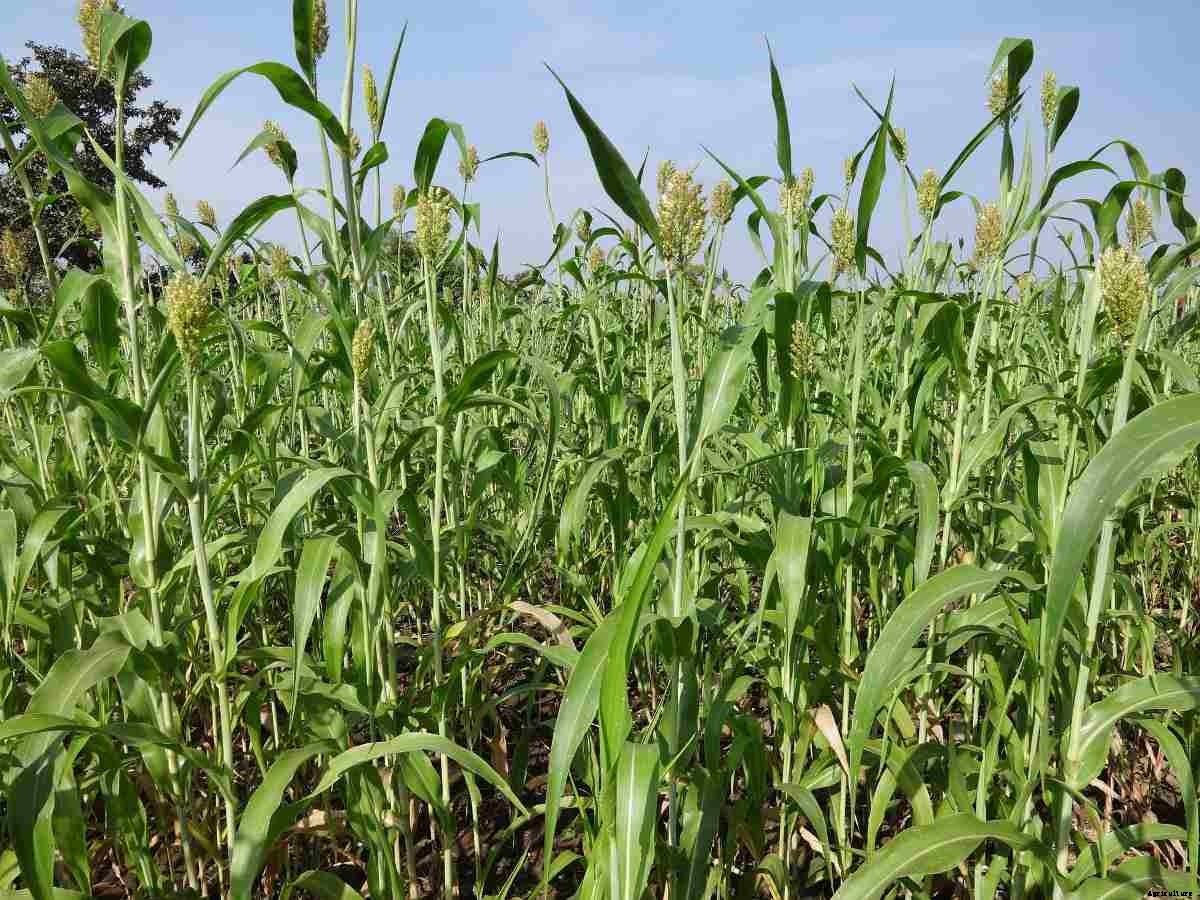
Crops grown through Dryland agricultural systems should be highly drought tolerant. However, germinating seeds or rooted cuttings of these plants still want a considerable amount of water. Hence, normal water conditions should be available during the initial stages of plant growth. A lot of experimentation goes into the determination of the crops to be grown by Dryland farming at a particular location. Besides water availability, temperature ranges, the nature of the soil, the topography of the land, and other factors act in unison to determine the success or failure of crop growth on a piece of land. Corn, sorghum, and millets are some of the examples of cereal crops best suited to Dryland farming.
Legumes such as common beans, cowpeas, and pigeon peas, leafy vegetables like cassava greens, comfrey, and Leucaena, fruit vegetables such as watermelons, okra, dates, papaya, cashew, olives, and tamarinds, and oil plants like owala and sunflower seed are generally suitable for growth in arid climates. Among the non-food commercial crops that can be developed in arid climates are fiber-producing plants such as Sea Island cotton and sisal, timber plants like umbrella thorn, and feed legumes and grasses such as mesquite, Mother of Cacao, and Bermuda grass. Some of the crops are impossible to grow by Dryland agriculture, such as the food crops of rice (requiring 3,000 to 5,000 liters of water per kilogram of crop produced) and also sugar-cane (1,500 to 3,000 liters of water per kilogram), and certain varieties of commercially cropped cotton (7,000-29,000 liters of water per kilogram).
You may also like the Rotavator Uses in Agriculture, Advantages of Rotavator.
Major areas of concern in Dryland agriculture are;
The problem which the farmers have to face very often is to keep the plants alive and to get economic returns from crop production. But this single problem is influenced by several factors which are described below;
Moisture stress and uncertain rainfall – Dry farming areas receive an annual rainfall of 500 mm or even less. The rains are erratic, uncertain and unevenly distributed. Then, agriculture in these areas has become a sort of gamble with nature and very often the crops have to face climatic hazards. So, water scarcity becomes a serious bottleneck in dryland agriculture.
The effective storage of rainwater – Based on characteristics of Dryland farming, there will be no rain at all or there will be torrential rain with high intensity. Therefore, in the former case, the crops will have to suffer a severe drought and in the latter case they suffer either flood or water logging and they will be spoilt in case of heavy downpour, the excess water gets lost as run-off which goes to the ponds and ditches. This water can be stored for providing life-saving or protective irrigation to the crops grown in dryland areas. The loss of water takes place in different ways namely run-off, evaporation, uptake through weeds, etc. The water can be stored for a short or long period and it can be preserved in soil, pond or ditches based on situation and utilized for irrigation during dry periods.
The following farming technology is required to enhance agricultural production in Dryland areas;
Incase if you miss this: Papaya Farming in Polyhouse.
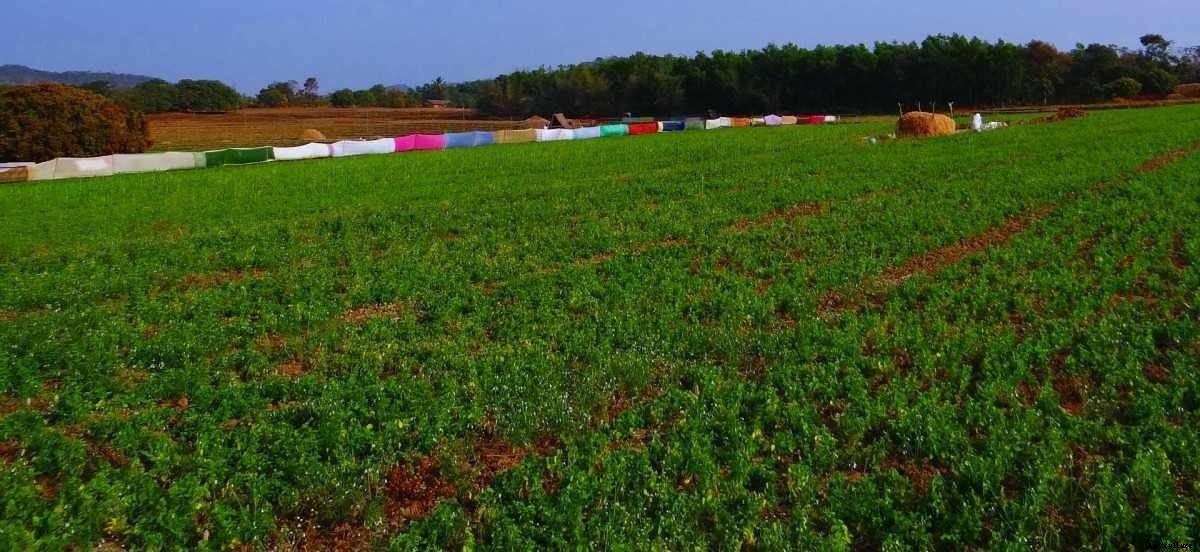
Dryland farming in India demands a great deal of effort to ensure that the soil is not deprived of moisture. The formation of soil crust at the surface is prevented by tillage to allow rainwater to seep in and reach the roots of a plant. Water runoff from crop fields is checked by leveling the fields and also establishing bunds or contour strips. Soil water evaporation is inhibited by mulching and planting of shelter belts of trees and shrubs. Dryland farming involves the planting of crops in a more dispersed manner, and in fewer numbers overall, than what is seen in “wet” farming methods. Weeds are destroyed so that these insignificant plants do not compete with the plants for water. Strip cropping is commonly practiced in Dryland agriculture. During the fallow periods in Dryland agriculture, no crops are grown in the fields to allow the soil to absorb and retain moisture and recharge nutritional capacities.
The improved techniques, which have so far been generated for the objective of increased crop production in Dryland areas, have been summarized in below lines;
The farmers of the dryland areas, before the development of dry land methods, growing a crop either on rainwater in Kharif or on conserved soil moisture during the winter. The crop varieties are grown when moisture is sufficiently obtainable. Such varieties have the low genetic potential for crop yield. Many criteria have been laid out for choosing a crop variety for Drylands. The capacity to produce a fairly good crop yield under limited soil moisture conditions is the most desirable criteria. The duration of Kharif crops should not normally exceed the number of rainy days.
Dryland agriculture is subject to high variability in areas sown, crop yields and output. These variations are the results of aberrations in weather conditions, particularly rainfall. Such monsoonal delays have repercussions on the program of activities for the agricultural year.
Soils of Drylands in the country are not only thirsty but hungry because these soils are severely eroded horizontally as well as vertically. Whenever efforts are made towards bunding of the fields in dryland areas, it is the surface soil that is removed. The resultant effect is that the fields are rendered shallow in-depth and completely deprived of plant nutrients, mainly nitrogen, phosphorus, and potassium. It is necessary to apply all three major nutrients in adequate amounts. Because, soil moisture is limiting in drylands, the availability of nutrients becomes limited, an attempt should always be made to apply fertilizers in furrows below the seed.
You might be interested in Types of Farming, Agriculture.


