
Welcome to Modern Agriculture!

Today, let us discuss the Polyhouse Business Plan along with the construction cost and advantages of Polyhouse cultivation.
Many people are aware of cultivation in open fields, but not in protected environments like Polyhouse or greenhouse. You may question yourself, what is Polyhouse? Well, it is nothing but a framed structure covered with standard micron polythene sheets. You can grow crops like vegetables, flowers, ornamental plants, exotic fruits, nursery plants in a covered area with controlled conditions such as sunlight, irrigation, humidity, etc. However, some crops are not suitable for Polyhouse. Since there are many advantages of Polyhouse cultivation, many people already started growing suitable crops in a protected environment. If you are planning for an organic vegetable business or floriculture business, you should consider Polyhouse farming. Polyhouse cultivation works very well in areas nearer to local marketing centers or especially tier1 and tier2 cities. These places around the metro cities are now setting up with Polyhouse infra as it really increases the area of protected cultivation. Now deeply discuss How to plan for Polyhouse cultivation, Suitable crops for the Polyhouse environment, subsidies available for Polyhouse along with other information.
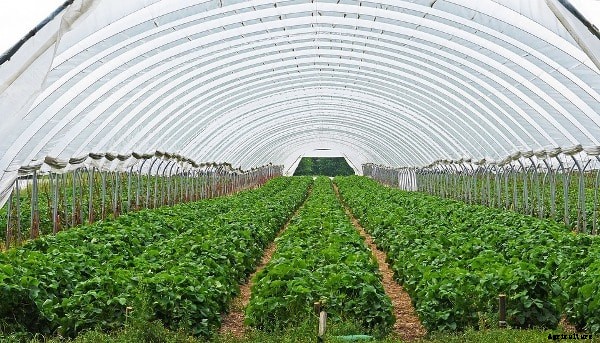
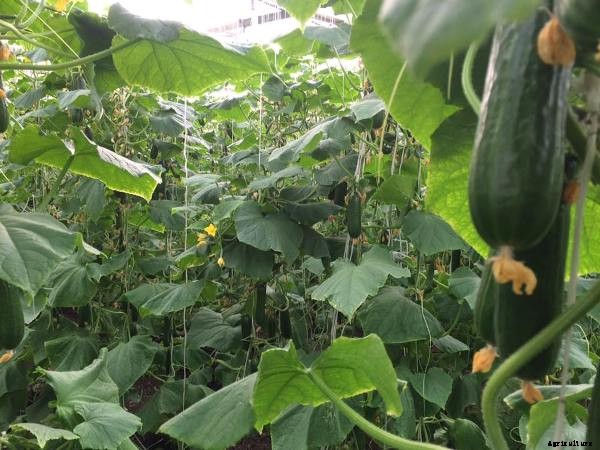
Assumptions: (1 season): 6 months crop growing period.
Expenses for Polyhouse business plan requirements:
Cost of Polyhouse construction for the area of 600 sq.mts: Rs.4,00,000.
Seedlings/Saplings/Plant Mterials: Rs. 15,000.
Preparation of the soil and land: Rs. 25,000.
Set up of Drip Irrigation in Polyhouse: Rs. 50,000.
Cost of Pipeline: Rs. 1,25,000.
Manures and fertilizers: Rs. 25,000.
Pest control or pesticides: Rs. 4,000.
Power connection/Electricity: Rs. 5,000.
We have two types of costs involved in this. i.e. Fixed cost and Variable cost.
Let us list the fixed component details and their costs.
Cost of the structure: Rs. 4,00,000.
Cost of the drip system: Rs. 50,000.
Cost of the pipeline: Rs. 1,25,000.
Cost of the land preparation: Rs. 25,000.
Cost of Labour: Rs. 30,000.
Cost of Propagation Material: Rs. 15,000.
Insurance Premium: Rs. 8,000.
Total Fixed Cost: Rs. 6,53,000.
Let us list the variable component details and their costs
Cost of fertilizers and manures: Rs. 25,000.
Cost of Pesticides: Rs. 4,000.
Electricity charges: Rs. 5,000.
Packaging and Transport charges: Rs. 30,000.
Total Variable Cost: Rs. 64,000.
If you want to calculate the Return on investment (R.O.I), it depends on the total production of produce in the Polyhouse. The total profits from Polyhouse cultivation depend on many factors such as market demand, farm management practices, and type of crop grown.
You should use this formula in general to calculate R.O.I.
Total profit = Total Revenue – Total Expenses.
Return on Investment (R.O.I) = Total Profit/Total Expenses.
Usually, you can expect 30 to 35% of R.O.I in Polyhouse cultivation, if you have a good Polyhouse business plan.
We are not giving any special figures because we don’t know which crop we are planning to grow in Polyhouse. However, this gives an idea of growing expenses and profits in Polyhouse.
There are states in India, which are providing Polyhouse subsidy and for construction and other material. Even some states are providing up to 80% of subsidy. However, there is a minimum limit requirement of the Polyhouse setup area. You can avail complete information on Polyhouse Loan and Subsidy, you can see any technical officer in NABARD or Horticulture Department.
How much does it cost to set up a Polyhouse in 1 acre? Well, the total cost of 1 acre Polyhouse would be around Rs. 40 lakhs. If you get a subsidy of 80%, then you would be ending up paying 8 to 10 lakhs from your pocket.
The typical Polyhouse areas are from 500 sq. meters to 20,000 sq. meters and these are suitable for small landholders. To be a successful Polyhouse farmer, you must have good skills in the construction of Polyhouse, crop growing techniques, and finally marketing the produce.
In case if you are interested in this: How To Grow Strawberries in Greenhouse.


