
Welcome to Modern Agriculture!

Every spring, it’s time to start prepping the yard for the (hopefully) long summer ahead. Lawn maintenance should be done regularly, whether you are dethatching, fertilizing, cutting, or aerating. This begs the question, ‘should you dethatch or aerate your lawn first?’
The answer to the question is to make sure you dethatch first before aerating your lawn. Loosening up and clearing the surface of the ground is best done before aerating. Performing these steps in this sequence will give you the best results for a thick, lush, and beautiful lawn.
Now that you know that aerating should take place first, let’s take a closer look at why. We’ll discuss the difference between dethatching and aerating and explore how each procedure is done. We’ll also explain how to determine if your lawn needs dethatching and whether (or not) you should aerate it as well. Keep reading for all the details on how to have a fantastic looking lawn!

Aerating is best done right after dethatching, preferably in the fall following a complete growing season. This gives the grass time to fill in and ‘recover’ after removing the soil plugs. The type of grass you have and the climate in which you live also determine when to dethatch and aerate as well.
Before we get into the topic of dethatching or aerating, we want to touch on when you should be doing these tasks.
The best time of year to dethatch and/or aerate your lawn is the same for both procedures – when the grass is actively growing, and the soil is moist and fertile. For cool-season yards, this is usually between late summer and early autumn (August through October). In contrast, warm-season grasses should be dethatched and/or aerated during late spring and early summer (April through June).
Aeration (also known as aerification or aeriation) is a procedure whereby air is circulated through the soil. Regarding lawn maintenance, aeration involves using a tool to puncture the earth with spikes, removing approximately 1” by 2” cores of soil from the ground. This process is vital to the health of your lawn and should not be overlooked.
Aeration helps to both improve drainage and reduce puddle formations. It also aids in the spread of nutrients and water throughout the soil while encouraging deeper roots to form. It’s the first step in preparing the ground for grass seed deposit and can be completed with either motorized or manual equipment, including walk-behind, ride-on, and tractor-style models as well as spiked shoe designs.
Dethatching is the process by which thatch (a layer of organic matter including dead grass, leaves, and weeds that form at the base of grass plants) is removed from lawns. A de-thatcher is a mechanical device that is pulled behind a garden tractor and abrades the surface or subsurface of your lawn using metal blades or prongs.
Dethatching is also vital to lawn health. It enables grass to grow thicker and makes it less susceptible to disease. By reducing thatch, your lawn is better able to absorb air, water, and nutrients from the soil. This procedure is usually done in spring or fall and using professional-grade machines but can also be done with smaller, somewhat less intense domestic-style models.
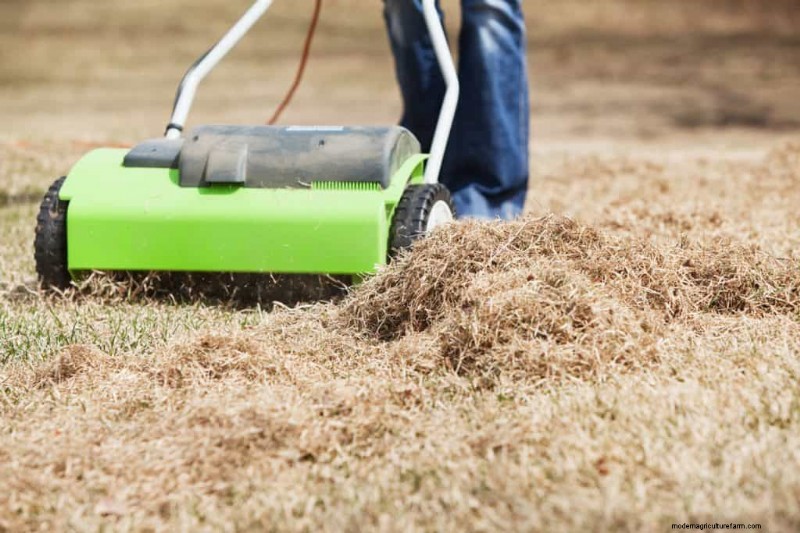
Contrary to popular belief, power raking and dethatching are not the same things. Power raking is more rigorous than dethatching, which removes large quantities of thatch from lawns. The process involves using a machine the size of a push mower to ‘dig out’ thatch and is twice as expensive to do. Dethatching is less aggressive, cheaper, and often used on healthy lawns with small amounts of thatch.
It is recommended that you power rake your lawn before aerating it. Power raking first will help prepare the grass for aeration. You should power rake at least 5 to 7 days before aerating so that your lawn has time to recover between procedures. As soon as the thatch layer reaches ½”, then your lawn is ready to be power raked.
Aerating is an essential part of maintaining lawn health and should be done regularly. Dethatching, on the other hand, should be done only if required. A small amount of thatch (around ¾” of less) is good, as it helps keep the soil fertile and rich. Dethatching too often or when unnecessary, will strip this ‘good’ layer of thatch and expose the soil to air, thus drying out your lawn.
Dethatching should be done when the soil is moist, not sopping wet! Right after a light rain is the ideal time. It also shouldn’t be done when the ground is very dry or in drought-like conditions. Be sure to mow your lawn just before dethatching as well.
Not sure if you can mow a wet lawn? We have the answers for you!
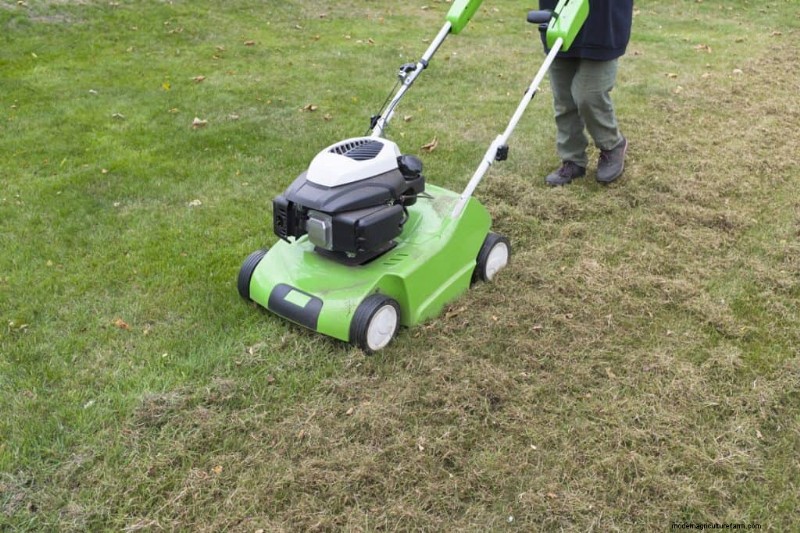
It is best to fertilize your lawn immediately after dethatching it. Do not, however, apply nitrogen to the grass until it has had the chance to grow and ‘green up’ first. Fertilizing your lawn while it is still dormant will only encourage the weeds to develop and possibly choke out the grass.
The correct fertilizer to use after dethatching can be either the liquid quick-release kind or a granule slow-release type. Just be sure it contains more phosphorous and potassium and little to no nitrogen, as too much N will only compound your thatch problem.
Check out the best dethatchers rakes available in the market now!
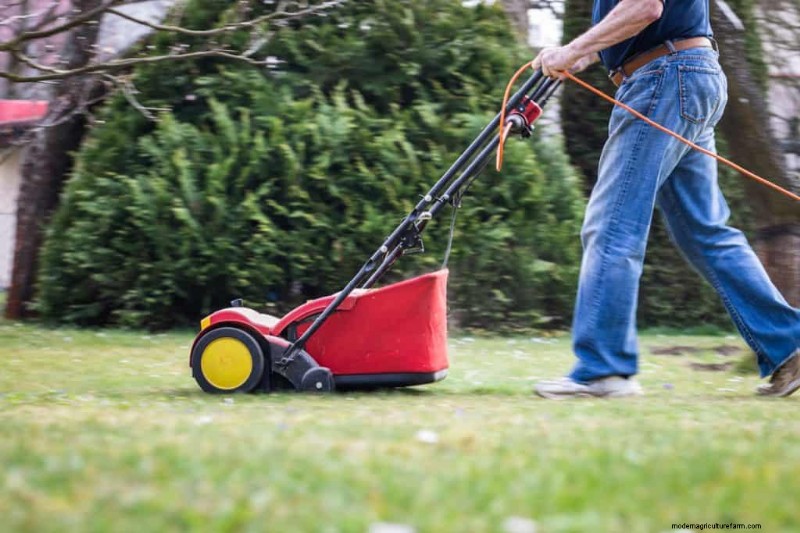
Dethatching your lawn can be done by yourself using a rake and dethatching machine. Begin by running a convex rake through the grass to thin-out the thatch. Then, use a plastic lawn rake to move the thatch into a pile for disposal. Use work gloves to pick-up the thatch and place it in a garbage bag.
Rent a detaching machine and go over the affected area again. Be sure to have the staff at your local equipment rental store set up the device in advance, as the blades need adjusting to a specific depth to work correctly. Once home, push the dethatching machine through your lawn, just like you would a lawnmower. If the thatch is more than an inch thick, it’s best to hire a professional to do the job, if your budget allows. This service usually costs between $200 and $400, depending on the size of your lawn.
Aerating your lawn requires the following supplies and steps:
Aeration costs, on average, between $15 to $17 per thousand square feet of lawn. This is if you hire a professional company to do it for you. It usually takes around 30 minutes to do and is worth it if you have the funds to get it done.
Know the best time to aerate your lawn by clicking here!
To conclude, you should always aerate your lawn after you dethatch. The best time of year to dethatch and/or aerate your lawn is when the grass is actively growing, and the soil is moist and fertile. For cooler climate lawns, this is usually between late summer and early fall (August through October). In contrast, warmer climate grasses should be dethatched and/or aerated during late spring and early summer (April through June).
Sources


