The soil your lawn depends on needs to be nurtured, and aerating and tilling are two ways to achieve this. But these two things can get confusing, so we researched if you should cultivate or aerate your yard. And here is what we gathered.
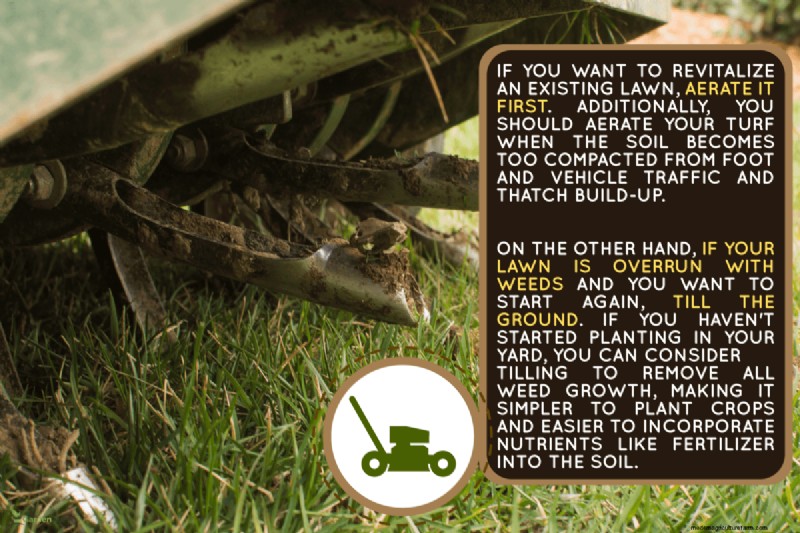
If you want to revitalize an existing lawn, aerate it first. Additionally, you should aerate when the soil becomes too compacted from foot and vehicle traffic and thatch build-up.
On the other hand, if your lawn is overrun with weeds and you want to start again, till the ground. If you haven't started planting in your yard, you can consider tilling to remove all weed growth, making it simpler to plant crops and easier to incorporate nutrients like fertilizer into the soil.
So when is the best time to perform these activities? Keep reading to find out. We'll also cover the differences between the two and compare the pros and cons of each. Additionally, we'll tackle how to till your yard and what to do after you aerate your lawn. So, read on!
What's The Difference Between Soil Aeration And Tilling [Including Their Pros And Cons]?
To understand tilling and aeration better, the table below shows each of their functions, including advantages and disadvantages.
Types Of Soil Cultivation
|
How It Works
|
Advantages
|
Disadvantage
|
Aeration
|
- Aerating the lawn helps to alleviate thatch buildup brought on by shallow rooting and tackles thin and bare patches connected to soil compaction.
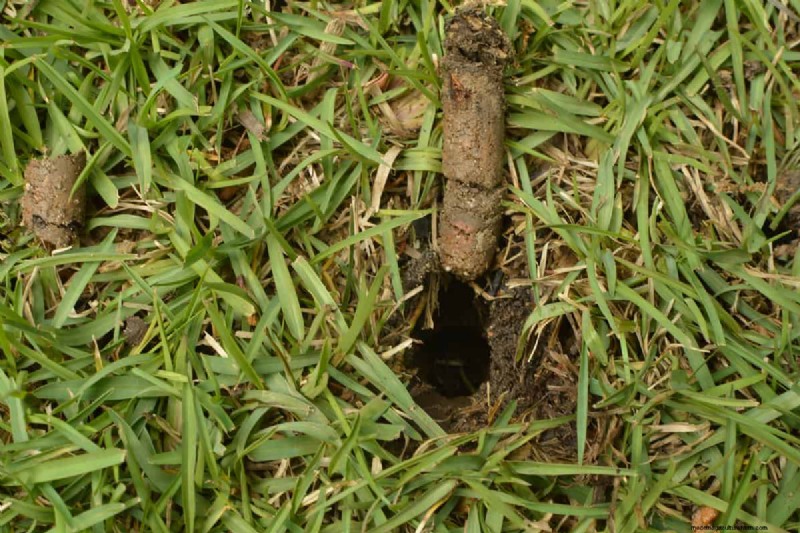
- To penetrate the root and thatch layer and allow critical water and air to descend into the soil where it can better reach the grassroots, aeration is a lawn care technique designed to generate openings in lawn turf and the underlying soil structure.
- After the method of inserting tiny plugs, or "cores," into the lawn, the procedure is typically referred to as "core aeration."
|
- Aerating is a simple DIY task.
- Your lawn can better absorb water and nutrients with aeration.
- Over-aeration is never a concern.
|
- Aerator rentals can be pricey.
- Simple yet labor-intensive.
|
Tilling
|
- Tilling is a type of deep cultivation that is required to prepare a new garden bed or to add a significant amount of organic material.
- If you are making a new garden bed in a location with particularly poor soil, you may need to till the soil even deeper—up to 12 inches.
|
- You can start anew with an area of lawn by tilling.
- The ground is prepared for sod or sowing by tilling.
- When the temperature is cool in the fall, you can till.
- Compacted earth is broken up.
- Adds organic matter and air.
- Eliminates bugs.
|
- For a while, your lawn will be the only one of its kind.
- Work is difficult.
- Destroys the natural structure of the soil, increasing the risk of compaction.
- Decreases the soil's capacity to hold rainwater.
- Facilitates the germination of latent weed seeds by bringing them to the surface.
|
When Is The Best Time To Till Your Yard?
The ideal time to till the ground is typically in the spring. You must wait until two conditions are met- the soil must be sufficiently warm and dry before tilling.
If you don't wait for these two things, your soil and plants can suffer more harm than good.
So how do you know if the soil is dry? Squeeze a handful of your soil to determine if it is sufficiently dry. The soil is sufficiently dry if the ball of dirt in your hand crumbles when pierced. The soil is too damp to till if it remains in a ball.
How To Till A Lawn
You must rid the lawn of trash and any existing vegetation before you can till it. Clear away any debris on the lawn. Remove any rocks that are still buried in the ground. Rocks obstruct tilling, which is what lovely grass deserves. Any visible roots you see should be dug out from under the rock.
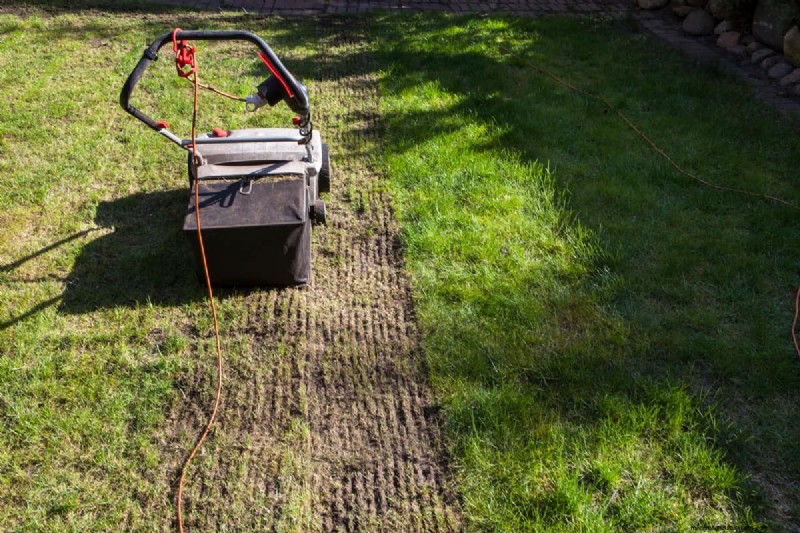
Here is a brief step-by-step guide on how to till your lawn:
1: Moisten The Soil
- To make hard soil easier to till, water it. Your job will be a lot simpler if you can soften the dirt. You'll benefit from a little rain, but the weather might change quickly. Bring out the garden hose for summer soil that is bone dry.
- Spray water onto the ground until it is soaked 2" or so down. Make sure the dirt is damp rather than waterlogged by digging that far down.
2: Add Nutrients To The Soil
- Apply amendments and fertilizer to the soil. Add the ingredients you desire to the soil and cover it.
- First, apply any amendments you deem necessary, such as fresh topsoil or sand for hard, slow-draining lawns. Give them an inch of thickness. Whatever you do, cover the area with 2" of compost or fertilizer.
- Spread using a mechanical spreader. This saves a lot of time compared to spreading them by hand and raking them into an even surface.
3: Start Tilling Using A Rototiller
- Set the rototiller to a 6- to 8-inch depth in the dirt. A depth bar can be found on the rototiller's side. You can adjust it to a setting between 6" and 8".
4: Till From East To West
- Start by tilling the lawn from east to west. You'll use the rototiller the same way you would a lawnmower. Over one lawn edge, turn the rototiller.
- Once you've reached the end, spin around and head back while remaining close to the first line you finished.
- Keep repeating the sequence until you're done. There should be no spaces between the lines.
5: Till From North To South
- To complete, till the lawn from north to south. To make sure the dirt is thoroughly broken, go over the lawn once more.
- Take the other route this time. If you previously moved from left to right, move this time from top to bottom.
6: Level The Lawn And Finish It Up
- With a rake, comb the earth. Pull the rake down by the prongs. The soil needs to be leveled out before planting.
When Is The Best Time To Aerate Your Lawn?
The ideal time to seed and aerate your lawn is in the fall. The fall season's aeration will help nutrients get to the root system. The new grass seed germinates more quickly due to the colder temperatures and moist soil.
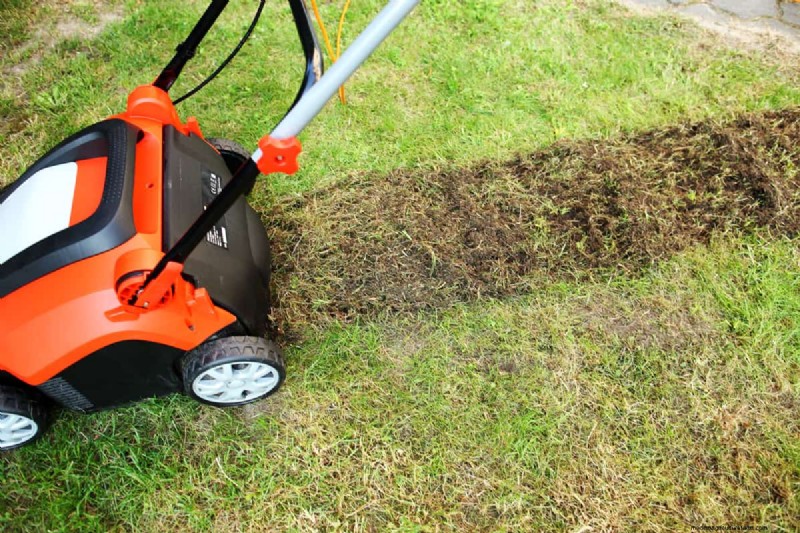
Additionally, if you see these signs, then it must be time to aerate your lawn:
- There is a layer of thatch accumulation of more than 1/2".
- Compacted soil as a result of excessive foot traffic, young children, or animals that play on your lawn frequently.
- When you have a clay soil type, this soil type is dense and restricts the movement of nutrients, water, or air through the soil. This can result in a sick lawn.
- There is a puddle on your lawn. Another indication that your grass needs to be aerated is poor drainage.
- The grass on your lawn is thinning. One explanation is that your lawn may be too compacted for the roots to grow correctly.
- Your lawn's yellow and brown patches are typically an indication that the roots are lacking the nutrients they require to develop and be green. It's time to aerate and seed if additional cautionary indicators are present, together with yellow or brown patches.
- The ground will continue to be moist for a while after becoming saturated. However, a region with compacted soil may initially appear damp before soon drying up. In essence, it is impossible to maintain moisture in compacted soil.
- It might be time to aerate if you see that your grass has stopped growing or is growing very slowly.
- If you have difficulty sticking a screwdriver into your lawn, then it's time to aerate it.
How Much Does It Cost To Rent A Lawn Aerator?
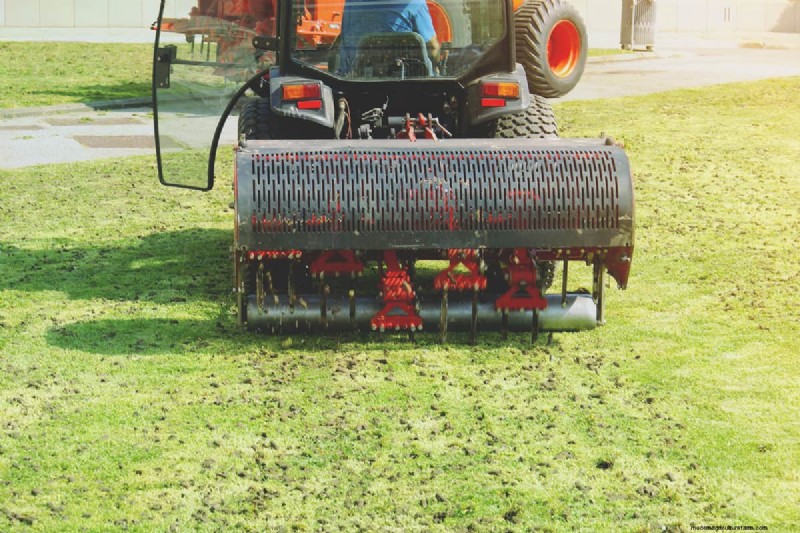
A core aerator can be rented for about $70 for four hours or $90 per day with a $150 deposit. Make sure to factor the round trip into your rental period's schedule because you will be responsible for transporting it home and returning it.
Pro tip: To have enough time to aerate your entire lawn, you might want to think about renting the aerator for the entire day.
What's Next After You Aerate Your Lawn?
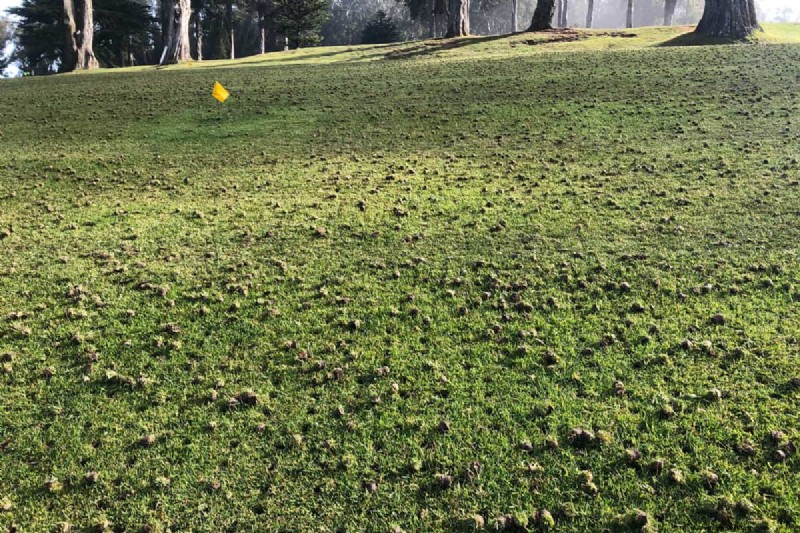
The ideal time to sow the lawn or apply fertilizer is right after aerating. The fertilizer will be sent directly to the roots where it can be most beneficial, giving the seeds the best chance of growing properly.
If you plant seeds after aerating, it's crucial to water them daily for the next few weeks, so they have a chance to grow properly.
Never go overboard, though. For roughly 20 minutes, water each section of the lawn. You can reduce your watering frequency to every other day after a few weeks.
Final Thoughts
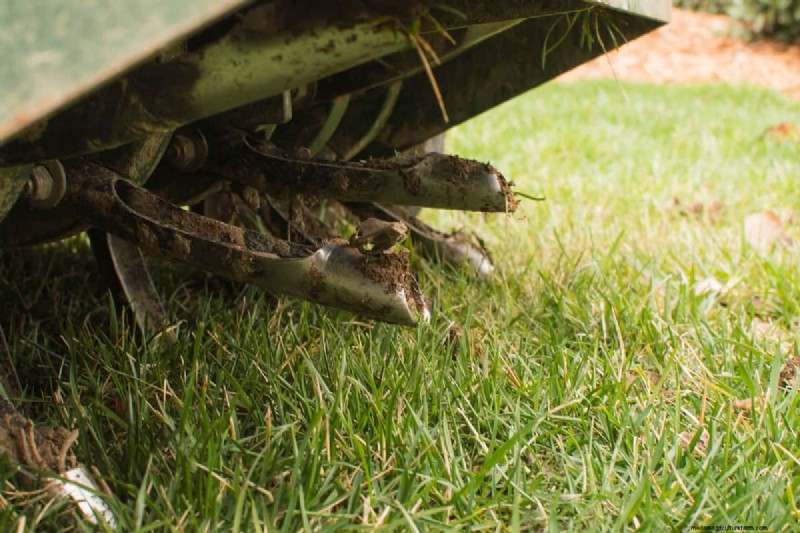
It is crucial to know if you should aerate or till your yard since these two terms don't work the same way. You should aerate when you already have an established yard, and you should till when you want to start anew.
If you enjoyed this one, go check out our other posts here:
Can You Aerate Your Lawn In The Spring? Should You?
Tilling: The Ultimate Guide For Your Home Garden Success


