
Welcome to Modern Agriculture!

Caring for your lawn can seem like a second job. Perhaps you are considering all the options on the market for lawn care. You have probably wondered how much a yard or a ton of mulch weighs. We've researched these questions and have found substantial research results to share with you!
A yard of mulch will weigh anywhere from 400 to 1,000 pounds. The weight will vary depending on the mulch type and the moisture level.
Are you interested in learning how to measure mulch to determine how much you need? Perhaps you are wondering how many yards of mulch will fit in a pickup truck. We've researched these topics and have gathered quality research results to share with you. Without further ado, let's get into it!
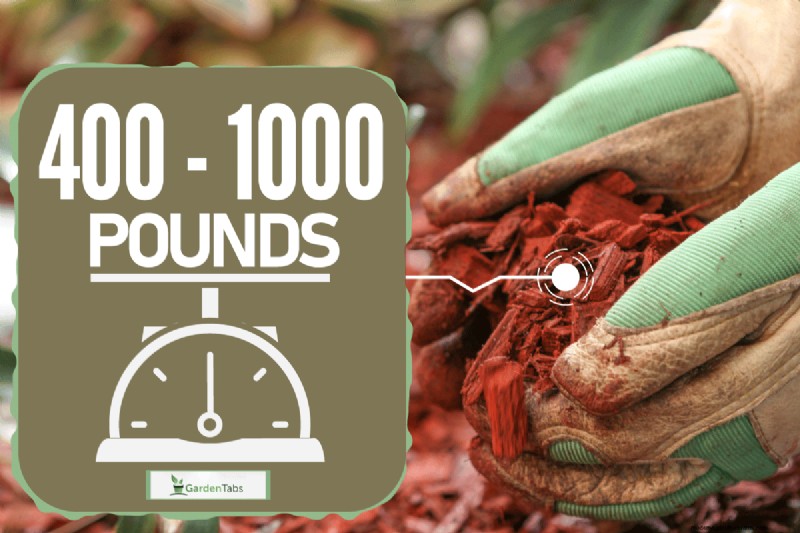
The exact weight of a yard of mulch will depend on a couple of variables. First, it depends on the type of wood the mulch was manufactured from because each kind of wood will absorb moisture differently.
Second, how finely or coarsely textured the mulch is will affect how much water it can retain. For the most accurate weight information, contact the retailer or manufacturer for exact weights per yard of mulch.
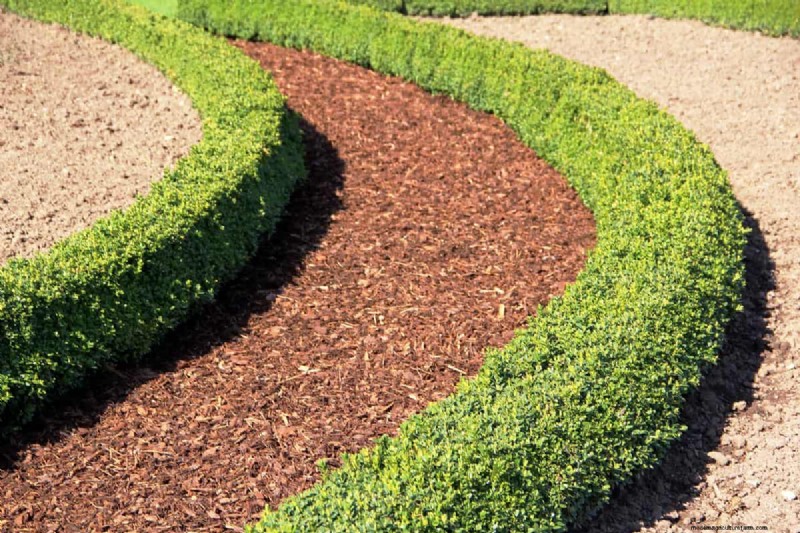
Three yards of mulch will generally weigh between 1,200 and 3,000 pounds based on the aforementioned variables.
Are you concerned that mulch will draw termites into your home? Take a look at this post to learn more: Does Mulch Attract Termites? [And how to protect your home]
The average bag of mulch contains two cubic feet of mulch and weighs 20 pounds. This means that 100 bags of mulch will total one ton of mulch which will cover 1,200 square feet with mulch two inches in depth.
Suppose you find mathematical equations confusing. Lowe's offers a helpful mulch and soil calculator. Simply type in the square footage, depth, and type of mulch to determine the exact amount of mulch you will need for your next lawn care project.
Measuring the areas you want to mulch to and determining the required depth before purchasing your mulch order is a good idea.
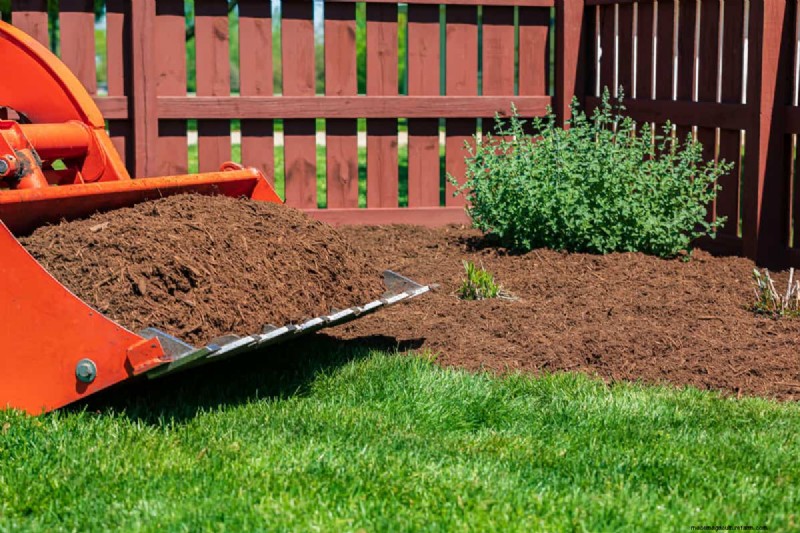
Generally, a full-size pickup truck bed will hold two to three cubic yards of mulch, and a smaller model pickup truck will hold about two cubic yards or less. Please note the type of mulch, whether it is fine or coarse-textured, will change how much will fit in the pickup truck.
Many homeowners will opt to have mulch delivered to avoid making multiple trips to the lawn and garden center because hauling mulch yourself will get your pickup truck bed messy.
According to Lowe's, the depth of the mulch will depend on the texture of the mulch. Suppose you have finely textured mulch. It is best to layer it about one to two inches, and coarse-textured mulch should be layered three to four inches for the best results.
Please note that if a storm washes away the mulch and leaves bare patches or areas where your mulching is thinned, you can always add more mulch and spread it evenly to restore the tidy look and keep your yard looking nice and healthy!
Word of caution: don't use more mulch than necessary or have it uneven with areas of more than four inches in any area. Over-mulching will diminish the oxygen supply to the plants' roots.
Also, over-mulching will encourage fungi mats to flourish. Those fungi mats will repel the water you want to conserve for your plants' root system.
Yes, it is advised to pull weeds and remove the roots before mulching. Without removing the weeds before adding the mulch, those weeds will grow through the mulch and ruin the tidy aesthetic of a well-tended yard.
Keeping mulch at least six inches from the house is best. If you mound the mulch against the house, the water retained by the mulch could dampen the sides of the house and cause wood rot. To prevent this issue, keep six inches between the house and the mulch.
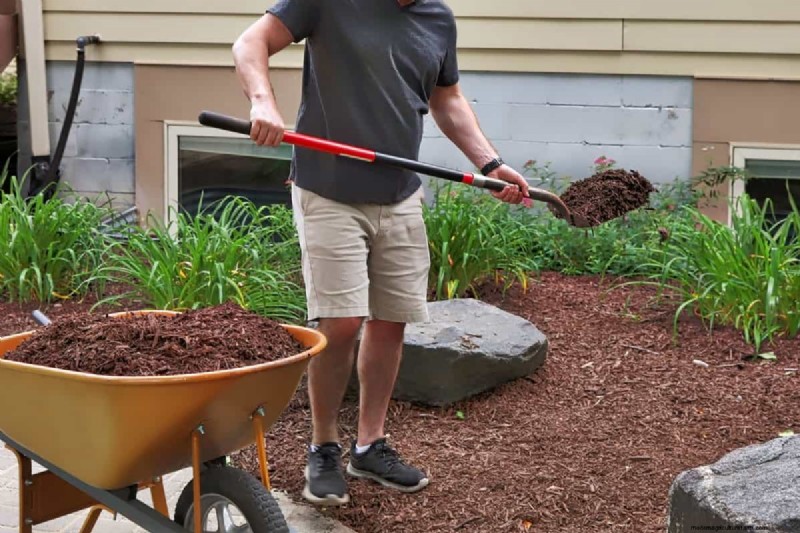
Mulch is excellent for mulching trees and protecting the trunk from insects. However, it is not beneficial to mound a lot of mulch around the tree trunk because it will keep the tree's root collar damp, leading to rot.
Depending on the tree's health and age, rotted spots will kill it or allow an infestation of bugs that will diminish the tree's health.
Leave a couple of inches between the tree trunk and the mulch for the best results, especially if you are mulching young trees with developing root systems. Allowing the tree collar space is paramount for the tree to develop correctly.
Do you have maple trees in your yard and are wondering about the best way to mulch those beautiful trees? Check out this post to learn more: Should You Mulch Around Maple Trees?
There are a few exceptions where using mulch will not be beneficial.
Suppose your soil's PH is tested on the acidic side. Using cedarwood or pinewood mulches will increase the soil's acidity. Although it will not increase it exponentially, it could cause the ground to become too acidic for the plants.
One way to remedy these issues is to allow the mulch to sit for a year to reduce its acidity before using it to mulch your garden. Also, test your soil over the growing season to chart the acidity levels.
Generally, mulch isn't the most inexpensive addition to improving the look of your yard. Suppose mulch is not in your budget. Consider requesting mulch from your city's arborist and landscapers; often, residents can get mulch for free!
Avoid using mulch around plants with shallow root systems until the plants are more established. Then, use larger pieces of mulch around those plants to encourage the root system to grow.
One of the best properties of using mulch is it will help your soil retain water which is vital to support plant life. Suppose you have low or wet spots in the yard. Do not use mulch in those areas because it will cause too much water to remain in the soil and cause root rot in the surrounding plants.
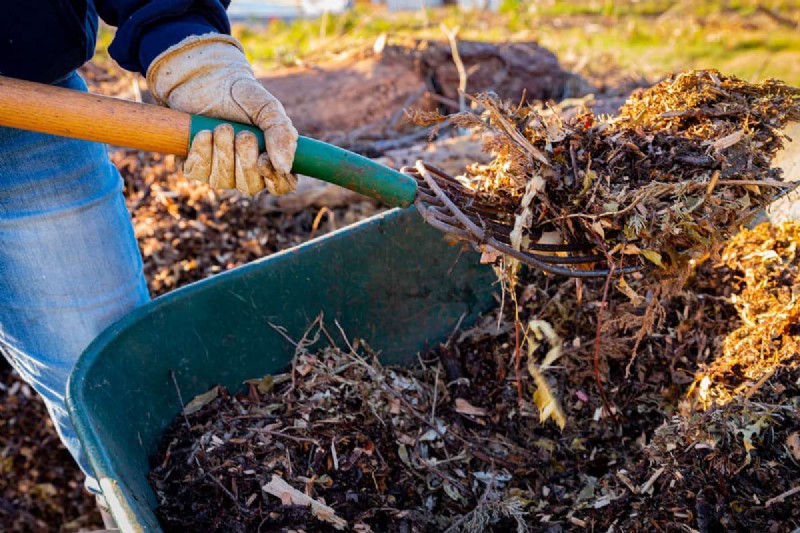
Typically, the mulch will start to break down in one to two years. The first signs of decomposition are the colors fading from vibrant earth tones to dusty brown. It will take the next four to seven years to fully decompose into the soil.
Please keep in mind that a few variables will affect how quickly the mulch will break down. How thick was the mulch layered? Also, the climate and rainfall totals where you reside will affect how quickly the mulch will decompose.
This article taught us about how much mulch weighs and its multiple purposes for gardens and flowerbeds. Also, we discussed lawn and tree care that will help reconnect you with nature and improve your property's appearance. Thank you for reading!
Please be sure to check out some of our other posts before you go to help further your lawncare knowledge base:
4 Best Ground Covers (Mulch) To Put Under Pine Trees
Does Mulch Attract Termites? [And how to protect your home]
Best Soil And Best Mulch For Dogwood Trees


