
Welcome to Modern Agriculture!

Does your soil dry quickly or drain too long after watering? Perlite is a readily accessible rock you can incorporate in potting soil mixes. To help you, we researched whether a dash of perlite can overcome these soil problems and aerate soil. Here's what we found.
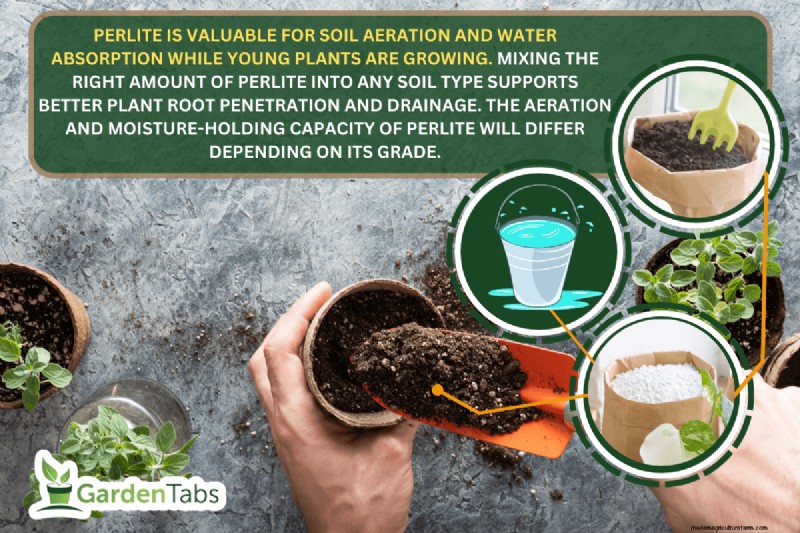
Perlite is valuable for soil aeration and water absorption while young plants are growing. Mixing the right amount of perlite into any soil type supports better plant root penetration and drainage. The aeration and moisture-holding capacity of perlite will differ depending on its grade.
Perlite is among the dozens of soil conditioners widely used in horticulture. In this post, we have a detailed discussion of perlite. We will also explore its uses, types, qualities, application, alternatives, and other related questions. So, keep on reading to gain more insights.
Perlite is a white-colored natural glass that comes from volcanos. It resembles small pebbles or crushed styrofoam.
Its chemical name is sodium potassium aluminum silicate. While it is mostly comprised of silicon dioxide and other elements, it also bears 2 to 5% of water.
For this reason, it maintains a neutral pH between 7 to 7.5. Similarly, it is free from added nutrients and remains lightweight despite expanding when heated.
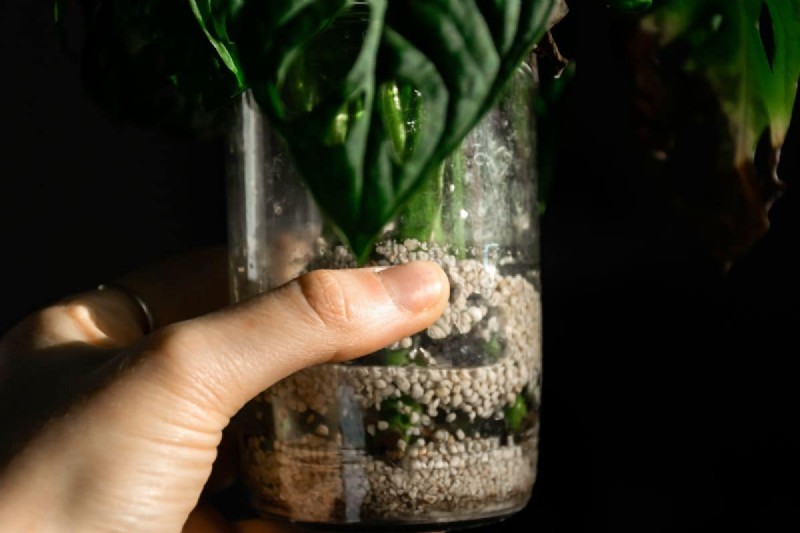
Because it is an inorganic element, it has high stability and no expiration date. Thus, it can resist mold growth or pest infestation, making it long-lasting and non-compostable.
Perlite comes in three forms: expanded, vapex, and agricultural.
Across the globe, several companies mine and manufacture this versatile rock to supply heightened demands. People use it in different industries: horticulture, medicine, water filter treatment, and construction.
Perlite is a handy soil conditioner for these various applications, whether you are a residential or commercial grower.
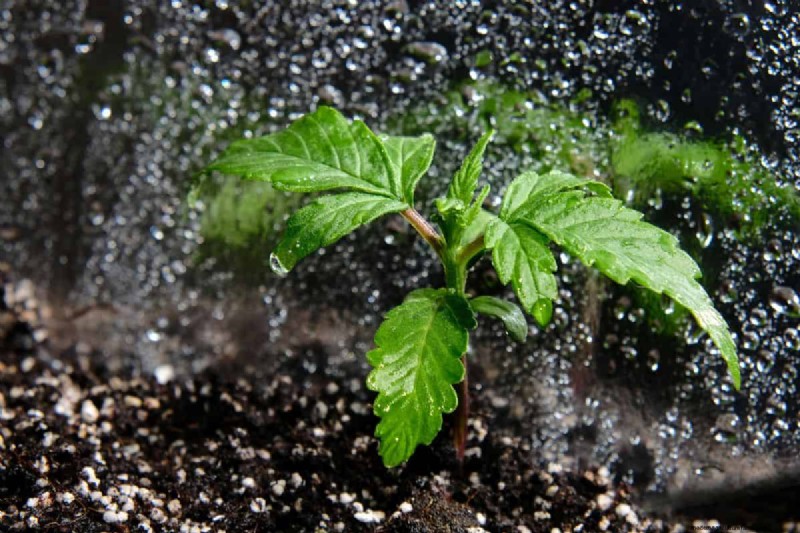
Perlite can absorb water. Despite its minute size, it carries a high surface area and porous crevices, allowing some water to maintain in the soil.
The smaller the pore space, the greater the amount of water it can absorb. If you place it in a pot, every nook and cranny naturally shrinks.
These glassy rocks function as water drainage and facilitate aeration for enhanced circulation of vital gases. They counter soil compaction that makes the roots shallow.
In return, it develops into a healthier lawn or gardens with a deeper foundation and a higher root growth rate.
Aeration is the solution for soggy roots, dry foliage, and plants affected by bacteria and fungi. It also minimizes the risk of over-watering.
You can purchase perlite in various sizes, from super coarse to fine. We've created a brief guide to help you choose the right grade for your garden. Keep in mind that pieces of perlite can easily be broken into smaller chunks.
As the largest size, super-coarse perlite ranges between 1/4 and 3/32 inches. Super-coarse perlite has a moisture-holding strength of 19%.
Since these dimensions have good porosity for drainage and aeration, this type of perlite is suitable for hydroponics and orchid growing.
Coarse perlite is a flexible grade of perlite. It varies in size from 3/16 to 3/64 inches and has a 34% water-holding ability.
This type of perlite facilitates balanced draining and absorption. It is too big to fuse completely with soil, but you can use it with your succulents and orchids.
This middle grade of perlite lies between the coarse and fine versions, measuring 1/8 to 1/32 inches. With 46% water-holding strength, it works perfectly for potted plants and seedlings, even without other conditioners.
Its dimension fit well with containers measuring one to three inches in width.
The smallest grade of perlite ranges from 1/16 to 1/128 inches. Because it can keep liquid up to 52%, it is popular for sprouting roots from cuttings and seedlings. It is appropriate for plug trays with one- to two-inch diameters.
With these figures, a top-tier perlite manufacturer illustrated that the water space and holding power increase as perlite gets finer. Meanwhile, the infiltration rate and free air will plummet if you have a refined grade.
Washing perlite before the application is only a preference. Based on a forum, home gardeners prioritize filtering the rocks with a sieve.
This step is crucial for removing any dust. You can then opt for a quick or thorough rinse. For better results, growers dampen it with rainwater or distilled water.
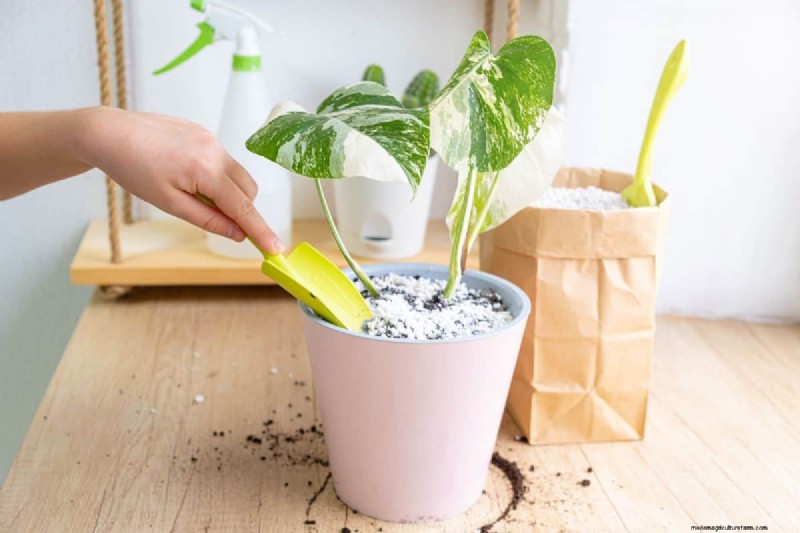
The amount of perlite depends on the purpose. For instance, allot around 30 to 50% of perlite in your soil mixture when combined with peat moss, coconut coir, and compost rich in carbon and nitrogen.
Premade soilless mixes are available on the market for easy application during cutting propagation.
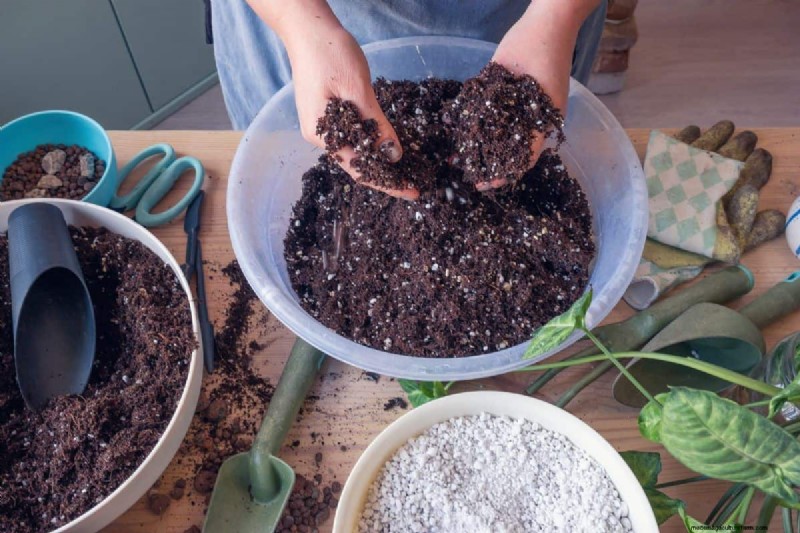
You should mix perlite with soil when aiming for a loose and well-draining medium. You should spread it in between the soil layers instead of placing it on the top or bottom of the container. It will improve drainage and keep the lightweight particles intact.
Learn more from the video below.
https://www.shutterstock.com/image-photo/substrate-materials-potting-soil-plants-coming-1798518058
You can grow plants in perlite alone. To propagate cuttings, fill the pot to around 75% with the rocks before adding the plant. Then water it deeply and place the container inside a humidity dome or resealable plastic bag.
Because this technique will maintain humidity, the plant will experience rapid growth, and leaf tipping will be reduced. Throughout the process, remember to expose the plant to fresh air every other day and maintain the water supply.
Unlike soil, perlite gives more air space to form new roots, especially for leafless nodes like Monstera. There is also less chance of rotting.
Watch this clip to discover how to do the perlite propagation method within one month.
To learn more about soil options, explore this guide: Best Soil Mix For Hanging Baskets [7 Top Options You Should Try!].
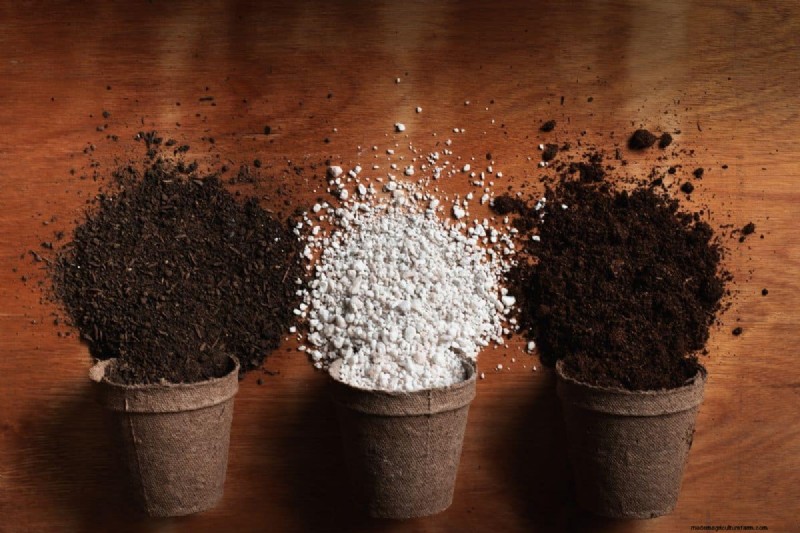
Vermiculite is a brown-colored weightless rock. It differs from perlite despite similarities in pH levels, longevity, insect resistance, and absence of odor. Vermiculite is not as dusty as perlite.
Vermiculite is more expensive than perlite. It also possesses a higher water-holding capacity, immersing plants in water for a long stretch. As a result, plants become vulnerable to root rot.
For these reasons, these elements work best under specific situations and plant types. For instance, vermiculite is ideal for succulents and seed-starting mixtures, whereas the latter goes well with houseplants.
Besides coarse vermiculite, here is a short selection of alternatives or good combinations for perlite. Mixing other elements will support these volcanic rocks as they deteriorate during water absorption.
You should avoid adding paver sand or horse manure in place of perlite, even though they produce different benefits.
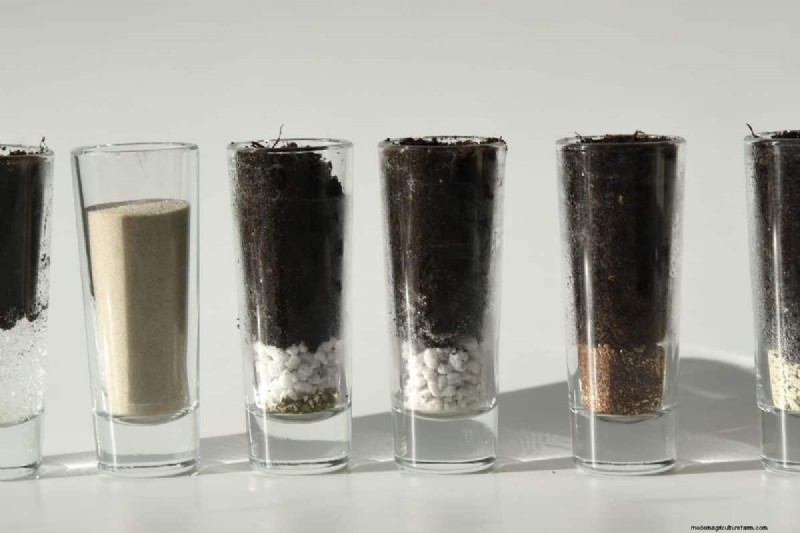
Like other soil additives, perlite has limitations. Here are some disadvantages you need to consider while using this rock.
While perlite comes from volcanic activities, it is non-flammable and non-reactive. According to the Perlite Institute, several studies debunked the claims that perlite causes respiratory problems.
It does not possess any trace of asbestos, a mineral causing cancer, and other serious diseases. However, it can still act as a mild irritant during eye and skin contact and inhalation.
If you're irritated by it, you should perform first aid measures, including drinking water, breathing fresh air, and applying lotion. You should eek medical advice if the discomfort persists.
Overall, perlite is safe for garden use and everyday exposure, provided you wear a mask, gloves, and goggles.
Perlite can aerate the soil and improve the water absorption of roots.
Whether coarse or fine, perlite is your helping hand for meeting the needs of your garden plants, whether they have sandy or clay soil. You can also incorporate other elements in conditioning the ground quality.
Thanks for reading! If you enjoyed this post, explore these related articles on soil conditions:
15 Best Plant-Based Compost Mixes
Can You Mix Mulch With Soil?


