
Welcome to Modern Agriculture!

If your aquaponics plants are starting to look tired, yellowing leaves, weak growth, or that “something’s off” feeling, there’s a good chance magnesium is the missing piece.
It’s easy to overlook. After all, in aquaponics, we tend to focus heavily on fish health, ammonia levels, and nitrogen cycling. But here’s the truth most growers learn the hard way: plants don’t just need nutrients, they need the right balance of nutrients.
Magnesium plays a quiet but critical role in that balance.
At the heart of every green leaf is chlorophyll, the pigment responsible for photosynthesis. And right at the center of every chlorophyll molecule? Magnesium. Without it, your plants literally can’t efficiently capture energy from light. That’s when you start seeing pale leaves, slow growth, and disappointing yields.
In soil gardening, magnesium is often replenished naturally. But in aquaponics, you’re working with a closed-loop system. Nutrients come primarily from fish waste and what’s already in your water. If magnesium is not present in sufficient amounts or becomes unavailable due to pH or nutrient imbalance, your plants will show it.
The good news is this:
Magnesium deficiency is one of the easiest problems to fix, if youwhat to look for and how to respond.
In this blog, I’ll walk you through:
Whether you’re running a small backyard system or scaling up your grow beds, mastering magnesium management is one of those small upgrades that leads to noticeably healthier plants and better harvests.
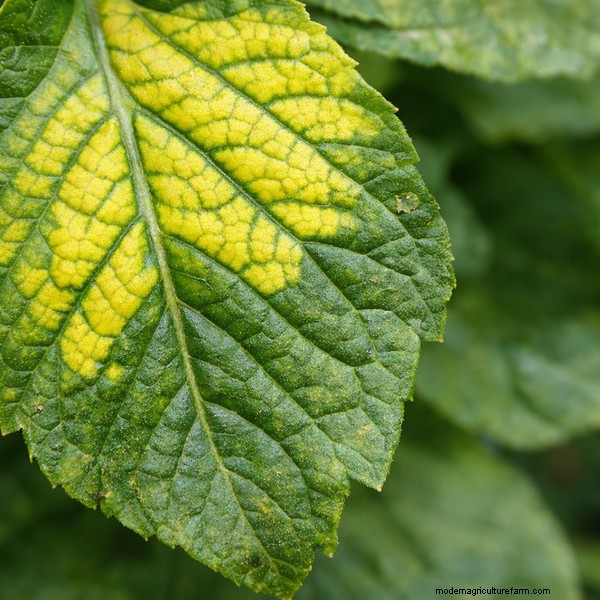
Magnesium deficiency in aquaponics happens when your plants are not getting enough magnesium to support healthy growth, or when the magnesium in your system is not available for plants to absorb.
It’s important to understand that magnesium is classified as a secondary macronutrient. That means plants need it in moderate amounts, not as much as nitrogen, phosphorus, or potassium, but still absolutely essential for proper development.
In a healthy aquaponics system, nutrients primarily come from fish waste, uneaten food, and natural biological processes. While this ecosystem does a great job supplying many nutrients, magnesium is one of the elements that often falls short, especially over time.
Here’s why:
Unlike soil, which can store and slowly release minerals, aquaponics relies on what’s actively present in the water. If your water source is low in magnesium, your plants simply won’t have access to enough of it.
And even if magnesium is present, it doesn’t always mean your plants can use it.
Things like:
…can “lock out” magnesium, making it unavailable to plant roots.
That’s when deficiency begins to show.
Magnesium is not just another nutrient, it’s directly tied to your plant’s ability to produce energy.
It helps with:
When magnesium levels drop, these processes slow down. Plants struggle to produce energy, and growth begins to stall.
Magnesium deficiency often manifests subtly.
At first glance, your plants might just look a little “off.” Growth slows slightly. Leaves lose their deep green color. But if you know what to look for, the early signs are actually very distinct.
This is the most recognizable symptom.
You’ll notice:
It creates a striking contrast, almost like a green skeleton over a yellow background.
Magnesium is a mobile nutrient, which means the plant can move it from older leaves to support new growth.
So when magnesium is limited:
This is a key clue that helps you distinguish magnesium deficiency from other issues.
As the deficiency progresses:
At this stage, your plants are already under stress and need attention quickly.
Even if the discoloration isn’t severe yet, magnesium deficiency quietly affects plant performance.
You might notice:
Plants simply don’t have the energy to thrive without enough magnesium.
This is where many growers get tripped up.
Both magnesium and iron deficiencies cause yellowing, but there’s a crucial difference:
Getting this wrong can lead to adding the wrong supplement, and wasting time while your plants continue to decline.
Let’s break down the most common causes of magnesium deficiency so you can fix the root problem.
Your system can only work with what it has.
If your water source is:
…it likely contains very little magnesium to begin with.
Unlike soil, there’s no natural mineral reserve in aquaponics. So if magnesium isn’t coming in through your water or supplements, your plants will eventually run short.
Even if magnesium is present in your system, your plants might not be able to absorb it.
Magnesium availability is highly dependent on pH:
This is called nutrient lockout, and it’s one of the most common hidden causes of deficiency.
A system with “enough nutrients” can still show deficiencies if the pH isn’t dialed in.
Plants absorb nutrients through a delicate balance. Too much of one element can interfere with another.
Magnesium competes with:
If these are present in high amounts, they can block magnesium uptake, even when magnesium levels are technically adequate.
This often happens when:
Sometimes, the issue is no’t the system, it’s the lack of visibility.
Magnesium deficiency often develops when:
Aquaponics rewards consistency. The more regularly you check your system, the easier it is to catch nutrient issues before they affect your plants.
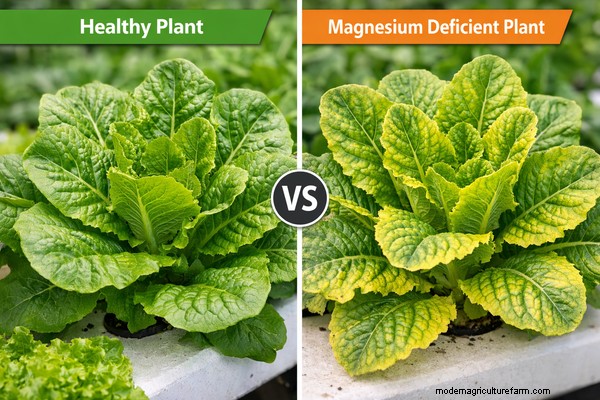
Now that you know what magnesium deficiency looks like, let’s get into the part that really matters: how to fix it quickly and safely.
The goal here isn’t just to add magnesium. It’s to restore balance in a way that supports both your plants and your fish.
Before adding anything to your system, take a moment to double-check.
Ask yourself:
If yes, you’re likely dealing with magnesium deficiency.If the newest leaves are yellow instead, it may be iron, not magnesium.
Why this matters: Adding the wrong nutrient won’t solve the problem and can make things worse.
Before adding magnesium, make sure your system allows plants to actually absorb it.
If your pH is off:
Tip:Fixing pH alone can sometimes resolve the issue without adding anything else.
The most common and effective solution is magnesium sulfate, also known as Epsom salt.
Why it works:
How to:
Important:
After adding magnesium:
What to expect:
Focus on new leaves as your indicator of success.
This is where many growers stop too early.
After a few days:
If needed:
Aquaponics is all about steady, controlled changes, not quick fixes.
Fixing magnesium deficiency is not complicated, but it does require a thoughtful approach:
Do this right, and you’ll not only fix the current problem, you’ll strengthen your system for the long run.
Once you’ve confirmed a magnesium deficiency, the next question becomes:
What’s the best way to add magnesium to your system?
The truth is, there’s no one-size-fits-all answer. The “best” option depends on your experience level, how hands-on you want to be, and how precise you need your nutrient control to be.
Let’s break down the most effective magnesium sources used in aquaponics, along with their pros, cons, and when to use each.
This is by far the most popular choice, and for good reason.
Why growers love it:
Best for:
Things to watch out for:
Bottom line: A great go-to fix, especially when you need results fast.
These are specially formulated to support both plants and fish in aquaponics systems.
Why they’re useful:
Best for:
Things to consider:
Bottom line: A solid long-term solution if you want less guesswork and more stability.
Some growers prefer broader mineral supplements that include magnesium along with calcium and other trace elements.
Why they help:
Best for:
Caution:
Bottom line:Powerful, but best used with a clear understanding of your system’s needs.
If you’re just starting out:
Go with Epsom salt for quick, simple correction
If you want consistency and ease:
Use a commercial aquaponics nutrient blend
If you’re fine-tuning your system:
Consider mineral additives for long-term balance
Tip:Many growers start with Epsom salt, and that’s perfectly fine.
But over time, as your system grows and becomes more productive, switching to a more balanced supplementation approach can save you time, reduce mistakes, and keep your plants consistently healthy.
Fixing magnesium deficiency is satisfying, but preventing it in the first place is where experienced growers really separate themselves.
In aquaponics, consistency beats reaction every time.
Once your system is balanced, your goal shifts from “fixing problems” to keeping everything stable so problems don’t come back.
One of the most common mistakes is only testing when plants start looking unhealthy.
A simple habit makes a huge difference:
Why it works: Magnesium problems don’t appear overnight, they build up over time. Regular testing helps you catch them early.
Your pH level acts like a gatekeeper for nutrient availability.Even if magnesium is present, unstable pH can block absorption.
Ideal range:
6.2 – 6.8
Best practices:
Stable pH means consistent nutrient uptake.
Remember: nutrients don’t work in isolation.
Too much:
…can interfere with magnesium uptake.
Simple rule: Avoid over-supplementing unless you know exactly what your system needs.
When in doubt, aim for balance over abundance.
Healthy fish equals steady nutrient input.
If feeding is inconsistent:
Keep it steady:
Your plants are your best early warning system.
Take a few minutes each week to:
The earlier you spot a change, the easier it is to correct.
Even after you understand magnesium deficiency, a few practical questions always come up, especially when you’re applying this in a real system. Let’s clear those up.
There’s no fixed schedule, and that’s a good thing.
Magnesium should be added:
If your system is stable and your plants look healthy, you likely don’t need to add anything.
Rule of thumb:Let your plants and water tests guide you, not a calendar.
Yes, when used correctly.
Epsom salt (magnesium sulfate) is generally safe because:
Important precautions:
If fish show signs of stress, pause and reassess before adding more.
You’ll usually see improvement within:
5–10 days for new growth
However:
If nothing improves after a week, revisit:
4. Do all plants react the same way to magnesium deficiency?
Not exactly.
Some plants are more sensitive than others:
That’s why it’s helpful to observe multiple plants across your system, not just one.
Magnesium deficiency might seem like a small issue at first, but as you’ve seen, it can quietly affect everything from leaf color to overall plant growth and yield.
The good news? It’s one of the most manageable and preventable challenges in aquaponics.
Aquaponics is all about balance. When your system is in sync, your plants grow faster, look healthier, and produce better results, with less effort over time.
And here’s the part many growers don’t realize at the beginning:
The difference between struggling systems and thriving ones usually comes down to small, consistent actions, not big fixes.
Once you build the habit of monitoring your water, observing your plants, and making gradual adjustments, problems like magnesium deficiency become easy to handle, and often easy to avoid altogether.


