
Welcome to Modern Agriculture!

If you’ve ever struggled with slow plant growth, cloudy water, or a system that just doesn’t feel balanced, there’s a good chance your grow media is part of the issue.
In aquaponics, grow media is not just there to hold plants upright; it’s the backbone of your system. It supports beneficial bacteria, helps regulate water flow, and creates the environment your plant roots depend on. When your media performs well, everything else becomes easier.
That’s where lava rock quietly shines.
It’s not the most polished-looking option, and it doesn’t get as much hype as clay pebbles, but experienced growers know its value. Lava rock is incredibly porous, which means it provides tons of surface area for beneficial bacteria to thrive. At the same time, it offers excellent drainage and aeration, helping prevent common issues like root rot and clogging.
And unlike some premium grow media, lava rock is usually affordable and easy to find, making it a practical choice whether you’re building your first system or scaling up.
In this blog, you’ll learn exactly how to use lava rock in aquaponics the right way, from choosing and preparing it to avoiding common mistakes. Think of this as the shortcut to getting it right the first time.
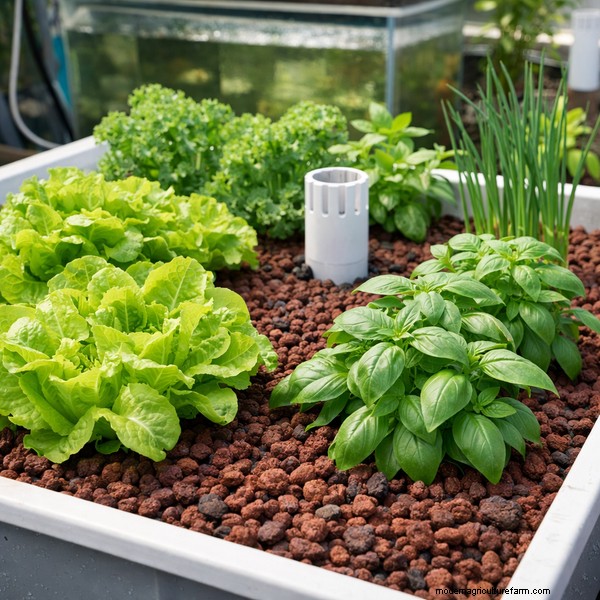
Lava rock is exactly what it sounds like, rock formed from cooled molten lava. But what makes it special for aquaponics is not just where it comes from, it’s how it’s structured.
When lava cools, gases trapped inside create tiny holes throughout the rock. This gives lava rock its signature rough, porous texture. And in aquaponics, those tiny pockets are incredibly valuable.
Those holes dramatically increase the surface area of each rock. More surface area means more space for beneficial bacteria, the ones responsible for converting fish waste into plant nutrients.
In simple terms:
Lava rock helps supercharge that process by giving bacteria a place to live and multiply.
Here’s why so many growers rely on it:
In practice, lava rock creates a balanced environment where:
That combination is exactly what an aquaponics system needs to stay healthy and productive.
It’s not about being the most expensive or the most popular, it’s about doing the job consistently well. And lava rock does that better than most people expect.
Once you start using lava rock, the advantages become pretty obvious, especially after a few weeks when your system stabilizes, and your plants begin to take off.
Here’s where lava rock really earns its reputation.
One of the biggest strengths of lava rock is its ability to support beneficial bacteria.
Those tiny pores we talked about earlier? They act like a massive apartment complex for microbes. This allows your system to efficiently convert:
Ammonia → Nitrites → Nitrates
The result: cleaner water for your fish and more nutrients for your plants.
If your goal is a stable, low-maintenance system, this is a huge win.
Compared to premium grow media like clay pebbles, lava rock is often significantly cheaper, and easier to source locally.
For larger systems, that cost difference adds up fast.
You’re getting high performance without the premium price tag, which makes lava rock especially appealing for:
Lava rock doesn’t compact easily, and its irregular shape creates natural gaps between pieces.
This means:
Healthy roots = faster growth and stronger plants.
Unlike some media that break down over time, lava rock is incredibly durable.
Once it’s in your system, it can last for years without needing replacement. This makes it a convenient option for many growers.
Lava rock is a natural material with minimal processing.No synthetic coatings. No chemical treatments. Just volcanic rock doing what it does best.For growers who care about sustainability, this is a solid bonus.
This isn’t just theory, lava rock has been used successfully in aquaponics and hydroponics systems for years.
Ask experienced growers, and many will tell you:
Lava rock is incredibly effective, but like any grow media, it’s not perfect.
The good news? Most of its downsides are easy to manage once you know what to look for. Let’s walk through the common issues and how to avoid them.
Fresh lava rock can be rough and jagged. In some cases, those sharp edges can:
How to avoid it:
Dry lava rock feels relatively lightweight, but once it absorbs water, it gets significantly heavier.
This can put extra stress on:
How to avoid it:
One of the most common beginner mistakes is skipping the rinse.
Lava rock often comes covered in:
If added directly, this can:
How to avoid it:
While lava rock drains well, debris like fish waste and plant matter can build up between the rocks if the system isn’t balanced.
How to avoid it:
Not all lava rock is the same. Some batches may:
How to avoid it:
None of these drawbacks are deal-breakers, they’re just part of working with a natural material.
In fact, most experienced growers will tell you: Once lava rock is properly prepped and set up, it becomes one of the most stable and low-maintenance media options available.
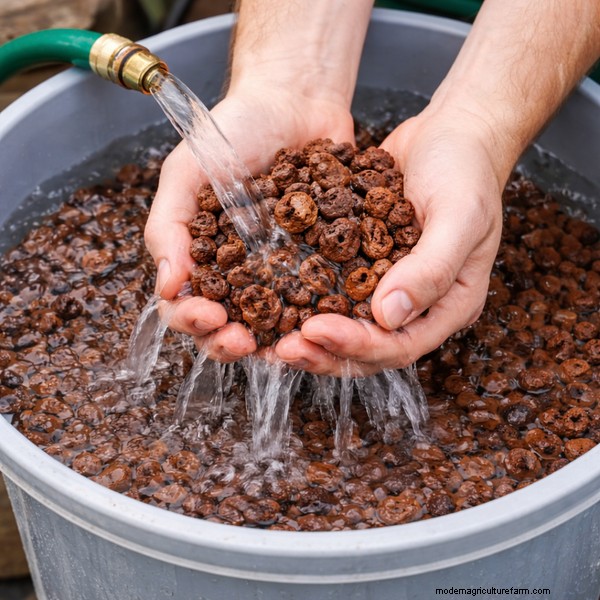
Properly preparing your lava rock can be the difference between a smooth-running system and weeks of frustration. The good news? It’s simple, you just need to do it right.
Aim for lava rock pieces around ½ inch to 1 inch (1–2.5 cm).
Why this size works best:
Avoid:
This is the most important step.
Place your lava rock in a bucket, bin, or mesh bag and rinse it with clean water. Stir it around as you rinse.
Keep going until:
This removes fine particles that could otherwise:
After rinsing, soak the lava rock in clean water for several hours (or overnight if possible).
This helps:
Some growers even do a second rinse after soaking for extra peace of mind.
As you handle the rocks, take a few minutes to:
This small step helps protect delicate roots, especially for seedlings.
Before placing lava rock into your grow bed:
If you’re working with a large system, don’t try to do everything at once.
Break it into manageable batches:
Skipping or rushing preparation is one of the fastest ways to run into problems early on.
But when you take the time to prep your lava rock properly:
Once your lava rock is properly prepared, it’s time to put it to work.
This is where everything starts coming together, your grow bed becomes both a plant support system and a powerful biofilter.
Start by adding lava rock evenly across your grow bed.
Best practices:
This depth gives you:
Lava rock works especially well in media bed systems.
Here’s why:
What to watch for:
Planting is straightforward, but a gentle touch helps.
For seedlings:
For seeds:
Lava rock is versatile, but some plants thrive especially well:
Great choices:
These plants benefit from:
Because lava rock is loose and irregular, larger plants may need extra support.
Simple solutions:
A well-functioning system depends on consistent water movement.
Make sure:
If you notice uneven growth, it’s often a sign of uneven water flow, not the media itself.
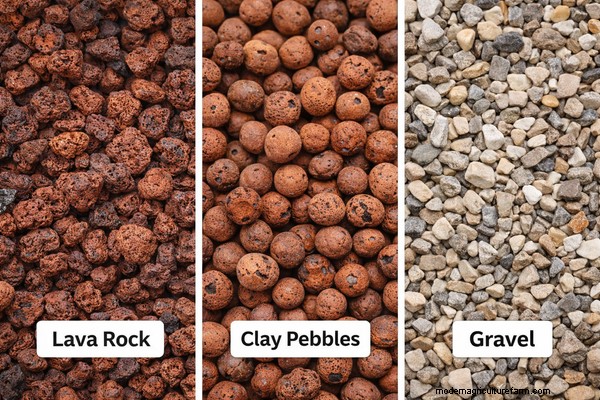
Choosing the right grow media can feel overwhelming, especially with so many options out there. The truth is, there’s no one-size-fits-all answer. But when you compare lava rock side-by-side with other popular media, its strengths become a lot clearer.
Let’s break it down in a practical, no-fluff way.
Clay pebbles (often called Hydroton) are one of the most popular choices, but they come at a price.
Lava Rock
Clay Pebbles
Bottom line: If budget matters and you don’t mind a bit of prep work, lava rock offers better value.
Gravel is another common option, especially in DIY systems.
Lava Rock
Gravel
Bottom line:Gravel works, but lava rock gives your system a biological advantage.
Some growers experiment with materials like:
Lava Rock stands out because:
Lava rock is a great fit if you:
Lava rock might not be ideal if you:
Feature
Lava Rock
Clay Pebbles
Gravel
Cost
Low
High
Low
Biofiltration
Excellent
Good
Moderate
Weight
Medium
Light
Heavy
Prep Required
Yes
Minimal
Minimal
Durability
Very High
High
Very High
One of the biggest advantages of lava rock is how low-maintenance it becomes once your system is established. But “low-maintenance” doesn’t mean “no maintenance.”
A few simple habits can keep your system running smoothly for years, and prevent small issues from turning into big ones.
Healthy systems have consistent, even water movement.
Watch for:
If something looks off, it usually traces back to water distribution, not the lava rock itself.
Over time, fish waste and organic debris can accumulate between the rocks.
While some buildup is normal (and even beneficial), too much can:
What to do:
Lava rock is generally pH-neutral, but your overall system can shift over time.
Get in the habit of:
Stable pH equals healthier fish, better nutrient uptake, and stronger plants.
Healthy roots are one of the clearest indicators of a well-functioning system.
Look for:
If you notice dark, slimy, or smelly roots, it could signal:
Once your system is running well, resist the urge to constantly dig or rearrange the media.
Why?
Only intervene when there’s a clear issue.
Here’s the good news, lava rock rarely needs to be replaced.
In most cases:
You might consider cleaning if:
Even then, clean in sections to preserve beneficial bacteria.
Most issues people run into with lava rock aren’t because the media is flawed, it’s usually because of small mistakes early on.
The good news? Once you know what to avoid, you can prevent 90% of the common problems before they even start.
It’s tempting to save time and pour lava rock straight into your grow bed, but this almost always backfires.
What happens:
Fix: Always rinse thoroughly until the water runs clear. No shortcuts here.
Size matters more than most beginners realize.
Too small:
Too large:
Sweet spot:
Stick with ½" to 1" (1–2.5 cm) for best results.
More media isn’t always better.
Overfilling or compacting lava rock can:
Fix: Keep it loose and evenly distributed. Let water and air move freely.
Your system will usually tell you when something’s off, you just have to pay attention.
Watch for:
Catching these early makes fixes quick and easy.
Even the best grow media won’t perform well if water isn’t moving properly.
Common issues:
Fix: Test your system before planting. Make sure water reaches all areas evenly.
Constantly digging around in your grow bed can do more harm than good.
Why it matters:
Fix: Set it up right, then leave it alone unless there’s a clear issue.
Even with the right setup, aquaponics takes a little time to stabilize.
Lava rock helps speed things up, but your system still needs to:
Fix: Be patient. Consistency beats quick fixes every time.
By this point, you’ve seen what lava rock can do, but the real question is: is it the right fit for your system?
The answer depends less on “what’s best” and more on what fits your goals, setup, and preferences.
Lava rock isn’t perfect, but it’s practical, proven, and highly effective when used correctly.
If you’re expecting something ultra-polished and ready-to-use straight out of the bag, it might feel a bit rough around the edges (literally). But if you value performance and reliability, it’s hard to beat.
This is especially true for:
There’s nothing wrong with choosing convenience, just know you’ll likely pay more for it.
At the end of the day, aquaponics success comes down to balance, and your grow media plays a bigger role in that than most people realize.
Lava rock might not be the most eye-catching option, but it delivers where it counts. It supports beneficial bacteria, keeps water flowing, and creates a healthy environment for roots to thrive. Once it’s properly set up, it quietly does its job in the background, day after day, cycle after cycle.
And that’s really what you want from your system: something reliable.
If you take the time to prepare it properly, set up your grow bed with care, and follow a few simple maintenance habits, lava rock can give you years of consistent performance. No constant tweaking. No unnecessary complexity. Just a stable system that works.
More importantly, it gives you confidence.
Because once your foundation is solid, everything else becomes easier:
And instead of constantly fixing problems, you get to focus on what actually matters, growing food, experimenting, and enjoying the process.
You don’t need the most expensive setup to succeed in aquaponics. You need a system that’s built thoughtfully, with materials that do their job well.
Lava rock is one of those materials.


