Welcome to Modern Agriculture!

If you’ve downsized to a smaller home, moved to a property with limited yard space, or simply have a patio or balcony as your main outdoor area, you might think your gardening days are behind you.
Not true! The latest trend sweeping through container gardening circles is what we’re calling “botanical bentos”: compact, curated container gardens that pack maximum beauty and function into minimal space.
Think of them as carefully composed mini-landscapes that deliver the same joy as a full garden but fit perfectly on your patio, balcony, or deck.
You might have a spacious patio, a cozy balcony off your bedroom, a rooftop deck, or a small concrete slab behind your townhouse. These ideas will help you create a lush outdoor retreat that’s as functional as it is beautiful.
Going vertical is hands-down the smartest strategy for small-space gardening. A tiered herb tower lets you grow multiple varieties in the footprint of a single pot, perfect for corner spots on patios or balconies where floor space is limited.
Look for cylindrical planters with multiple planting pockets along the sides, or create your own using stacked containers.
Start with culinary favorites you’ll actually use: basil on top where it gets the most sun, trailing thyme cascading down the sides, and compact oregano in the middle tiers. Parsley, chives, and sage round out your collection beautifully.
Most herbs have shallow root systems and only need containers about 6 inches deep, making them perfect candidates for vertical growing.
Group herbs with similar water needs together. Mediterranean herbs like rosemary, thyme, and sage prefer drier conditions, while basil, cilantro, and parsley like consistently moist soil.
If you want maximum impact with minimum maintenance, succulents are your best friends. These architectural beauties come in incredible colors from silvery blue to deep purple, and their geometric shapes create instant visual drama.
Try creating a shallow “dish garden” using a wide, low container. Plant rosette-shaped echeverias as your focal points, add trailing string-of-pearls to soften the edges, and fill gaps with sedums in contrasting colors.
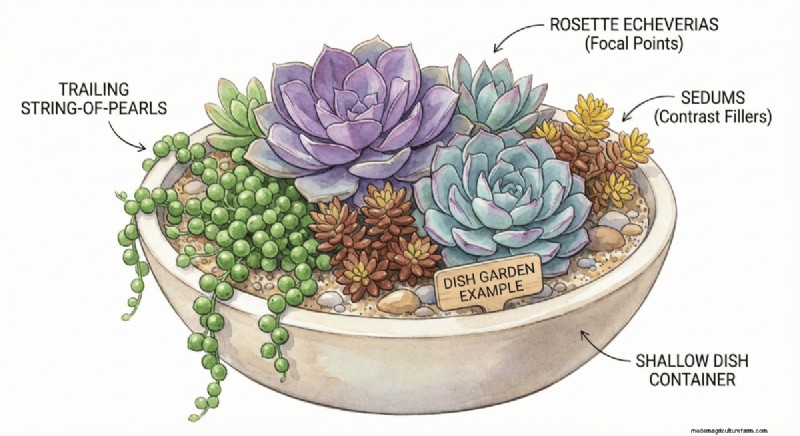
Succulents thrive in full sun and only need watering every week or two once established.
We'll email it to you so you can read it later!
By saving, you agree to receive occasional emails. Unsubscribe anytime.
Why settle for just flowers when you can grow food? Long rectangular planters work beautifully on balcony railings, along patio edges, or positioned beneath windows. They make excellent mini vegetable gardens. The trick is choosing dwarf or patio varieties specifically bred for container life.
Plant cherry tomatoes like ‘Tiny Tim’ or ‘Patio Choice Yellow’ as your centerpiece. They’ll only reach about 18 inches tall but produce generous harvests. Add lettuce along the front edge (it tolerates partial shade), tuck in some radishes for quick rewards, and finish with trailing herbs like oregano spilling over the sides.
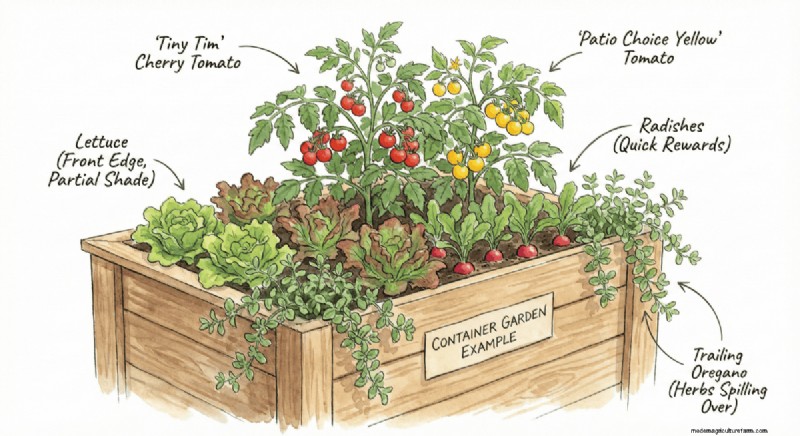
This setup gives you fresh salad ingredients all summer without monopolizing your limited space.
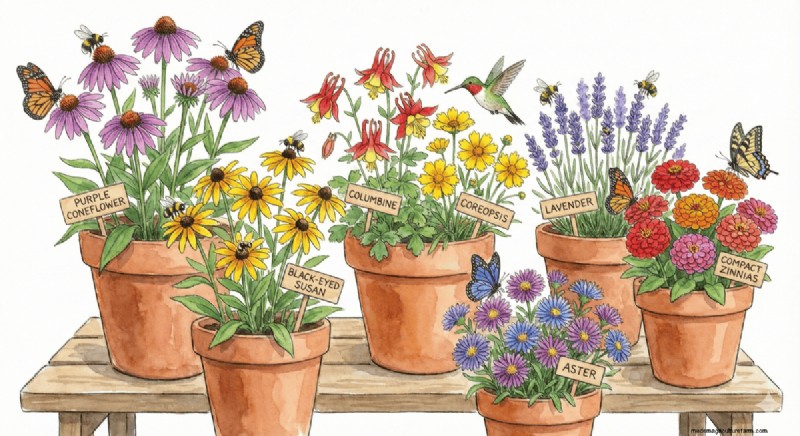
Even the smallest outdoor space can support local wildlife. A window box or long planter filled with pollinator-friendly flowers brings butterflies, bees, and hummingbirds right to your patio or yard while adding cheerful color.
Mix compact varieties of native wildflowers with herbs that bloom. Plants like columbine, aster, black-eyed Susan, purple coneflower, and coreopsis can thrive in containers. Lavender adds fragrance and attracts beneficial insects, while compact zinnias provide brilliant pops of color. The bees will thank you, and you’ll enjoy the show.
Sometimes simple really is best. Three matching pots in graduating sizes create an elegant, cohesive display that doesn’t overwhelm small spaces. This approach works especially well on balconies or smaller patios where you need to keep walkways clear and traffic flow easy.
Choose herbs you cook with regularly. Basil in the largest pot serves as your summer workhorse. The medium pot holds rosemary (which can overwinter in many climates), and the smallest features compact chives that regrow quickly after cutting.
Thyme, sage, and mint are staple herbs that grow well in containers with minimal care, making them excellent alternatives if you prefer different flavors.
Grouping identical containers creates a polished, intentional look that feels more designed than random. Terra cotta offers classic appeal, while glazed ceramic adds a modern touch.
Strawberries love container life, and a pyramid planter maximizes your berry harvest in minimal space. These tiered structures let you grow multiple plants vertically while keeping fruit off the ground where slugs might find them.
Alpine strawberries like ‘Pineapple’ varieties produce tiny yellow berries with distinct flavor, and they don’t send out runners that take over your space. Regular strawberries work too, just look for compact varieties like ‘Albion’ or ‘Seascape’ that produce throughout the season rather than one big flush.
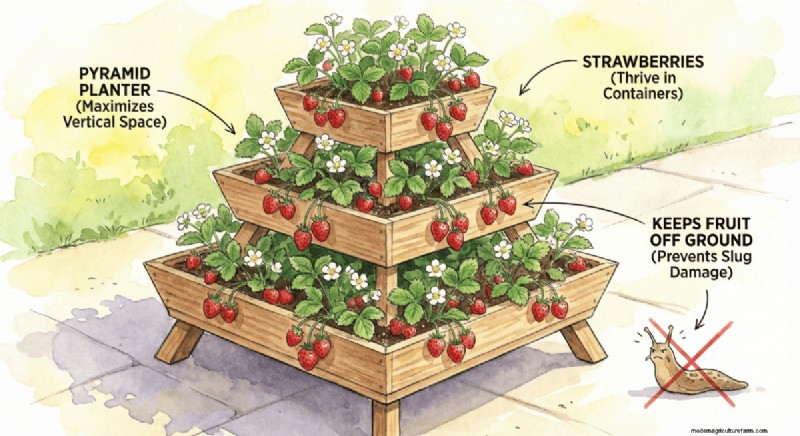
Position your pyramid where it gets at least six hours of sun daily. The berries will cascade beautifully over the edges, creating an edible ornamental that serves double duty as garden art.
Not all patios and balconies bask in full sun, but that doesn’t mean you can’t garden. Create a lush retreat using plants that actually prefer shadier conditions.
Fill containers with hostas for dramatic foliage, add delicate ferns for texture, and include shade-tolerant herbs like mint and parsley. Mint and chives grow well in shade, producing flavorful leaves even with less intense sun. Impatiens and begonias add pops of color throughout summer without needing direct sunlight.
Read more: 12 Hosta Care Hacks Every Gardener Should Know
The key to shade gardening is embracing foliage over flowers. Different leaf shapes, sizes, and colors create visual interest that’s just as beautiful as a sunny flower border.
Picture this: a single large, shallow container that grows your entire salad. This “one-pot wonder” approach is incredibly satisfying and surprisingly productive.
Start with lettuce as your foundation: choose a mix of colors and textures like ‘Pomegranate Crunch’ red romaine and butterhead varieties. Lettuce like ‘Pomegranate Crunch’ produces small, dense heads perfect for containers. Tuck in radishes for crunch (they mature in just 25 days), add a few scallions along the edge, and finish with arugula for peppery bite.
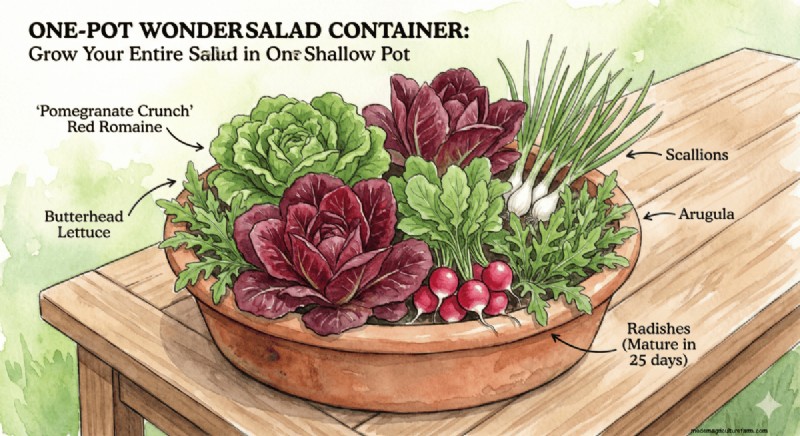
This garden delivers fresh greens for weeks if you practice “cut-and-come-again” harvesting: snipping outer leaves while letting the center continue growing. When warm weather arrives and lettuce bolts, simply replant with heat-loving alternatives like Swiss chard.
For seriously low-maintenance gardening, nothing beats cacti. These sculptural plants make bold statements, require minimal water, and thrive on neglect. They’re perfect if you travel frequently or simply want hands-off beauty.
Group various cactus shapes and sizes in individual containers clustered together. Golden barrel cactus paired with thimble cactus creates a miniature desert landscape. Top-dress the soil with decorative gravel or small stones to complete the southwestern aesthetic and help prevent moisture issues.
Place your cactus collection in the sunniest spot on your patio. Water deeply but infrequently (every 2-3 weeks during growing season, even less in winter). The dramatic shapes provide year-round interest without any fuss.
You don’t need acres of land to grow your own bouquets. A few well-chosen containers can keep you in fresh flowers all season long.
Plant zinnia ‘Thumbelina’ (stays under 6 inches tall), compact cosmos, dwarf marigolds, and globe bachelor’s buttons. These prolific bloomers produce more flowers the more you cut them, creating a virtuous cycle of constant color. Petunias, marigolds, and geraniums provide splashes of color in container gardens.
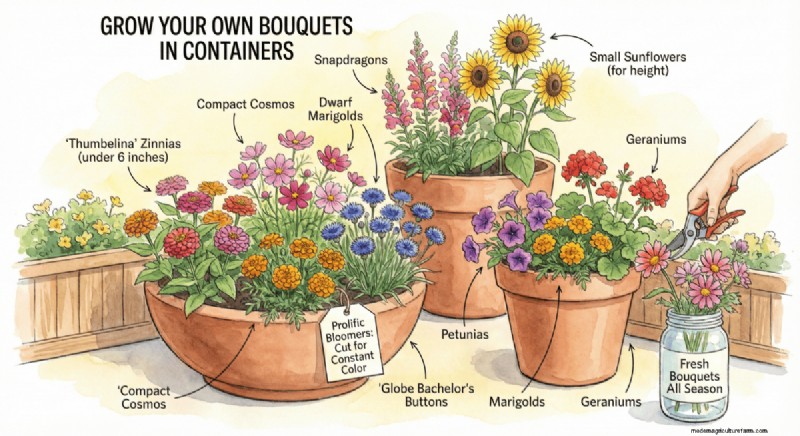
Tuck a few longer-stemmed varieties like snapdragons or small sunflowers in a back corner for height. The trick is keeping containers deadheaded (removing spent blooms encourages more flowers rather than seed production).
Yes, you really can grow fruit on a balcony! Dwarf and patio fruit trees have been bred specifically for container life, producing full-sized fruit on compact plants.
Blueberry varieties like ‘Blueberry Glaze’ grow just 2 feet tall and can be kept pruned like boxwood. Columnar apple trees stay narrow and upright (perfect for tight spaces), while dwarf citrus like Meyer lemons or kumquats overwinter beautifully in cold climates if you bring them indoors.
These trees need larger containers (at least 15-20 gallons), but the reward of homegrown fruit makes them worth the investment. They also serve as attractive focal points when not in fruit, with glossy leaves and pretty spring blossoms.
If you’re extremely short on space or want the fastest possible harvest, microgreens are your answer. These nutrient-dense baby greens go from seed to plate in just 1-2 weeks and work beautifully on small patios or balconies, or even tucked into corners of larger container displays.
Use shallow trays or even repurposed takeout containers with drainage holes. Sow seeds densely, keep them moist, and harvest when plants are 2-3 inches tall. Popular varieties include arugula, radish, kale, and sunflower shoots.
The beauty of microgreens is succession planting. Start a new tray every week or two for continuous harvests. They need less sun than mature plants and can grow in partially shaded corners of your patio or balcony, or even on a bright windowsill if outdoor space is extremely limited.
Why let valuable vertical real estate go to waste? Railing planters, wall-mounted containers, and hanging pockets attach securely to balcony rails, patio walls, or fences without taking up any floor space.
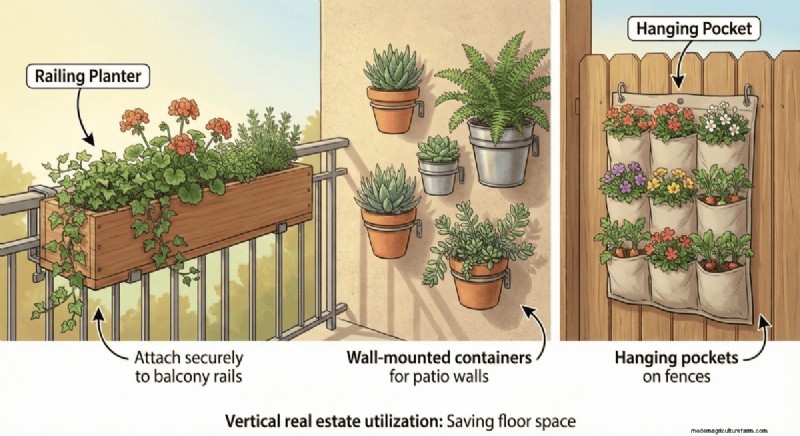
Hanging planters and wall-mounted containers turn blank walls and railings into living art.
Plant them with colorful annuals that trail over the sides: petunias, calibrachoa, and lobelia create cascading curtains of color. For edible options, try trailing tomatoes like ‘Tumbling Tom’ or herbs like thyme and oregano that naturally spill over edges.
Make sure mounted planters are securely attached. You don’t want a windstorm sending your garden flying. Choose self-watering versions if possible, as wall and railing plants dry out quickly in wind and sun.
Sometimes the most powerful gardens are the quietest. A single wide, shallow bowl becomes a miniature Zen landscape with just a few carefully chosen elements.
Read more: 30+ Zen Garden Ideas That Will Inspire You
Start with fine gravel as your base. Add a dwarf Japanese maple (yes, they’ll grow in large containers), a few small rocks selected for interesting shapes, and perhaps a tiny evergreen like a dwarf hinoki cypress.
This minimalist approach brings meditative calm to small spaces. The slow growth of the plants means minimal maintenance, and the overall effect is contemplative rather than busy.
Most people plant window boxes for summer color and forget about them the rest of the year. Smart small-space gardeners create boxes that look good through all four seasons.
Start with a base of small evergreens like boxwood or dwarf conifers that provide year-round structure. Evergreens in varying textures, shapes, and colors add lasting interest to container gardens. In spring, tuck in early bulbs. Summer brings annuals for color. Fall means ornamental kale and mini mums. Winter gets dressed up with evergreen branches and berry sprigs.
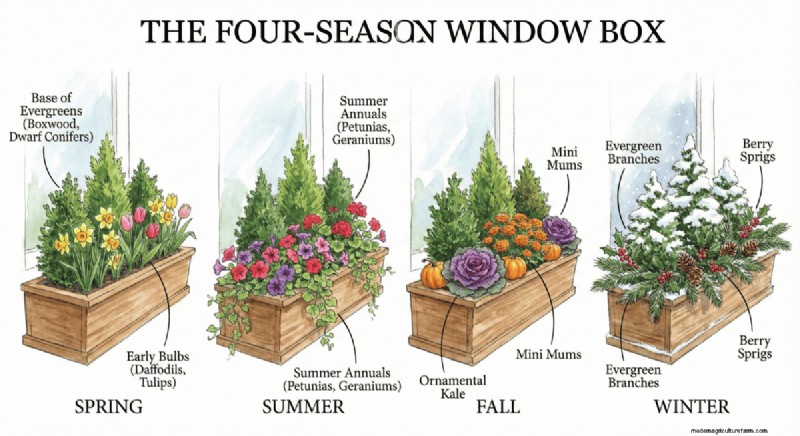
This approach requires more planning but eliminates the boom-and-bust cycle where your containers look amazing for two months and dismal the rest of the year.
If you use your patio or balcony primarily in evenings, design your containers for nighttime enjoyment. White and pale flowers glow in moonlight, while evening-fragrant plants perfume the air right when you’re out there to appreciate them.
Plant moonflower vine (like morning glory’s nocturnal cousin), white petunias, and pale impatiens. Add jasmine for intoxicating evening scent, and include night-blooming stocks if you can find them. Climbing varieties like jasmine add height and fragrance to container displays.
Position this garden near your seating area where breezes will carry the fragrance your way. The white flowers create a luminous effect as twilight deepens, making your small space feel magical.
Read more: 13 Night-Blooming Plants That Transform Your Garden Into a Moonlit Paradise
Before you rush out to create your botanical bentos, keep these practical tips in mind:
Bigger is almost always better: larger containers hold more soil, which means they don’t dry out as quickly. Look for pots at least 12 inches in diameter for most plants.
Make sure every single container has drainage holes. Without them, roots will rot no matter how carefully you water.
Garden soil is too heavy for containers. Use a lightweight potting mix designed specifically for containers. It costs more upfront but makes a huge difference in plant health and how often you need to water.
Containers dry out faster than garden beds, especially in summer, so check daily and water when the top inch of soil feels dry.
Consistency is key: wild swings between bone-dry and waterlogged stress plants. Consider self-watering containers or drip irrigation if you travel frequently.
Nutrients in potting mix get used up quickly. Feed container plants with liquid fertilizer regularly to keep them healthy. Start about a month after planting and continue every 2-3 weeks through the growing season.
Depending on your location, wind can be a challenge, especially on elevated balconies or exposed patios. Choose sturdy containers that won’t tip, protect delicate plants against walls or in sheltered corners, and consider staking taller plants.
Wind dries plants out faster than lack of water and causes stress, so wind-exposed containers need more frequent watering.
Growing upward instead of outward lets you create abundant gardens while maintaining walking space. Use trellises, shelves, hanging baskets, and wall-mounted planters to take advantage of every dimension.
Plants lean toward the sun, so turn containers a quarter turn every few days to keep growth even and compact. This prevents lopsided, stretched-out plants that look unkempt.
If you live where winters are cold, decide in advance which containers will come indoors, which plants are cold-hardy enough to stay out, and what you’ll do with tender perennials.
Some plants like rosemary can overwinter indoors on a sunny windowsill.
The beauty of botanical bentos is their flexibility. Start with just one or two containers if you’re new to gardening.
See what works in your specific space: how much sun you really get, which spots stay sheltered from wind, where you naturally gravitate when you’re outside.
Gardeners are creating whole gardens on patios and balconies using beautiful containers, and the trend shows no signs of slowing.
Container gardening also keeps you connected to the rhythms of nature even when your outdoor space is limited. You’ll notice when first leaves emerge, watch pollinators visit your flowers, and harvest herbs at their peak. These small, daily interactions bring surprising joy and relaxation to busy lives.
With a little creativity and the right approach, even a modest patio or balcony becomes a productive, beautiful garden that enhances your outdoor living space all season long.
Have you tried small-space container gardening? What worked best in your setup? Share your experiences in the comments below!