
Welcome to Modern Agriculture!

If you’ve been scrolling through garden inspiration lately, you’ve probably noticed something: minimalist, sparse landscaping is officially out, and lush, abundant, absolutely packed gardens are having their moment.
Welcome to maximalist gardening for 2026. More is definitely more, and every square inch is an opportunity to layer textures, create intimate outdoor rooms, and turn your yard into a private green sanctuary.
The beauty of this trend? It’s not about perfection or following rigid rules. It’s about planting what you love, creating visual drama through layering, and transforming your outdoor space into something that feels alive, personal, and maybe just a little bit wild.
This trend is all about creating gardens that feel like tranquil refuges through layers of foliage. Think less about colorful flower displays and more about the richness of green in all its shades, from deep emerald to lime, silvery sage to glossy jade.
This approach works beautifully with the maximalist trend that’s taking over gardens in 2026. Rather than minimal, streamlined spaces, maximalist gardens celebrate abundance, combining natives with pollinators, edibles with ornamentals, and creating spaces that surprise and delight at every turn.
One of the most essential techniques for creating that lush, green-drenched look is mastering the art of layering. Think of your garden as having three distinct layers that work together to create depth and visual interest.
The backbone of any well-layered garden starts with understanding vertical structure. Professional landscapers recommend thinking in terms of foreground, midground, and background plantings.
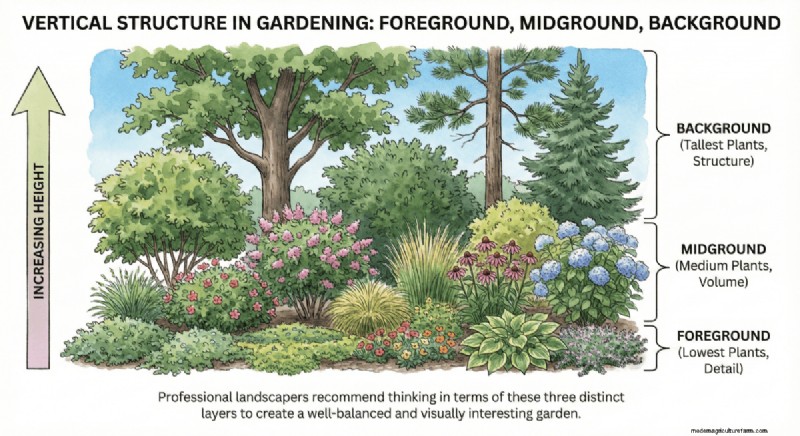
Start with your tallest plants at the back or edges. These could be small trees, tall evergreens, or large shrubs that provide structure and privacy. Your middle layer should feature medium-height shrubs and perennials that fill the space between ground and sky. Finally, your foreground should showcase low-growing plants, groundcovers, and shorter perennials that create a seamless transition.
The magic happens when these layers blend together rather than looking like distinct rows. Stagger your plantings so they overlap slightly, creating a more natural, full appearance that draws the eye through the entire space.
For year-round green appeal, don’t make the mistake of choosing only one plant type. Fine Gardening experts suggest bringing evergreen shrubs and trees into the heart of your garden beds, where they act as anchors while surrounding plants change with the seasons.
Boxwoods, dwarf conifers, and Japanese barberry create permanent structure, while deciduous plants like hydrangeas and ornamental grasses add seasonal interest and softer textures. This combination ensures your garden looks intentional and lush even in winter.
The secret to keeping an all-green garden from looking flat? Texture, texture, texture. Landscape designers emphasize the importance of mixing plants with different leaf shapes and textures to create visual interest without relying on color.
Pair broad-leafed hostas with feathery ferns, or contrast the fine needles of ornamental grasses against the bold foliage of elephant ears. Mix plants with shiny leaves like camellias alongside matte-finished plants like lamb’s ear.
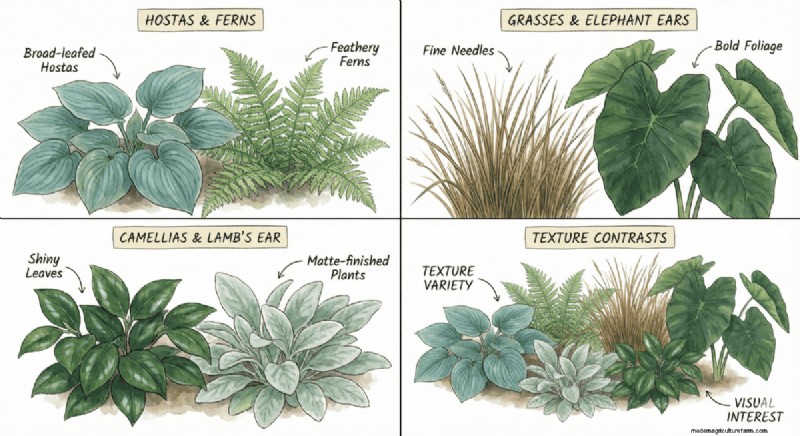
This textural variation creates a sophisticated, layered look that feels intentional rather than chaotic.
Instead of spotting single plants here and there, group plants in odd numbers: three, five, or seven of the same variety. This technique creates “drifts” of color and texture that have far more visual impact than scattered individual specimens.
This approach also makes your garden feel more cohesive and intentional, even when you’re mixing different plant types. Repeat the same plants in different areas of your garden to create rhythm and flow that guides the eye naturally through the space.
Don’t forget to think vertically! Climbing plants like clematis, climbing hydrangeas, and jasmine can transform bare walls, fences, and structures into living green tapestries.
These vertical elements are especially valuable in small spaces where you need to maximize every dimension. Train them up trellises, arbors, or even let them scramble through trees for a naturalistic look that adds layers without taking up precious ground space.
Read more: 24 Beautiful Vines That Climb, Bloom, and Create Instant Privacy
Even in your shortest planting areas, aim for variety in height. Not everything needs to be uniform. Garden designers recommend allowing some taller plants to peek through from the back layers, creating a more natural, staggered appearance.
This “breakthrough” technique adds surprise and keeps the eye moving through the garden, discovering new plants and combinations at different angles and times of day.
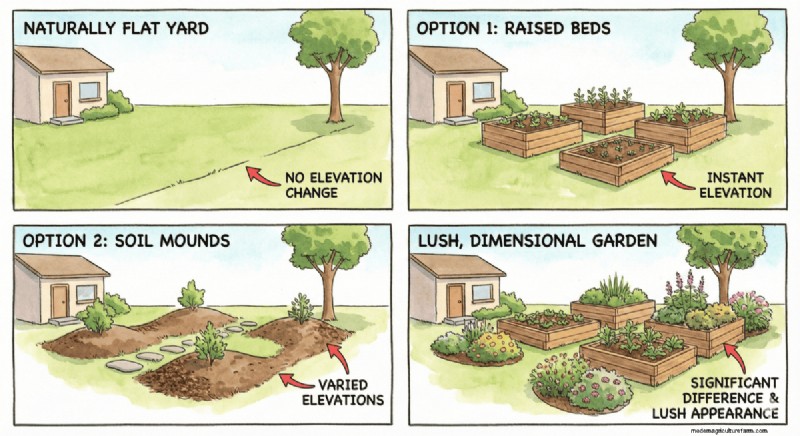
If your yard is naturally flat, you can create instant layers by building raised beds or mounding soil to create different elevations. Even modest height variations make a significant difference in how lush and dimensional your garden appears.
Raised beds also offer practical benefits: better drainage, easier access for maintenance, and warmer soil for earlier spring growth. Win-win-win.
We'll email it to you so you can read it later!
By saving, you agree to receive occasional emails. Unsubscribe anytime.
One of the most exciting aspects of maximalist garden design is the concept of creating distinct “rooms” within your outdoor space. Just as your home has different rooms for different purposes, your garden can too.
Garden rooms are distinct areas designed for specific functions: dining, lounging, meditation, or even gardening itself. The key is defining these spaces clearly enough that they feel intentional, but keeping them connected so your yard doesn’t feel chopped up.
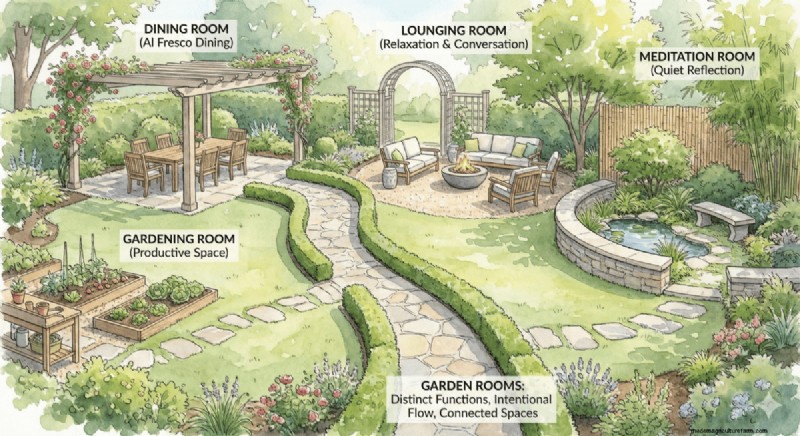
Think about how you actually want to use your outdoor space. Do you need a cozy spot for morning coffee? A larger area for entertaining? A secluded nook for reading? Once you identify these needs, you can design your garden rooms accordingly.
Instead of relying solely on fences or hardscaping, use dense plantings to create the “walls” of your garden rooms. Tall ornamental grasses, mixed shrub borders, or even bamboo screens can effectively separate spaces while maintaining that lush, green-drenched aesthetic.
Read more: 25 Flowering Vines That Transform Ordinary Fences Into Stunning Living Walls
The advantage of plant walls? They soften harsh lines, provide habitat for wildlife, and change with the seasons. Plus, they don’t feel as permanent or confining as solid structures, allowing glimpses through to other areas that create visual intrigue.
Every room needs a floor, and in garden rooms, this can be accomplished through a combination of low-growing plants and hardscaping materials. Creeping thyme, moss, or low sedums can fill spaces between pavers or create living carpets under trees.
Mix materials thoughtfully: perhaps a gravel path leading to a flagstone patio, softened with creeping plants that spill between stones. The goal is to make transitions feel natural rather than abrupt.
While not every garden room needs a literal ceiling, overhead elements like pergolas, arbors, or even tree canopies create that sense of enclosure that makes a space feel intimate and room-like.
Train climbing vines over pergolas for natural shade, or position seating areas beneath the dappled light of mature trees. These overhead layers complete the room effect and provide valuable shade during hot summer months.
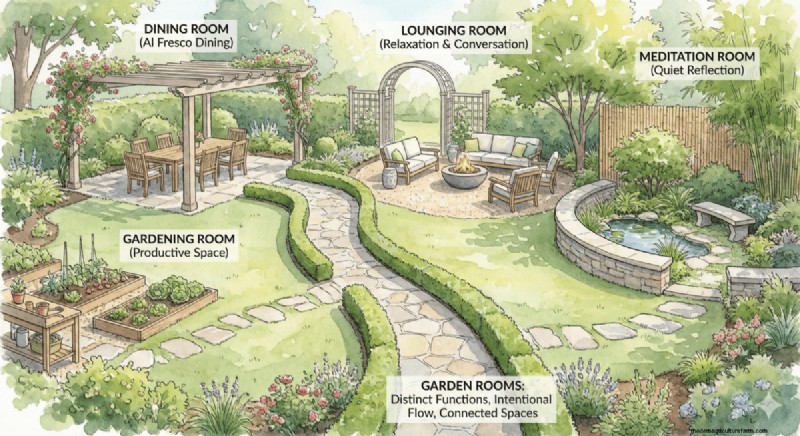
Just as hallways connect rooms in your home, pathways and transition zones should connect your garden rooms. These don’t need to be elaborate—a simple stepping stone path or a narrow gravel walkway lined with plants works beautifully.
The key is making these transitions feel intentional. A slight narrowing of the path, an archway overhead, or a change in ground material all signal movement from one space to another.
A common mistake is creating long, narrow outdoor spaces that don’t function well. Landscape architects recommend proportioning outdoor rooms closer to square or following a 2:3 ratio for better functionality.
Think about the furniture and activities each space will accommodate. A dining area needs enough room for the table, chairs, and space to walk around comfortably. A lounging area should feel cozy without cramping.
For garden rooms that feel private but not closed off, consider “double wrapping” your space with layers of plantings. Place taller screening plants at the perimeter, then add another layer of smaller trees or large shrubs further inside the garden.
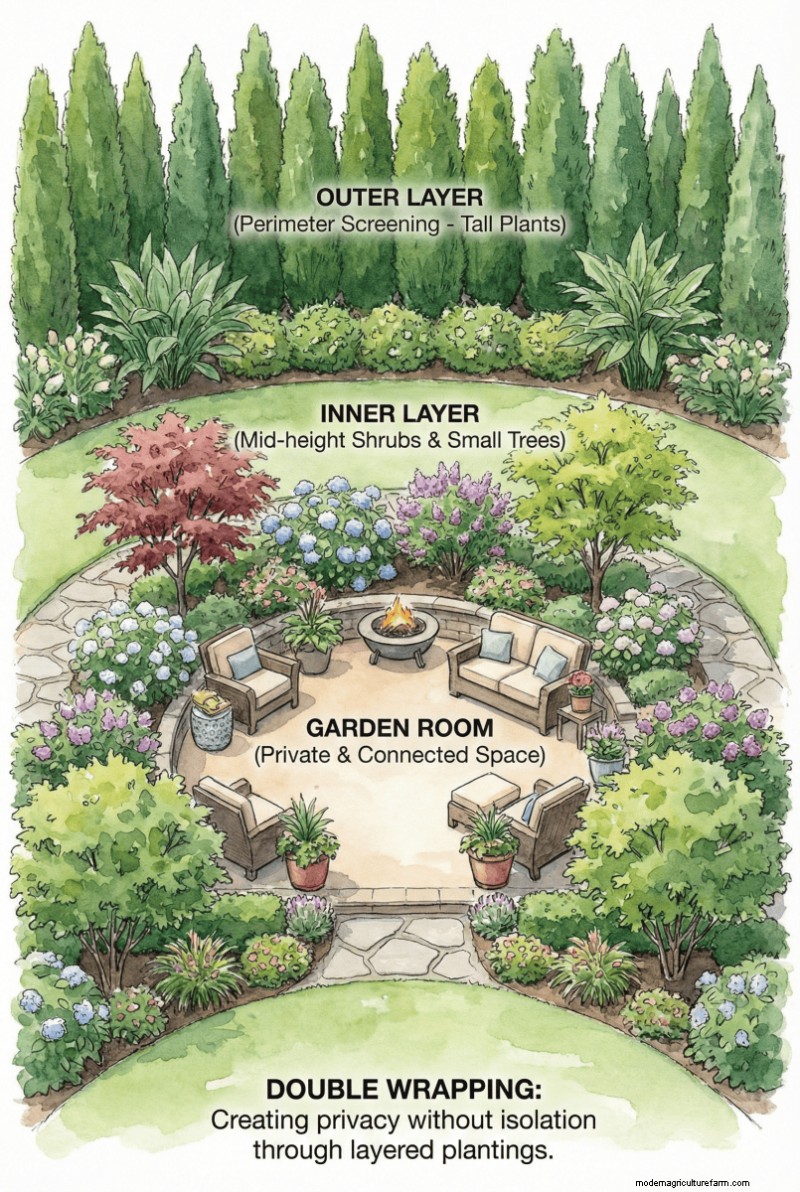
This approach provides excellent privacy while creating depth and that all-important sense of discovery as you move through the space. It also prevents the “fortress” feeling that a single wall of tall plants can create.
When ground space is limited (or when you want to maximize the lush, green feeling of your garden), going vertical is the answer. Vertical gardens don’t just save space; they transform plain walls and fences into living, breathing works of art.
Living walls are one of the most dramatic ways to add greenery vertically. These systems range from simple pocket planters mounted on walls to sophisticated hydroponic installations with built-in irrigation.
Start small if you’re new to this technique. Modular pocket systems are affordable and forgiving. Choose plants with similar light and water requirements, and group them accordingly. Ferns, succulents, trailing vines, and herbs all work beautifully in vertical systems.
The payoff is huge: instant privacy, natural air purification, noise reduction, and a stunning focal point that’ll make your neighbors wonder how you did it.
Your fence is prime real estate for vertical planting. Climbing roses, clematis, honeysuckle, and jasmine can transform a plain fence into a flowering wall of privacy and fragrance.
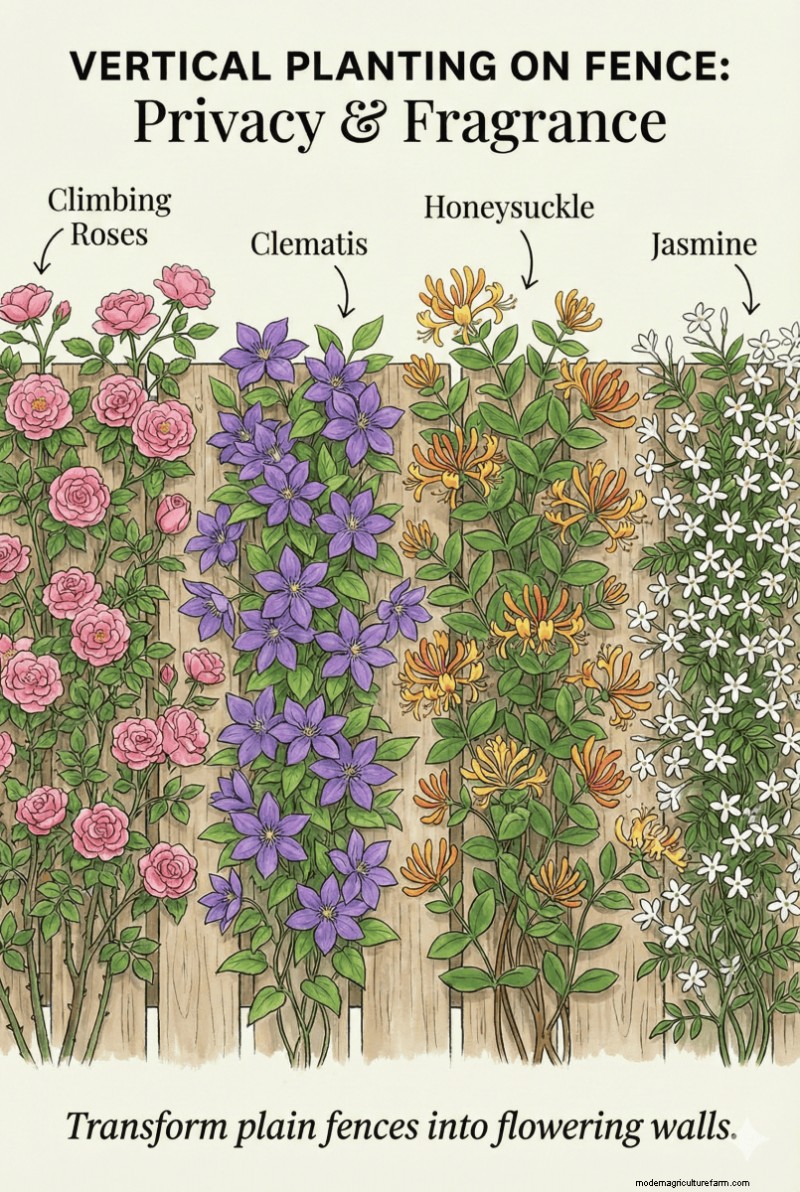
Install simple wire supports or small trellises against the fence to guide plants upward. For year-round coverage, include evergreen climbers like star jasmine or ivy alongside deciduous flowering vines.
Read more: 27 Climbing Blooms That Turn Fences Into Flower Walls
Stacking planters at different heights creates instant vertical interest. DIY vertical gardens using repurposed materials (old pallets, wooden ladders, or hanging planters) add personality while maximizing planting space.
This approach is perfect for renters or anyone who wants flexibility. You can rearrange, refresh, or even take your vertical garden with you if you move.
For a unique vertical element that’s both beautiful and productive, try espaliering fruit trees. This centuries-old technique trains trees to grow flat against walls or fences in decorative patterns.
Apples, pears, figs, and even cherries can be espaliered. The result is a living sculpture that produces fruit while taking up minimal space, perfect for small gardens or creating vertical interest along pathways.
Read more: Which Fruit Trees Can You Espalier?
Don’t overlook the potential of hanging elements. Cascading plants in hanging baskets add another dimension to your garden, especially when positioned at different heights to create a cascading effect.
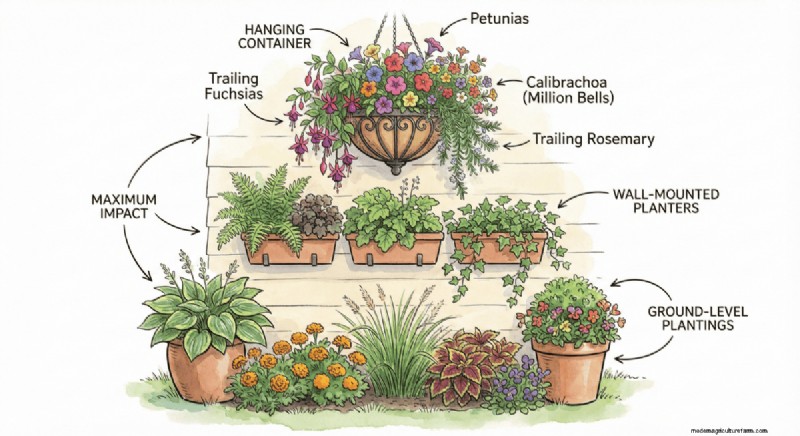
Petunias, calibrachoa, fuchsias, and trailing herbs like rosemary work beautifully in hanging containers. Layer them with wall-mounted planters and ground-level plantings for maximum impact.
Read more: 13 Drought Tolerant Plants For Hanging Baskets
Rather than a single row of tall plants, create a layered privacy screen by combining trees, tall shrubs, medium shrubs, and ornamental grasses. This “wide border” approach provides excellent screening while looking more like a lush garden than an obvious privacy measure.
Start with small trees or tall evergreens at the back, step down to bushy six- to eight-foot shrubs, then add a third layer of shorter plants and grasses at the front. The result is a privacy screen that’s also a beautiful, diverse garden in its own right.
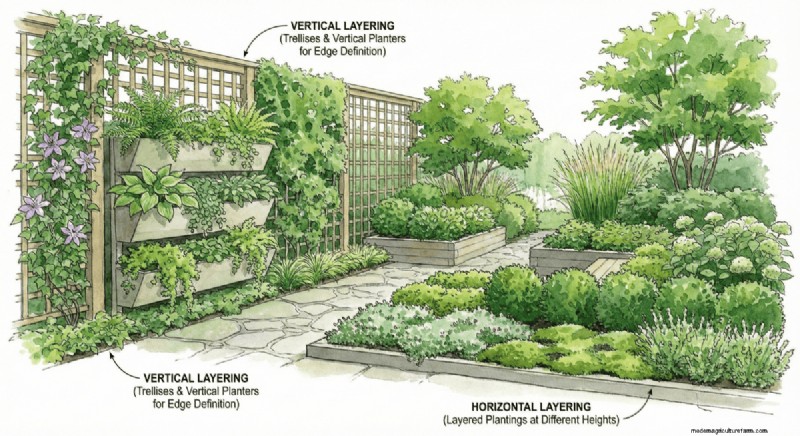
The most successful green-drenched gardens combine both vertical and horizontal layering. Use trellises and vertical planters to define the edges of garden rooms while filling horizontal space with layered plantings at different heights.
This comprehensive approach creates that maximalist abundance you’re after while providing privacy, defining spaces, and making even small yards feel like expansive, multi-dimensional gardens.
The beauty of the maximalist, green-drenched garden trend is that there’s no single “right” way to do it. The goal is creating abundance, privacy, and personality through layered plantings, thoughtfully designed garden rooms, and creative vertical solutions.
Start by assessing what you already have: existing trees, structures, or features that can become anchors for your design. Then think about how you want to use your outdoor space and what level of privacy you need. From there, it’s all about building up layers, mixing textures, and embracing the “more is more” philosophy that makes maximalist gardens so appealing.
Don’t try to transform everything overnight. Maximalist gardens develop over time as you add new plants, discover what works in your conditions, and refine your combinations. The journey is part of the joy—each season brings new opportunities to layer in more green, create new garden rooms, and make your outdoor space increasingly lush and personal.
This year, give yourself permission to go big with plants. Fill those empty spaces, layer in more textures, create intimate garden rooms, and build up those vertical surfaces. Your reward? A private, green-drenched sanctuary that feels like a world away from everyday stress…right in your own backyard.


