Welcome to Modern Agriculture!

 Shutterstock
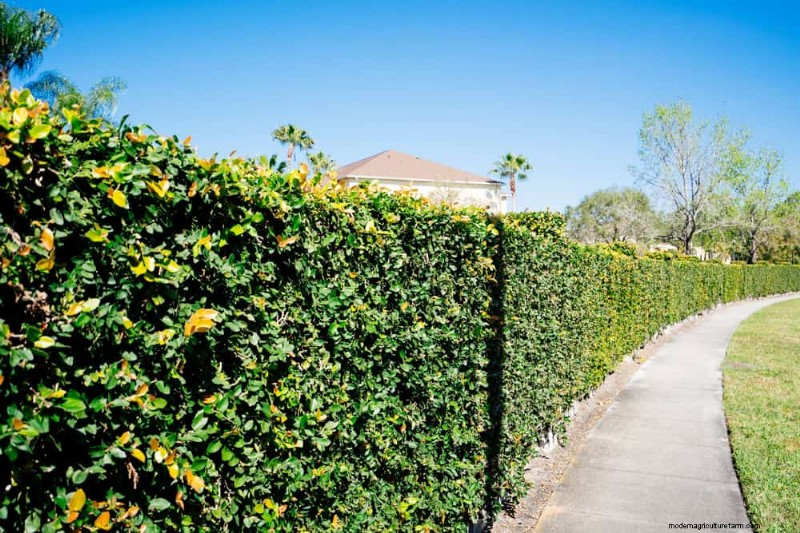
Looking for ways to reclaim a bit of solitude in your outdoor space? Natural privacy screens offer more than just seclusion. They bring texture, movement, and life to your property while blocking unwanted sightlines. The consensus among landscape professionals is that fast-growing species deliver the quickest results, often creating a meaningful barrier within just a few growing seasons.
Beyond blocking views, these plants serve multiple functions. They muffle traffic noise, filter dust and pollutants, provide windbreaks, and create habitat for birds and beneficial insects. Some retain their foliage year-round, while others offer seasonal blooms or dramatic fall color. Your choice depends on your climate, available space, and how much maintenance you’re willing to commit to.
Growth Rate Reality Check: Most “fast-growing” plants need 2-3 years to establish strong root systems before they hit their peak growth rate. Expect modest results in year one, then accelerated growth in years two through five as the root zone develops.
 Shutterstock
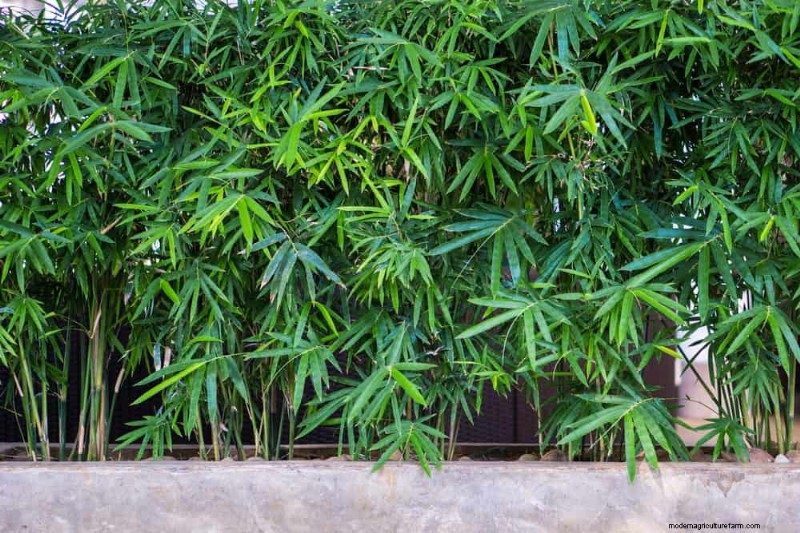
Bamboo’s reputation as the world’s fastest-growing plant is well earned. Certain species can add over a foot of vertical growth in a single day during peak season, which sounds miraculous until you realize it comes with responsibilities.
Stick with clumping varieties rather than running types. Running bamboo sends underground rhizomes outward in every direction, popping up shoots far from the original planting. Clumping bamboo expands slowly from its base, forming a tidy grove that won’t invade your neighbor’s yard or crack your patio. Popular clumping varieties include Bambusa multiplex and Fargesia species.
Bamboo handles diverse climates surprisingly well. While tropical species thrive in warm, humid regions, cold-hardy varieties like Fargesia robusta tolerate freezing temperatures. The thick culms and dense leaf canopy create an effective sound barrier, making bamboo a favorite near busy roads.
One common mistake is underestimating water needs during establishment. Young bamboo requires consistent moisture, particularly in the first two years. Once mature, most species become reasonably drought-tolerant, though they’ll always perform best with regular watering.
 Shutterstock
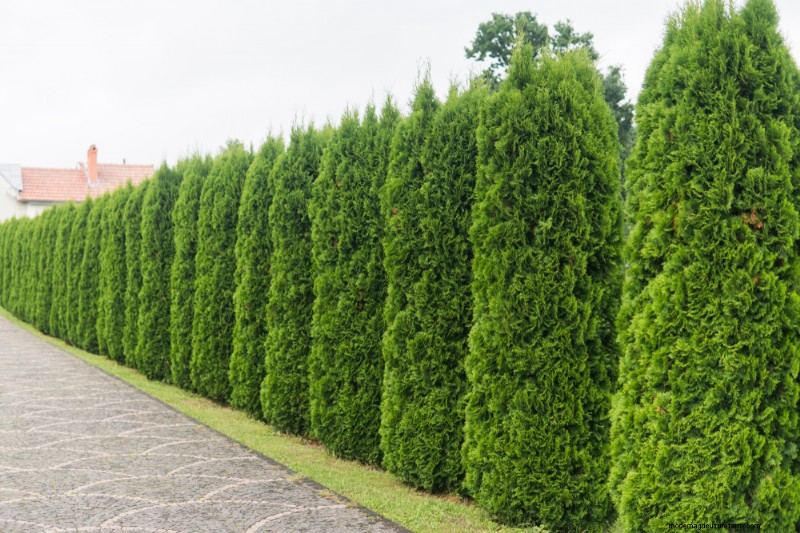
Arborvitae has become nearly ubiquitous in suburban privacy plantings for good reason. The naturally pyramidal shape requires minimal pruning, and the evergreen foliage maintains coverage through winter when you need it most.
Green Giant arborvitae is the go-to cultivar for fast results, adding 3-5 feet per year in optimal conditions. Mature specimens reach 15-20 feet tall but stay narrow, typically 3-5 feet wide, making them ideal for tight spaces along property lines. Emerald Green arborvitae grows slower but maintains a more compact, formal appearance.
These trees adapt to most soil types, though they prefer slightly acidic to neutral pH. Full sun produces the densest growth, but they tolerate partial shade without significant thinning. In very shady spots, expect looser branching and potential gaps in coverage.
Winter burn poses the main challenge in cold climates. Heavy snow and ice can splay branches outward, and harsh winter winds combined with frozen soil sometimes cause browning foliage. Wrapping young trees with burlap in exposed locations helps prevent damage. Proper watering in fall, before the ground freezes, also reduces winter stress.
We'll email it to you so you can read it later!
By saving, you agree to receive occasional emails. Unsubscribe anytime.
 Shutterstock
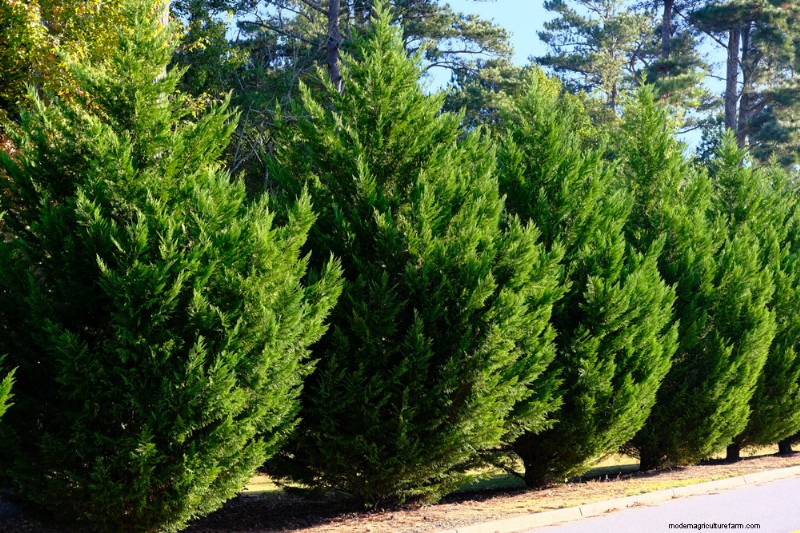
Leyland cypress delivers impressive vertical growth, sometimes adding 3-5 feet annually when young. This hybrid between Monterey cypress and Nootka cypress combines the best traits of both parents, resulting in a vigorous, adaptable tree.
The scale is worth considering before planting. Mature height can reach 50-70 feet if left unpruned, with a spread of 15-25 feet. That size works well for rural properties or large estates but can overwhelm smaller suburban lots. Regular annual pruning keeps them at a manageable height, though this becomes labor-intensive as the trees age.
Leyland cypress tolerates various soil conditions, including clay and sandy loam, as long as drainage is adequate. Soggy, waterlogged sites invite root rot and other fungal issues. They handle drought better than many evergreens once established but perform best with consistent moisture during active growth.
⏱ Pruning Schedule
Annual trimming: Late spring or early summer
Heavy shaping: Every 2-3 years
Time commitment: 2-4 hours per 10-tree hedge
Spacing matters significantly with Leylands. Plant them 6-8 feet apart for a quick screen that fills in within a few years, or space them 10-12 feet apart if you prefer maintaining individual tree shapes. Closer spacing creates faster privacy but increases competition for water and nutrients.
 Shutterstock
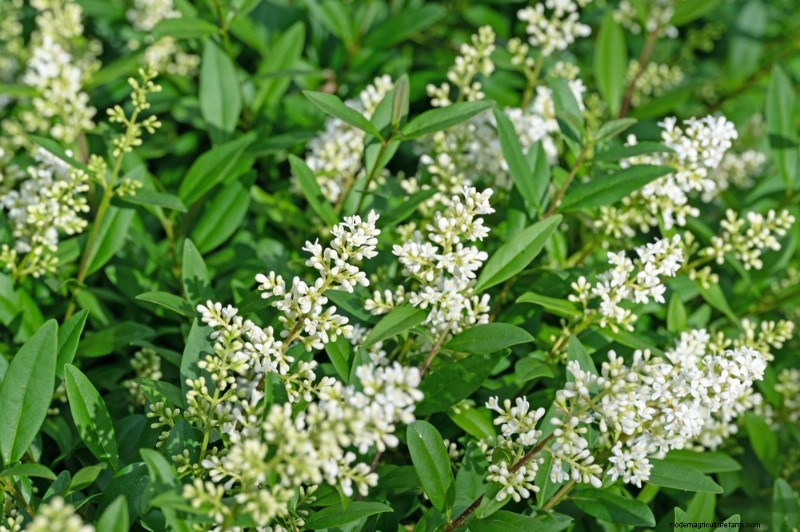
Privet represents old-school hedging at its most reliable. This shrub has lined property boundaries for generations, valued for its tolerance of heavy pruning and ability to bounce back from neglect.
Several species serve as privacy screens. California privet (Ligustrum ovalifolium) grows quickly and accepts severe shearing, making it popular for formal hedges. Japanese privet offers similar characteristics with slightly smaller leaves. Chinese privet grows faster but can become invasive in warm climates, escaping cultivation and spreading into wild areas.
The small white flowers that appear in late spring carry a distinct fragrance that divides opinion. Some find it pleasantly sweet, while others describe it as cloying or unpleasant. The blooms attract pollinators but also produce small berries that birds love, which can lead to unwanted seedlings sprouting throughout your yard.
Privet adapts to sun or shade, though growth becomes denser and more compact in full sun. These shrubs tolerate urban pollution, compacted soil, and drought conditions once established. Root systems are aggressive, so avoid planting too close to septic systems, water lines, or foundation plantings.
Pruning frequency depends on your desired look. For a manicured, formal hedge, plan on trimming 2-3 times per growing season. If you prefer a looser, more natural appearance, once annually after flowering suffices.
 Shutterstock
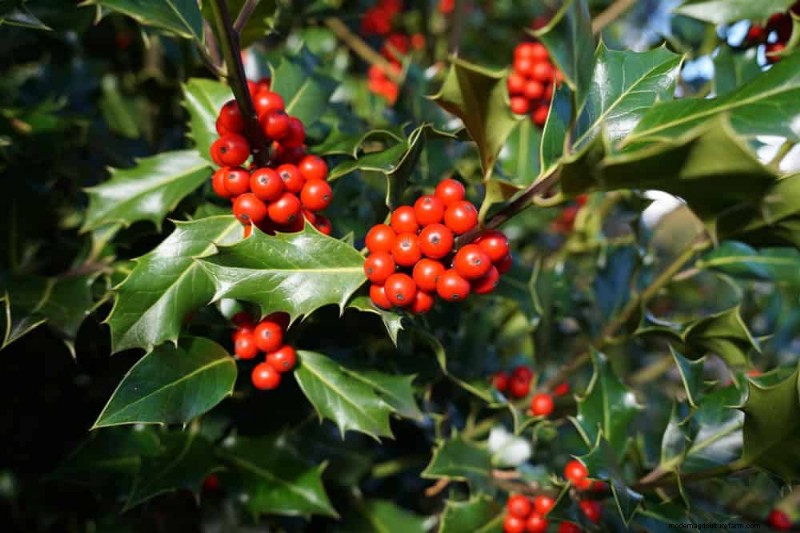
Holly’s spiny leaves add a security dimension that most other privacy plants lack. Nellie Stevens holly stands out among fast-growing cultivars, reaching 15-20 feet tall and 8-12 feet wide with minimal care.
The evergreen foliage stays deep green year-round, providing consistent screening. Female plants produce bright red berries in late fall and winter, but only if a male pollinator grows nearby. One male holly can pollinate several females within a 50-foot radius, so coordinate with neighbors if possible to maximize berry production.
Holly tolerates a range of soil conditions, including moderately acidic to slightly alkaline pH. Drainage is more critical than soil fertility. Soggy conditions lead to root rot, while well-drained sites, even if nutritionally poor, support healthy growth. Established hollies handle drought reasonably well, though extended dry periods may cause leaf drop.
These plants resist most pests and diseases, though spider mites occasionally become problematic during hot, dry weather. A strong spray from the garden hose typically controls minor infestations. Scale insects sometimes attach to branches; horticultural oil applied in early spring before new growth emerges provides effective control.
 Shutterstock
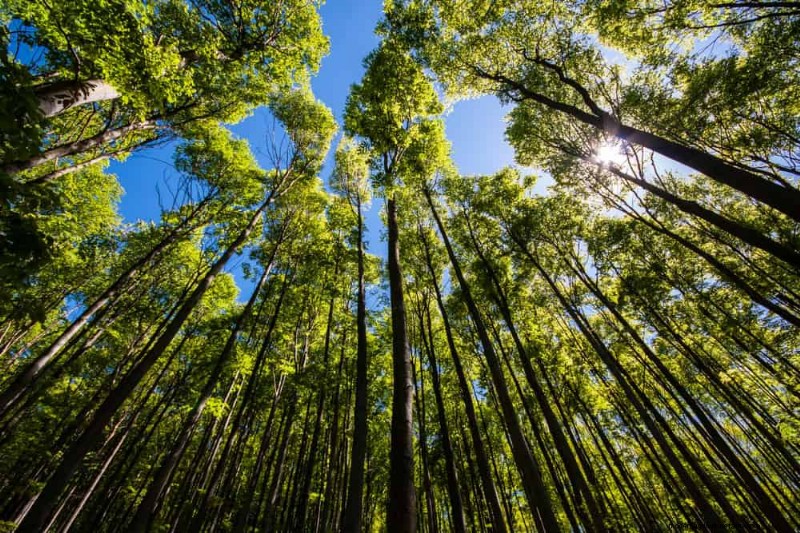
When speed matters above all else, hybrid poplars deliver. Growth rates of 6-8 feet per year are common, with some specimens exceeding 10 feet in ideal conditions. That rapid expansion comes with trade-offs worth understanding.
These trees live fast and die relatively young. While many landscape trees survive 50-100 years, hybrid poplars typically decline after 20-30 years. Weak wood makes them prone to storm damage, and large branches sometimes drop without warning. Avoid planting them near structures, play areas, or anywhere falling limbs could cause problems.
Water demands run high, especially during establishment. Young poplars need deep watering weekly in the absence of rain. Mature trees become more drought-tolerant but still perform best with supplemental irrigation during dry spells. The extensive root systems seek out water aggressively, making them poor choices near septic systems, water lines, or sewer pipes.
Hybrid poplars work well as temporary screens while slower-growing species fill in, or in rural settings where their eventual decline poses minimal risk. The upright growth habit creates narrow screens, so plant them in staggered rows for better coverage.
 Shutterstock
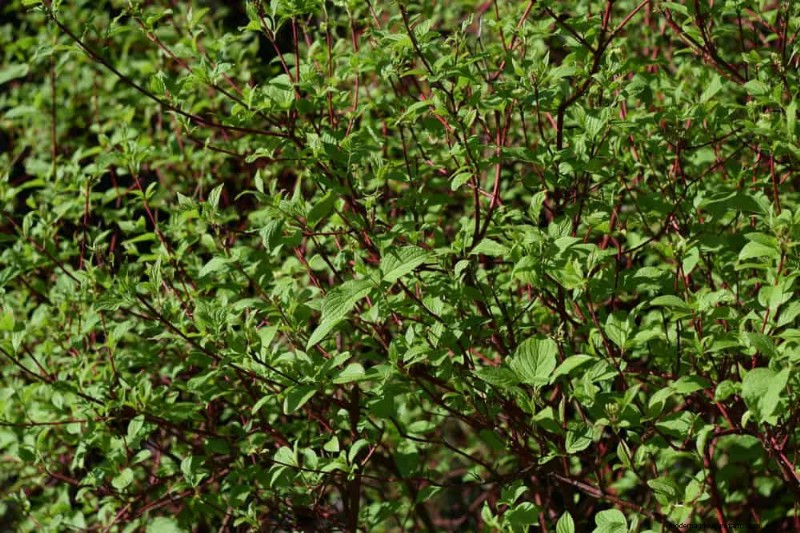
Red twig dogwood brings year-round interest in a way few privacy plants can match. Spring delivers white flowers, summer brings lush green foliage, fall showcases burgundy leaves, and winter reveals brilliant red stems that glow against snow.
This deciduous shrub grows 6-9 feet tall and spreads outward via suckering, forming dense thickets that block views effectively. The winter stem color is brightest on young wood, so many growers practice renewal pruning, cutting one-third of the oldest stems to the ground each spring. This encourages fresh growth with the most vibrant red coloration.
Red twig dogwood excels in challenging sites. It tolerates wet soil better than most woody plants, making it ideal for low spots, rain gardens, or areas with poor drainage. It also handles cold winters without damage, thriving in zones as cold as USDA 2.
Birds visit for the white berries that appear in late summer. The fruits aren’t particularly showy but provide food for wildlife when many other sources have been depleted. The shrub also hosts several butterfly species, adding ecological value beyond privacy screening.
 Shutterstock
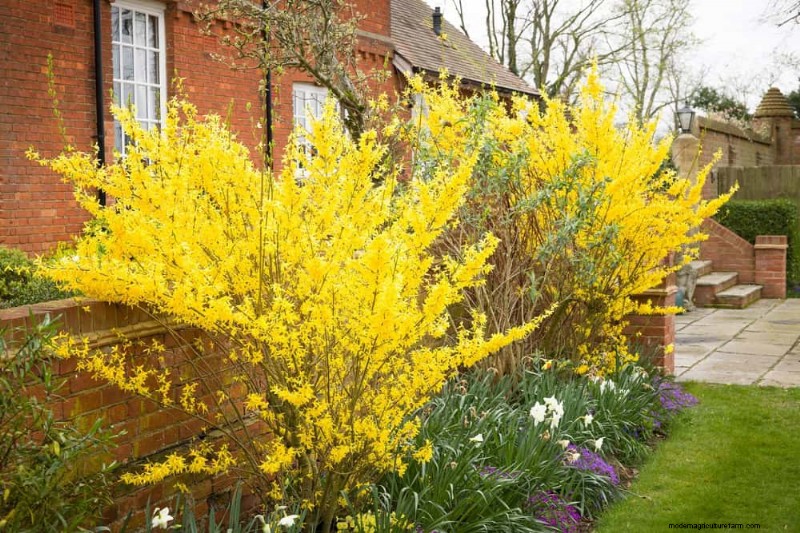
Forsythia announces spring with an explosion of golden yellow flowers that appear before the leaves emerge. This early bloom timing makes it one of the first significant color sources in the landscape after winter, though the show lasts only 2-3 weeks.
The shrub grows vigorously, quickly reaching 8-10 feet tall with a similar spread. Arching branches create a fountain-like form that works well as an informal hedge but requires ample space. Crowding forsythia against fences or planting too close to structures leads to awkward pruning and loss of the plant’s natural grace.
After flowering, forsythia fades into the background as a plain green shrub. The foliage isn’t particularly ornamental, and fall color is minimal to nonexistent in most climates. Some gardeners see this as a drawback, while others appreciate the neutral backdrop it provides for later-blooming perennials.
Pruning timing affects next year’s bloom. Forsythia sets flower buds on old wood produced the previous season, so any cutting after early summer removes potential flowers. Prune immediately after blooming if shaping is necessary, removing up to one-third of the oldest canes at ground level to encourage fresh, vigorous growth.
 Shutterstock
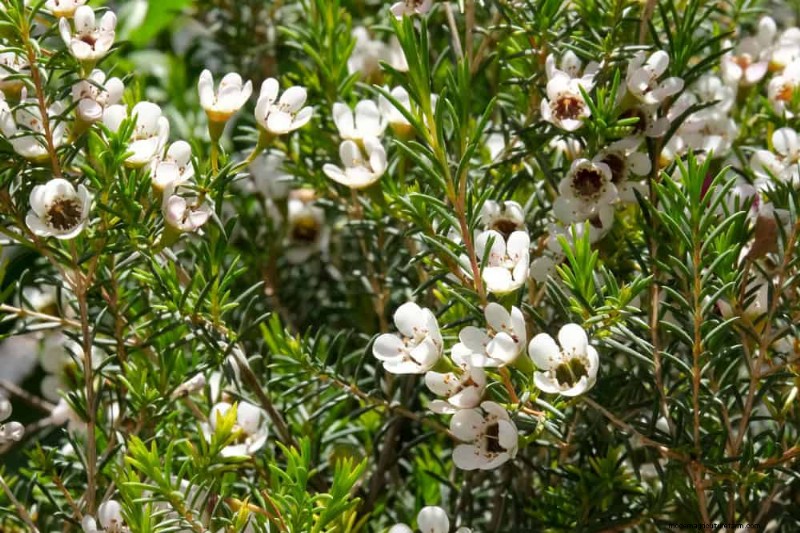
Coastal gardeners prize wax myrtle for its tolerance of salt spray and sandy soil. The evergreen to semi-evergreen foliage releases a pleasant fragrance when brushed or crushed, adding a sensory element to your privacy screen.
Growth habit is upright and irregular, creating a natural, informal appearance. Mature plants reach 10-15 feet tall, though they respond well to pruning if you prefer keeping them shorter. The multi-stemmed form produces dense branching that fills in gaps effectively.
Female plants produce waxy, gray-blue berries that persist through winter. Early colonists boiled these berries to extract the wax coating, using it to make fragrant candles. Birds consume the berries, particularly during winter when other food sources are scarce. Male plants don’t produce berries but are necessary for pollination if you want fruit production.
Wax myrtle adapts to various soil types, from acidic sand to heavier clay loam. It tolerates brief flooding and extended drought with equal ease once established. In northern parts of its range (USDA zones 7-8), it may drop leaves during harsh winters but typically regrows vigorously in spring.
 Shutterstock
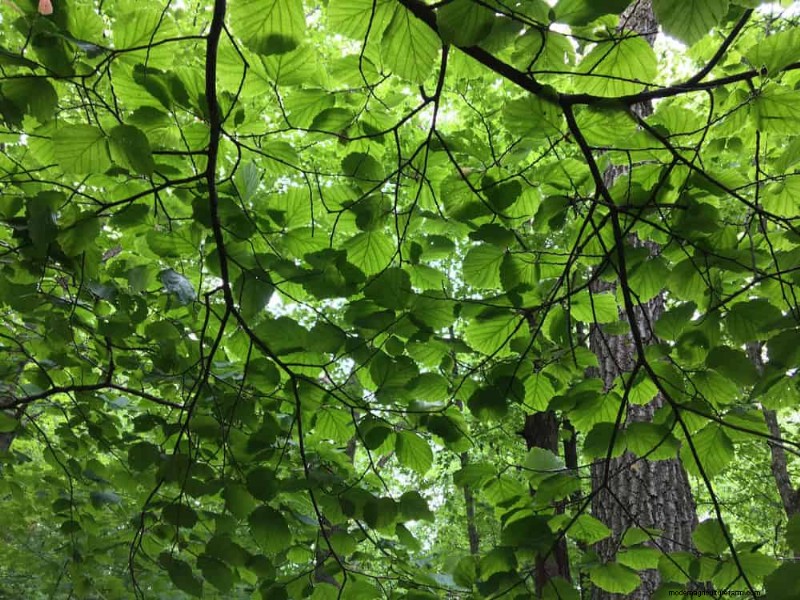
American hornbeam earns its “musclewood” nickname from the smooth, sinewy trunk that resembles flexed muscles. This native tree offers a slower but steadier alternative to some of the more aggressive growers on this list.
The dense, twiggy branching pattern creates effective screening even in winter after leaves drop. Spring brings fresh green foliage that darkens through summer before turning vibrant shades of yellow, orange, and red in fall. The leaves often persist into early winter, extending the period of privacy coverage.
Mature size stays manageable at 20-30 feet tall with a similar spread, making hornbeam suitable for smaller properties. The slow to moderate growth rate (1-2 feet per year) requires patience but results in a stronger, more long-lived tree than faster alternatives.
These trees thrive in partial shade, making them excellent understory plantings or choices for sites with limited direct sun. They tolerate various soil conditions, including occasional flooding and compacted clay. The wood is incredibly hard and dense, resisting storm damage better than many other species.
 Shutterstock
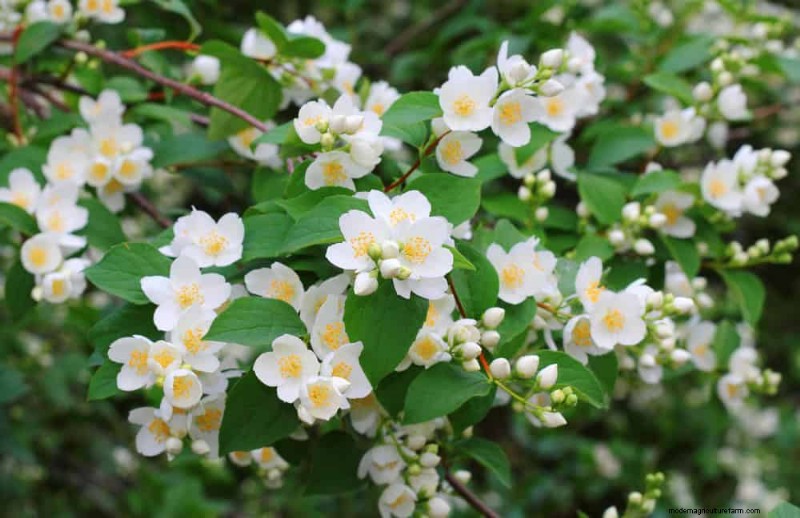
The intense citrus fragrance from mock orange flowers stops people in their tracks. Blooming typically occurs in late spring or early summer, transforming the shrub into a cascade of white flowers for several weeks.
Different cultivars offer varying heights and bloom intensity. Common mock orange (Philadelphus coronarius) reaches 10-12 feet tall with single flowers, while ‘Minnesota Snowflake’ stays shorter but produces showy double blooms. ‘Aureus’ features golden foliage in spring that fades to lime green by summer, adding a color dimension beyond flowering.
These deciduous shrubs prefer full sun for best flowering but tolerate partial shade. In too much shade, bloom production drops significantly and growth becomes lanky. Well-drained soil of average fertility suits them fine; overly rich soil can encourage excessive vegetative growth at the expense of flowers.
After blooming, mock orange becomes a plain green shrub with minimal ornamental interest. The foliage doesn’t offer fall color, and the bare winter branches are unremarkable. Pair it with evergreen plants if year-round screening is your primary goal, using the mock orange for seasonal fragrance and beauty.
💡 Fragrance Considerations
Strong floral scents can be polarizing. Plant mock orange, viburnum, and privet away from windows, outdoor seating areas, and air intakes if you’re sensitive to fragrances. What smells divine to one person might trigger headaches in another.
 Shutterstock
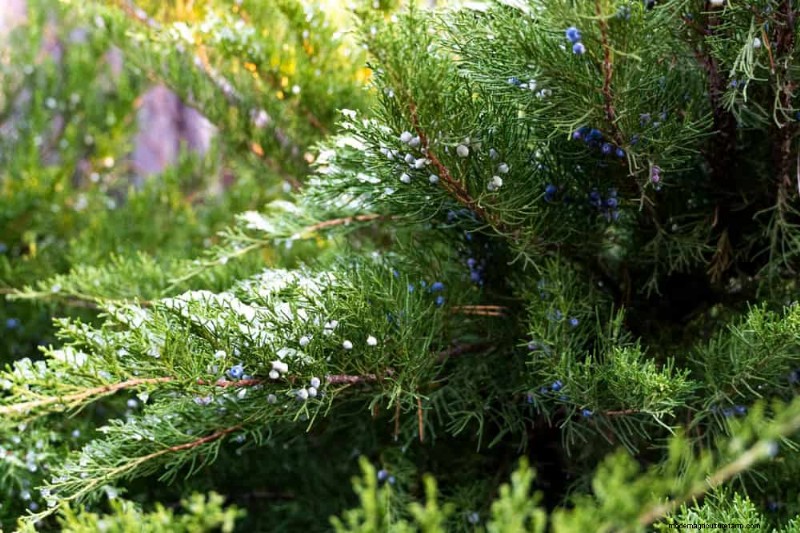
Eastern red cedar, despite its common name, is actually a juniper. This native evergreen adapts to challenging conditions that defeat many other trees, thriving in poor, rocky soil and handling both drought and cold with minimal complaint.
Young trees grow fairly quickly, adding 12-24 inches annually during their first decade. Growth slows as the tree matures, eventually reaching 40-50 feet tall with a pyramidal to columnar form. The aromatic, scale-like foliage stays green year-round, providing consistent privacy coverage.
Female trees produce small blue berry-like cones that attract cedar waxwings and other birds. These “berries” are actually fleshy cone scales, but birds don’t seem to mind the botanical technicality. The cedar-apple rust fungus alternates between red cedars and apple trees, so avoid planting them near apple orchards.
Once established, Eastern red cedar tolerates drought exceptionally well. The deep taproot accesses water beyond the reach of many other species. This same characteristic makes transplanting difficult; start with young, container-grown specimens rather than attempting to move mature trees.
 Shutterstock
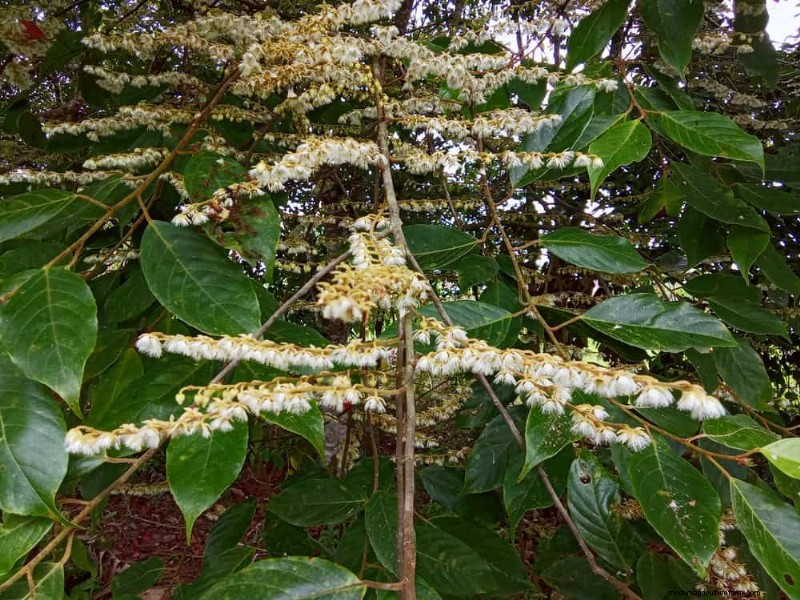
Japanese blueberry tree brings a refined, sophisticated look to privacy plantings. The glossy, dark green leaves maintain their shine throughout the year, creating a polished appearance that suits contemporary landscapes.
New growth emerges with a bronze to reddish tint before maturing to deep green. Older leaves turn bright red before dropping, creating small pops of color throughout the year rather than one concentrated fall display. The tree maintains enough foliage year-round to provide effective screening.
Small, fragrant white flowers appear in summer, though they’re not particularly showy. The blue-black berries that follow attract birds but create minimal mess. Growth rate is moderate to fast, with young trees adding 2-3 feet annually under good conditions.
Japanese blueberry adapts to full sun or partial shade, though sun exposure produces denser growth. It tolerates urban conditions well, handling air pollution and reflected heat from pavement better than many alternatives. Once established, it manages drought periods reasonably well, though regular watering produces the best appearance.
 Shutterstock
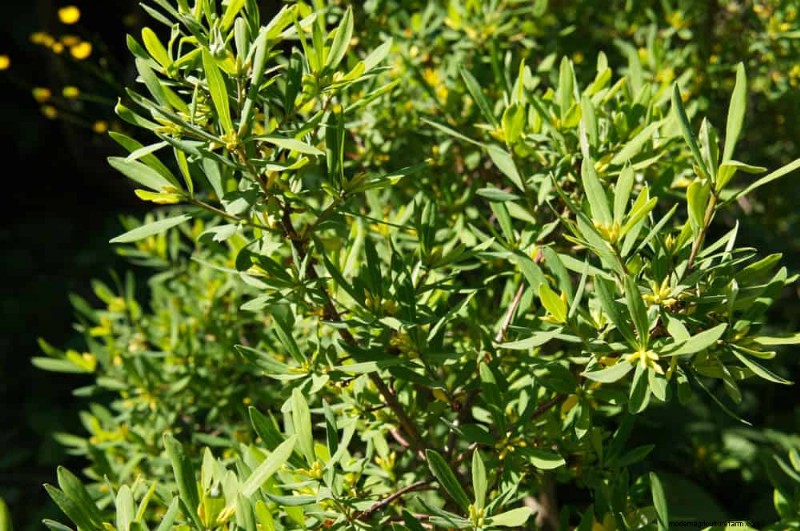
Northern bayberry thrives where other plants struggle. Sandy, nutrient-poor soil doesn’t faze it, and salt spray actually seems to encourage growth. This adaptability makes it invaluable for coastal properties and roadside plantings where salt application in winter limits other options.
The semi-evergreen foliage stays on the plant through much of winter in mild climates, though it drops in colder regions. Even when bare, the dense branching structure provides reasonable screening. Crushed leaves release a spicy, bayberry scent that’s pleasantly aromatic without being overwhelming.
Female plants produce waxy gray berries along the stems in fall. These persist through winter, providing food for birds and visual interest. The wax coating was historically collected for candle-making, though modern harvesting for that purpose is rare. Male plants must grow nearby for berry production to occur.
Bayberry fixes nitrogen in its roots through a symbiotic relationship with actinomycete bacteria, allowing it to thrive in infertile soil. This same characteristic means it rarely needs fertilization and can actually suffer from over-fertilizing, which promotes excessive soft growth.
 Shutterstock
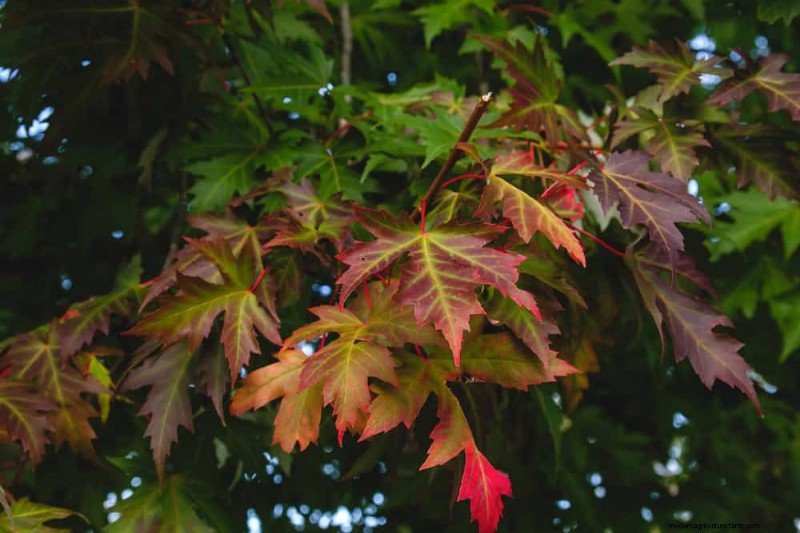
Silver maple grows fast and gets big, sometimes too big for typical residential lots. Young trees can add 3-6 feet per year, quickly outgrowing the space allotted to them. Mature specimens reach 50-80 feet tall with equally impressive spreads.
The distinctive leaves shimmer in the breeze, with deep green upper surfaces and silvery-white undersides creating a flickering effect. This characteristic makes the tree visually interesting but also reveals a potential problem: the leaf surface area catches wind easily, increasing storm damage risk.
Branch structure tends toward weakness, with narrow crotch angles that split easily under ice or wind load. Regular pruning to develop strong scaffolding reduces risk but requires ongoing attention. Falling branches can damage property or injure people, so plant silver maples away from high-traffic areas.
The aggressive, shallow root system creates challenges for lawn maintenance and can lift sidewalks or driveways. Roots also seek out water and sewer lines, potentially causing expensive plumbing problems. Despite these drawbacks, silver maple remains popular for its rapid growth and ability to tolerate urban conditions, including compacted soil and air pollution.
 Shutterstock
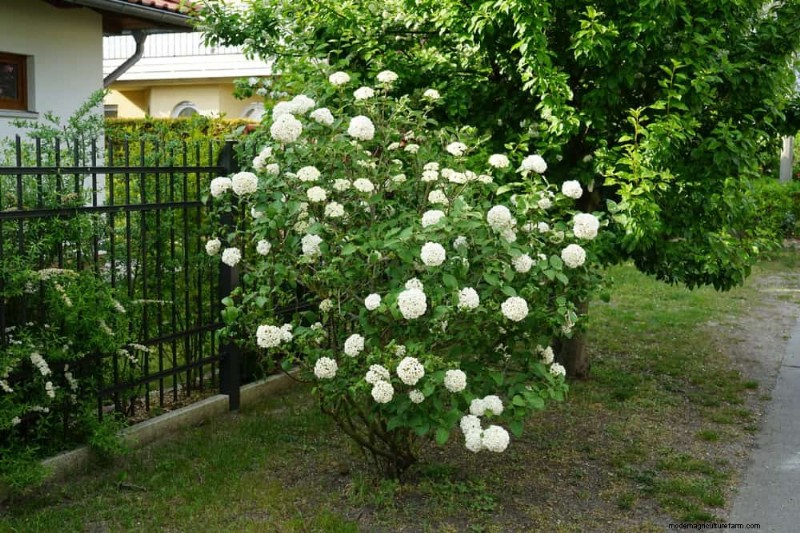
The viburnum genus offers dozens of species suitable for privacy screening, each with unique characteristics. Arrowwood viburnum provides dense growth and adaptability to shade. Leatherleaf viburnum stays evergreen in warm climates. Prague viburnum combines fast growth with disease resistance.
Most viburnums produce clusters of white or pink-tinged flowers in spring, followed by berries that ripen through summer and fall. The berries start yellow, red, or pink before maturing to blue-black, creating a multi-colored display. Birds consume the ripe berries, providing food when insects become scarce in fall.
Growth rate varies by species, with some adding 2-3 feet annually while others expand more slowly. Spacing recommendations range from 4-8 feet apart depending on the variety and whether you want individual plants or a merged hedge. Closer spacing creates faster coverage but may require more frequent thinning.
Viburnum beetle has become a significant pest in recent years, with larvae skeletonizing leaves in spring and adults feeding in summer. Resistant species include Koreanspice viburnum and Judd viburnum. Heavily affected plants can be treated with insecticidal soap or neem oil, though repeated applications may be necessary.
 Shutterstock
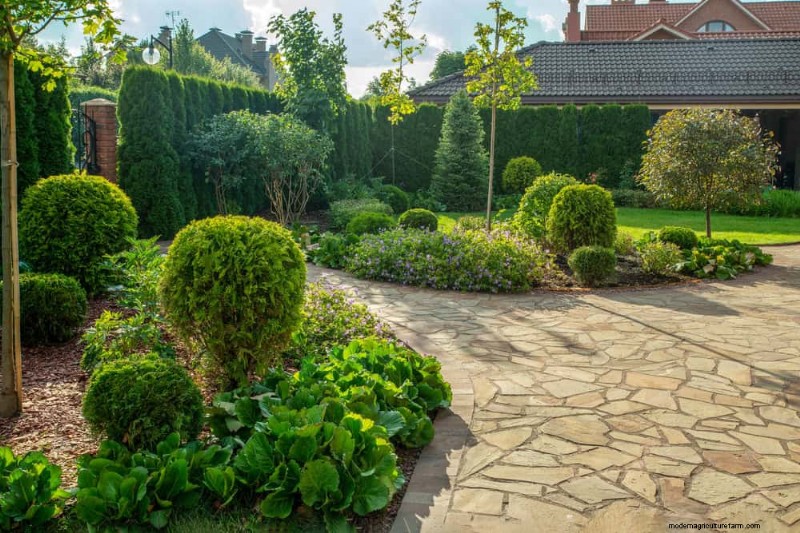
Creating a natural privacy barrier involves more than just picking plants and sticking them in the ground. Consider your site’s specific conditions: sun exposure, soil type, drainage patterns, and available space. A plant that thrives in full sun and sandy soil may struggle in shade with heavy clay.
Think about maintenance requirements honestly. Fast growth sounds appealing until you realize it means frequent pruning to keep plants in bounds. Evergreens provide year-round coverage but may cost more initially than deciduous options. Fast-growing plants deliver quick results but sometimes come with trade-offs in longevity or strength.
Layering different species creates visual interest while ensuring some coverage if disease or pests affect one variety. Mix evergreen backbone plants with deciduous options that provide seasonal flowers or fall color. The result is a living screen that evolves through the seasons while maintaining its primary function: giving you the privacy to enjoy your outdoor space on your own terms.