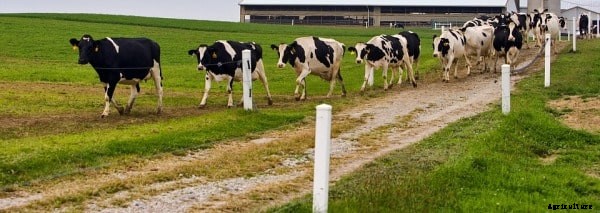
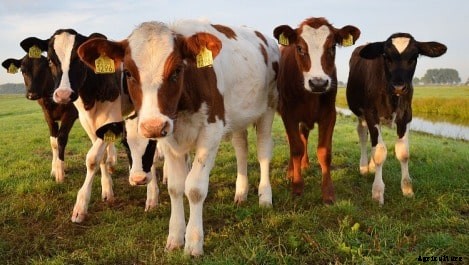
Introduction: Cattle farming is a part of animal husbandry practices, which include the farming of entire animal livestock. Initially animal husbandry started only with cattle farming by rearing cows, goats, buffalo, sheep, etc. but later on it extended to other farming types such as fish, poultry, etc. Animals in general are reared to obtain things for basic needs like milk, eggs, meat etc. Cattle farming refers to the rearing and management of dairy and drought animals. The category of animals which are reared for milk are dairy cattle and that which are reared for labor works like ploughing and irrigation are drought cattle. The main aim of cattle farming is to improve the quality and quantity of milk that is produced. To achieve this aim high yielding varieties of cattle breeds are developed and reared. The ever increasing demand for dairy and other products from the cattle keeps the cattle farming industry successful. The local market itself is enough to bring good returns for cattle farmers, but care must be taken to keep the cattle healthy and manage the farm operations in a decent way.
Cattle Farming Guide.
DIFFERENT BREEDS FOR CATTLE FARMING:
Cattle are generally distinguished by their origin and production methods. Depending on the effective production of milk and meat the cattle are classified into four breeds, they are a Milk breed (high milk producing cattle), Beef breed (specific to meat production), Dual breed (both the milk and meat type), Draft breed (used for labor works). Cattle breeds are also classified into three categories based on the origin, such as Desi breed (these include the local type), foreign breed (originating from different parts of the world), hybrid breed (produced from the artificial insemination of two different types of breeds).
COW BREEDS OF INDIA
Gir Cow Of India.
Indigenous breeds of cattle for dairy:
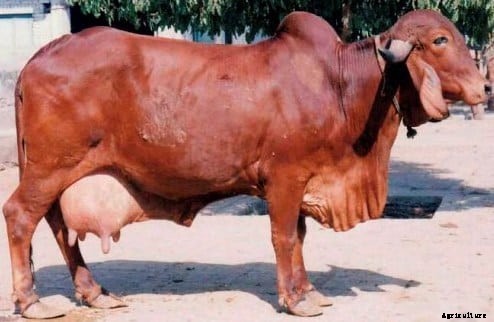
GIR:
The origin of the breed is from the Gir forest range in Gujarat. It is also found in Rajasthan and Maharashtra.
This breed of cattle is sometimes addressed as Bhadawari, Desan, Sorthi, Surati, Kathiawari and Gujarati.
The skin color of the cattle is dark red, black or chocolate –brown with curved half moon shape horns.
Yield of milk is around 1200-1800 kg per lactation.
This cattle breed is strong and has high resistance to diseases.
RED SINDHI:
It is a native of Karachi and Hyderabad (Pakistan) regions.
It is sometimes called as Red Karachi, Sindhi and Mahi.
The skin color of the cattle is red with strips of white.
This breed yields 1250 to 1800 kg of milk per lactation.
The bullocks of this breed are used for road and field work.
SAHIWAL:
It is a native of Montgomery region of the undivided India. This breed is also known as Lola, Lambi bar, Montgomery, Multani and Teli.
The skin color of this breed is pale red, reddish dun with white patches. The breed has a symmetrical body with loose skin.
This breed yields 1400 to 2500 kg of milk per lactation.
Indigenous breeds of cattle for draught:
HALLIKAR:
It is considered to have originated from vijayanagarm, Karnataka.
The color of the breed is gray or dark gray. They are compact, muscular, medium sized animals with long horns, strong legs and a prominent forehead.
This cattle breed is generally used as a draught animal for its trotting ability.
AMRITMAHAL:
This breed is a native of Hassan, chikmgalur and Chitradurga districts of Karnataka.
The color of this breed varies from black and gray to near white. The horns are long with black end points. The tail, feet and muzzle are generally black in color.
KHILLARI:
This breed is the native of Sholapur and Sitapur districts of Maharashtra.
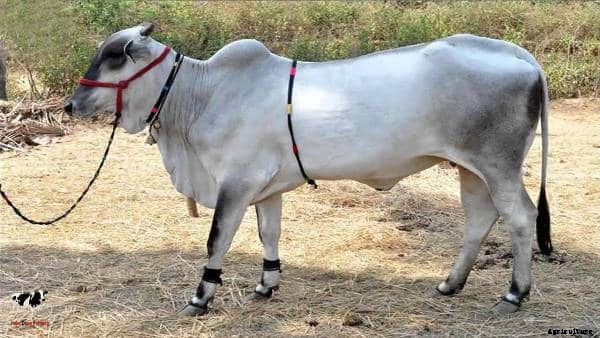
The color of the breed is gray or white, has long horns either black or pink in color.
The bullocks of this breed are powerful and active.
KANGAYAM:
This breed originated from few districts in Tamilnadu (Kanga yam, Dharapuram, Perundurai, Erode, Bhavani and Coimbatore).
They have a medium size compact body with black rings around dark prominent eyes. They have almost straight horns. The color of the cow is gray or white. The bulls are gray with black hump.
BARGUR:
They derive their name from the bargur hill in Tamilnadu and are also mostly found in that region.
They are reared to work in the hilly uneven region because they are fast and can withstand trotting.
These cattle are medium in size and well built. The color of the animal is brown with white markings.
UMBLACHERY:
They are found in some districts of Tamilnadu (Thanjavur, Thiruvarur and Nagappattinam).
These are also known by other names such as Jathi madu, Mottai madu, Molai madu, Therkathi madu.
This breed has white marks below the hocks. The calves are red or brown in color with white marks on face, limbs and tail.
They are used for ploughing wet land because they are expected to have great strength and look sturdy. The horns of this cattle breed are removed as a peculiar practice.
PULIKULAM:
This breed is found in a cumbum valley in Tamilnadu. Sometimes it is also called as Jallikattu made, kidai made and sanitary.
They are small in size and grew in color with a hump. They have red or brown spots in the muzzle, eyes, switch and back.
They are used for ploughing and mostly for penning in the field. They are active breeds, but cannot trot faster.
ALAMBADI:
It is found in the Alambadi region in Tamilnadu.
These cattle are gray in color with backward curved horns like the Mysore cattle breed. It is similar to Hallikar breed and is known as Betas.
Generally used for ploughing purposes.
Indigenous breeds of cattle for dual purpose:
THARPARKAR:
It is found in the Tharparkar district of Pakistan and some parts of Rajasthan.
They are also known as white Sindhi, gray Sindhi and Thari. As the names indicate they are either white or gray in color.
These are medium sized, compact animals with lyre shaped horns.
The cows of this breed yield 1800 to 2600 kgs of milk per lactation and the bullocks are used for ploughing and casting.
HARIANA:
This breed’s origin is from several districts of Haryana (Rohtak, Hisar, Jind, and Gurgaon), Punjab, Uttar Pradesh and some parts of Madhya Pradesh.
They have small horns.
Cows yield 600 to 800 kgs of milk per lactation and bullocks are used for powerful work.
KANKREJ:
Its origin is from southern Rann of Kutch in Gujarat and Rajasthan (Barmer and Jodhpur).
This breed is also known as Wadad or Waged and Wadhiar.
The color of this animal breed is silver gray, iron gray or steel black with Iyre shaped horns. They have a different gait called the 1 ¼ pace or the Sawai Chal.
The cows yield 1400 kgs of milk per lactation and the bullocks are used as draught animals for ploughing and carting.
ONGOLE:
Ongole Cattle.
It originated from the Ongole district of Andhra Pradesh. It is also known as Nellore.
The breed has large muscles and a big hump. The color is light gray.
Used for both draught and dairy purposes. The milk yield of the cows is around 1000 kgs per lactation.
KRISHNA VALLEY
Found in the black cotton soil region of Krishna valley and some parts of Maharashtra.
The breed looks large with loosely built short bodies. They have a long tail. The color is gray or white with dark shades in the fore and hind quarters in male breed. The female breed is white.
Cows produce 900 kgs of milk per lactation and the bullocks are used for quality woks and ploughing.
DEONI:
It is native to Maharashtra, Karnataka and western Andhra Pradesh.
This breed is also named as Dongerpati, Dongari, Wannera, Waghyd, Balankya and Shevera.
The skin color of the breed is spotted black and white.
The age at which the cattle breed first reproduces is between 894 to 1540 days. The minimum calving interval is 447 days.
This breed yields 636-1230 kg of milk per lactation.
Exotic breeds of cattle for dairy:
JERSEY:
This breed of cow originated in an island called jersey in the United Kingdom.
This breed is mainly crossed with other indigenous breeds of cattle.
It is the smallest dairy cattle breed with a typical reddish fawn color.
The body is angular and compact with dished forehead.
The milk yielding capacity is 4500 kg’s per lactation with 4.5% fat.
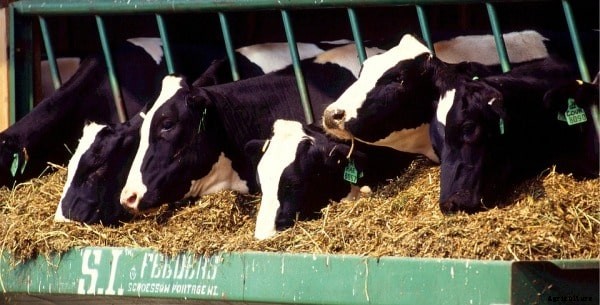
HOLSTEIN FRIESIAN:
This breed originated from the province of Friesland, northern Netherlands.
They are considered as the largest dairy breed with rugged structure and well built large udder.
These breeds are distinguished by the white and black patches on the skin.
The cow yields 6000 to 7000 kgs of milk per lactation.
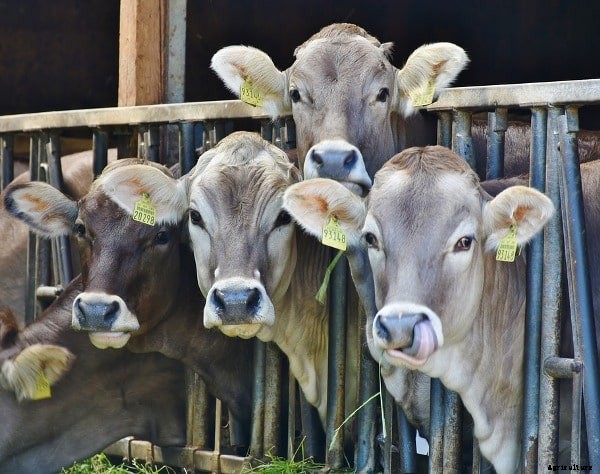
BROWN SWISS:
This breed originated from the mountainous region of Switzerland.
They are rugged in nature. Karan Swiss is a breed obtained by the cross of brown Swiss with sahiwal cattle at National Dairy Research Institute, Karnal.
They produce 5000 kgs of milk per lactation on an average.
RED DANE:
This breed is native of Denmark and considered as a heavy breed.
The color of the breed is red, reddish brown or dark brown.
This cattle yield 3000 to 4000 kgs of milk per lactation.
AYRSHIRE:
This breed is considered as the most beautiful and is a native of the Ayrshire region of Scotland. They are also known as Dunlop or Cunningham cattle.
They are active animals, but difficult to manage.
Produce less milk and butter fat (4%) when compared to other breeds.
GUEMSEY:
This breed originated in a small island of Guemsey in France.
The color of the breed is cherry red or brown. Also found in mahagony and white colours.
This breed of cow is advantageous for farming because it has a high milk yielding efficiency, low calving difficulties and longevity.
The cow produces 6000 kgs of milk per lactation and the color of milk is golden due to the presence of high beta carotene content.
Cross-breed cattle:
JERSEY CROSS:
Produced from the cross breed of indigenous breed of cow and the Jersey breed.
The cross breeds with jersey makes a suitable dairy animal for the tropical regions.
They have high heat tolerance and are medium sized. Also adapt well to the climate.
The first generation of the cross breed produces 2 to 3 times more milk than the indigenous cows.
HOLSTEIN FRIESIAN CROSS:
Produced from the cross breed of indigenous cows with the Holstein Friesian.
They are suitable to be reared in the hilly areas as they are less tolerant to heat.
They are also less resistant to diseases when compared to the jersey cross.
They yield more milk with less fat percentage.
BUFFALO BREEDS
Indigenous buffalo breeds:
MURRAH:
This breed is native to Haryana, Punjab and south of Delhi.
It is also known as Delhi, Kundi and Kali.
This breed of buffalo has jet black colour skin with white marks on tail and face. It has horns which are tightly curved.
Average milk yielding capacity is 1500 to 2500 kgs per lactation and the butter fat content is 7.83%.
They are used for milk and butter fat production and sometimes for grading up of local buffaloes.
SURTI:
This breed is found in Kaira and Baroda districts of Gujarat. It is also known as Deccani, Gujarati, Talabda, Charator and Nadiadi.
This breed of buffalo has rusty brown or silver gray color skin with sickle shaped horns which are long and fat. It has two white collars, one near the jaw and the other near the brisket region.
It yields 1000 to 1300 kgs of milk per lactation and the milk has a high fat percentage of up to 8-12%.
JAFFRABADI:
This breed is found in the Gir forest region and Jamnagar districts of Gujarat. The nomadic tribe, Maldharis maintains and rear this cattle breed.
This breed is considered the heaviest Indian bread with heavy drooping horns. The udder has funnel shaped teats.
The milk yielding capacity of this breed is 1000 to 1200 kgs per lactation.
Since the breed is heavy it is used for carting and ploughing.
BHADAWARI:
It is found in Agra, Etowah district of Uttar Pradesh and Gwalior district of Madhya Pradesh.
The skin color is copper or light with copper or light brown eye lids. Two white lines ‘chevron’ is seen on the lower side of the neck of this buffalo breed.
This buffalo yields 800 to 1000 kgs of milk per lactation. The fat content in the milk is 6 – 12.5 %. It is a highly efficient breed that converts feed into butter fat.
The bullocks of this breed are used mainly as draught animals as they are tolerant to heat.
NILI RAVI:
It is found near the river Ravi, some parts of the Sutlej valley in Punjab and Sahiwal (Pakistan).
The breed has wall eyes; small, elongated head bulged at the top and pressed between the eyes. Horns are small and coiled.
The milk yielding capacity of the cattle breed is 1500 to 1850 kgs per lactation.
Generally used for heavy trotting work.
MEHSANA:
It is a dairy breed found in Mehsana, sabarkanda and banaskanta districts of Gujarat and also in Maharashtra.
It is a cross breed of Surti and Murrah. It has a long body like Murrah but small limbs. The horns are irregular and lightly curved.
They yield milk around 1200-1500 kgs per lactation.
These breed bullocks are also used for heavy work.
NAGPURI:
This breed is known as Elitchpuri or Barari. It is found in some parts of Maharashtra (Nagpur, Akola and Amravati).
The color of the breed is black with white patches on legs tail and face. The horns are long, flat and curved (sword shaped).
Milk yield is around 700-1200 kgs per lactation.
Generally bullocks are used for heavy work.
TODA:
This breed is considered semi wild and derives its name from the Toda tribe of the Nilgiris in south India.
The skin color is fawn or ash- gray with thick hair all over the body. The horns are wide and curved in the form of a crescent. The breed has a long body with deep chest and strong short legs. This animal is gregarious in nature.
The milk yield is 500 kgs per lactation on an average with 8% fat content.
CATTLE FARMING METHODS:
There are different farming systems through which cattle can be raised such as grass-fed, grain-finished, cow – calf farms and feedlots. Huge land space is a perquisite for cattle farming along with good water resources.
FEED MANAGEMENT FOR CATTLE FARMING:
Cattle Feed Management.
Adequate water and nutrient rich food has to be provided for the cattle to maintain high yielding capacity and make them resistant to diseases. The food for the cattle should keep the animal healthy and meet the requirements of the farm. Therefore the cattle are fed with high fiber food like roughage and with proteins and nutrients. Micronutrients are also included in the food for the cattle to promote high output. Cereal grains, greens, hay and straw are most common feed for the cattle. The Greens (alfalfa, Timothy, clover) improve the milk producing capacity of the cattle. It is estimated that a dairy cow needs 5 liters of water to produce 1 liter of milk on an average.
HOUSING FACILITIES FOR CATTLE FARMING:
Cattle Housing.
Provision of space is a critical factor to keep the cattle disease free and healthy. The space specifications are different for different breeds. Each single cow requires 80 square feet of open space and 40 square feet of indoor space which may vary for different breeds. Proper ventilation and drainage are important to house the cattle. The flow of fresh air and light keep the cattle healthy. Generally concrete houses are built for housing cattle.
HEALTH CARE FACILITIES FOR CATTLE FARMING:
Health Care Of Your Cattle.
Cattle may be prone to diseases because of parasites, bacteria and viruses. These microbes infect the cattle, both externally and internally. Clean drinking water should be supplied for the cattle a precautionary measure against diseases and the cattle should be vaccinated on a timely basis to prevent diseases and illness. Cleaning the cattle regularly and keeping the house clean can help prevention of diseases. The cattle should not be fed with unnatural diet, but should be allowed to graze in the open which reduces the risk of health problems. Decomposing manure around the cattle poses a serious health risk due to the spread of bacteria. A hormone called the Recombinant bovine somatotropin is administered to the cattle for high milk production, but research has shown no significant difference in the yield. Antibiotics are generally given in very low doses to the cattle to prevent them from sickness due to stress and overcrowded conditions.
ADVANTAGES OF CATTLE FARMING:
Advantages of Cattle Farming.
The high demand for milk and milk products is a big advantage for cattle farming. The demand keeps ever increasing with the growing population.
Marketing the product is easy as the demand is high and it is a traditional practice.
Cattle farming is Eco friendly, no risk of harming the environment.
No extra human labor is required, family members can themselves participate in cattle farming.
Good care and management will help produce maximum returns.
Since the cattle breeds for milk production are known, a proper choice of breeds can help get good output.
Investment is high, but there are sources which can help invest in cattle farming business such as bank loans.
Cattle farming is a source of income, employment and also fulfil the nutrition requirements of a family.
The by-products of cattle farming like the cow dung and urine are used an organic supplement for agricultural purposes.