
Welcome to Modern Agriculture!

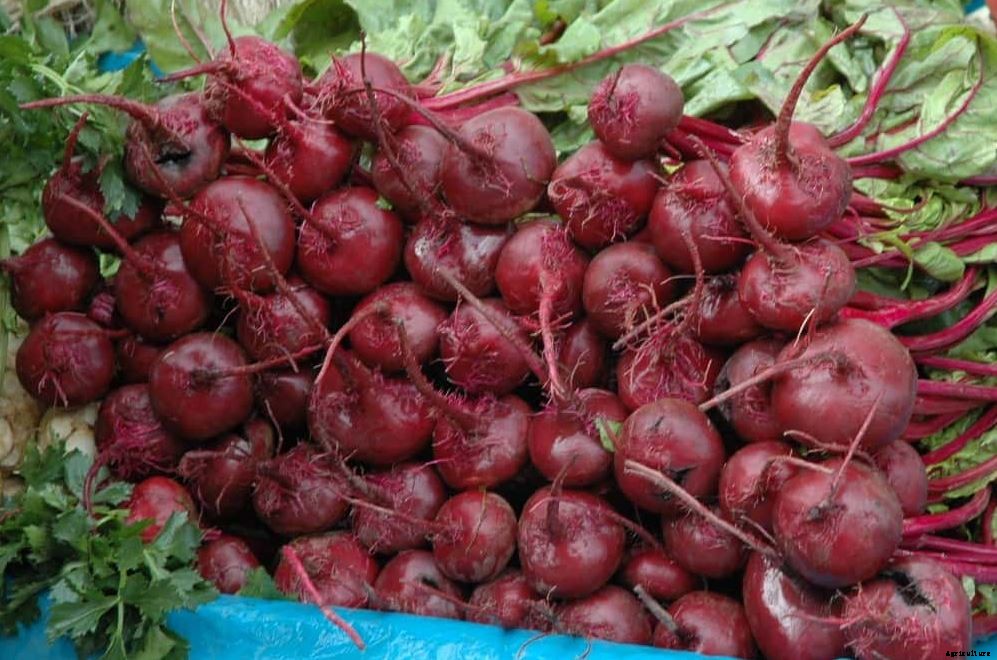
Beetroots, common salad available in any kitchen are popularly known as the garden beet. It is a common root vegetable. Beetroot is a sweet, healthy vegetable fruit that is loaded with antioxidants. These antioxidants, present in beetroot red pigment helps us in protecting heart & also in preventing cancer.
Farming beetroot is a simple method complare to other commercial crop as it does not needs to much care & management. It can be easily grown in home gardens as well as in the poly houses & in the green houses, mainly for its fleshy enlarged roots. The garden beet is different from the sugar beet, where the emphasis is laid more on the sugar content of the roots. Whereas the garden beet is used for salad and cooked vegetable purposes.
It produced widely by the grower because of its lots of health benefits & are consumed by people mainly in the kitchen as a vegetable because of its plenty of nutrient value. In fact, garden beet is a useful vegetable in many ways. The swollen roots are eaten boiled or as a salad. They are also used for preparing pickles. The tender leaves and the young beet plants are used as greens.
How Long Does Beetroot Take to Grow? It totally depends on the cultivar, used for its cultivation and also the climatic condition. However, most of the best varieties are ready for harvesting in about two to three months of planting on the field.
Botanical details of Beetroot:
Scientific Name Beta vulgaris Common names beet, beetroot, Spinach Beet, Garden Beet, mangel-wurtzel, Sea Beet, chard, White Beet, etc Family Solanaceae (the Poisonous Nightshade family) Colour Bright crimson color Best Season of Plantation Throughout the yearAll of this, let me tell you, is because of what? beets contain such a great popularity all over the world and occupy a unremovable place in the kitchen.
Check out here the beets nutritional information in detail.
It does not contain any % of cholesterol so that we can call it a Zero calorie food
Check out some of the most talked, beetroot benefits for health.
Check here Also More articles:
So, add this awesome zero calorie vegetable in your diet. Take it at least on
Beetroot (English), Chukander (Hindi,India), Chukander (Nepali), Betterave (French), چغند (Persian), Remolacha (Spanish), چقندر (Urdu), Rote Bete (German), Biotais (Scottish), Rode biet (Dutch), 근대의 뿌리 (Korean), Burak (Polish), Baytaraaf (Somali), улаан манжин (Mongolian), Kırmızı Pancar (Turkish), 甜菜根 (Chinese), Panxhar (Albanian), свекла (Russian), Beta (Swedish), цвекле (Serbian), Pak gaat deang (Thai), Cvekla (Bosnian), Sfeclă (Romanian), παντζάρι (Greek), Barbabietola (Italian), Rødbete (Norwegian), الشمندر (Arabic), rể củ cải (Vietnamese), Rødbede (Danish), 甜菜的根 (Taiwanese), Буряк (Ukrainian), ჭარხალი (Georgian), Repa obyčajná (Slovak), цвекло (Bulgarian),
Find yours local name of beets.
Beetroots are excellent nutritious food that is widely cultivated by the farmer and are also easy to grow. Many uses to grow them in their backyard garden for the vegetable purpose, but if are going to cultivate it for commercial purpose then you have to take care some key factors which the beet production.
So, give you a comfort, here is a list of some factors that give direct effect on the yield of Beetroot Farming:
So, it is a good idea to learn them in more details. Here, I had tried my best to provide you a reliable data & best Information about these factors in detail. Learn them and take advantage of this details in your commercial root farming.
In any commercial farming, the variety or cultivars used for propagation in your farm plays a vital role in deciding the production of your commercial crop. So, select only those cultivars which are high in yields & are also fast growing nature so that you can get a bigger profit in a very short time period. Also, ensure that is climate condition supports well or not to the selected of superlative cultivars?
Following cultivars are mostly used by the grower to achieve optimum production in beetroot cultivation.
It is advised that if climate support, then grows these cultivars which are able to give an optimum production.
However, here below is a table, which describing numbers of hybrid varieties (cultivars) along with its specification
Hybrid (Variety) Specification Boltardy Best cultivars to grow which is capable of producing a large, tender rounded roots having deep red color & fresh sweet flavor Burpees Golden It is golden yellow, round shape beetroot cultivars. It’s Youngs leaves (bright green) are good to eat. Just cooked them & served it with the spinach.No bleeding when cut like red beet used too. Detroit 2 Crimson Globe It is also one of most popular beet cultivar that is used for commercial farming which has globe shaped, deep maroon color. Forono It is high yielding beet cultivar with a cylindrical shape, long rooted beetroot that has a sweet flavor. Forono Like Forono, It is also high yielding beet cultivar with a cylindrical shape, long rooted beetroot that has a sweet flavor. Kestrel F1 It is a dark red beetroot with globe-shaped which roots have bright green foliage and are high in sugar content. Good to grow for commercial beet farming. Modella Tasty roots with an almost perfectly round shape. Moulin Rouge It is a superb single seeded (mono-germ) beet cultivar that is capable of removing the sugar, needs for thinning. It’s baby roots with deep internal color & smooth skin are sweeter than other beet cultivars Pablo It is a long period cultivar that is able to stay fresh without becoming woody with perfectly uniform, smooth skin & also has very good resistance to disease
With help of using this cultivar, one can earn an excellent profit from root farming. Red Ace A smooth, rounded beetroots which are high in quality like have intense red flesh. With help of using this cultivar, one can earn an excellent profit from root farming. As being able to stay fresh without becoming woody.
This cultivar is high in production & is also superb culinary cultivar (variety)
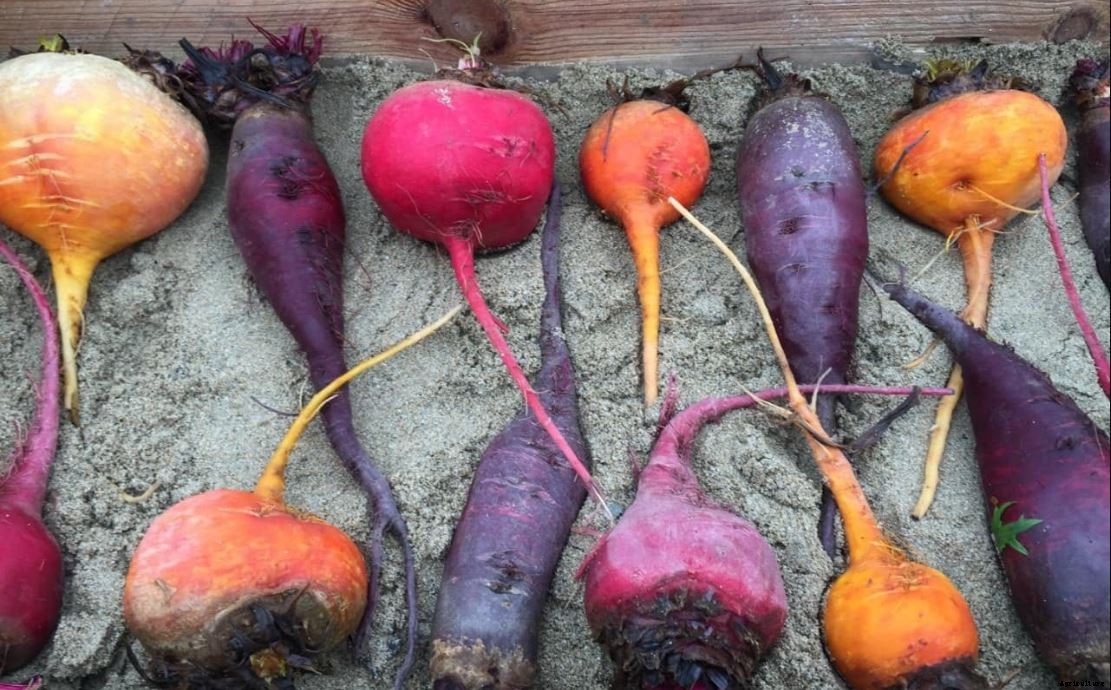
Find out with local horticulture department for upgraded or hybrid cultivar, specific to your climate condition.
If climate support, then any one with high yielding cultivar can produce an expected amount of beet production. So, for getting a higher yield, check whether is your climate condition support a well or not to your beet cultivation for selected beet cultivar. Since agro-climatic factor is also a major factor that decides the beet production.
Beet thrives their best in a cool climate condition as beets are cool weather & hardy crop. A temp. ranging from 17 ‘C to 28 ‘C is considered as the best for good development of root. They can be cultivated through out the complete year but winter is the best for its cultivation. Beets grown in relatively higher temp has a poor quality of root like are light in color & low in sugar content. So, it is better to plant them in the winter season or in Monsoon season to obtain quality roots from its cultivation which are high in sugar content, sweet in the taste along with intense internal color.
Extended cold conditions lead to slower development of beet roots. Also, an excessive hot weather leads to some disorder in roots like Zoning. Zoning in beets means theirs appears succeeding, concentric circles with dark & light red color in the roots. Beets are able to develop well in the warmer season but no in excessive hot, it will lesson you root quality which is not able to give you any profit.
Beets are grown widely by the people because beets are able to grow well over a wide range of soil like any fragile soils but soil with sandy loams, deep, & well-drainage power has the excellent result in the beetroots cultivation. Avoid planting beets in heavy soils because, in heavy soil, roots get unsymmetrical in shape since a round shape, intense dark red beets earn greater demand in the market.
A soil with pH, ranging between 6.0 to 7.5 is considered as most appropriate soil for farming beetroots. However, with the help of gypsum, you can manage your soil a well to bring to it in appropriate pH or desired pH. So, cultivate your beets in the soil which is moistened, high is productivity & neutral in nature i.e. neither too basic nor too much acidic.
Excessive clay in your soil leads to decrease in the root production because development of roots takes place at the surface of the soil. So, if present, removed the excessively clay from your soil for beet farming. Adding organic manure to top soil is effective in removing the excessive clay.
Beet Seeds are the only way for propagation in beet cultivation. So, select a quality seed with a disease resistant stability so that you can achieve an expected production of roots; quality & quantity. In the market, high quality & high yielding beet seeds are easily available.
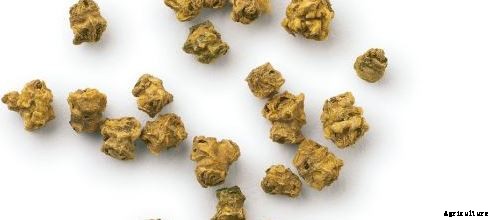
Sow these selected, high yielding seed at about 2 cm deep in the field. Try to sow seed about 7 to 9 cm apart from each other along with Rows spacing should be about 30 to 45 cm, it also helps in the good development of beetroots.
For propagation of beetroot, sowing seeds from mid of April to mid of July (usually monsoon season) is considered as the best time for getting good results in roots production. However, this time varies with the climatic condition in accordance with the region.
A regular checking of these planted seeds should be done for the quick development of roots.
Generally, sowing beets seed up to 8 kg per unit hectare land is sufficient enough to achieve an optimum roots production. This; seed rate mainly depends on cultivar, used for the cultivation of beetroots.
So, try to sow seed about 7 to 9 cm apart from each other with rows spacing should be about 30 to 45 cm, it also helps in the good development of beetroots.
Treating beet seed with suitable liquid fertilizer can lead to good results. Seed treatment also helps in increasing the germination % of cultivar and also enhances the quick growth of roots in the field.
Those selected high yielding seed should be wash properly. Keeping them under clean running water about 3 hours is sufficient enough. After that, soak these washed seeds in a solution of 0.5 % Aretan. Soak them about half an hour after washing them properly.
After soaking in a solution of 0.5 % Aretan, leave these soaked seeds to became dry for about 8 hrs at room temp (manually 28 ‘C) before sowing them on the field.
Give water to the field regularly, but do not water over the top of beets. It will disturb the growth of roots in the field. Try to give water by gentle hoeing only, as it will minimize the chance of new emergence of weed in your farm.
In summer or dry weather, constant watering is essential for the better development of roots.
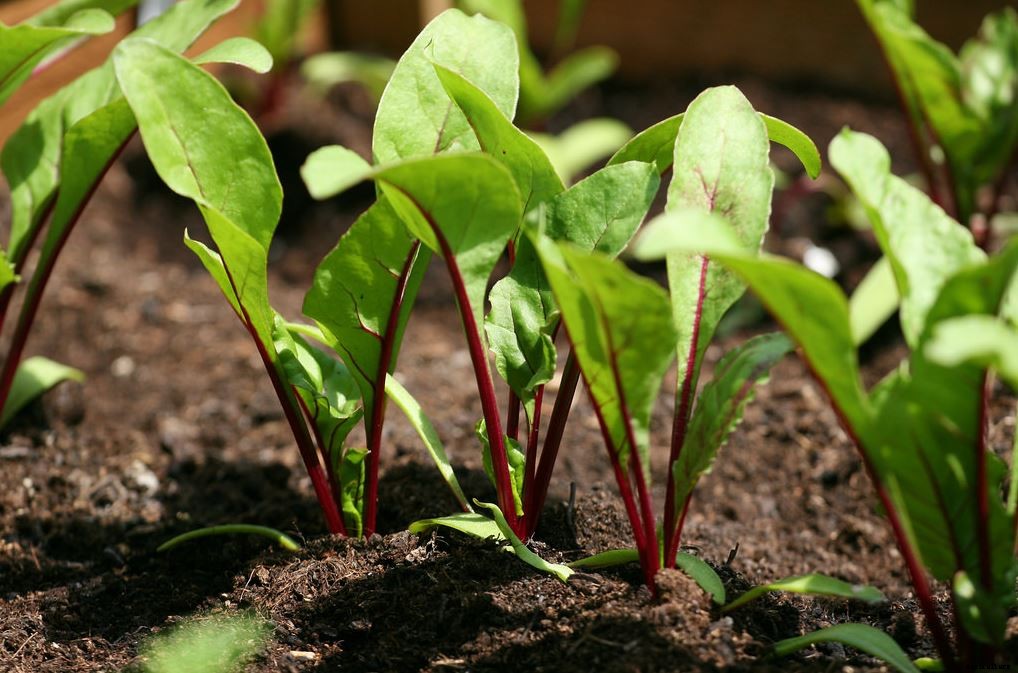
After about two weeks of sowing beet seeds, seedling starts to appear. It varies with climatic condition. When they reach their height about 5 cm high, thin them keeping a distance of 10 cm between each one. It will enhance the growth of your roots to spread widely & became a healthy.
At this stage, if present, removal of weak ones is to be carried out as they are not able to grow healthy because of Seedling diseases or infected seeds. Grow only strong one so that in about two months, you became able to harvest those matured roots. At this stage, plants are about 10 cm in height.
Proper irrigation leads to positive result in any crop and this crop requires lots of water for the speedy growth of the plants. Watering is necessary for summer season & especially in drought condition. First irrigation should be done just after sowing beet seeds in the field, to achieve quick growth of beetroots in the soil. After that watering in the field should be given on the basis of plant requirement. Do not let your soil to become dry. Moisten your soil via frequent watering in a hot season.
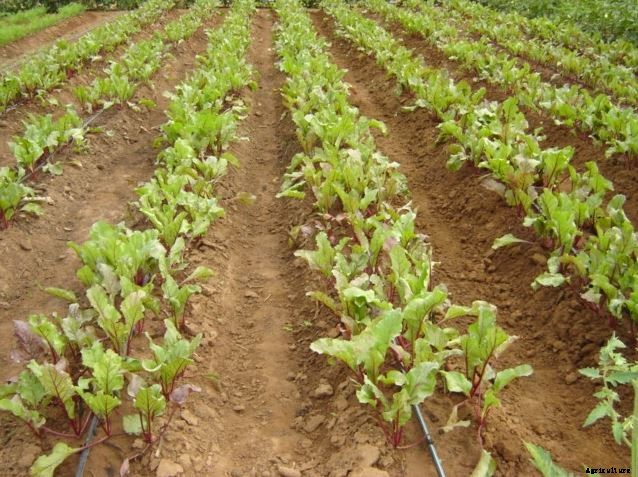
If you irrigating your crop with the help of drip irrigation system, rather than using the traditional method of watering in the crop, then it is more beneficial to you. As this system effectively make use of water as well as fertilizer too.
Mostly, all govt. are giving subsidies on drip irrigation system to the small farmer, which are incapable of holding this much cost. For more details on this system, please consult your nearest agriculture department.
It is a good idea to make use of drip irrigation system instead of using tradition method of watering. The traditional method of watering is a time-consuming process & is not able to utilize water effectively, But drip irrigation system effectively makes use of water as well as fertilizer too. So, it is more beneficial to you both; economically & in saving your precious time too.
Beetroot requires plenty of water but you must have to take care of some point while giving the water to it. Here below are some advice. So, take advantages of this information.
To produce 1 tonnes of quality roots, you have to spend, Potash (about 4.5 kg), Potassium (about 4.5 kg) & Nitrogen (about 2 kg). So, prepare your soil full of organic matter before starting beet farming. So, at the time of preparing farm, a basal dose of 70 kg Nitrogen & 120 kg Potash should be applied per unit hectare along with well mixed ordinary manure (more than 10 tonnes) to fill, up the need of organic matter for beets farming.
Take care that beets are too sensitive to Boron. Boron deficiency in beet crop may result as the internal splitting of the roots. So, apply boric acid or borax to the soil to recount the boron deficiency of your soil, if present.
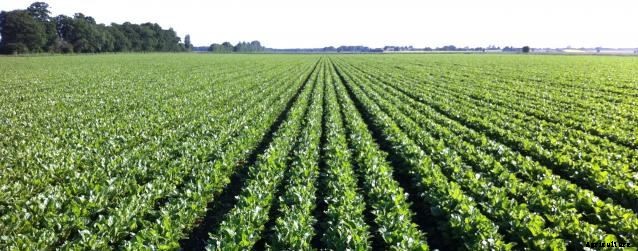
To achieve optimum & expected results in your beet farming, pest & disease are controlled a well which causes to lower growth or destroying it. So, to give you comfort, below is some information for you learn about pest & disease in farming beet with their controlling measures.
In beetroot cultivation, some common pests like Leaf-eating insects, Red spider, Aphids, and flea beetle are found in root cultivation.
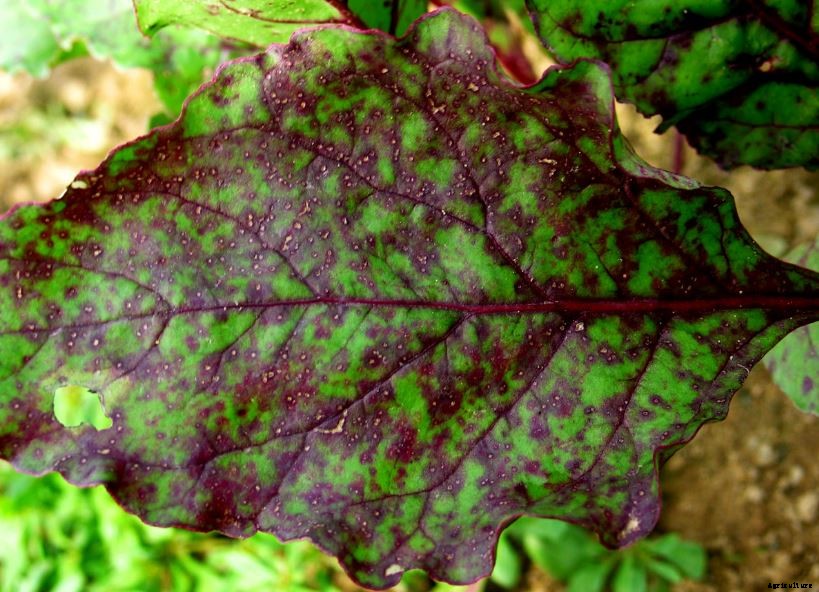
In root farming, Cercospora leaf spot, Brown Rust, damping-off, Downy mildew, Heart rot, Scab, Root rot, & Rhizoctonia are some common disease that found in it.
Note: Your local horticulture is the best for suitable & reliable information on Pest, diseases & its controlling measure. Please contact if any other query.
It is a common disease found in commercial beetroot farming. Here below is an image, showing its symptoms:
Beetroots are ready for harvesting after about two months of sowing beet seeds in the field. Usually, harvest beetroot, when plant reaches to about 10 cm in height. Harvest only quality roots having a diameter about 8 cm with dark intense red color.
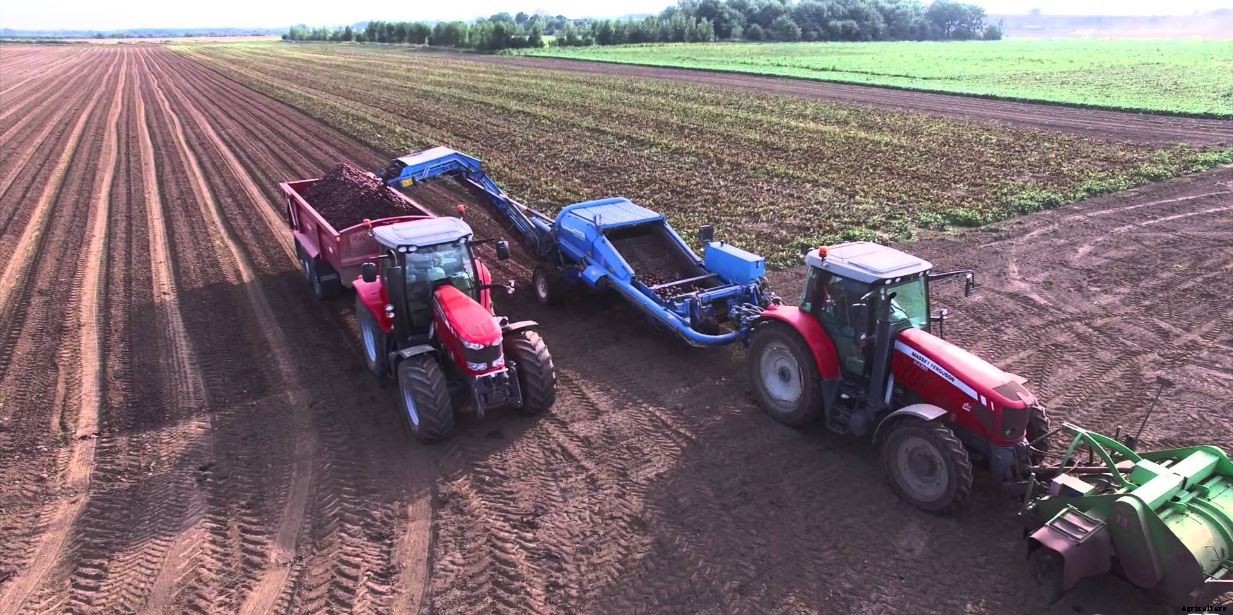
Harvest manually, however mechanical means of harvest are also available in the market. Their maturity period varies on the basis of the cultivar.
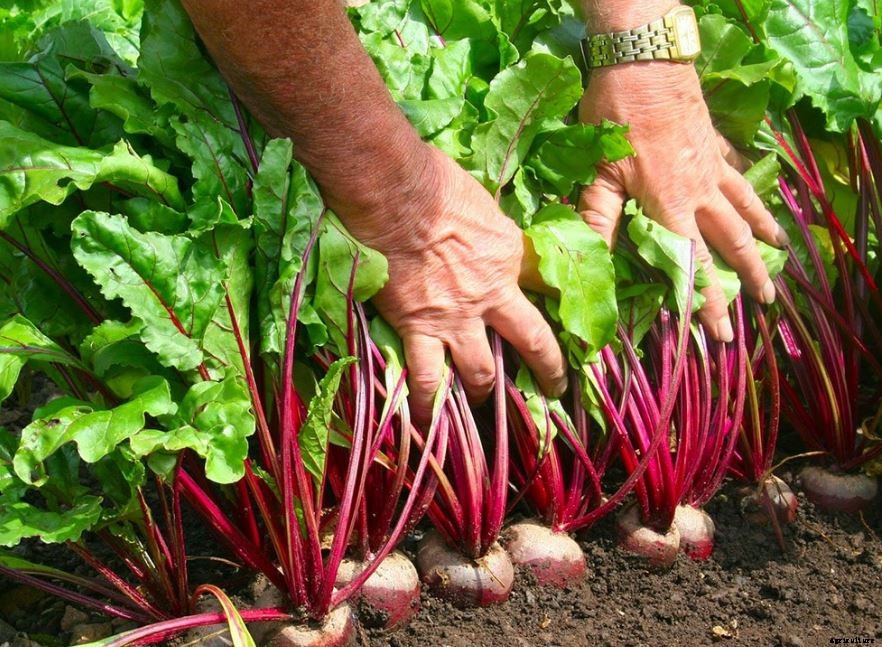
After about two months of planting beets, healthy roots are ready for harvesting. At this stage, bulbous root with 3 cm in diameter, for salad purpose. This first harvesting of roots, helps in providing a good space enough for well gowth of remaining one to becomes healthy & larger, acquiring a intense internal red color.
However, Harvest those quality roots, one with about 9 cm in diameter can cause to higher production of roots in your farming.
Pulled those quality roots from field manually like by hand or with help of sickle. Removed tops of your collected roots. Clean them with fresh water & short out them on the basis of size as A grade, B grade & C grade.
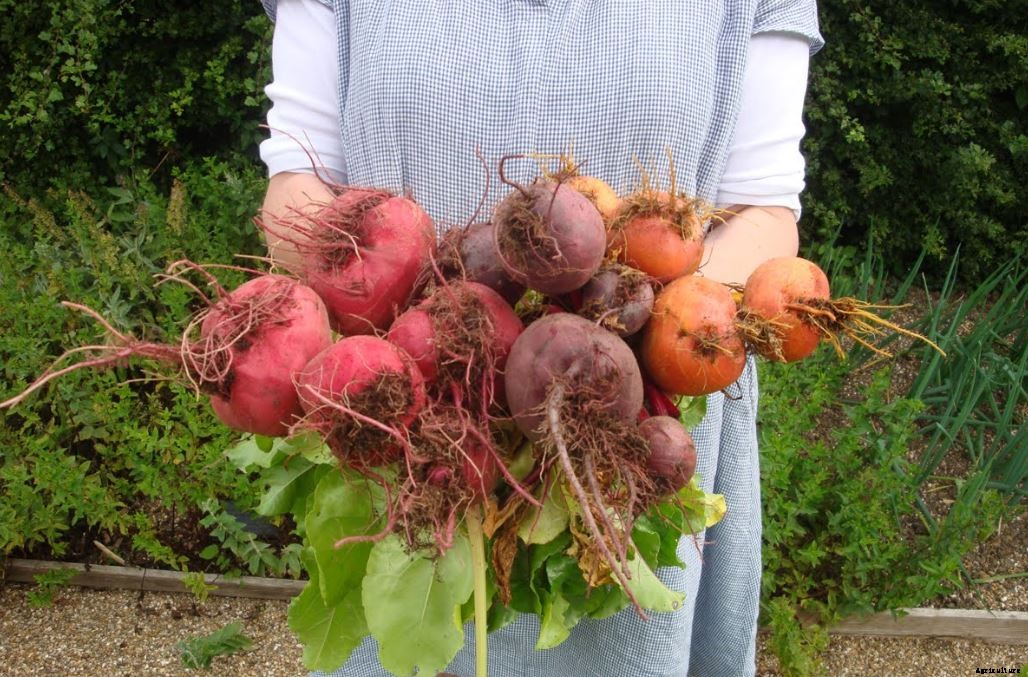
Presently, mature roots of beet are harvested means of mechanical way in the advance countries, are de-top, cleaned & finally packed in suitable box or polythene bags.
Post harvesting in beet farming includes the following factors:
In commercial root farming, one can easily achive a root production of 30 to 35 tonnes per unit hectare land in a very short time period, just about two to three months. However, good farm management skill, proper care, suitable cultivars lead to root production more than it.
Farming beetroot is a simple, than other commercial crops as it require less care & management of it. One can groow root in Home gardens as well as in green houses and in the poly houses to obtains its fleshy, enlarged roots. As are low-calorie food that makes you feel full healthy & happy and are also used as vegetables for weight loss. Beetroots are also listed as one of zero calorie vegetables. So, because of this, beetroots has an excellent demand in local markets
So, by farming roots commercialy, one can obtain wonderful profits with proper farm management and marketing skills in very short time period, usually about two to three month by selecting a suitable (high in yielding) cultivars
Hoping a great success in Beetroot farming!!!


