
Welcome to Modern Agriculture!

The following article details Aloe Vera Farming Techniques, Tips. This also covers the cultivation practices of the Aloe Vera crop.
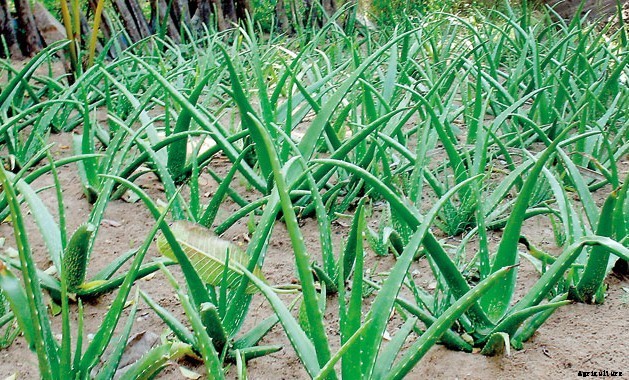
Introduction of Aloe Vera: – Aloe Vera is a very hardy perennial tropical plant that can be cultivated in drought areas as well. This plant became very popular in the world due to its medicinal value. This plant also called a “miracle plant”
(or) “nature’s tonic”. This plant is native to Africa & Mediterranean regions. Aloe Vera belongs to the family of “Liliaceae”. Africa, China, the U.S.A., Australia, Mexico, tropical regions of Latin American countries, and the coastal area of south India are the major producers of Aloe Vera in the world. This plant is being used extensively in the cosmetic industry and consumer product segment.
Health Benefits of Aloe Vera: – Below are some of the health benefits and medicinal values of Aloe Vera.
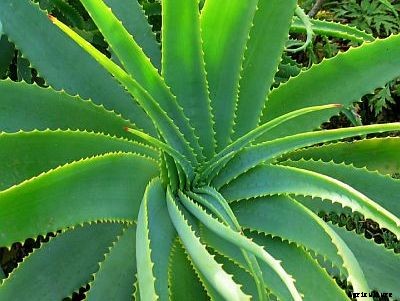
Major Producers of Aloe Vera in India:- Rajasthan, Andhra Pradesh, Gujarat, Tamil Nadu, Maharashtra, and Kerala are major producers of this crop.
Aloe Vera Local Names in India:- Musambar, Ghikanwar (Hindi), Korphad (Marathi), Kalabandha (Telugu), Chirukattalai (Tamil), Lolisara (Kannada), Kattawazha (Malayalam), Kumari (Sanskrit), Ghrithakumari (Bengali), Kunwar (Gujarathi), Kumari, Mushabora (Oriya).
Improved Commercial Varieties of Aloe Vera in India:- Aloe barbedensis, perfoliata,A. chinensis,A. littoralis,A indica,A. abyssinica,A. vulgaris, AL-1, IC111269, IC111271 and IC111280.
Climate Required for Aloe Vera: Basically, Aloe Vera is a warm tropical crop. Aloe Vera can grow in various climatic conditions. This can be successfully grown in low rainfall regions and dry areas with warm humid conditions. This plant is very sensitive to extreme cold conditions. This plant thrives best on dry sandy soils in the regions where lower rainfall is expected. This plant cannot tolerate frost and cool climatic conditions.
For Unit Cost and Profits (economics) of Aloe Vera farming: Read Here.
Soil Requirement for Aloe Vera:- Aloe Vera can be cultivated on a wide variety of soils from sandy soils to loamy soils. However, it thrives best in light soils. As this plant is sensitive to water stagnation, make sure to select well-drained soils for its cultivation. This plant can tolerate soils with a high pH range up to 8.5. Aloe Vera growth would be faster in black cotton soils with good drainage. This plant also thrives best with higher foliage. This plant also tolerates soils with salty in nature.
Propagation and Planting Method of Aloe Vera:
In Aloe Vera farming, propagation is done through root suckers/rhizome cuttings. In Aloe Vera farming, propagation is done through root suckers/rhizome cuttings. In case of root sucker propagation, select medium size root suckers and should carefully dig without damaging the mother plant at the base. This can be directly planted in the mainland. In the case of rhizome cutting propagation, after harvesting the crop, dig out the underground rhizome and make about 6 cm length cuttings with two to three nodes on them. Place these on prepared sand beds. Once sprouts are popping up, transplant these into the main field. Usually, about 15000 suckers are required for 1 acre of the nursery.
Read: Frequently Asked Questions About Aloe Vera Farming.
Land Preparation: Land should be plowed and cross-plowed thoroughly to bring the soil to the fine tilth stage. To increase the soil fertility, add about 15 to 20 tonnes of well-rotted farmyard manure during the last plow. Form ridges and furrows @ 40 cm apart. The suckers should be planted @ a 40 cm distance.
Planting Density and Spacing of Aloe Vera: To accommodate about 50,000 to 55000 plants per hectare, the spacing between plants should be 40 x 45 cm (or) 60 x 30 cm maintained.
Irrigation Requirement for Aloe Vera Plants: Aloe Vera crops can be grown both under rainfed and irrigated conditions. Irrigation should be carried out immediately after planting the suckers. A couple of irrigations in hot summer weather will result in good yield. In the rainy season, avoid water logging in the field as this crop is sensitive to water stagnation.
Weed Control/Intercultural Operations: As part of intercultural operations in Aloe Vera farming, earthing up should be carried. Weeding should be done @ regular intervals.
Manures and Fertilizers for Aloe Vera Plants: As part of the land preparation, apply 15 to 20 tonnes/ha of well-rotted farmyard manure (FYM). Thereafter the same dose of farmyard manure should be applied every year. As a basal dose, fertilizers like NPK in the ratio of 50:50:50 kg per hectare should be applied.
Pests and Diseases of Aloe Vera: Aloe rust, basal stem rot, and bacterial soft rot are the common pests and diseases found in Aloe Vera farming. For control measures, contact your nearest agriculture department.
Harvesting of Aloe Vera: Aloe Vera crop will become ready for harvesting from the second year after planting. Fresh leaves of 3 or 4 can be picked. Picking up leaves should be done during morning or evening times. Three harvests can be carried in one year time. This crop is a labor-intensive crop. After harvesting leaves, again they re-generate up to 5 years after planting. Not only leaves but side suckers can also be harvested for use in planting material.
Post Harvesting Tasks of Aloe Vera:- After harvesting the fresh leaves, care should be taken for drying the leaves. Usually, a harvest crop is allowed to lose the moisture in the field itself before transporting. To prevent any mold growth, leaves should be kept dry and cool. The use of concrete floors is useful in stacking or storing them.
Economic Life of Aloe Vera: – Commercial yield of Aloe Vera can be obtained from the second to the fifth year. Thereafter, the field should be re-planted.
The yield of Aloe Vera:- An average yield of 40 to 45 tonnes of thick leaves can be obtained per 1-hectare land cultivation.
Marketing of Aloe Vera:- Marketing should be done through pharma and herbal companies. These plants have excellent demand in international markets as well due to their medicinal value and aroma.
Bottom Line: Excellent plant for cultivation in the dry and regions with less annual rainfall and once planted, it gives the yield for 5 years. Due to its international demand, this crop can turn into gold with good crop management practices.
Are you also looking for Sheep & Goat Farming Guide: Read Here.
In case if you are interested in this: How To Grow Organic Lettuce.


