
Welcome to Modern Agriculture!

Today, we are going to learn Tulsi Farming Practices in India.
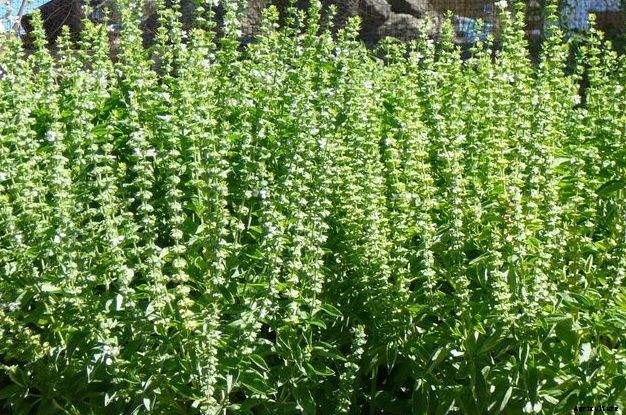
Basil or Sacred Tulsi is an excellent shrub and known as “queen of herbs” belongs to the family of “Lamiaceae”. This plant has been cultivated for centuries in India for multiple uses. Tulsi plant is a very sacred plant and worshiped by many Indians. Most of the Indians grow these plants in their houses and worship this plant. These plant leaves are also used in the production of oil. The oil of the Tulsi plant has about 72% eugenol and is comparable to clove oil. Eugenol is mainly used in cosmetics, perfumes, pharmaceuticals. These plant leaves are also used to make “Tulsi tea”. This plant also has many medicinal properties which made this plant popular. The parts of Tulsi generally used are its leaves, seeds & dried roots. This plant is being used in Ayurvedic medicines. Commercial/Organic cultivation of basil crop is picking up in India on a very large scale.
Some of the health benefits of Tulsi plants are as follows.
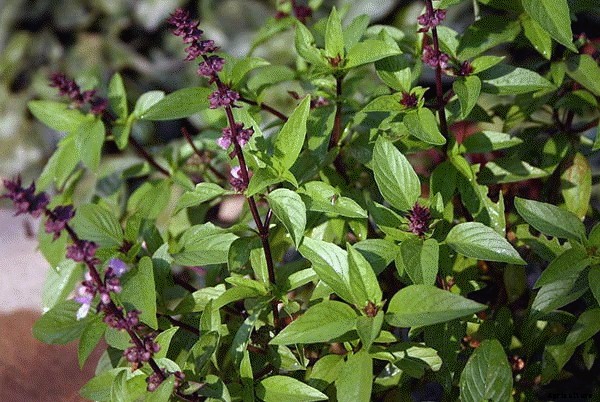
Currently, Purple type also called “Krishna Tulsi” & Green type also called “Sri Tulsi” are under commercial cultivation.
Basil (English),
Tulsi (Hindi),
Tulasi/Thulasi (Telugu),
Thulasi/Tirunirrippachai (Tamil),
Tulasi/Amli/Huli (Kannada),
Tulasi/Sivatulasi (Malayalam),
Tulsina/Sabje (Gujarati),
Tulsichi/Sabja/Tulasa (Marathi),
Imli/Tulasigidda/Tulasi (Punjabi),
Tulasi/Durlabha (Oriya),
Babui Tulsi (Bengali),
Tuulesi (Konkani),
Imli (Urdu).
Tulsi plants can be grown in a wide variety of climates including tropical and subtropical conditions. Long days with high temperatures are best for its growth and good oil content. However, It also thrives under partially shaded conditions but with low oil content. It requires moderate annual rainfall with humid conditions for better yield.
Read: How To Extract Tulsi Oil.
The Tulsi plant is a hardy plant and can be grown on a wide range of soils. However rich sandy loam soils with good internal drainage are ideal for its cultivation. Avoid highly alkaline, saline, and waterlogged soils. Well-drained soils with good organic matter will result in good vegetative growth of the plant. Soil pH of 5.5 – 7.0 is ideal for a better yield of Tulsi.
The land or main field should be ploughed 2 or 3 times with a local/country plough or tractor to bring to the soil to a fine tilth. Add 15 tonnes of Farm Yard Manure in the soil for better yield. Make good internal drainage in the soil to avoid any waterlogging.
The Tulsi plant crop can be propagated through seeds or cuttings.
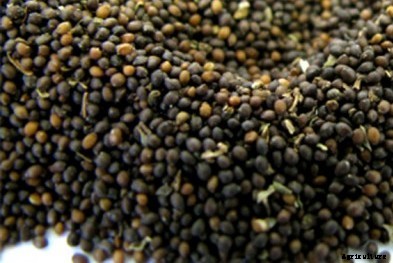
Nursery raising of seedlings:-Prepare the nursery bed size of 4.5 m x 1.0 m x 0.2 m and apply Farm Yard Manure of 2 kg/square meter. Make sure the nursery bed/soil is covered with partial shade. Soil should be prepared to a fine tilth and worked up to 25 cm to 30 cm depth. As the basil seeds are very small in size, mix the seeds with sand in the ratio of 1:4. Then seeds should be sown in beds 8 weeks in advance of the monsoon. Generally, these seeds germinate in 1 week to 2 weeks and seedlings become ready for transplanting in the main field in about 6 to 7 weeks time @ 3 to 5 leaf stage.
In this propagation method, terminal cuttings with 8 – 10 nodes &10 -15 cm length should be used. These cuttings should be planted in well-prepared nursery beds or polythene bags. Roots of the cuttings will be matured enough In about 4-6 weeks and ready for transplanting in the field. Row-to-Row space should be about 40 cm and space within the row should be about 40 cm.
An average seed rate is about 120 grams/acre (or) 300 grams /ha.
Apply Farm Yard Manure of 15 tonnes per hectare or 6 tonnes per acre as part of the land preparation. Fertilizers N @ 48 kg, P2O5 @ 24 kg and K2O @ 24 kg/acre (or) Fertilizers N @ 120 kg, P2O5 @ 60 kg and K2O @ 60 kg/ hectare should applied. Along with FYM, entire phosphorus and potassium and half nitrogen should be applied as basal dose and remaining nitrogen should be applied in split doses i.e. after first cutting and second cutting.
Read this: Project Report On Tulsi Cultivation In India.
Irrigation should be given immodestly followed by transplanting. Carry the irrigation 2 times a week for 4 weeks. Thereafter, based on the rainfall and soil moisture, irrigation should be provided @ weekly interval. Irrigation is not required in the rainy season. Make sure the water drains well in the rainy season.
In Tulsi farming, 2 weedings are fair enough to control the weeds as these plants become bushy. One hoeing after two months of planting is fair enough. The first weeding should be carried out @ 1 month after planting. The second weeding should be carried out @ 2 months after planting. After each harvest, carry out the weeding task to avoid any weed growth.
The major pest found in Tulsi cultivation is “Leaf rollers” and common diseases found are Powdery mildew, root-rot, and seedling blight.
To prevent these pests and diseases, the following control measures should be taken care of in Tulsi farming.
Tulsi crop will be ready for the first harvest after 3 months of planting. This crop should be harvested @ the full bloom stage. Cut the plants at least 15 cm above the ground level to ensure good regeneration for future harvests. After the first harvest, the next one can be carried out after 70 to 75 days interval. Cutting these plants on sunny days is preferred to obtain good yield and oil content.
Yield in any crop cultivation depends on the crop management practices and soil and cultivar. In the Tulsi crop, an average yield of 9000 to 14000 kg leaves per hectare can be achieved. This herb also contains oil (about 0.2%). The expected essential oil average yield could be about 10 to 25 liters per hectare.
In case if you are interested in this: Hydroponic Nutrient Chart.


