Tilapia Fish Farming Information Guide For Beginners
Tilapia Fish Farming:
Introduction to Tilapia Fish Farming:
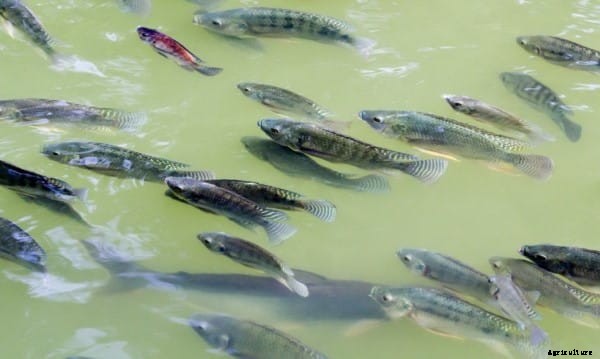
Fish is one of the species that is being farmed for centuries. Due to natural resources, fish became the best and cheapest animal protein consumed worldwide. Tilapia are mainly freshwater fish inhabiting shallow streams, ponds, rivers, and lakes, However, due to over-exploitation and pollution, the availability of fish in natural waters has declined considerably and this made to think of alternate methods of growing fish. Due to increasing fish meat consumption and growing demand day by day, artificial or controlled environments gaining popularity for fish production. Fish farmers can choose ponds, tanks or any new water body to take up the fish culture. This can improve the financial position of a farmer and create local employment for skilled as well as non-skilled people. Commercial Tilapia fish farming is becoming popular day by day as demand growth for this fish in Asia. Basically, Tilapia is the second most farmed fish in the world. In countries like China, Egypt, Philippines, Brazil, Thailand, and Bangladesh Tilapia fish contributed substantially to the Food Security. The world aquaculture production of Tilapia fish is 4.2 million tonnes with an estimated value of around 3 to $ 3.5 billion. India has very limited commercial farming of Tilapia fish. “Oreochromis niloticus” is the scientific name of Tilapia fish.
When it comes to the potential of Tilapia fish farming, generally, low-lying areas with water stagnation are suitable for agricultural activities. These type areas can be converted into ponds for raising the fish. Mono sex Tilapia is beneficial as they grow at a faster pace and with uniform size. The genetically Improved Farmed Tilapia (GIFT) enhanced market potential as it is scientifically proved to be superior to freshwater carps and would be an ideal fish culture in Asian countries. Tilapia fish is among the easiest and most profitable fish to farm due to their omnivorous diet, mode of reproduction. Tilapia fish farming in tanks or channels is considered safe for the environment since their waste and disease is contained and not spread to the wild.
Top Tilapia Fish Production Countries:
The following are top producing countries of Tilapia fish.
China.
Egypt.
Indonesia.
Philippines.
Thailand.
Vietnam.
Taiwan.
Colombia.
Ecuador.
Myanmar.
Malaysia.
Uganda.
Bangladesh.
Costa Rica.
Nigeria.
Zambia.
Common Names of Tilapia Fish:
Nile Tilapia, Blue Tilapia, and Mozambique Tilapia.
Tilapia Fish Health Benefits:
The following are the Tilapia fish health benefits.
Tilapia fish is a good source of protein.
Tilapia fish is good for bone health.
Tilapia fish may prevent prostate cancer.
Tilapia fish is good for the immune system and thyroid function.
Tilapia fish is good for brain health.
Tilapia fish is good for weight loss:
Tilapia fish prevents premature aging
Tilapia is a rich source of omega-3 fatty acids, hence good for the heart.
Caution: People who are prone to or having allergies or on any other medication or pregnant, consult your doctor before consuming fish.
Tilapia Fish Farming – Advantages of Tilapia Culture:
The following are the benefits and advantages of Tilapia fish farming.
The best part of Tilapia fish is fast growth.
Tilapia fish has excellent demand in both local and international markets.
Tilapia fish prefers all kinds of supplementary feeds.
Tilapia fish can be profitably cultured in seasonal ponds.
Tilapia fish can be cultured at high stocking densities in ponds or local waters.
Tilapia fish has high disease resistance ability.
Tilapia fish can be raised in saline water as well where salinity is between 12 – 16 ppt.
Tilapia fish farmers can achieve good profits with a proper fish farming business plan.
Tilapia Fish Farming – Selection of Pond:
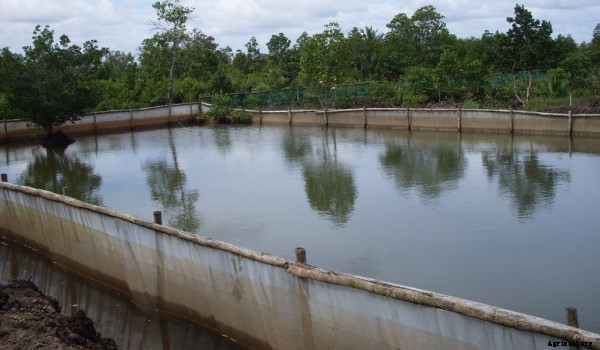
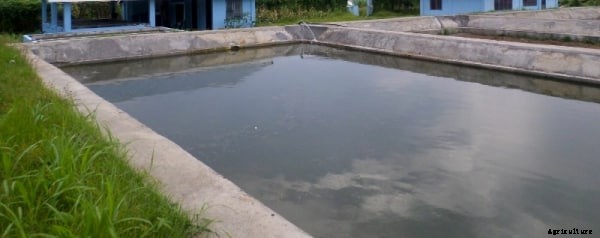
Selection of pond plays a major role in successful Tilapia fish farming. Select the pond or tank with a minimum water depth of 1.5 to 2 meter. Make sure that the water level never falls down below 1 meter. The main criterion to be kept in mind is that the selected pond soil should be water retentive and sufficient water supply is assured. Avoid flood-prone areas, industrial areas, and chemically impacted soils. If you are selecting old ponds, they can be renovated for fish culture by dewatering, repairing of the embankments and provision of inlet and outlet. In either case of ponds (new or old), the following should be done for the development of the pond.
Excavation/Digging of new ponds should be carried out.
In case of existing shallow ponds, deepen the shallow ponds.
Desilting of existing ponds should be carried out.
Impoundment of marginal areas of water bodies should be carried out.
Construction of Inlets / Outlets should be carried out.
Construction/repairs of embankments should be carried out.
Construct/ repair any civil structures, watchmen rooms, water supply arrangements/electricity supply.
Tilapia Fish Farming Bio-Security:
Biosecurity measures should be in place to ensure no escape of the Tilapia fish or biological material from the farm/pond to the other water source. The following important biosecurity measures should be taken care of safe Tilapia fish culture.
Outlet water from fish ponds must be screened and treated before released into drains/canals/rivers during culture practice or subsequent to harvesting in order to prevent the escape of fish eggs into natural water bodies.
Provide bird scaring device/fencing securing the pond.
Make sure that the bund height is high enough to avoid fish escape from the pond.
Arrange sluice gates with appropriate mesh size to prevent the escape of fish, eggs, and fry.
In case of flooding, make sure to secure the pond so that the fish or fry will not escape from the pond to another water source.
Read: How To Start A Sheep Farming In Bangladesh.
Tilapia Fish Pond Management:
Pond management plays a critical role before and after stocking the fish. Various measures should be carried out as part of pond management. The following are the fish pond management activities.
Tilapia Fish Farming – Pre-stocking:-
In the case of new ponds, pre-stocking starts with liming and filling the water.
In the case of existing ponds, any unwanted weeds and fish should be cleared by manual, mechanical or chemical means.
Unwanted and predatory fishes and other animals should be removed by repeated netting or by sun drying the pond bed for a couple of days.
Tilapia Fish Farming – Liming:
The fish ponds which are acidic in nature are less productive than alkaline ponds. However, lime is used to bring the pH to the desired level for better production. Apart from this, lime has other benefits as mentioned below.
Lime increases the pH level.
Lime acts as a buffer and avoids fluctuations of pH.
Lime increases the resistance of soil to parasites.
Lime toxic effect kills the parasites and lime speeds up organic decomposition.
If you are planning to go for commercial fish farming, a soil test should be tested. On average, 225 to 250 kg/ha lime is required to cover the 1-hectare pond. However, the actual dose depends on the pH of the soil and water.
In case of a new pond, the pond should be filled with water after liming application.
The following table shows the lime application in fish ponds.
Fertilization should be carried out depending on the soil quality in the pond. A combination of both organic and inorganic fertilizers may be used for best results. The fertilization schedule has to be prepared and can be modified depending on the growth of the fish.
Tilapia Fish Farming – Organic Application:
Organic manure to be applied after a gap of 3 days from the date of liming.
Cow-dung @ 5000 kg/ha may be applied.
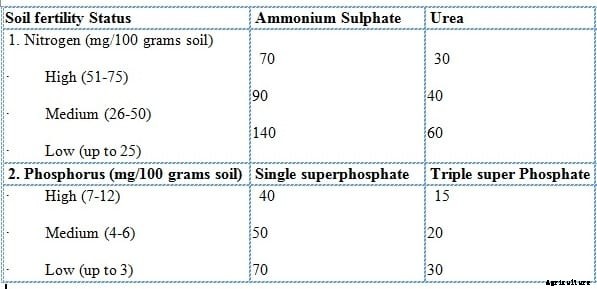
The requirement of nitrogenous and phosphate fertilizers would vary as per the nature of the soil fertility indicated below.
Tilapia Fish Farming – Inorganic Application:
Tilapia Fish Farming – Stocking:
The fish pond will be ready for stocking after 2 weeks of application of fertilizers. Tilapia fry (small fish) can be procured from the approved hatcheries.
Tilapia Fish Farming – Nursery Rearing:
The Tilapia fry should be reared in nursery ponds at least a month before they come to the actual pond.
The nursery rearing can be done in nylon meshed hapas suspended in grow-out ponds. 50 – 80 fry may be reared in one square meter.
Feeding can be done using small floating pellets and the feeding can be reduced from 30% -20% of the body weight as the fish grows and moved into the grow out pond.
Special feeds can be bought from the market. The Tilapia fry should be fed at least 3 – 4 times a day based on the demand for feed to get good survival and growth.
The ‘hapa’ should be cleaned regularly to facilitate water flow.
After rearing one month in nursery ponds, Tilapia fry’s can be released into the actual growing pond with a stocking density of 3-6 No’s /sq. meter for better development and survival.
Tilapia Fish Farming – Post Stocking:
Tilapia Fish Farming – Supplementary Feeding: Generally, any fish needs much more feed than what is available in the pond or tank. However, Tilapia fish can be fed with artificial feed and floating pelleted feed. A commercial feed with Feed Conversion Rate of 1.25 to 1.5 is ideally preferred.
Tilapia Fish Farming – Manuring: Organic Manuring may be applied in monthly installments @ 900-1000 kg/ha and inorganic fertilization may be applied at monthly intervals alternating with organic Manuring. However, the monthly rate of fertilization will depend on pond productivity and the growth of the Tilapia fish. Make sure that excess fertilization does not take place which may result in eutrophication.
Tilapia Fish Farming – Monitoring: Periodical monitoring of the fish to be carried out for disease incidence and growth. Records for day to day management of the pond to be kept for inspection.
Tilapia Fish Farming – Harvest: Harvesting of the Tilapia fish is generally done at the end of 5 to 6 months when the fish attains an average weight of 500 to 600 grams in 5-6 months. Production of 8 – 10 tons/ha can be obtained in one crop of 6 months.
Harvesting should be done by partial dewatering and repeated netting. Based on the market demand fish farmers can sell the live fish to market or can be frozen and export to international markets.
Tilapia Fish Farming – Subsidy for Fish Farming:
There many schemes available in Asian countries where small fish farmers can avail the subsidies on seed and feed, equipment of fish farming.
Bottom Line of Tilapia Fish Farming:
Tilapia fish farming is an excellent business and one can get decent profits provided there are proper fish farming practices are in place.