Feeding the cattle is not just putting some hay in front of them. In the reality there is much known about the cattle feed. Many things that should be considered when you think of cattle feed, they are, what a feed is available, what and how much your cattle should be fed, and is that feed improves the cattle’s health and productivity.
For Cattle feed, mainly based on the type of operation, location, finances, and personal preferences when feeding the cattle.
How much do the cattle need?
First, you need to find, how much food your cattle needs depending based on their breed. The breed and type of cattle you raise are the key features to know about the amount of the cattle feed. The amount of feed is also based on nutritional requirements, as some breeds need more protein or certain vitamins, for instance.
The amount of feed required for the cattle is mainly based on Breed the sex, which surprisingly has very little impact.
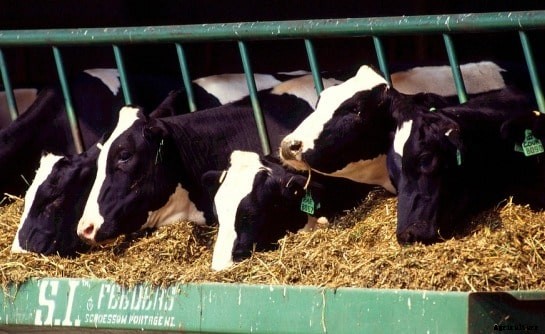
Stall Fed Cow Farm.
Cattle Breed and feed requirement:
Dairy cattle need more feed than the beef cattle.
British breeds like Angus, Shorthorn, or Hereford take very less feed. Continental breeds like Charolais or Limousin typically need high energy and protein feeds.
Exotic breeds have higher feed requirements than the continental or British breeds.
Feed management based on their weight:
Feeding of cattle is based on the average daily gain (ADG). It is calculated by cattle’s current weight, their body fat composition, and their age. ADG can be calculated by the target weight of your cow and subtract it from the current weight of the cow.
Read: Dairy Farming FAQ.
Feed for the cattle based on the Environment:
The length of the grazing season and average temperatures play a key role in how much and what you feed your cows.
Consider the factors like the condition of the pasture, how cold it gets at night, and what crops grow in your area.
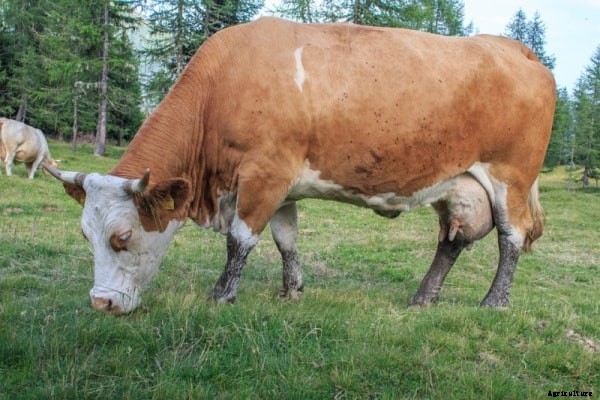
Cattle Grazing Outdoors.
Feed Based on Weather and Location:
Feeding should be high during:
Low temperatures (temperature below 30°C).
In the regions with high winds.
If the pasture is very muddy, need.
Feeding should be low during:
When the temperature is above 30°C.
Provide low feed when night temperatures are not cool.
Wind speed (average): If the wind speed is high, the insulating capabilities of the hair coat and body condition will be compromised. During the cooler seasons like autumn and winter the wind will show greater effects on weight gain and animal performance than ambient temperatures alone.
Mud: A muddy lot will reduce the dry matter intake levels by 15 to 30%.
Heat stress: Heat stressed animals will have more energy requirements as they trying to dissipate excess heat built up from ambient temperatures (greater than 30ºC). The animals that are over-conditioned, lactating, and dark-haired are susceptible to heat stress.
High Quality feeds:
There are many varieties in cattle feed. Pick the feeds based on what nutrients your cows need and what’s available in your area.
Read: Angus Cattle Facts.
Common Types of Cattle Feed
Formula: It can be a mixture of hay, silage, grain, supplement, mineral, salt, by-product, salt, vitamin, etc.
Hay: It is a grass, legume, or grass-legume mix.
Silage are corn, barley, winter wheat, rye, winter rye, triticale, oats, and pasture grass.
Grains can be oats, wheat, barley, rye, corn, and triticale etc.
Straw includes cereal grain chaff baled, barley, oats, triticale, rye, and wheat. Legume or pulse straw also includes pea, flax, lentil, and green feed.
Chaff—Similar to straw.
By-products can be soybean meal, alfalfa pellets, wheat middling’s, brewer’s yeast, bakery product, corn gluten, cottonseed meal, soybean meal, alfalfa pellets or cubes, barley malt sprouts, beet pulp, canola meal, canola cake, and oat hulls.
Supplements are protein feed formulas, these are a mix of other minerals and grains.
Salts are available in block or loose form. Salt blocks contain 95 to 98% of salt and 5% or 2% mineral respectively.
Vitamins—Vitamins A, D, and E are available in the market as a feed-mix supplements.
Minerals—Calcium [Ca], phosphorus [P], sodium [Na], chloride [Cl], potassium [K], magnesium [Mg], and sulphur [S]. Microminerals are cobalt [Co], iodine [I], iron [Fe], molybdenum [Mo], manganese [Mn], copper [Cu], zinc [Zn], and selenium [Se]. Mineral bags with CA and P are available in the market in a ratio of 1:1 or 2:1.
Milk is fed to calves only and comes as cow’s milk or milk replacement formula in powder form in the market.
Fats supply feed are tallow, sunflower oil, and canola oil.
Feed for Nursing and Pregnant Cows:
The pregnant cows need more nutrients, vitamins and minerals, and water to grow their babies or produce milk. The nutritional requirements will be higher during the last 3 months of the pregnancy and just after they give birth.
The nursing cow feed should be decreased gradually after 3 months of clawing.
You should make a record on each cow’s reproductive to know when to increase or decrease their nutrition.
Check with Veterinarian for ideal Cattle feed formulate.
Take a professional advice from a veterinarian or cattle specialist. They will help you with how much to give your cows, along with what the nutritional makeup of the food should be.
Cattle Feed Ration:
Check the amount of dry matter intake (DMI) your cattle eat on average each day.
Analyze the energy, fiber, and protein contents of the feed that provide for the cow in a day.
Calcium-to-phosphorous ratio should be in a of 2:1 ratio.
Check that the vitamin and mineral levels are high that satisfies the cattle needs.
Consider the productivity status of your cattle
Cattlesarecategorized into 5 different types, based: lactation, breeding, or meat. Types of cattle based on types and specific conditions:
Lactating cows—feeding for the lactating cows is based on their milk production, like how many times they have produced milk, how much milk they produce, pregnancy status, and the expected birth weight of its offspring.
Dry cows—consider the rearing environment and how many months pregnant.
Bred heifers— consider the rearing environment and how many months pregnant.
Feeders and Replacements.
Herd bulls.
Cattle feed based on the breed and type of cattle:
Breeding plays a major in in determining feed rations. For instance, dairy cows need more feed requirements, and so need to be considered differently. The Feed formula used for lactating dairy cows in a dairy milking system is major work.
Some varieties of Dairy cattle breeds are Holstein, Jersey, and Brown Swiss, etc. In the feed formula, Simmentals and Fleckviehsare used for compulsory.
British breeds are Angus, Shorthorn, and Hereford. These breeds have lower maintenance requirements and thus are considered better converters of feed into milk or muscle.
Continental breeds, such as Charolais and Limousin, these breeds require more supplementation in energy and protein. If hay and grass quality is poor, they need more the supplementation to thrive.
Exotic breed like Santa Gertrudis, Nellore, and Sahiwal, and composites like Brangus and Braford cattle. These breed chickens need little higher maintenance requirement than either the non-Simmental Continental group and the British-type group.
Read: Jersey Cow Dairy Project Report.
Determine the weight of your cattle Before Diet Plan:
Before you choose the right feed for your cattle, first find each animal weight. Once you know, individual weight, then you can create a diet that can either keep them on their weight or make changes to their diet that will impact their size.
Nutrition During Pregnancy:
Nutritional requirements for cow will increase during her last trimester (last three months of pregnancy). Her nutritional requirements will higher after she has given birth. The Requirements of the heavy-pregnant cow increase as the fetus in her is growing and needing more energy and protein to grow.
After delivering, many cows will suffer with nutritional deficiency, upto 2 to 3 months of calving. You provide the complete balance feed.
Feeding after Calving:
After the 2- or 3-months of lactation and re-breed mark, nutritive requirements will reduce gradually.
The nutritional requirement for Dairy cowswilldecreasesvery slowly, (milk production slows to nothing by stopping regular twice-per-day milking) it takes more than 10 months after calving to get dried off.
Maintain the all the timings of gestation and lactation records of your animals. The records keeping of calving, breeding, lactating, and weaning will help you to maintain a healthy ration for your cows and heifers.
Quality of Feed: the quality of feed is judged by sight and smell.Appearance , smelling and looking at the feed determines how dusty, moldy, or even smelly the feed is.
Hay and straw will be bit dustier and smell or look moldy and of lower quality.
Mold and dust are unavoidable in the cattle feed, especially if bales are stored outdoors, or forage is baled up wetter than it should be.
Certain fungal molds can produce mycotoxins, which can cause health problems like infertility and abortions in breeding females.
Silage will have a putrid smell. It smells like rotten bananas and appear in dark brown color. A good quality silage will have a brownish color with a sweet, fermented smell and, if tasted, the grains have a tangy, sharp, almost sweet taste.
Grains with mold can spoil the quality. Grains have a musty, moldy smell like hay, and they get spoiled easily.
Green colored hayindicates its good quality. But the high temperatures, cutting mature forages, poor soil fertility, and improper curing and/or storing of bales can impact hay quality, even though they look green.
The proper storage and maintenance is compulsory for a good quality feed.
How to Feed the Cattle:
Feed separately, if required:
Each animal will have different nutritional needs, based on body condition score, weight, sex, reproductive status, and stance in the pecking order, should eat separately.
For lactating cows feed is different from the dry, mature cows. And growing steers and heifers fed will make a mature bull gain more weight than he needs.
We cannot avoid having different groups of cattle to consider, like a group of bulls, a group of cows, some heifers, and stocker steers, but to have a mix of cows, especially that are in varying stages of lactation and gestation can make planning out rations harder than it needs to be.
Suitable Containers:
Feeding should be done in appropriate containers. Purchase suitable containers for holding and feeding loose mineral, salt blocks, or grain for your animals. All the farm and ranch supply stores will sell the kind of feeders you need.
Containers for Hay feeding should be cone or cylindrical shaped containers, with slanted slots for the animals to fit their heads through are good for cattle. Hay feeders are best, as they reduce wastage and to put large round bales in and keeps the animals from climbing in and lying down in the feed and urinating/pooping in it further causing more waste.
Large feed bunks are ideal for feeding silage. These bunks reduce waste of silage on the ground, and also prevents animals from laying in and pooping in the feed.
Using raised bunks for feeding cattle, grain or supplemental mix will reduce waste and are easy to clean.
Loose mineral feed are provided in sheltered unit, so that the rain will not get into the feeder and ruin the mineral. All the farm and ranch supply stores sell mineral feeders. Use can also use, old rain barrel, a suspended tractor tire, a crafted wooden feeder, to even a modified futon or bed frame.
Salt blocks are fed on bare soil or grass, but its best feed in a container that keeps it off the ground. You can use old tire rim, modified ATV tire with a flat iron or rubber bottom, or a purchased plastic or metal salt block holder.
Cattle Diet:
Balance the feed ration and supply supplementation when required. Low quality hay should be supplemented with range cubes, grain, protein tubs or molasses licks to balance energy and/or protein.
If pasture or hay of good quality, there we don’t need any supplements.
Forage for Cattle:
Forage should be the primary feed for any cattle. Forage is available in pasture, hay, or silage. What species depends on your area.
The pasture and hay forage is all grass or all legumes or a mix of both.
Silage is primarily grass-based.
In the cattle feeding, forage is the most important part of the ration. This stimulates rumination, chewing, and buffering capacity of the rumen.
Cattle should get better ratio of forage in good quantities of silage with grain, grain by-product and other supplement mixed in.
Pasture and/or hay forage or fodder is the best feed for your cattle, provided it contains enough nutritive value for your cattle.
In case of nutritive deficiencies and supplement according to your animal’s needs.
Feed Switching:
Don’t switch diets of cattle suddenly. Be careful when switching from hay to grain. And, introduce grain or any high-energy diet slowly to avoid bloat, grain-overload, or acidosis.
Acidosis is common diseases caused when the diet is switched. This disease causes a sudden decrease in pH level in the rumen and encourage lactic acid-producing bacteria to increase in population, further decreasing pH in the rumen. The animal will go off feed, have stinky grey foamy diarrhea, and can even die.
Bloat is another disease that is dangerous to cattle that affects due to switched diets. Bloat occurs when the rumen is unable to release the gases, it causes discomfort to the animal, and even presses on the lungs and diaphragm leading to death by asphyxiation. Bloat needs to be treated immediately.