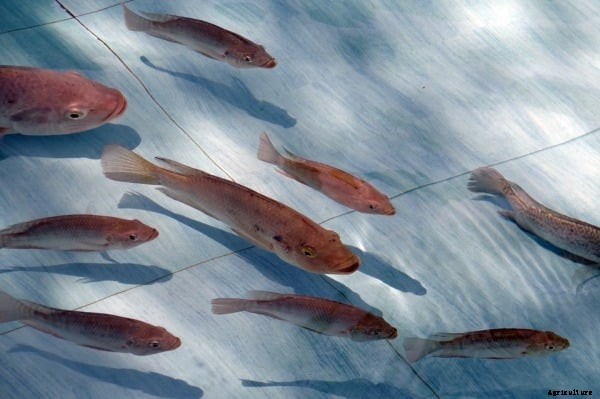
Raising fish is a form of aquaculture practice and is termed Pisciculture. Fish is a cold-blooded animal that can adjust its body temperature according to the media where it lives. Fishes are of different shapes and sizes; they may weigh from a few grams to hundreds of kilograms. Fishes are reared in confined water areas due to their high demand. The basic requirements that have to be considered for rearing fish as the same as other livestock management systems such as feed, breed, health, housing, etc. The importance of fish farming was only realized when land resources became scarce and the need for animal protein to the ever-increasing population was in demand. Rearing fish is an old practice dated some 2000 years ago but now it has become a part of the rural development system. Fish are generally found in sea and river basins. The natural availability of fish has decreased gradually due to increased fish collection; therefore it has become highly essential to raise fish on a commercial basis to meet the demands of the population. India ranks seven in fish rearing practices.
TYPES OF INDIAN FISH BREEDS:
The major freshwater fishes cultured in India are Major Carps, Minor Carps, Murrels, Catfishes, Exotic Fishes, and Coldwater fishes.
MAJOR CARPS: They grow fast and reproduce in artificial ponds. They do not have a stomach in the alimentary canal. In India the major carps are:
Catla
Largest of all carps.
Grey in colour with silversides.
The maximum length is 1 meter. Can grow to 1 kg in a year.
This fish has a stout body, broad head, upturned mouth, long fins, and visible lips.
It occurs in the surface waters and feeds on plankton.
It reaches maturity by the second year and can carry 70,000 eggs per kg of body weight.
Breeding season is in the monsoon and can also breed in bundhs with controlled conditions.
The seeds of this fish can be reared in undrainable ponds.
Labeo rohita
It is commonly known as rohu and is cultured in freshwater ponds or lakes.
It has a small head with an elongated body. The mouth is prominent with thick lips, has short barbells.
The colour of the fish is either blue or brownish gray. The scales of this fish are gray, red or black.
The maximum length of the fish is 90 cms. In one year it weighs around 900 g.
Generally found in rivers and canals.
The fish feeds on green algae, diatoms, mud, detritus, and decayed vegetable matter.
This fish reaches maturity in the second year. It spawns during the monsoon and can breed naturally in rivers. It can carry 2,26,000 to 2,80,0000 eggs depending on its size.
Mrigal
This breed of fish is found in rivers.
It grows to a maximum length of 65 cms and weighs around 1kg in one year.
This fish attains maturity in 1 to 2 years and can carry 124000 to 1900000 eggs depending upon its size.
Spawns during the southwest monsoon. Ponds are not suitable for Mrigal fish breeding.
The fins of this fish have an orange tinge, the caudal fin is sharp. The head is small with a blunt mouth.
INDIAN FISH BREEDS – MINOR CARPS: The carps grow to a size of 30 to 100 cm in length and have an average weight of 1 to 1.5 kg.
Labeo calbasu:
Found in freshwater ponds and tanks.
The colour of the fish is bluish-green.
They have small heads with folded lips. The snout has 4 black barbs. It can grow up to 1 m and weighs around 1.5 to 2 kg.
Labeo bata:
Grown with major carps during fish culture.
Attains maturity in 9 to 10 months.
Labeo fimbriatus:
They live in deep waters. The size of the fish is 90 cm and weighs 450 g. There are red spots over the scales in the middle row.
They have folded lips.
INDIAN FISH BREEDS – MURREL FISHES: They are the air-breathing variety of fishes having a long cylindrical body, flat head, and protractile mouth. They grow in freshwater areas. They breed before the onset of the monsoon.
Channa punctatus: (Spotted Murrel)
Generally found in stagnant waters. It is a small species of fish with a length of about 20 cm and weighs 0.25 kg.
The color of the fish is greenish-brown on the back and yellow on the bottom. Sometimes may have purple or black colour.
It is also known as live fish as it can live outside water. It has accessory respiratory organs.
Channa striatus: (Striped Murrel)
They are medium in size. Mainly found in the Indo-Gangetic plains and peninsular India.
The body of the fish is brown in the back and yellow or orange at the bottom.
They stay in muddy waters. Grow to a maximum length of 90 cm and weigh about 2 kg.
They feed on worms, frogs, tadpoles, and insects.
Its flesh has no cholesterol levels.
Channa Marulius: (Giant Murrel)
It is the largest Murrel of average size 45 cm but may attain 1 m with a weight of 4 kg.
It has a subcylindrical body tapered from head to tail. Its colour is greyish green on the back and pale yellow on the bottom with white dots on the body and fins.
Generally found in rivers with a deep sandy rocky bottom and clean water.
Channa Gatchua: (Mud Murrel) is another variety of Murrel cultured in India.
INDIAN FISH BREEDS – CAT FISHES: these fishes are generally known as predatory fishes. They have a pair of barbells in the upper jaw and another pair in the lower jaw. These fishes have no scales on the skin and spine so mostly used as a food breed.
Clarias Batracus:
It is also called walking catfish, native to Southeast Asia, and a variety of air-breathing catfish. In Karnataka (India) it is called Murgodu and Assam (India) is called Magur Mas.
It is found in slow-moving and stagnant waters such as swamps and ponds.
It has an elongated body of a maximum length of 0.5 meters and a weight of 1.2 kg. The colour of the fish is grey or greyish brown with white spots on the sides. The body is covered with mucus. It has a sting hidden behind the fins.
It is also used in laboratories for experimentation.
It feeds on molluscs, invertebrates, detritus, and aquatic weeds.
Heteropneustes fossilis:
This fish breed is found in India, Bangladesh, Pakistan, Nepal, Sri Lanka, Myanmar, and Thailand. In the Indian state of Kerala and Assam, it is called Kadu and Singhi respectively
This is called the Asian stinging catfish generally live in ponds, ditches, swamps, marshes, and muddy water. In Andhra Pradesh, it is found in the Kolleru Lake.
This fish is in demand due to its medicinal value.
The length of the fish is 30 cm. It has a flat head and compressed body at the sides. It has a sting which when delivered to humans can cause extreme pain due to the poison from the pectoral fin.
Clarias Macrocephalus:
It is native to the South East Asian region and is generally known as broadhead catfish.
This fish has white spots on the sides of its black body with a large dorsal fin. The maximum length of the fish is 120 cm.
It feeds on shrimp (young), small fish, and aquatic insects. It is found in canals, rice fields, pools, marshes, etc.
This fish is raised for its quality and appearance but generally, it has a slow growth rate and low fry production capacity.
Anabas testudeneus: (climbing perch)
This fish is native to Asia and found in India and China.
It can survive without water for 6 days, grows to a maximum length of 25 cm.
The head of the fish is triangular with a wide mouth and greenish body color.
Generally found in lakes, swamps, estuaries and feeds on shrimps, fry fish, macrophytic vegetation.
Etropius Suratensis: (Green Chromide)
It is found in the brackish south waters of India and Srilanka. It is also known by several other names such as Pearl spot Cichlid, Banded Pearl spot, or Striped Chromide.
Exclusively in the Indian states of Kerala and Goa, it is known as Karimeen and Kalundar
The fish is oval in shape and has a short snout. The colour of the fish is grey-green with a dark spot on the pectoral fin. The length of the fish is 20 cm but can reach a maximum length of 40 cm.
It lives in river deltas and feeds on aquatic plants, diatoms, animal matter and sometimes molluscs.
It is used as a food fish for its smell and is highly suitable for cultivation in ponds and lakes.
Wallago Attu:
Generally called helicopter catfish and some regional names are Sareng, Bengal boal etc.
The length of the fish is 1 m and weighs 20-30 kg. It has two barbells in the head with large jaws and teeth. It has a compressed body with a long tail.
It feeds on the animal matter and dwells in rivers.
Mystus Seenghala:
This fish is native to the Asia region.
It has four pairs of barbells, a deeply divided caudal fin, and an elongated upper jaw.
INDIAN FISH BREEDS – EXOTIC FISHES:
Cyprinus Carpio: (Common carp)
This fish breed is widely found in the waters of Europe and Asia. In India, it is introduced into the states of Tamilnadu and Orissa.
They preferably dwell in slow or standing water bodies with soft vegetation.
They feed on aquatic plants, crawfish, zooplankton, insects, crustaceans, and benthic worms.
The color of the fish is brownish-green on the back and golden yellow on the ventral side. The mouth has two pairs of barbells. The body is compressed and elongated with dusky fins. The length of the fish is 75 cm and weighs 6.5 kg.
Osphronemus Goramy: (GiantGoramy)
This fish breed is native to the Southeast Asia region and was introduced into the fresh waters of madras and Calcutta in India.
It dwells in slow-moving fresh or brackish water such as swamps and lakes. It can breathe moist air and can survive out of the water for a long time.
The length of the fish is 45 cm. The colour of the fish is golden or pale yellow with silver or pale blue vertical stripes.
They feed on algae, brine shrimp, starchy vegetables, legumes, etc.
Ctenopharyngodon Idella: (Grass carp)
This fish is native to eastern Asia but is grown in fresh water and brackish water with less salinity. In India, it is introduced into freshwater near Cuttack (Orissa).
The fish has a torpedo-shaped body, an oblique mouth, no barbells, and firm lips. The average length of the fish is 60 to 100 cm and weighs 7 kgs.
The colour of the fish is dark olive, brown, or yellow on the sides and white on the belly.
The fish feeds on aquatic weeds.
Hypothalamychthys molitrix: (Silver carp)
It is a native of Hongkong and was introduced into the freshwater region near Cuttack (Orissa, India).
The average length of the breed is 60 to 100 cm and weighs around 1.5 kg (50 kg maximum). The body of the fish is compressed laterally and has small shiny scales.
It has a filter for choosing feed as small as 4 micrometers. They do not have a stomach and feed on zooplankton and detritus.
Tilapia Mossambicus:
It is native to South Africa but introduced into subtropical regions also.
Its body is laterally compressed with long dorsal fins. The colour of the fish is pale greenish or yellow. The length of the fish is 35 cm with a weight of up to 1.13 kg.
They feed on diatoms, small fry fish, macroalgae, invertebrates, and detritus.
INDIAN FISH BREEDS – COLD WATER FISHES:
Salmogiardneri: (Rainbow trout)
The freshwater fish breed weighs about 0.5 to 2.3 kg and is 1.8 m in length. The body colour is silvery with a broad red line on the sides. They have pink colour dorsal and caudal fins.
Mostly occur in places with alluvial soil regions, cool lakes, etc.
Female fish can produce 2000 to 3000 eggs per kg of weight.
They feed on the larva, pupal, aquatic insects, etc.
Tor tor: (Mahseer)
It occurs in fast-flowing rivers and streams with rocky bases. Native to India, Bangladesh, Bhutan, and Nepal.
The maximum length of the fish is 150 cm.
The colour of the body is different with greyish green on the dorsal side, golden lateral sides, and silvery-white belly.
Tor Khudree:
It is found in major rivers and reservoirs in India and Srilanka.
The fish feeds on plants, insects, shrimps, and molluscs and can be grown in ponds.
The length is 1 m and weighs 45 kg. The body is dark on dorsal and lateral sides but yellow on ventrolateral sides.
Tinca Tinca: (Doctor Fish)
It occurs in slow-moving fresh waters like lakes and lowland rivers. It is a native of the Eurasia region.
It can survive in water with low oxygen content. They feed on chironomids, snails and pea clams.
The maximum size of the breed is 70 cm with a weight of 6.89 kg.
They have small scales. The colour of the skin is olive green and sometimes golden on the bottom. It has a narrow mouth with a small barbell.
INDIAN FISH BREEDS – BRACKISH WATER FISHES: these species are preferably cultured in estuaries on river mouths.
Mugil Cephalus: (Gray Mullet):
This fish is found in tropical and subtropical waters. It is reared in Kerala and Tamilnadu
The colour of the fish is olive green on the back and white at the bottom. It has silvery sides. There are six or seven horizontal stripes on the body. The maximum size is 100 cm and weighs about 8 kg.
It feeds on zooplankton, algae, etc.
Chanos Chanos:
It is also known as milkfish. Mostly occurs in the Indian Ocean and found in the state of Kerala.
The length of this fish is 1.80 m (maximum) with a maximum weight of 14 kg. The body is long and compressed. It has a small mouth that is toothless. The Colour of the body is olive green, with dark bordered fins, and silvery flanks.
They feed on algae, small invertebrates, and cyanobacteria.
The female fish can spawn up to 5 million eggs in saline shallow waters.
Lates Calcarifer: (Asian sea Bass or perch)
This fish is also known as Barramundi meaning large-scaled river fish in the Australian language.
It has a large elongated body, oblique mouth, and upper jaw that extend beyond the eye. The colour of the body on the dorsal side is dark green and the ventral side is shiny.
The length of the fish is 1.8 m (maximum) and the maximum weight is 60 kg.
They are salt and fresh water sport fish. They have scales with silver colour which change according to the environment.
They are found in clear turbid water. They feed on crustaceans, molluscs, and zooplankton.
REARING PRACTICES OF INDIAN FISH BREEDS:
To start a fish farm there are certain aspects that have to be considered because there is an external intervention into the natural environment of the species being reared for enhancing their production capabilities. The selection of the farmland and type, construction and maintenance of the pond, selection of the fish species, feed management, health care management, harvesting, and marketing of the produce are some important steps that help in the successful rearing of fish.
POND PREPARATION FOR REARING INDIAN FISH BREEDS:
Rearing Fish in a Pond.
An existing pond or a newly constructed structure can be used in raising fish. There may be two types of ponds seasonal and permanent. If a seasonal pond is chosen then fish breeds that grow and mature quickly have to be reared. The pond area has to be cleaned properly and fertilized. The pond soil and water have to be checked for their pH value. It is important to check for more pond plants as they reduce the cost of fish food. The pond should be free from ammonia gas and ducks should be raised to increase the oxygen supply in the ponds. The depth of the pond should be more if there are plans to reserve water for the dry period. Ponds that are well-drained are suitable for fish collection.
A balanced fish food consists of proteins, fat, vitamins, minerals, carbohydrates, and water. Natural feed is available for the fish in the pond but this doesn’t help in fish growth and production. So a nutritious supplementary feed has to be given to increase the production capacity of the fish. Natural fish food consists of plankton, aquatic insects, rotten plants and animals, grass, etc. The extra feed supplied to the fish includes rice bran, crop grain, kitchen leftovers, dried molasses, green leaves, roughage of wheat and pulses, maize powder, etc. The supplementary feed is highly essential for rearing fish on a commercial scale.
HEALTH CARE MANAGEMENT FOR REARING INDIAN FISH BREEDS:
Like any other living organism, fish is also prone to diseases. Diseases can occur in different forms like bacterial, fungal, parasitic, protozoan, viral, non-infectious, etc. The most common types of diseases observed in fish are ulcer and stomach swelling. The ulcer disease can be prevented by mixing 1 kg of salt and 1 kg of lime into the water before the arrival of the winter season. The stomach swelling can be prevented by providing sufficient feed (both natural and supplementary) to the fish in the pond.
HARVEST MANAGEMENT FOR REARING INDIAN FISH BREEDS:
A simple way to harvest the pond is by draining water from the pond. Fish should not be taken out of the pond during the first five months. Baskets, hand nets, or seine nets (mesh size less than 1 cm) are used for harvesting fish. Harvesting is done in the morning or during low temperatures. Store the live fish in watertight containers. Fish should be sold or sent to the marketplace within a day of harvest.
In case if you are interested in this: Hydroponic Nutrient Chart.